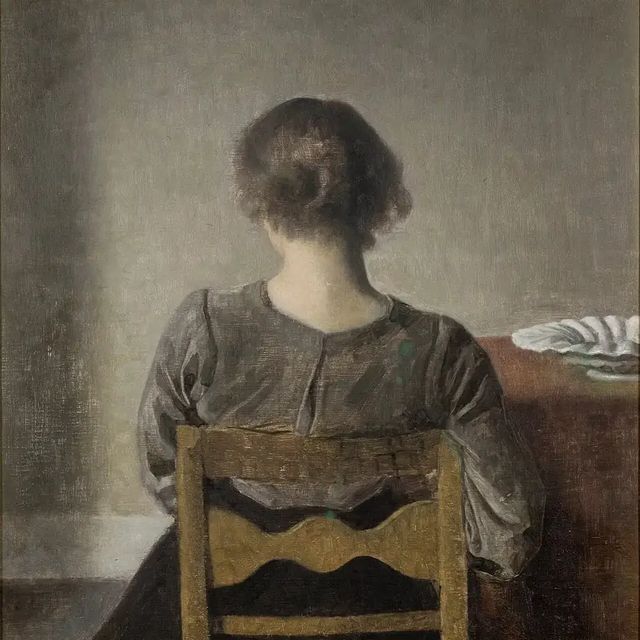
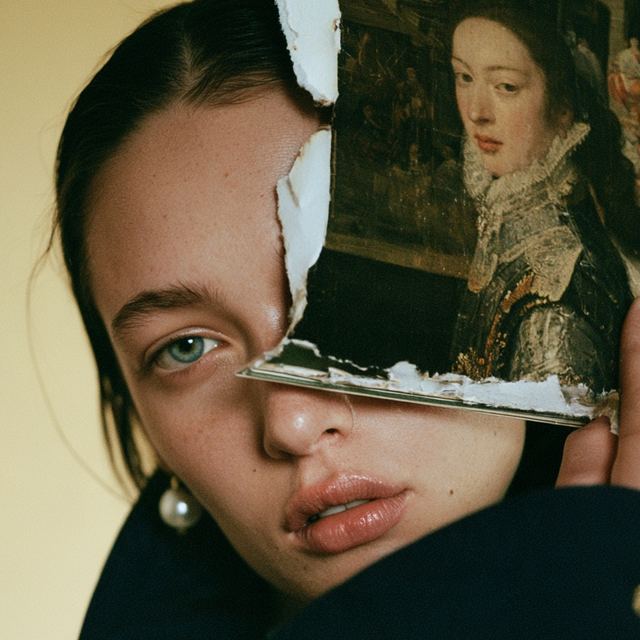
This is Tanya Taina, art historian of the soul. I look at a person the way I look at a work of art. Everyone has their own light and their own shadow, their own composition and their own story. A date of birth helps me get closer to someone.
Paintings help you see; psychology puts into plain words what you already feel. Enter your date and your gallery will open. You'll discover which paintings tell your story, where your strength lies, what wears you out and where to grow.
There are no ready-made answers here. There are paintings, questions and a little silence, so you can hear yourself. It's easier to understand your own life through art and through other people's. The date hints, the paintings show, psychology explains — and the conclusions are yours to draw.
You are not chaos, you are a system. A hint, not a fairy tale. Tanya Taina, art historian of the soul.
Explore the complete art collection — or enter your date of birth to discover the paintings of your personal gallery.
About my method
PersonalitydayFamily storymonthRealisationyearRelationshipsHealthSoul’s missionFatal mistakepoint of attentionmotherfather
ThumbHealthIndex fingerPersonalityMiddle fingerFamily storyRing fingerRealisationLittle fingerRelationshipsCentre of the palmThe soul’s mission
The Hand Method: knowing yourself through art
The number is the essence, psychology is the path, art is the mirror.
Where the method comes from
Life comes to us from two people. Every cell in our body holds 23 pairs of chromosomes, and in each pair one comes from our mother and one from our father. The mitochondria, the tiny “power stations” of our cells, we inherit from our mother alone. Genes give us potential; how it unfolds depends on how we live.
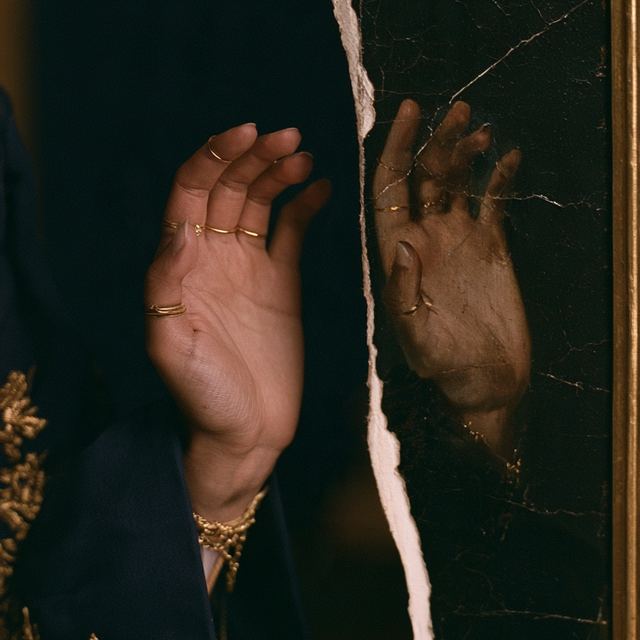
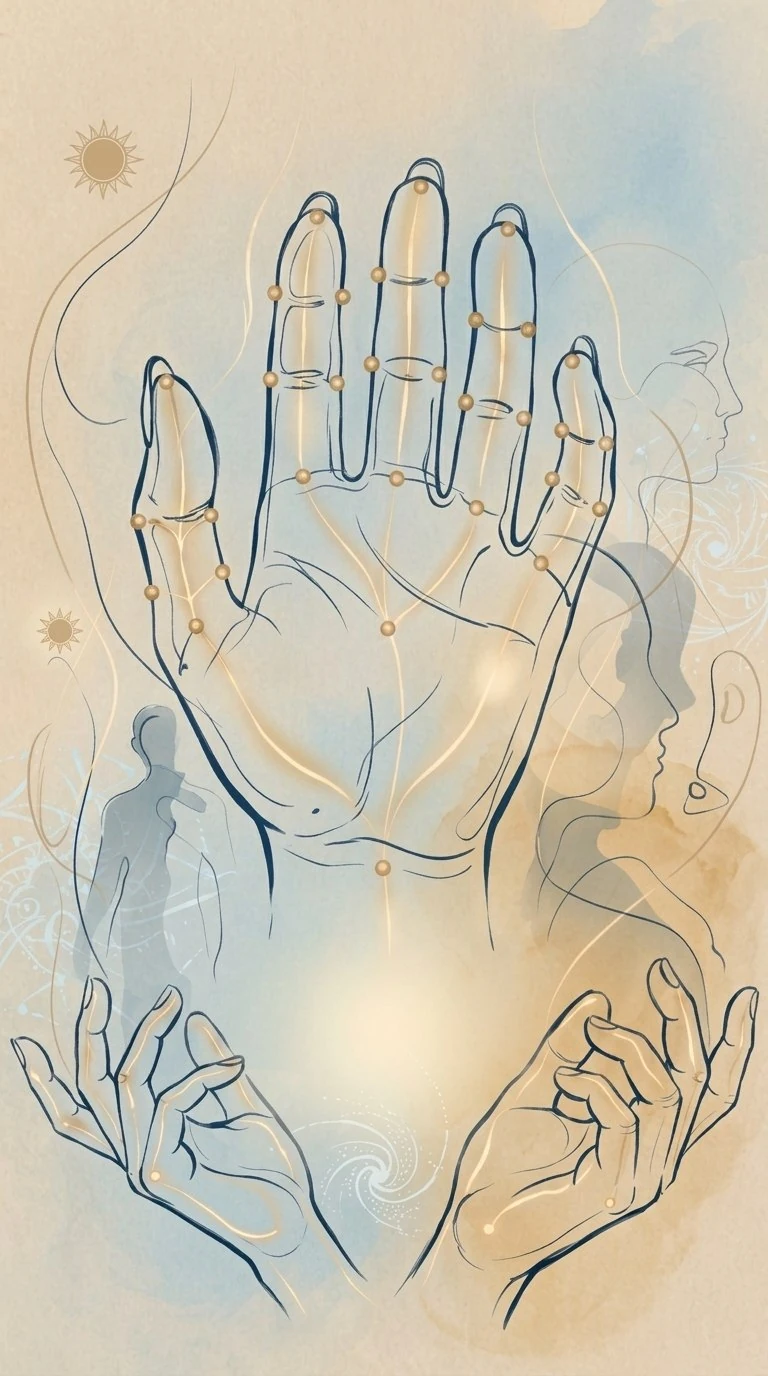
I see a parallel here with the date of birth. Both lines, mother’s and father’s, sound in it too, and it too shows potential you can work with. That is why, in my drawing, your hand is held by two hands.
I study digital psychology, including the Pythagorean school, as well as classical psychology. And I do my own research: I read people’s biographies, compare their lives with the calculations from their birth dates and notice patterns. I call them corridors of energy: recurring themes a life passes through. Then I joined all this with what I love most, art.
The hand as a map of life
Five fingers, five spheres, all connected like the fingers of one hand.
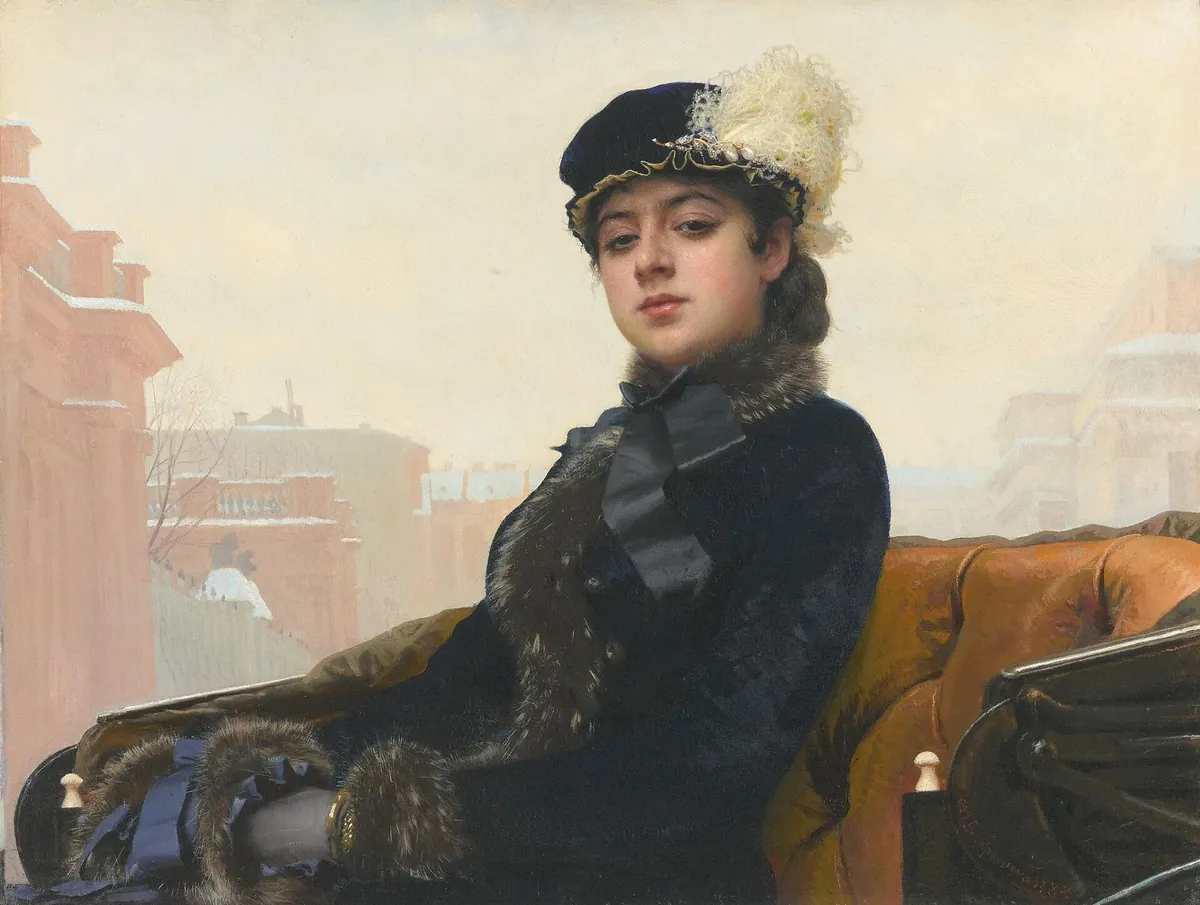
Ivan Kramskoi, An Unknown Woman, 1883
Personality is the index finger, your day of birth. It is how you show up in the world: temperament, first impression, your way of being yourself. It sounds loudest until about 25 but stays with you for life. Psychologists would call it the self-concept: who we feel we are.
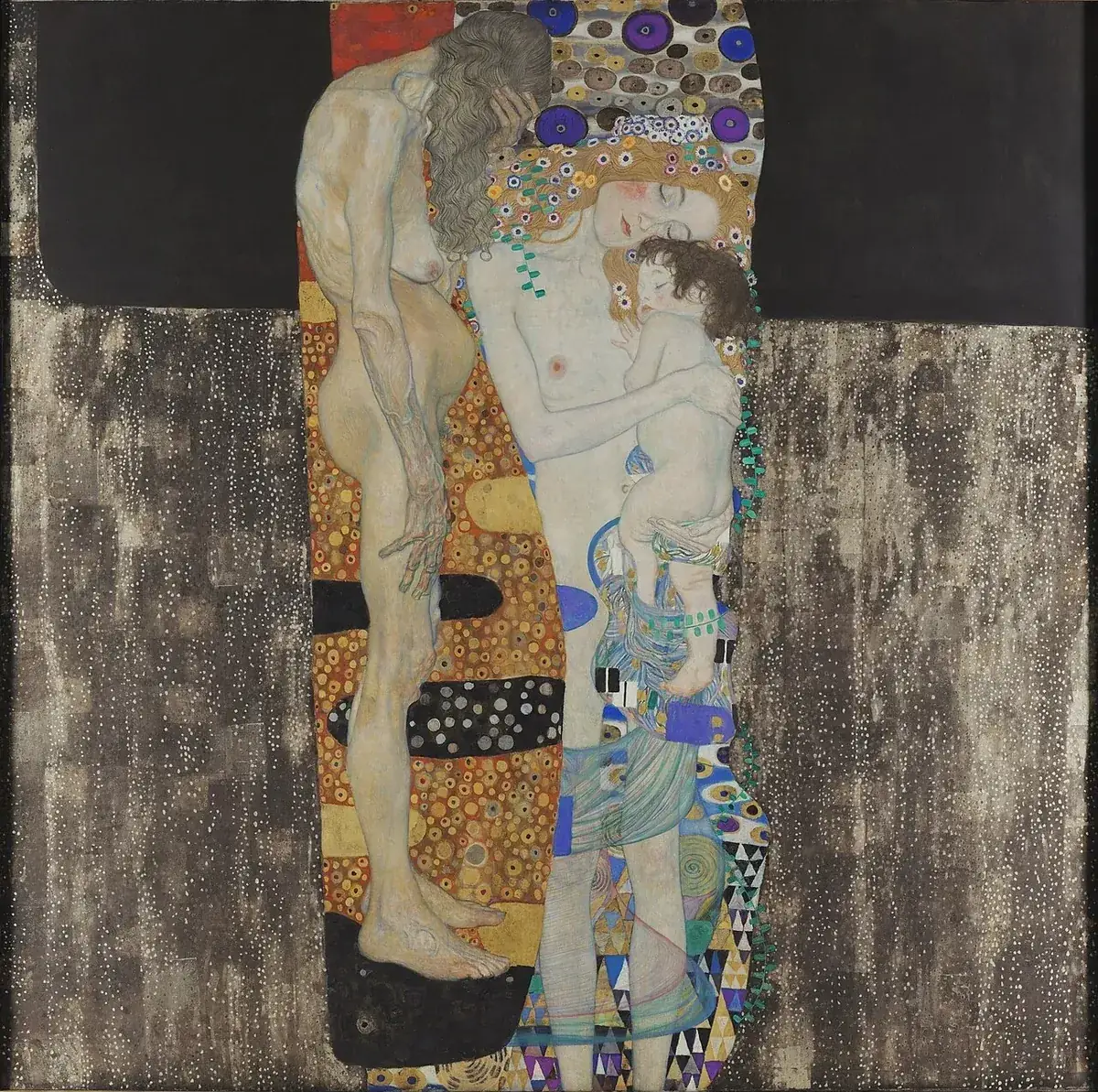
Gustav Klimt, The Three Ages, 1905
Family story is the middle finger, your month of birth. It is what reaches you through your family: habits, expectations, stories that repeat. It sounds especially loud between 25 and 35. The American psychiatrist Murray Bowen, founder of family systems therapy, showed that family patterns pass from generation to generation, often without our noticing. What a family has not lived through comes back until someone lives it in a new way.
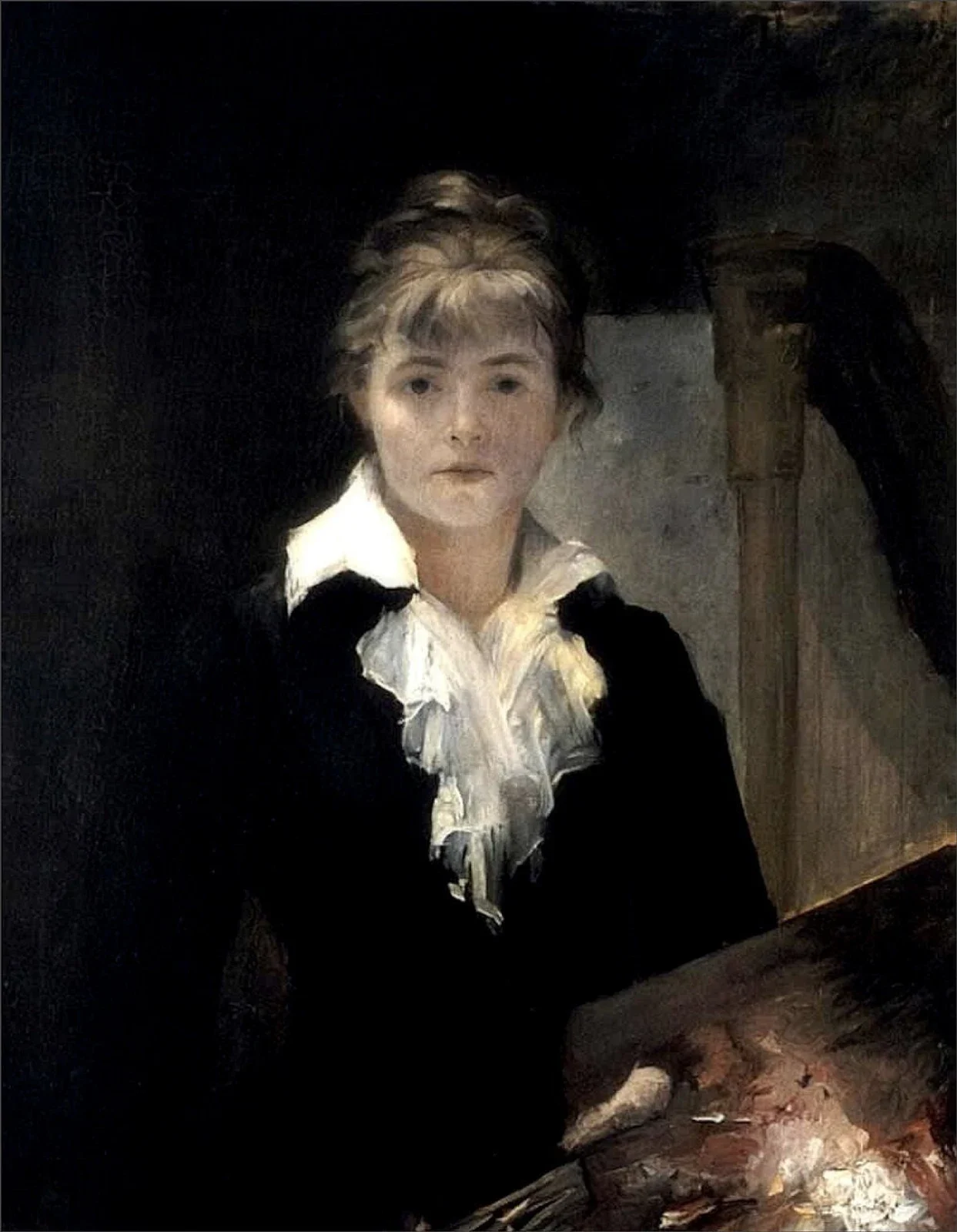
Marie Bashkirtseff, Self-Portrait with a Palette, 1883
Realisation is the ring finger, your year of birth. It is your work, your voice, your money: how you bring yourself into the world. It opens after 35. The psychologist Erik Erikson called this stage of maturity the time of “generativity”: the wish to create something that will outlast us.
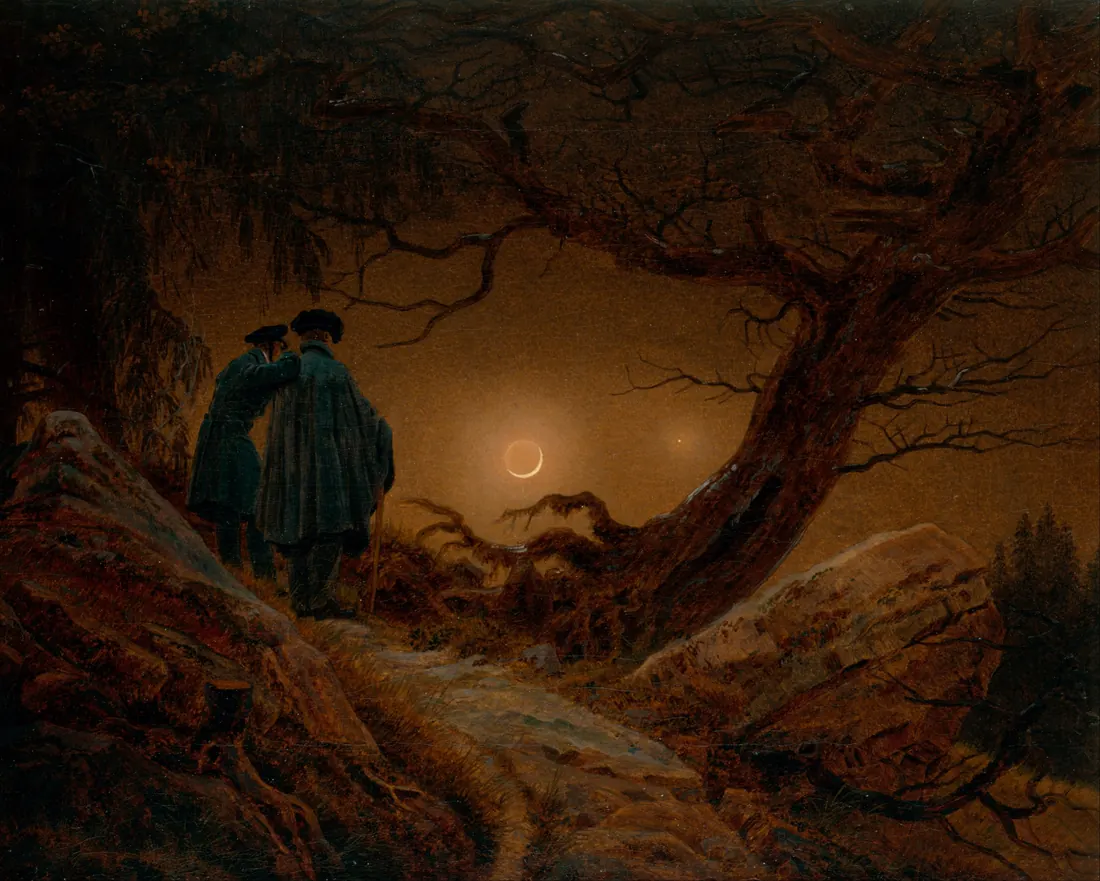
Caspar David Friedrich, Two Men Contemplating the Moon, 1819–1820
Relationships are the little finger. They sound from birth and all through life: with everyone around us and, first of all, with ourselves. The British psychiatrist John Bowlby, author of attachment theory, showed how early bonds with those close to us shape the way we love and trust as adults.
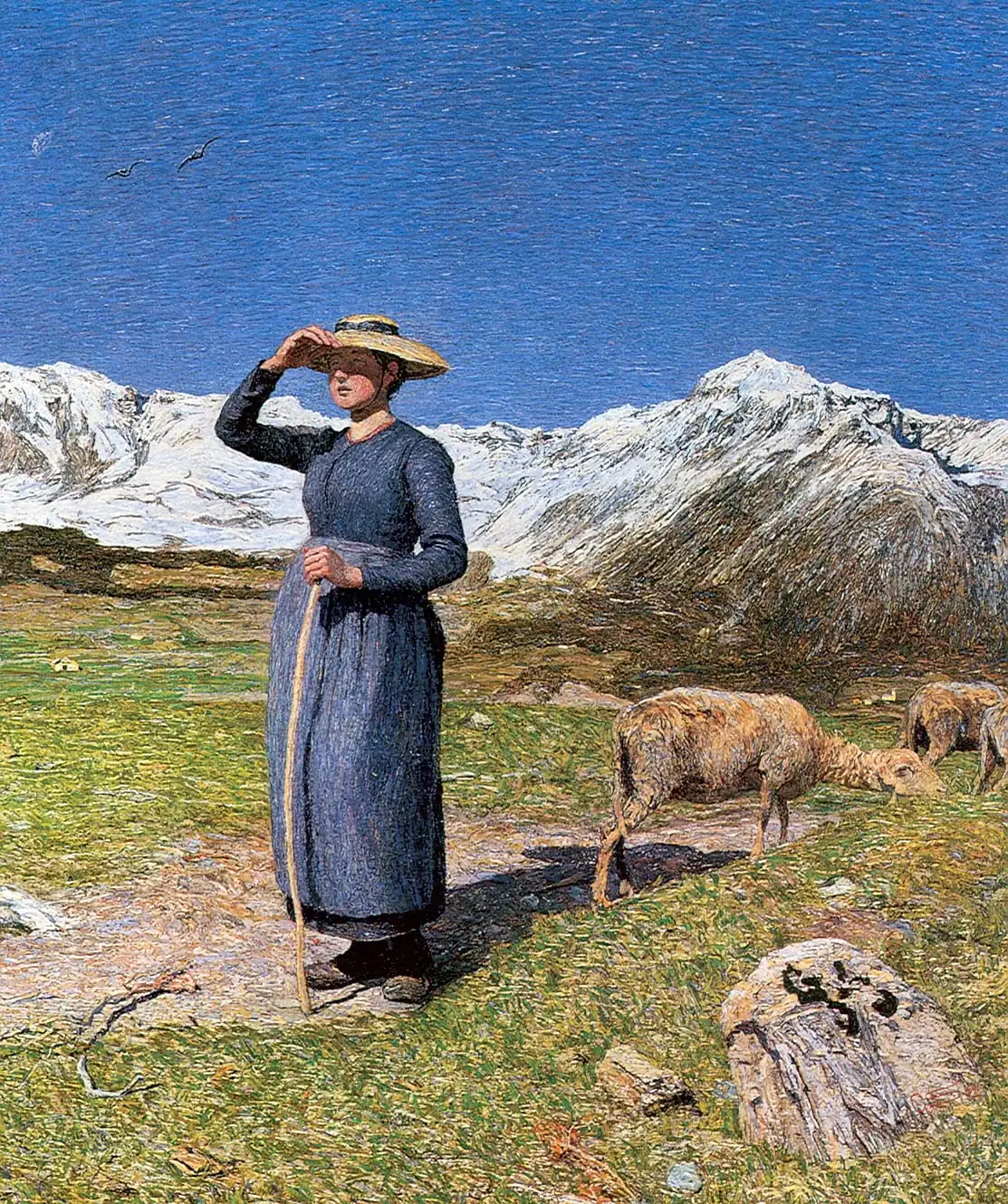
Giovanni Segantini, Midday in the Alps, 1891
Health is the thumb, the support of the whole hand. It is the sphere of strength and resources, and it shows how the rest of the map is lived: what is not lived through in the other spheres often echoes in the body. Modern medicine speaks of this through the biopsychosocial model: health is body, mind and surroundings together.
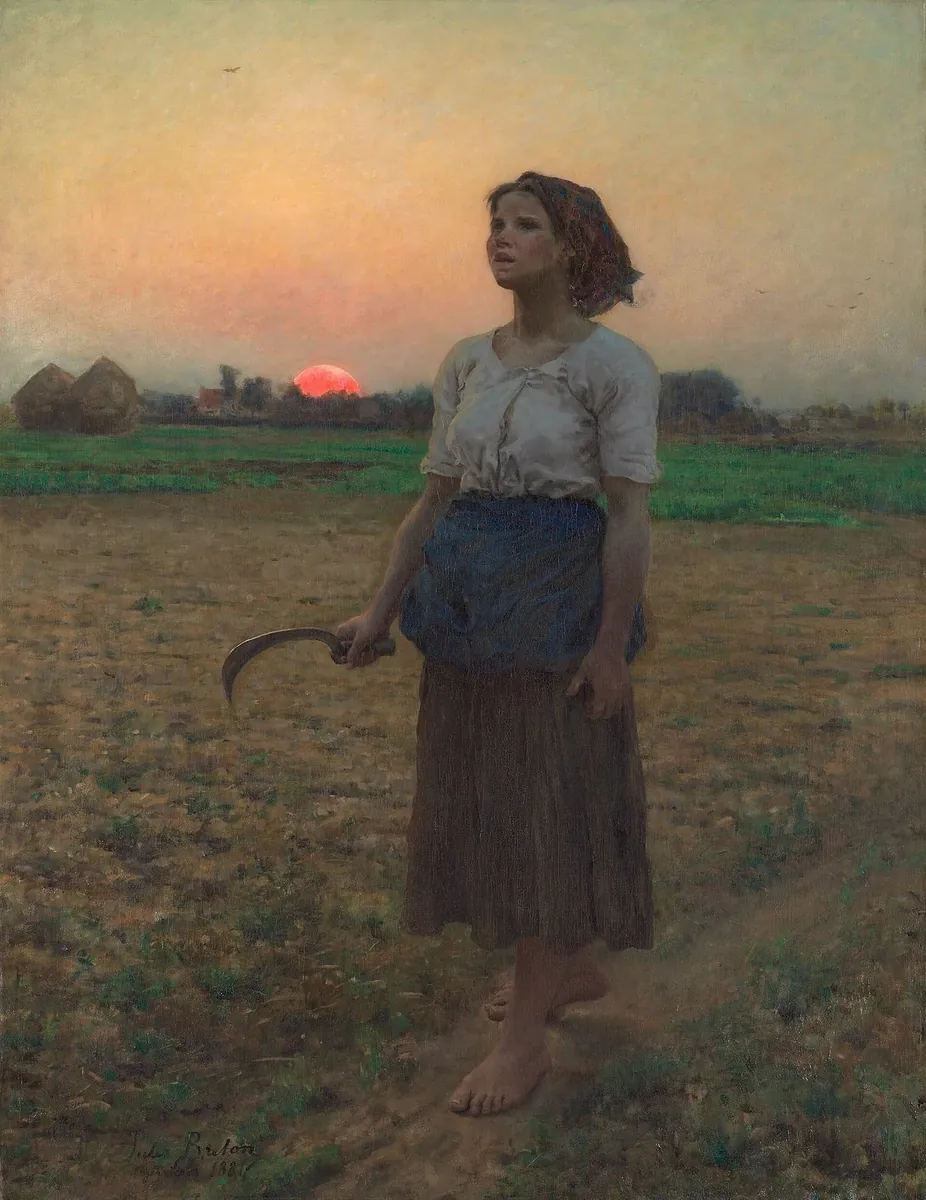
Jules Breton, The Song of the Lark, 1884
The soul’s mission is the centre of the palm. It is not about money but about meaning: why I am here. The Viennese psychiatrist Viktor Frankl, who survived the concentration camps, wrote that a person can bear almost any “how” if they know their “why”.
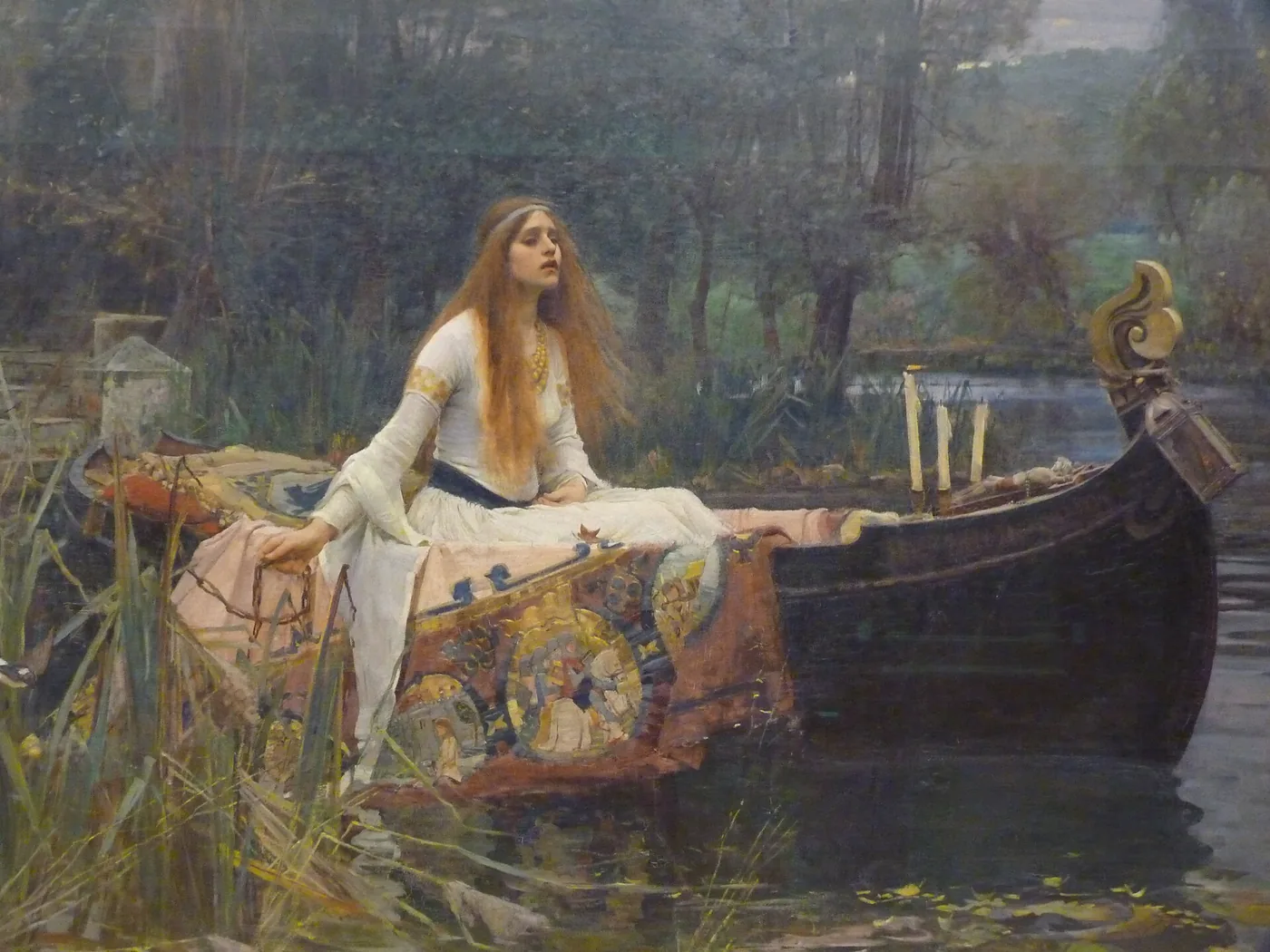
John William Waterhouse, The Lady of Shalott, 1888
The fatal mistake is the hand’s shadow, and everyone has their own. It is the place that pulls you, yet is best avoided. Carl Gustav Jung called the shadow the part of us we fail to notice, which steers us until we see it. To see it is to stop obeying it.
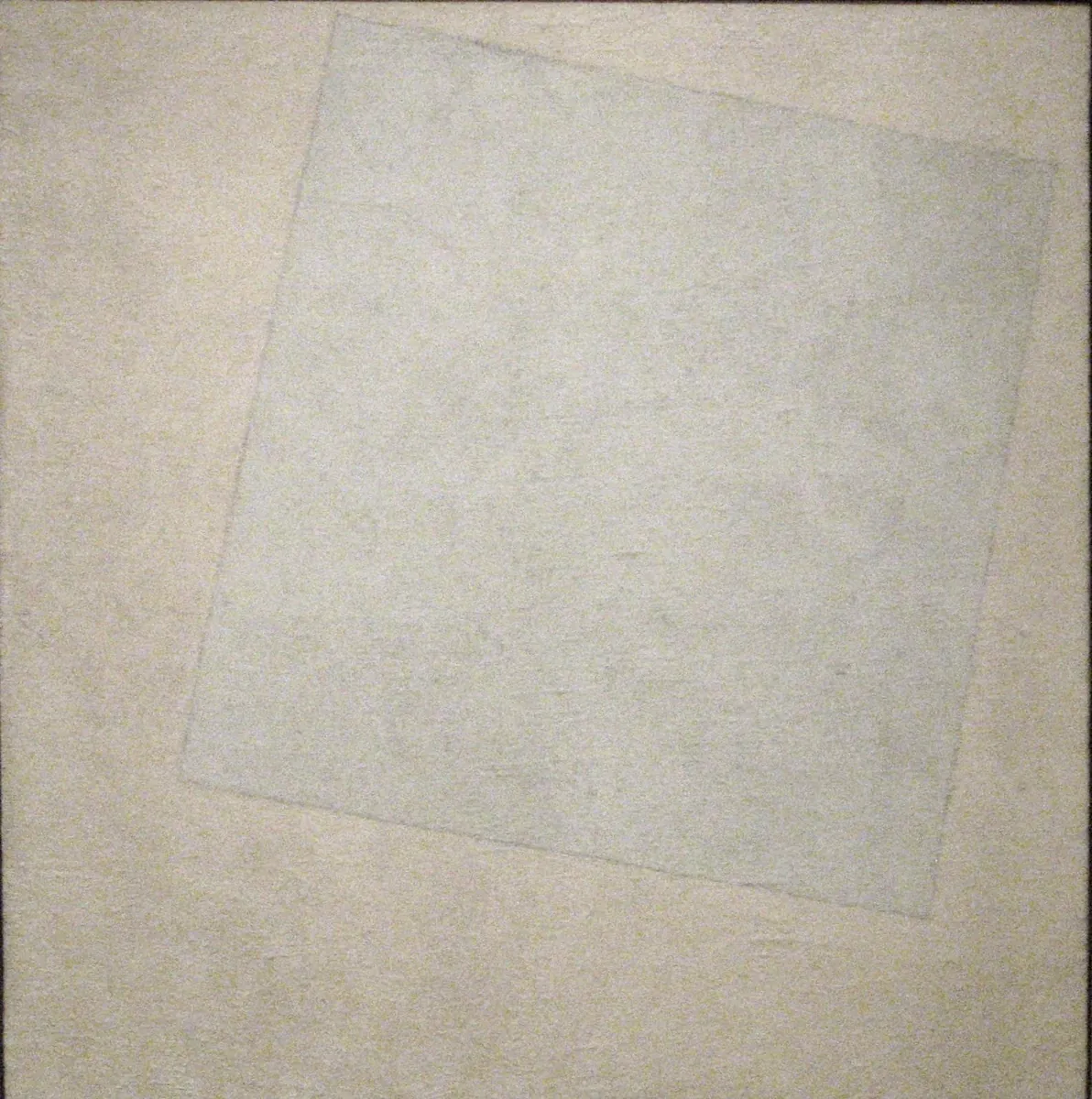
Kazimir Malevich, White on White, 1918
A zero in the date can appear in any sphere. A zero before a digit means a reset: life brings you back to the start of that digit’s theme until you grow up in it. A zero after a digit means expansion: the quality sounds stronger. It is a route: the way life teaches us to grow.
In every sphere, your painting and one path
Look. What do you see? Learn. Who painted it, when and how. Mirror. What in this painting is about you? Step. One small action in your life.
Why the painting is yours, not random
Seeing a painting is a skill, and it can be trained. This was shown by the research of the psychologist Abigail Housen and her method, Visual Thinking Strategies, used today by schools, museums and hospitals. I build on this practice of attentive looking and add my own step: the painting is chosen for you not by a guide but by your date. So your interest is double, in art and in yourself. And what relates to us personally we remember more deeply: psychologists call this the self-reference effect.
What this is
It is self-discovery and training the eye. I offer my reading, and you choose what resonates. It is not therapy and not prediction: a hint, not a fairy tale.
Look.
Sources: MedlinePlus (US National Library of Medicine): chromosomes, mitochondrial DNA · VTS: about the method · Rogers, Kuiper, Kirker, 1977, Journal of Personality and Social Psychology (self-reference effect)
Reviews
“I love this phrase so much: ‘you take yourself with you’. It helps me feel calm and confident anywhere. My personality has ‘build a system’ in it. So I need to start building the system inside myself. I read the site almost every day and understand more and more how important this is for my happy life. Thank you ❤️”
A reader · on personality New
“I’m truly hooked on your work… Almost every day I explore the paintings. I’ve started doing readings for people I know — and I always check their meanings in your method. You’re a magician ✨”
A reader · on the paintings New
“I read and think: what an incredible amount of work, how thoughtfully everything is made — both the content and the technical side. Easy to read, deeply understood.”
A reader · on her first exhibition
“I open your links and cannot tear myself away. Everything is built so well: the psychology and the writing. I feel my mind is not rusting.”
A reader · on the journal
“Your energy could light up cities! So much information, so much of it resonates. I loved the compatibility test.”
A reader · on compatibility
Reviews from letters and voice messages — shared with permission, without names. Write to Tanya ›
My projects on your Home Screen
Add my projects to your phone and open them in one tap, like apps.
Your map is ready. Start with the paintings below, or open your full energy map whenever you like.
Three Notes of Destiny
Day — Personality. Month — Family story. Year — Scale of realisation. Each note offers two artistic perspectives: Light and Shadow. Choose which painting to explore first.
Every life has its own sound. Begin with your first three notes.
Light — strengths and possibilities. Shadow — familiar reactions and difficulties worth exploring. Both paintings are two perspectives on one energy, like light and shadow on one canvas.
A hint, not a fairy tale. Art Historian of the Soul.
Five Areas — Five Fingers
You have heard your first three notes. Now look at the hand: in this artistic interpretation, it brings together five areas of your life.
Personalitybirth day
Family scriptbirth month
Scale of realisationbirth year
Relationships include not only other people but also your relationship with yourself and the world. Health is about your energy, needs and recovery.
What do the five areas mean? · Open
At different moments we may think analytically, rely on intuition, or notice other people’s feelings closely. These are ways of processing experience, not fixed personality types. Which do you recognize in yourself?
Personality — how you express yourself and make choices. Family story — patterns you may recognise from family life. Scale of realisation — the development of your abilities and inner support.
Relationships — how you connect with yourself and others. Health — how you replenish your energy and listen to your needs.
Every area can have both Light and Shadow: qualities to rely on and habits worth exploring more closely.
“Not every thought deserves a place in your mind.”
Two More Sides — Relationships and Health
Relationships and Health. Together with the first three notes, these form five life areas.
You Are More Than One Note
Now explore the complete map: each area has its own components and maternal and paternal lines. Notice the repeating numbers.
Why a hand?
Five fingers represent five areas: index — personality; middle — family script; ring — realisation; little — relationships; thumb — health.
The palm brings them together in the soul mission; the wrist marks the attention point. Each finger contains six programs: 30, plus the soul mission and the attention point — 32. The soul mission unfolds into two additional energies.
The idea grew from a star-shaped calculation. A star is far away; a hand is right here.
Based on Tanya Taina’s deposited work “Star of the Hand” (KOPIRUS, 22 May 2025).
My responses and notes
My responses and notes. Everything you write and mark is saved only on your phone.
Additional Observations
Relationships, health and additional questions, at your own pace.
The little finger and thumb of your hand
Deeper: the flight of life
Zero in your date and life’s tests in each digit: how life helps you grow
More about the number of your day
Each note has a limit of 1,200 characters. Your answers are included in the PDF, with extra pages when needed. Notes are saved in this browser on this device. To keep a backup, download your PDF or copy your notes before switching devices or clearing browser data.
How to read my handYour date: three notes and what sounds brightest
The next chord in your map invites reflection on meaning and direction.
Hall 4 · Where not to go
The fatal mistake — where temptation may lead
The fatal mistake is a direction not to take. Everyone has their own, and knowing it by sight means choosing calmly.
Some paths attract us more than others. They may promise love, admiration, safety or success — yet sometimes pull us away from our own values. These paintings offer symbolic themes for reflection, not predictions.
Start with your personal calculation: see where the energy appears, then explore three different paintings and the questions they raise.
Where does this energy appear in your calculation?
Enter your birth date to reveal your matching energies and paintings.
Energy 3 · Dependence on admiration and other people’s approval
Psychological perspective · a theme to explore
Recognition at any cost
What may attract you
To be noticed, desired, impeccable — to feel valued.
Where the trap lies
When other people’s opinions become more important than your own sense of who you are.
What to notice
You replay how you looked to others; an achievement stops feeling satisfying unless someone praises it.
A question for yourself: What would I choose if nobody were watching or judging?
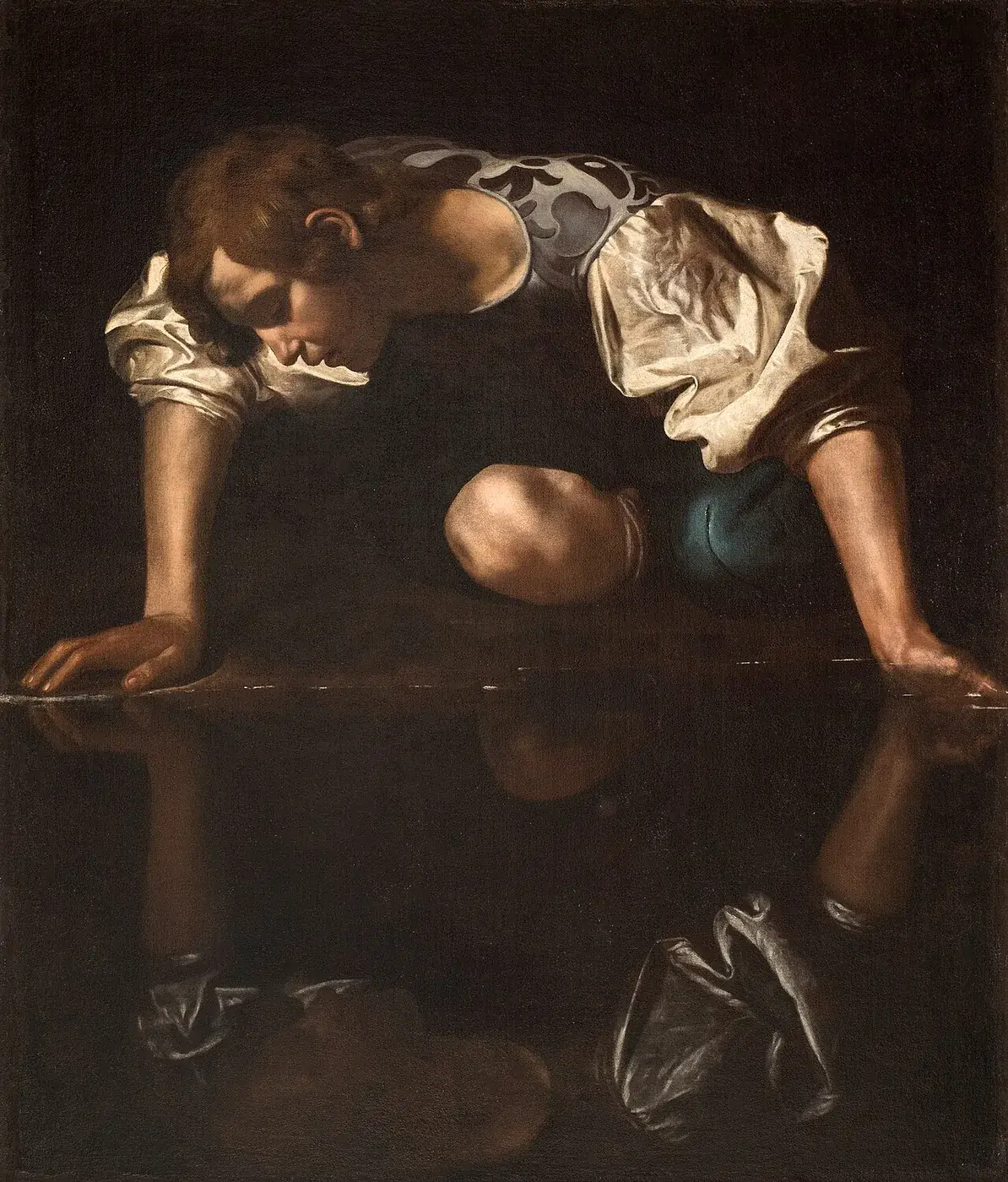
Narcissus
Caravaggio (attribution disputed) · c. 1597–1599
About the painting: history and details
A young man from an ancient myth bends over the water, captivated by his reflection. Caravaggio reduces the scene to an almost closed circle: the figure and its reflection seem to exist only for each other.
The possible trap
Not every moment of self-attention is vanity. But a reflection can become a trap if it is the only place you seek confirmation of your worth.
Recognise something familiar?
Can even a good day feel disappointing until someone notices your efforts?
A direction worth reconsidering
Whose approval are you waiting for before allowing yourself to feel pleased?
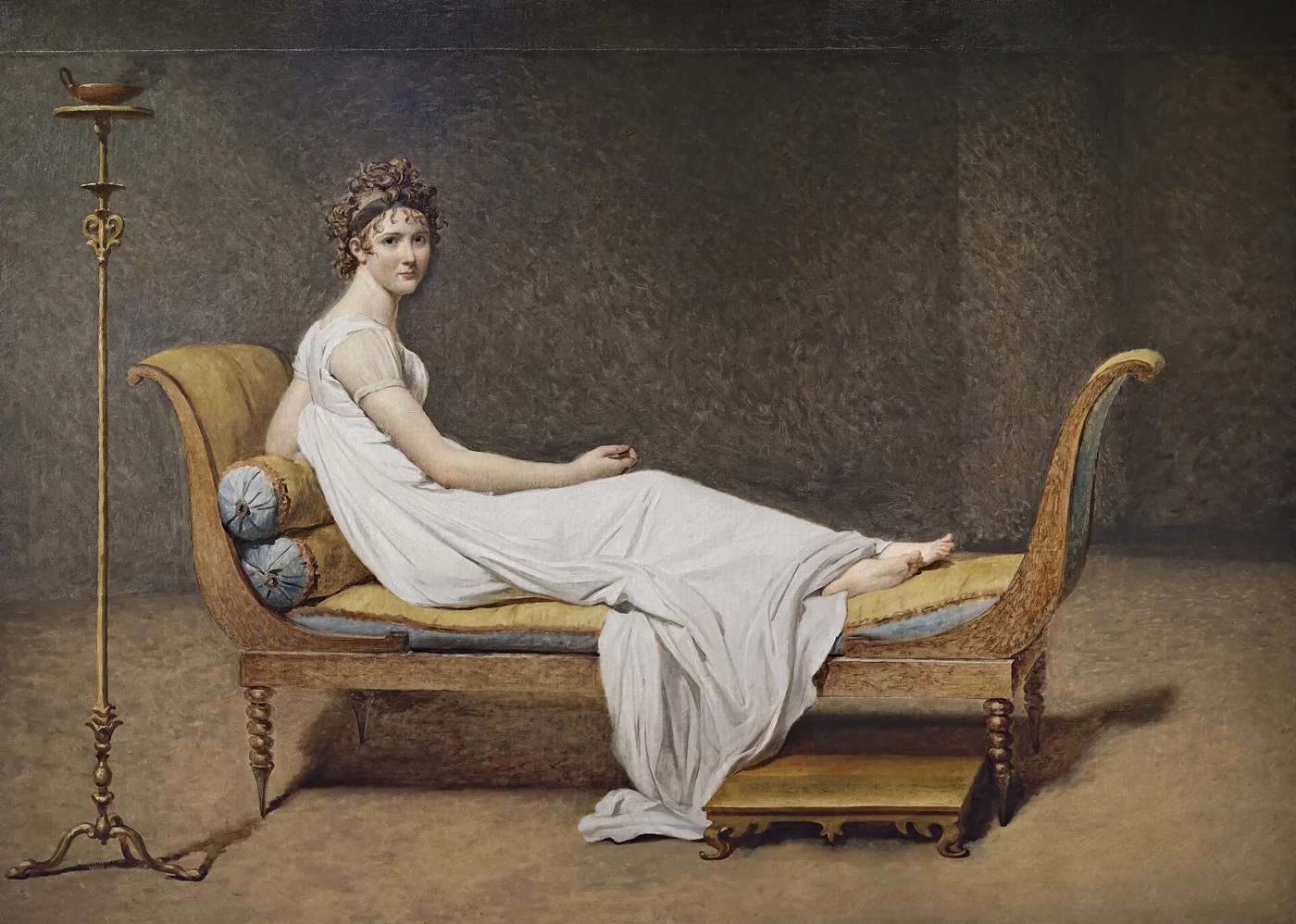
Portrait of Madame Récamier
Jacques-Louis David · 1800
About the painting: history and details
David began the portrait in 1800 and never finished it: the sitter disliked its cold, almost statuesque image and commissioned a new one from his pupil Gérard. David replied that “ladies have their caprices; so do painters” and kept the picture. After his death the state bought it, and today it is in the Louvre.
A public image can be both a source of power and a cage: the gaze of others begins to dictate who you should be.
Recognise something familiar?
Have you ever changed a decision simply because you imagined how other people would judge it?
A direction worth reconsidering
What would you choose if nobody were giving you marks?
The Lady of Shalott
John William Waterhouse · 1888
About the painting: history and details
The story comes from Alfred Tennyson’s poem: the heroine leaves her tower to meet the world, breaking a prohibition. The boat, woven cloth and autumn landscape lend tragic beauty to her choice.
The possible trap
We might see the cost of a life constrained by an image that seems impossible to break. Yet the heroine also dares to step beyond her familiar role.
Recognise something familiar?
Are you postponing real life while waiting to become an ideal version of yourself?
A direction worth reconsidering
Do not let the pursuit of a flawless image forbid you from having experiences of your own.
Energy 6 · Losing yourself in love
Psychological perspective · a theme to explore
When love makes it easy to lose yourself
What may attract you
Closeness, intense feelings, the promise of being needed and never being alone.
Where the trap lies
When maintaining a relationship increasingly requires you to surrender your boundaries and wishes.
What to notice
You agree when you would rather say no, or postpone what matters to avoid disappointing someone.
A question for yourself: Can I remain myself even when I love someone deeply?
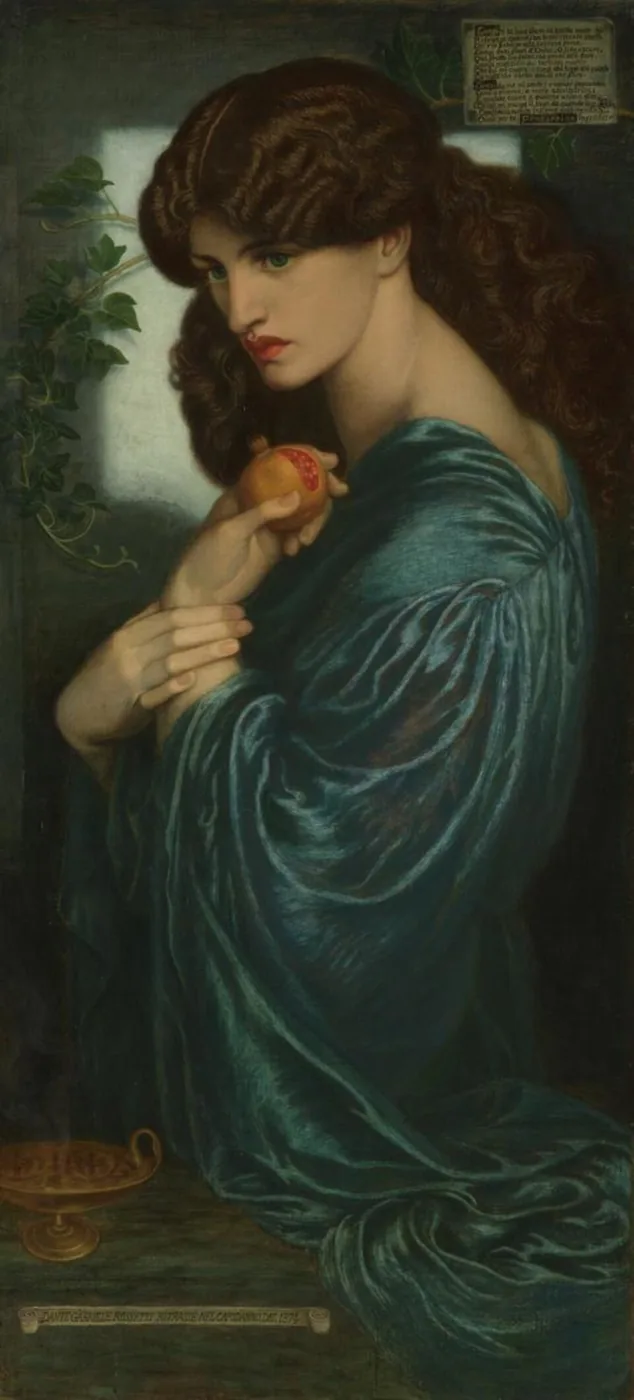
Proserpine
Dante Gabriel Rossetti · 1874 (Tate version)
About the painting: history and details
Rossetti returned to Proserpine repeatedly. The pomegranate recalls the myth: after eating its seeds in the underworld, she remains bound to that realm. The light behind her hints at freedom beyond reach.
The possible trap
Love and attachment become troubling when they demand that you forget your own wishes and boundaries.
Recognise something familiar?
Have you gradually given up things you once loved for the sake of a relationship?
A direction worth reconsidering
Ask yourself what parts of your own world must remain yours, even in intimacy.
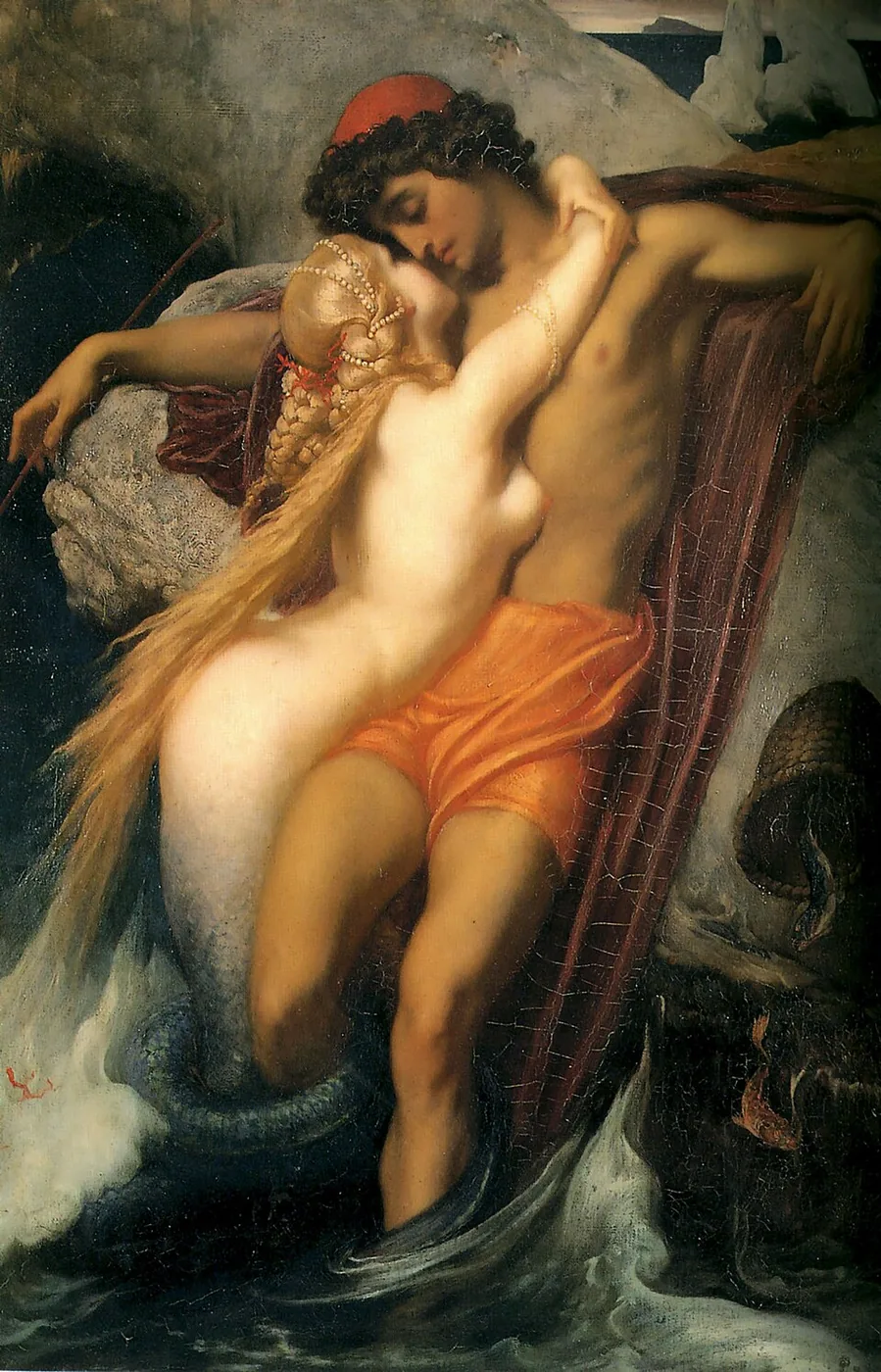
The Fisherman and the Siren
Frederic Leighton · c. 1856–1858
About the painting: history and details
Leighton explores the motif of a perilous sea enchantment. The entwined figures blur the boundary between tenderness and danger; the water becomes part of the story.
The possible trap
Attraction can be so powerful that we stop noticing where it is leading us.
Recognise something familiar?
Have you ever felt that an intense emotion mattered more than every other circumstance?
A direction worth reconsidering
Before following that pull, check whether you still have freedom to choose.
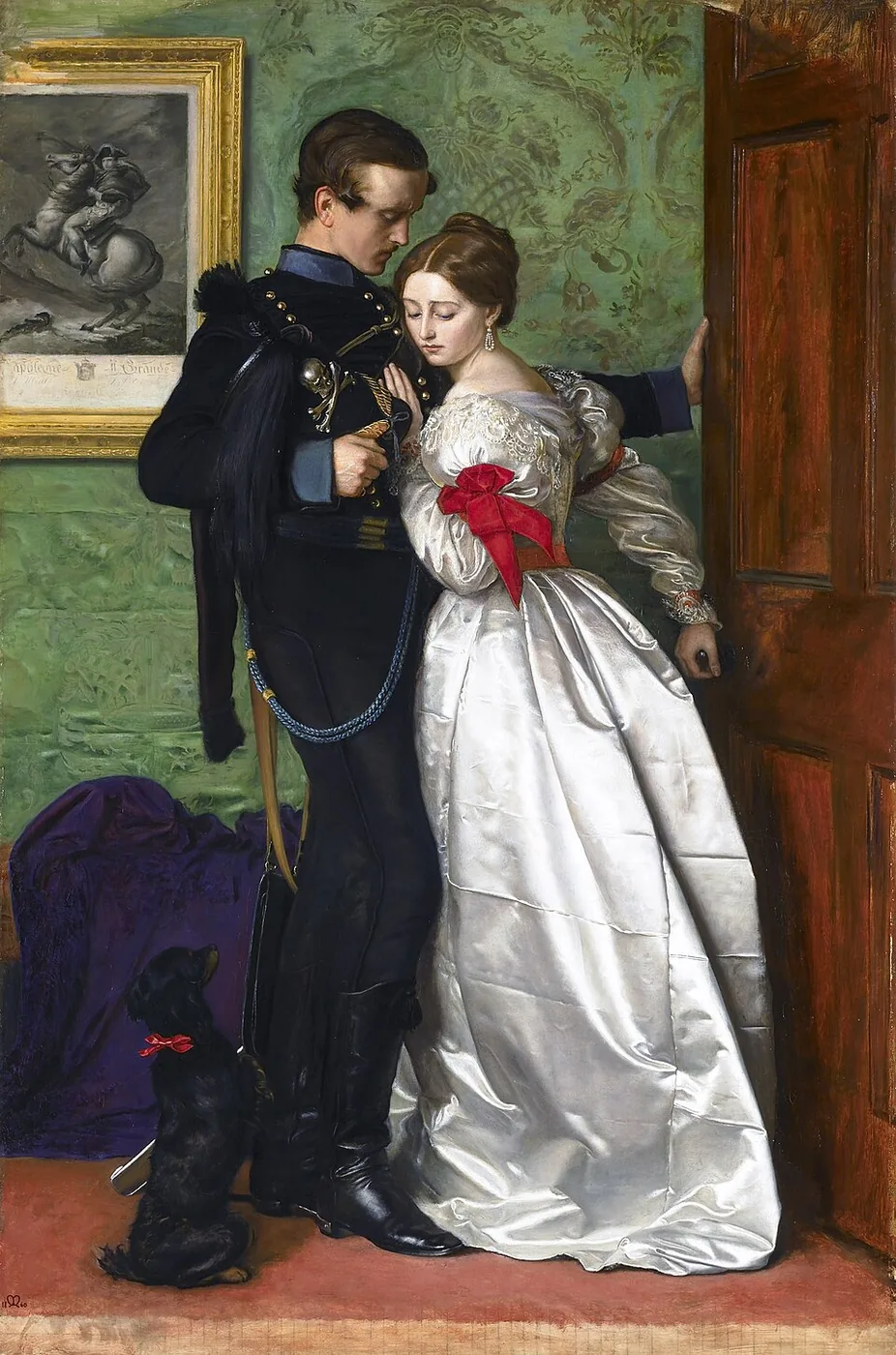
The Black Brunswicker
John Everett Millais · 1860
About the painting: history and details
This farewell scene evokes the Napoleonic Wars. A soldier is about to leave; a woman holds him back at the doorway. An image of Napoleon on the wall heightens the historical tension.
The possible trap
Even love does not erase the different aims and responsibilities of two people.
Recognise something familiar?
Have you tried to hold someone back after they had already made a decision?
A direction worth reconsidering
Notice the difference between asking for closeness and trying to control another person’s choice.
Energy 9 · Closing yourself off from the world
Psychological perspective · a theme to explore
When solitude becomes a wall
What may attract you
Quiet, independence, and the freedom not to explain yourself to anyone.
Where the trap lies
When a restorative break from people turns into a habit of avoiding connection and support.
What to notice
You keep saying “I can manage alone,” even when things are difficult and you want to be heard.
A question for yourself: Where do I need quiet, and where do I need a real conversation?
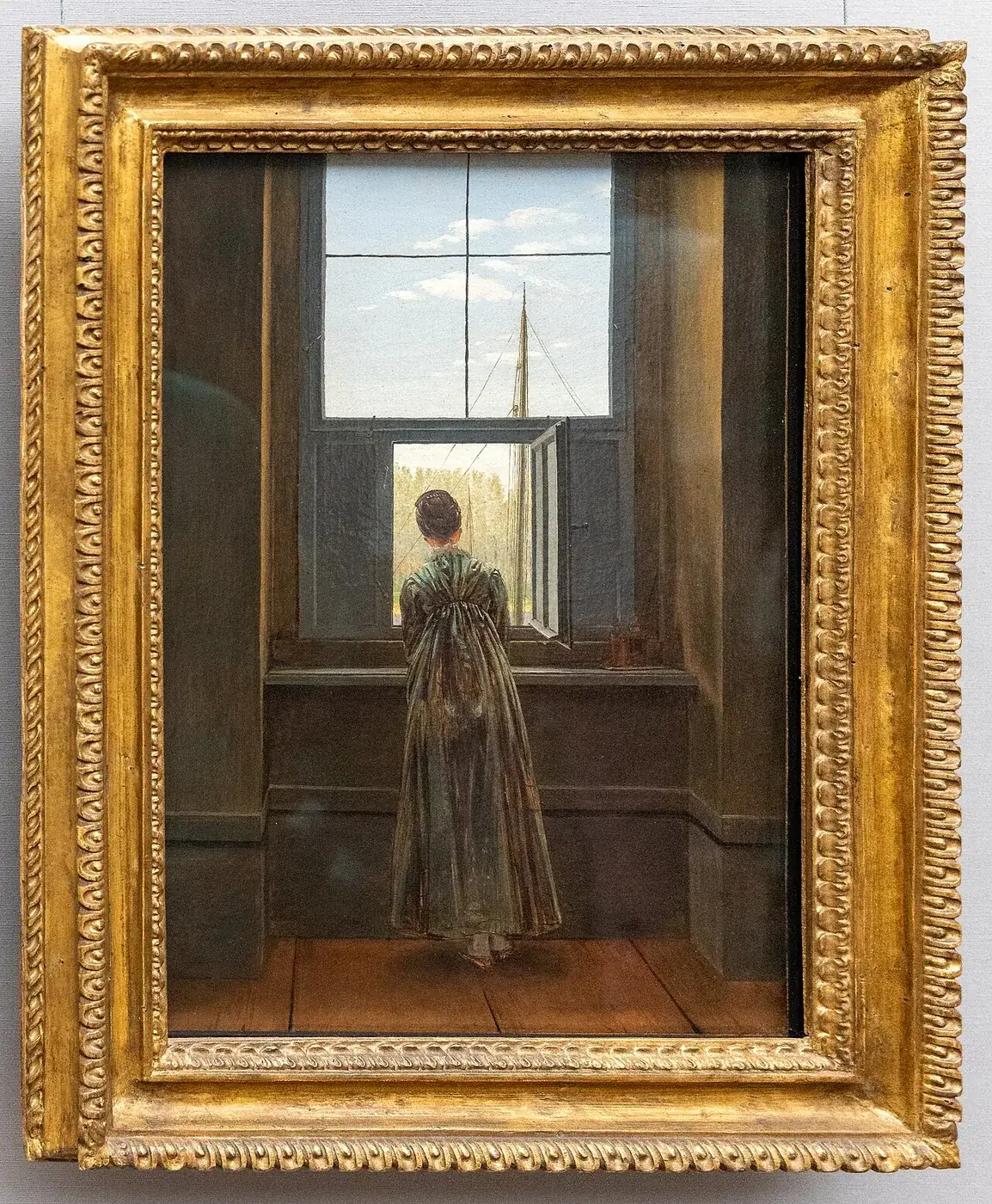
Woman at a Window
Caspar David Friedrich · 1822
About the painting: history and details
A woman stands with her back to the viewer before an open window. Friedrich transforms an ordinary room into a meeting place between an inner world and the world beyond.
The possible trap
Solitude can nourish us, yet sometimes it quietly becomes a life we merely observe from a distance.
Recognise something familiar?
Is it sometimes easier to imagine change than to take the first step?
A direction worth reconsidering
What small action today might help you stop being only an observer?
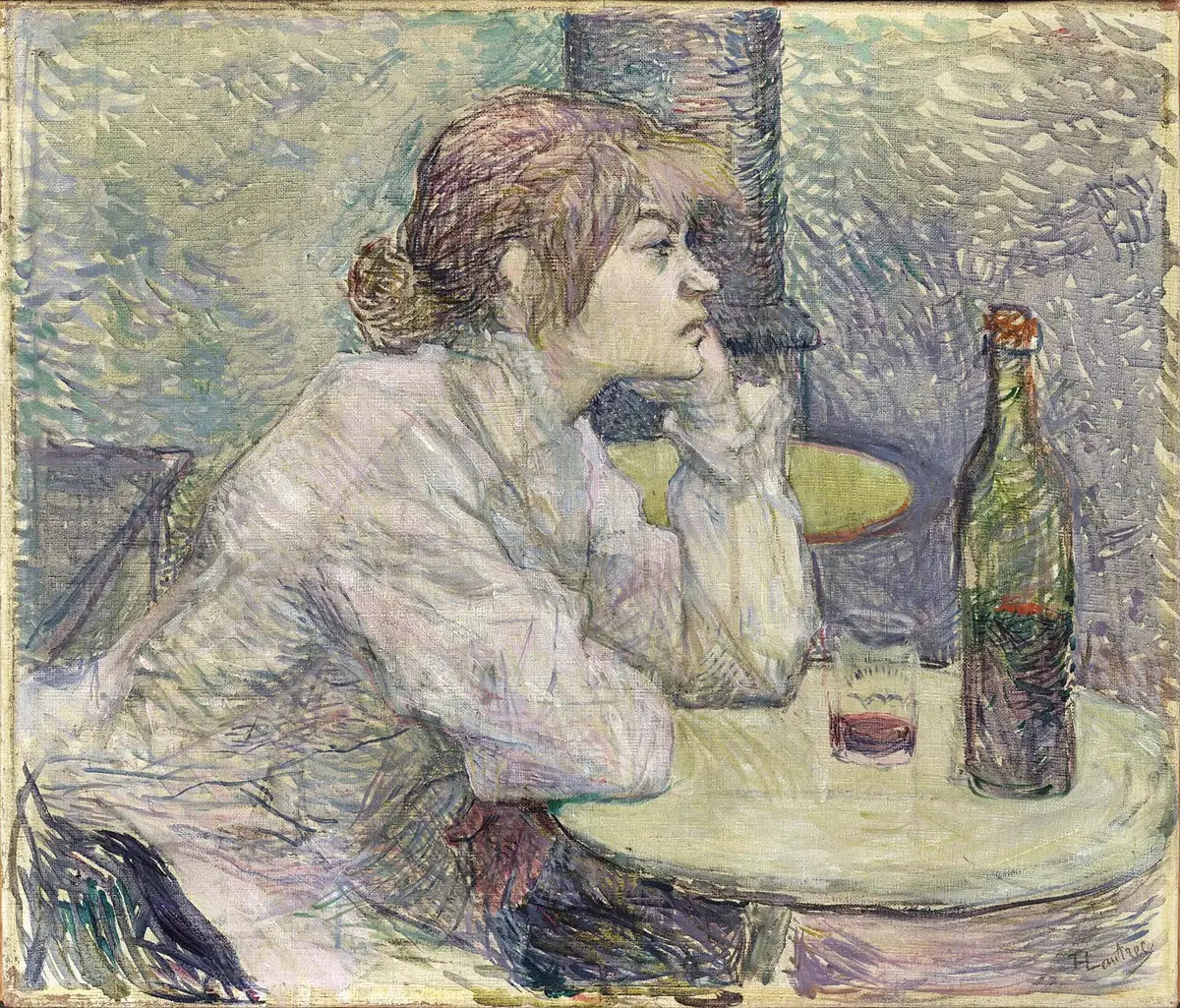
The Hangover (Suzanne Valadon)
Henri de Toulouse-Lautrec · 1887–1889
About the painting: history and details
The model was Suzanne Valadon, a Montmartre model who later became a painter herself. Lautrec painted her in 1887–1889 in a café: alone, chin on hand, looking away. The painting is in the Harvard Art Museums.
Loneliness is not always about being physically alone. Sometimes we stop reaching out even when we need connection.
Recognise something familiar?
Have you felt alone among other people but hesitated to speak to anyone?
A direction worth reconsidering
Do not assume silence is the only way to preserve yourself.
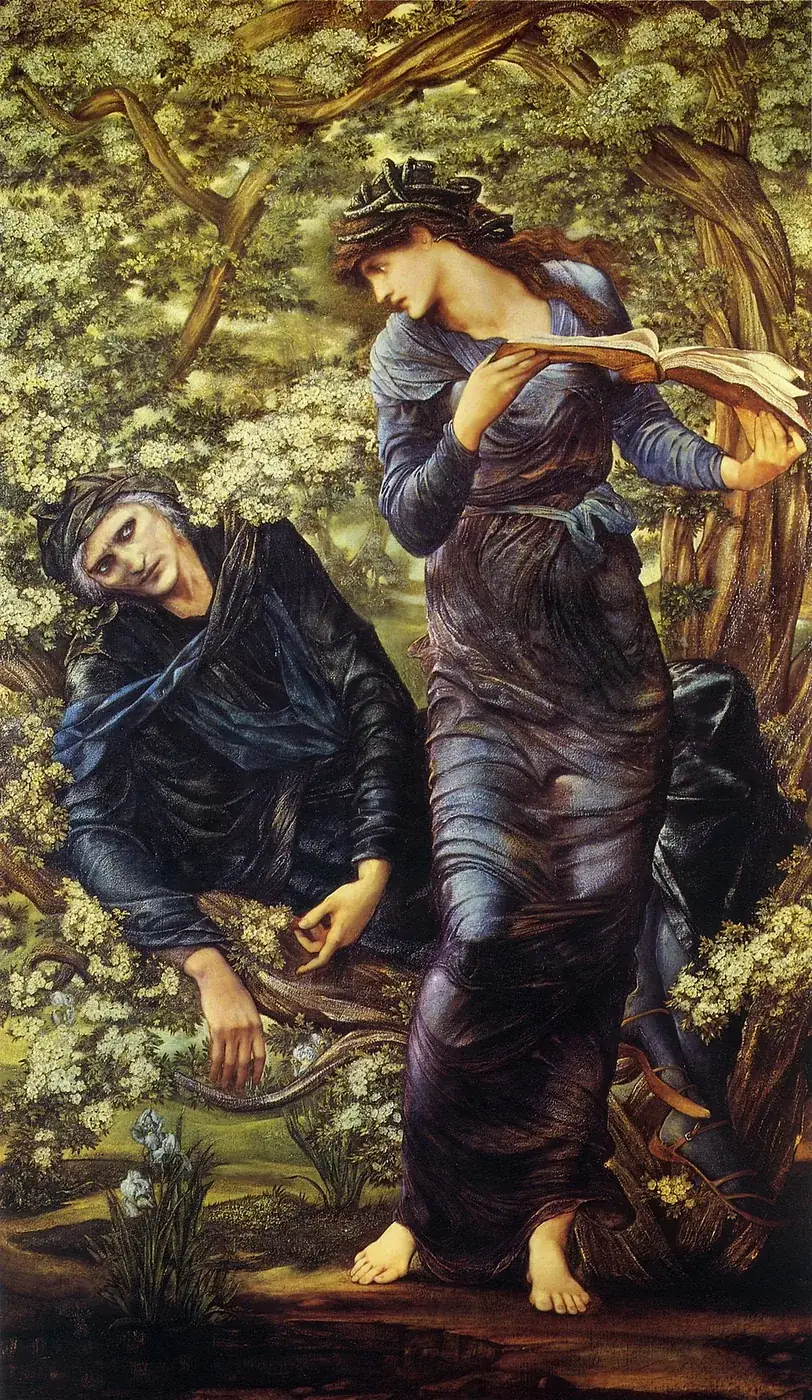
The Beguiling of Merlin
Edward Burne-Jones · 1872–1877
About the painting: history and details
Burne-Jones draws on Arthurian legend: Nimue enchants Merlin. Twisting branches and interwoven figures create a spellbound space.
The possible trap
Confinement is not always physical: we can become prisoners of our own beliefs and familiar explanations.
Recognise something familiar?
Do you keep repeating a story about yourself that leaves no room for new possibilities?
A direction worth reconsidering
Try testing an old conclusion about yourself against actual evidence.
Energy 12 · Forgetting yourself for the sake of others
Psychological perspective · a theme to explore
Waiting and self-denial
What may attract you
Being patient, loyal and indispensable, trusting that your efforts will eventually be appreciated.
Where the trap lies
When waiting or caring for others indefinitely postpones your own life.
What to notice
Once again, you put your plans off because everyone else’s needs seem more urgent.
A question for yourself: What matters to me that I could begin right now?
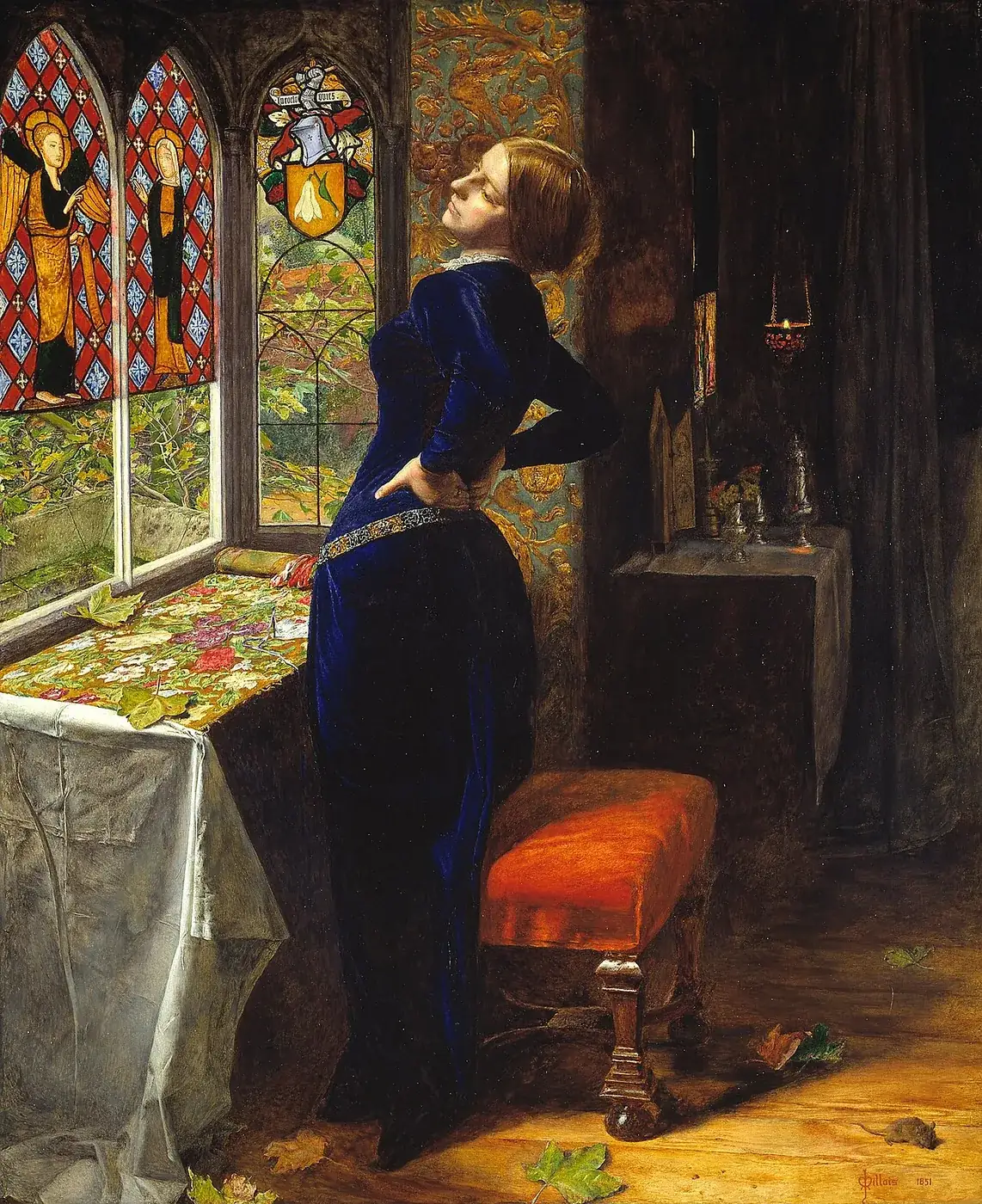
Mariana
John Everett Millais · 1851
About the painting: history and details
Inspired by Shakespeare’s Measure for Measure and Tennyson’s poetry, Mariana pauses her work and stretches beside a stained-glass window. Autumn leaves suggest the passage of time.
The possible trap
Waiting for another person can quietly crowd out your own life.
Recognise something familiar?
Have all your plans ever depended on whether someone would appear or change their mind?
A direction worth reconsidering
What could you reclaim without waiting for somebody else’s answer?
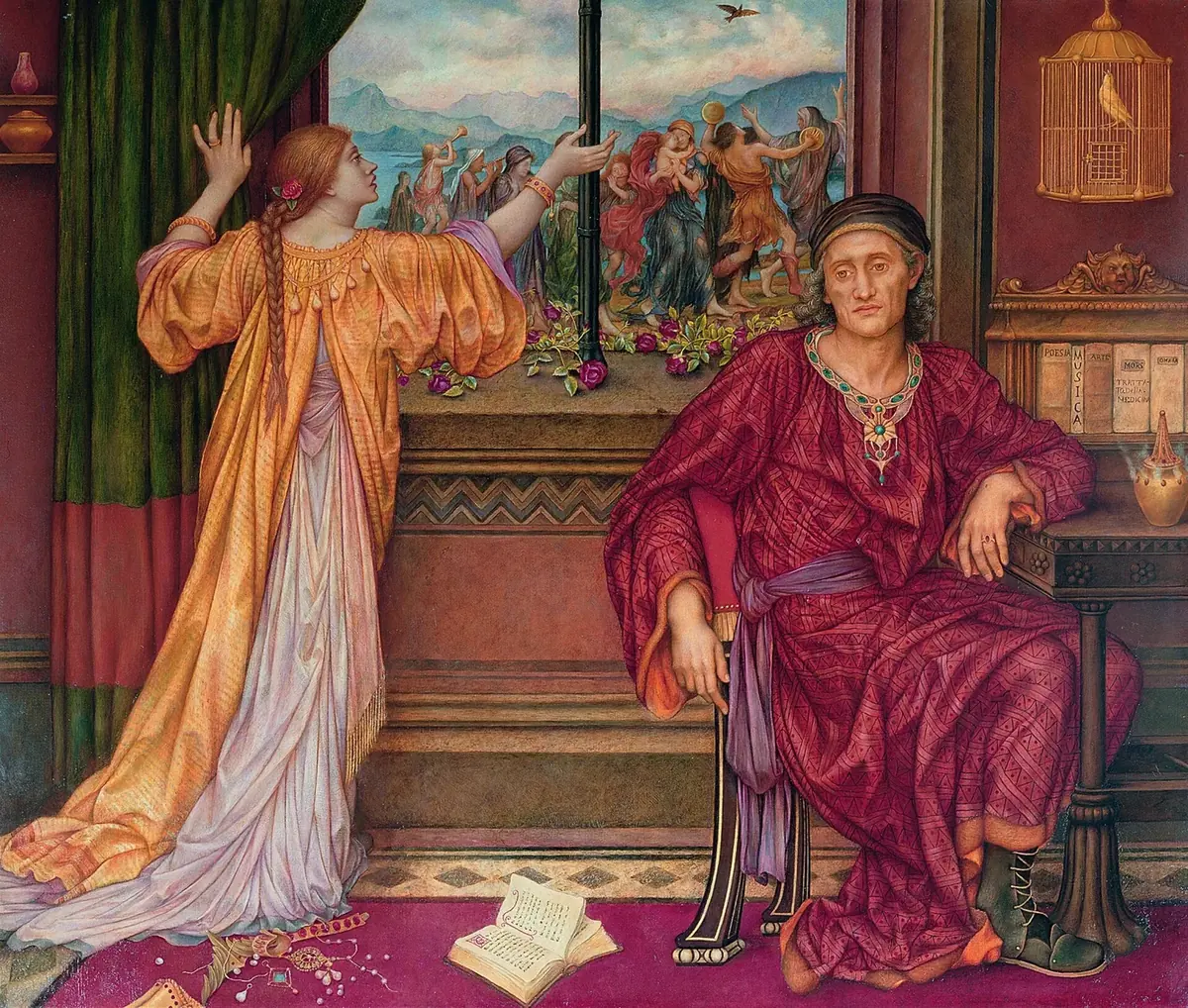
The Gilded Cage
Evelyn De Morgan · about 1901–1902
About the painting: history and details
The painting contrasts an enclosed interior and a richly dressed man with the lively movement visible beyond the window. De Morgan makes freedom a matter of choice, not luxury.
The possible trap
Care and comfort should not become excuses for abandoning your own aspirations.
Recognise something familiar?
Have you accepted a role that suited others while feeling constrained by it yourself?
A direction worth reconsidering
Ask what looks comfortable in your life but does not make you feel free.
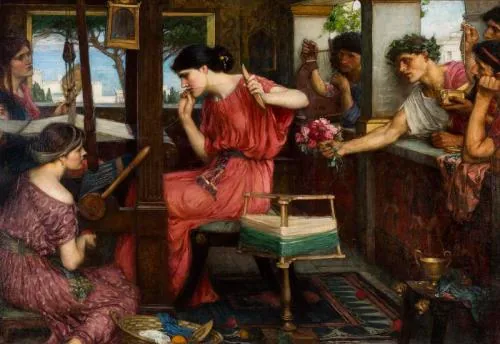
Penelope and the Suitors
John William Waterhouse · 1911–1912
About the painting: history and details
Penelope from the Odyssey weaves her cloth to postpone choosing a new husband while Odysseus is away. Waterhouse contrasts her concentrated work with the suitors’ persistent attention.
The possible trap
Devotion is not the same as the complete disappearance of your own needs.
Recognise something familiar?
When you wait for or support someone, is there still room in your schedule for you?
A direction worth reconsidering
Do not measure the worth of your love by how much you deny yourself.
Energy 15 · Becoming captive to your own desires
Psychological perspective · a theme to explore
The pull of desire and the temptation to control
What may attract you
Intensity, power over circumstances, pleasure and the feeling of being exceptional.
Where the trap lies
When the urge to possess or control outweighs respect for yourself and others.
What to notice
It is hard to let go; you want your way even when the cost is becoming too high.
A question for yourself: What am I trying to hold on to — and at what price?
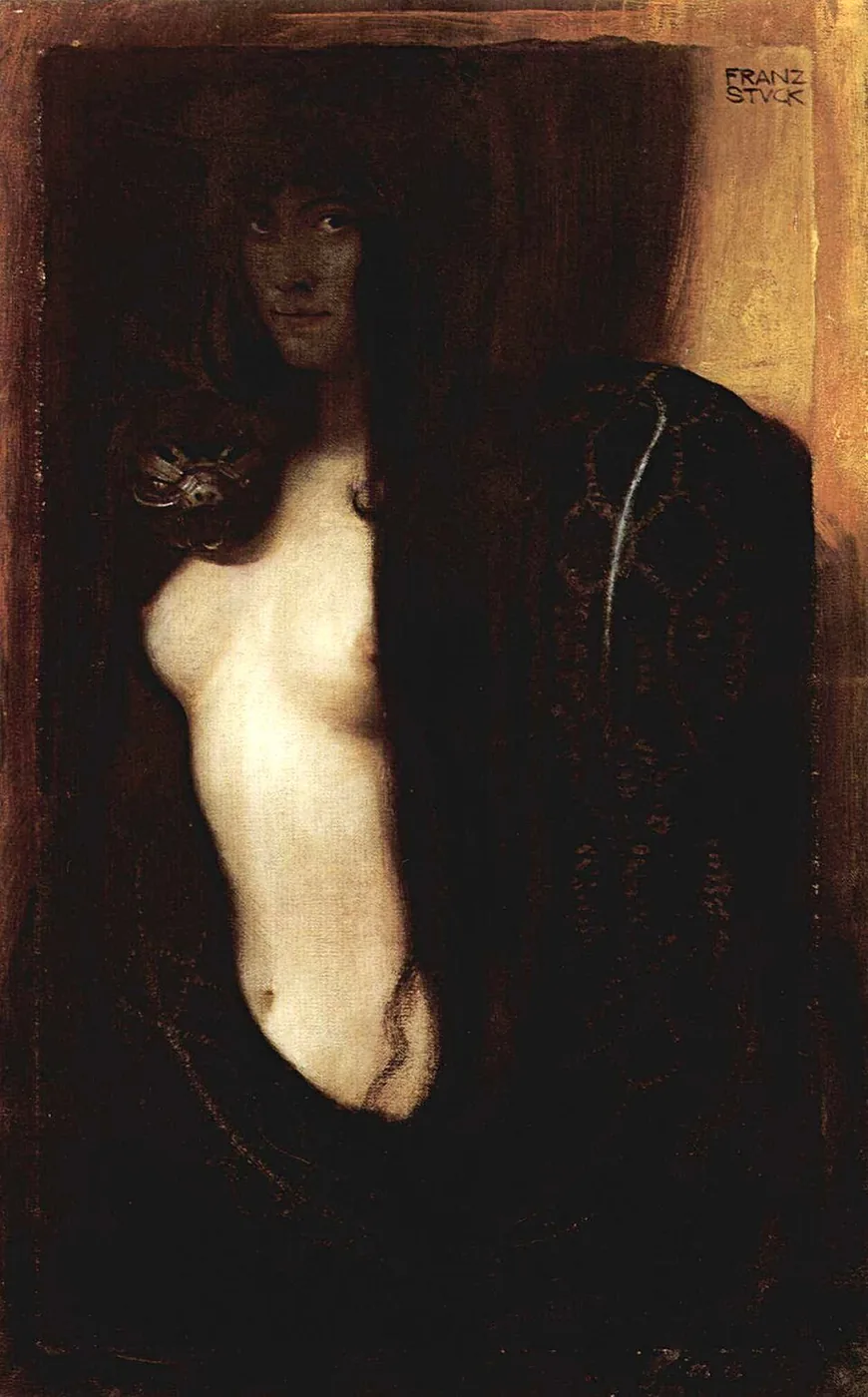
The Sin
Franz von Stuck · 1893
About the painting: history and details
A woman and a snake emerge from deep darkness; luminous skin contrasts sharply with the nearly black background. This is a characteristic Symbolist image of attraction and danger.
The possible trap
A powerful desire can obscure its consequences, especially when prohibition makes it more alluring.
Recognise something familiar?
Have you known the likely cost of a decision but refused to think about it?
A direction worth reconsidering
Do not forbid yourself to want things — consider who will pay the price of getting them.
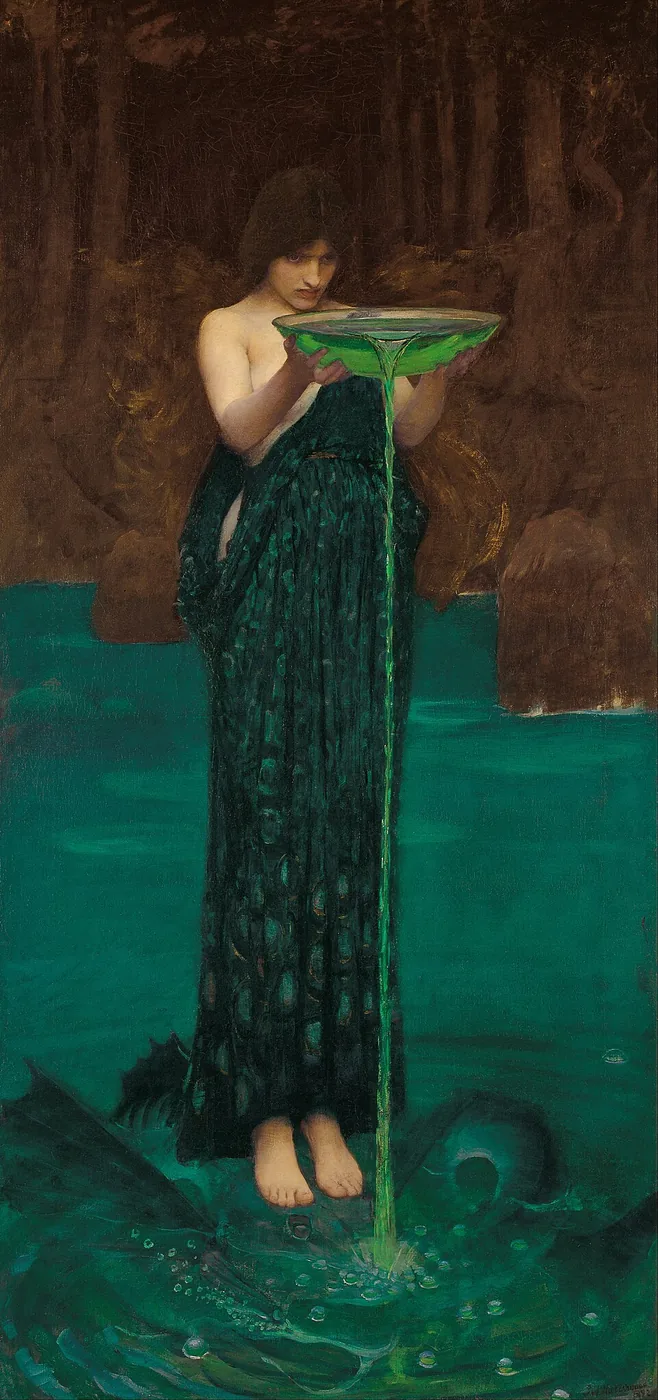
Circe Invidiosa
John William Waterhouse · 1892
About the painting: history and details
The story comes from Ovid: the sorceress Circe poisons the water out of jealousy towards Scylla. The poisonous green stream makes a destructive feeling almost tangible.
The possible trap
When jealousy and resentment begin to govern our actions, someone else’s story becomes a battleground.
Recognise something familiar?
Have you wanted to hurt someone in return just to regain a sense of control?
A direction worth reconsidering
Before acting out of jealousy, name the feeling and separate it from the action.
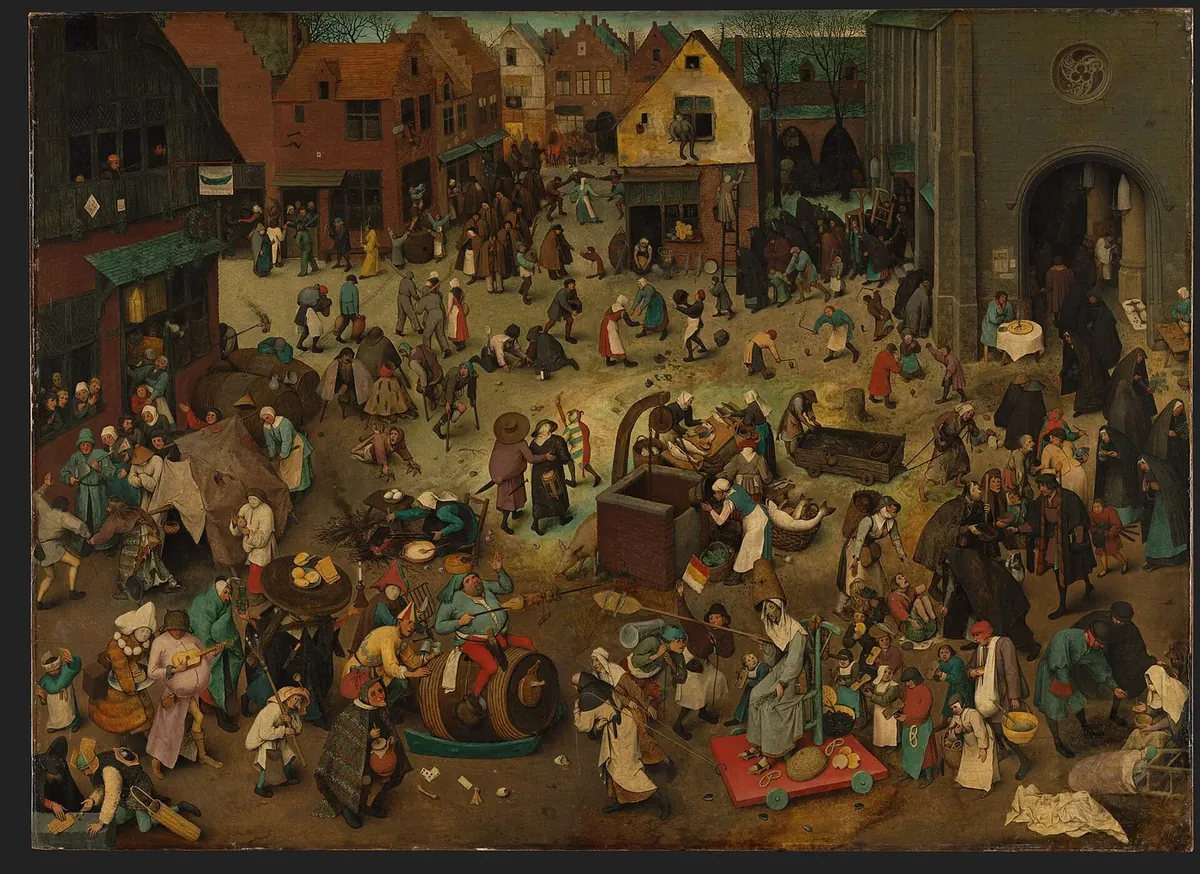
The Fight Between Carnival and Lent
Pieter Bruegel the Elder · 1559
About the painting: history and details
Bruegel fills a town square with scenes of celebration and religious abstinence. Two allegorical processions meet in the centre while everyday life continues around them.
The possible trap
The trap is not only excess: it can also be an endless struggle between “I want to” and “I must not.”
Recognise something familiar?
Do you swing between strict prohibitions and the urge to make up for everything at once?
A direction worth reconsidering
Look for a sustainable balance rather than yet another extreme.
Energy 18 · Believing your fears and illusions
Psychological perspective · a theme to explore
A world of guesses and anxious stories
What may attract you
Mystery, intuition and the wish to decipher hidden meanings before anything happens.
Where the trap lies
When assumptions begin to sound more convincing than verified facts.
What to notice
You return to the same conversation and worry more and more about things you do not actually know.
A question for yourself: What do I know for certain, and what am I only assuming?
The Moon moves ocean tides without touching the water. Our thoughts, too, can shape where we place our attention and how we choose. Listen to yourself, while noticing the difference between intuition and an anxious assumption.
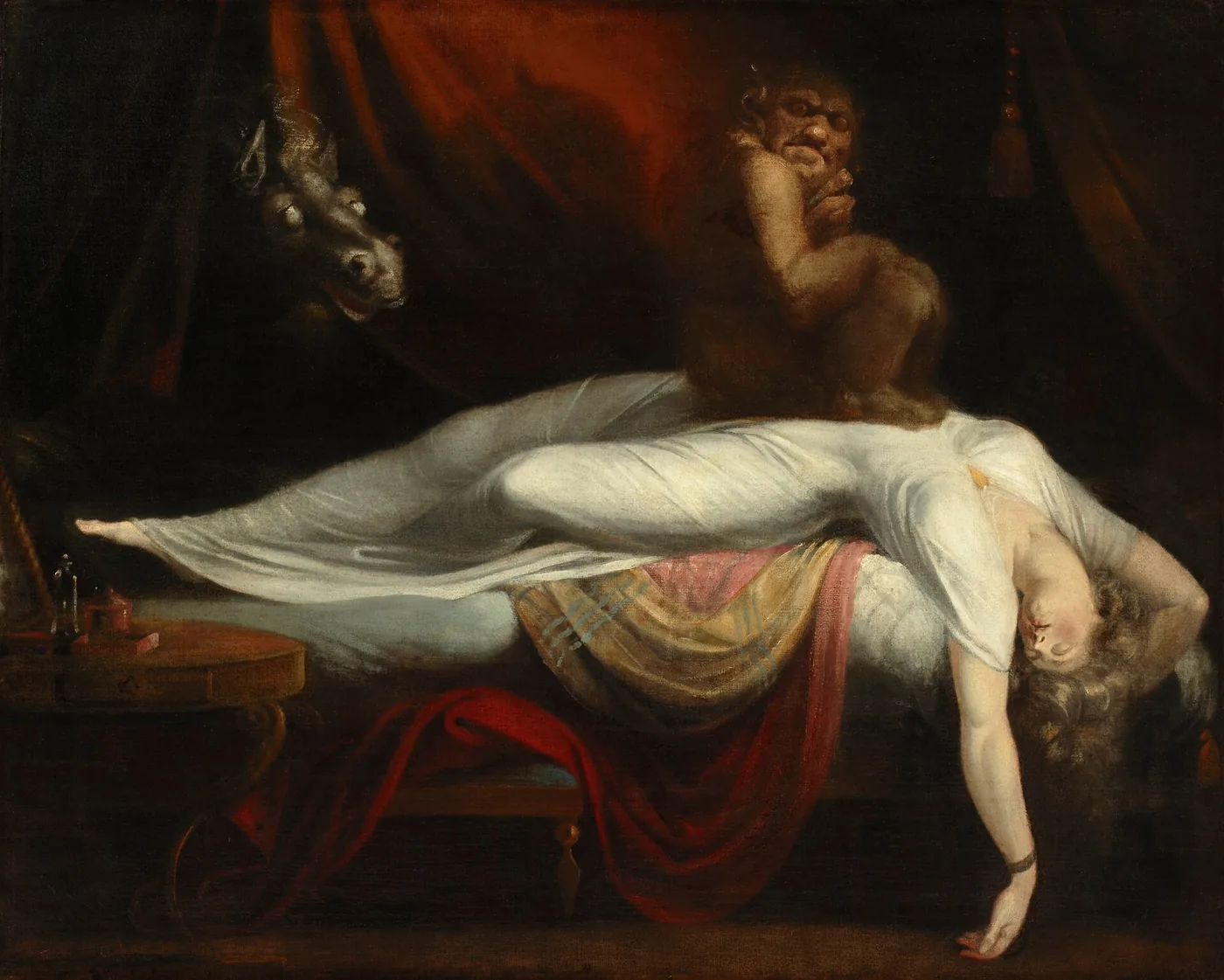
The Nightmare
Henry Fuseli · 1781
About the painting: history and details
A sleeping woman, a demonic figure on her chest and a horse’s head create a disturbing, almost theatrical scene. Fuseli explores nocturnal visions rather than depicting a literal event.
The possible trap
Fear can feel convincing even when the story behind it exists only in the imagination.
Recognise something familiar?
Can something you fear might happen feel more frightening than what is actually taking place?
A direction worth reconsidering
Separate what you can observe from the story fear has added.
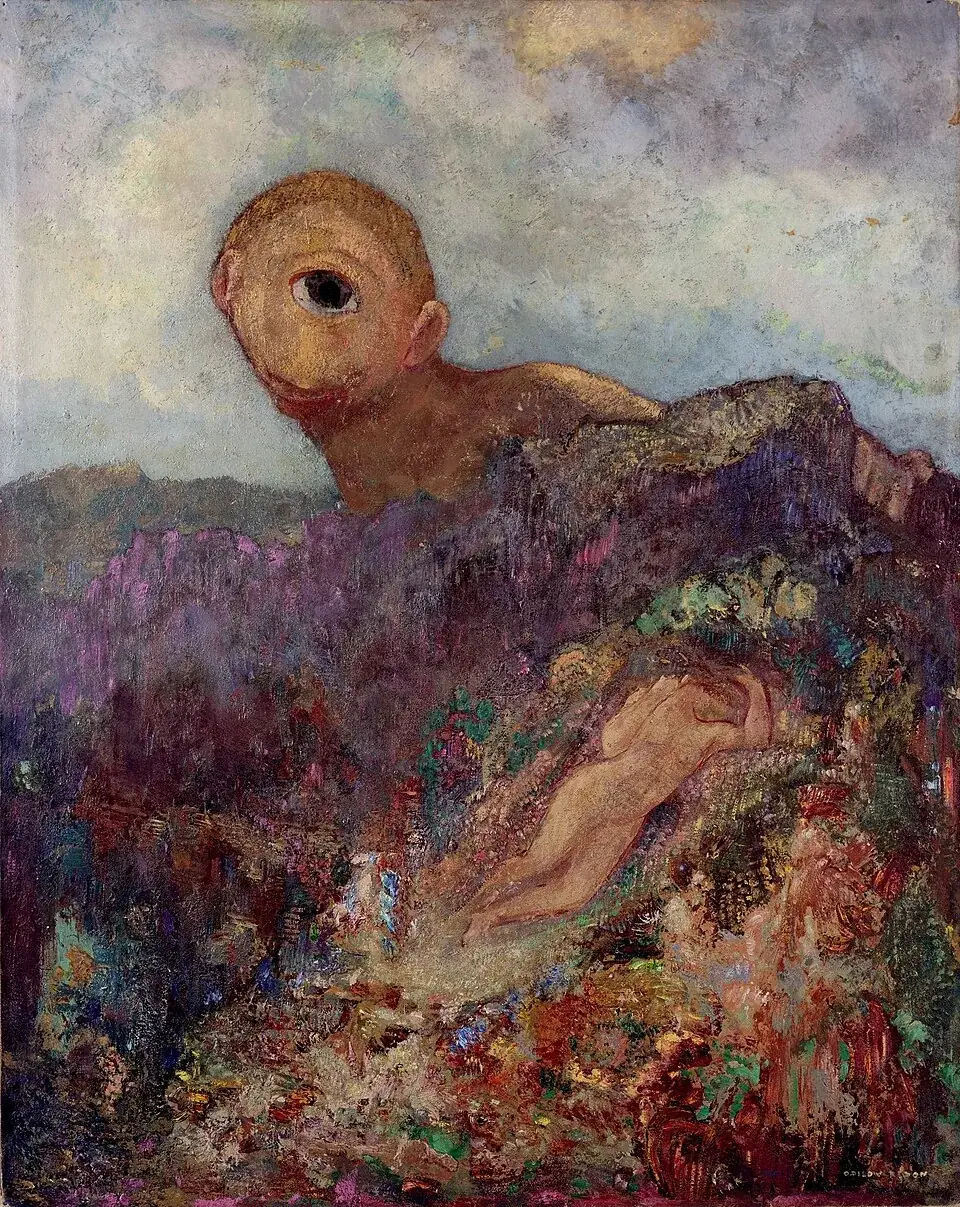
The Cyclops
Odilon Redon · c. 1914
About the painting: history and details
A huge one-eyed giant peers over a rock towards a sleeping figure. Redon turns a mythological subject into a mysterious space between dreaming and fantasy.
The possible trap
Uncertainty is easily filled with our own guesses, whether frightening or enticing.
Recognise something familiar?
Have you ever treated a guess about someone else’s feelings as an established fact?
A direction worth reconsidering
When you do not know, leave room for a question rather than a confident conclusion.
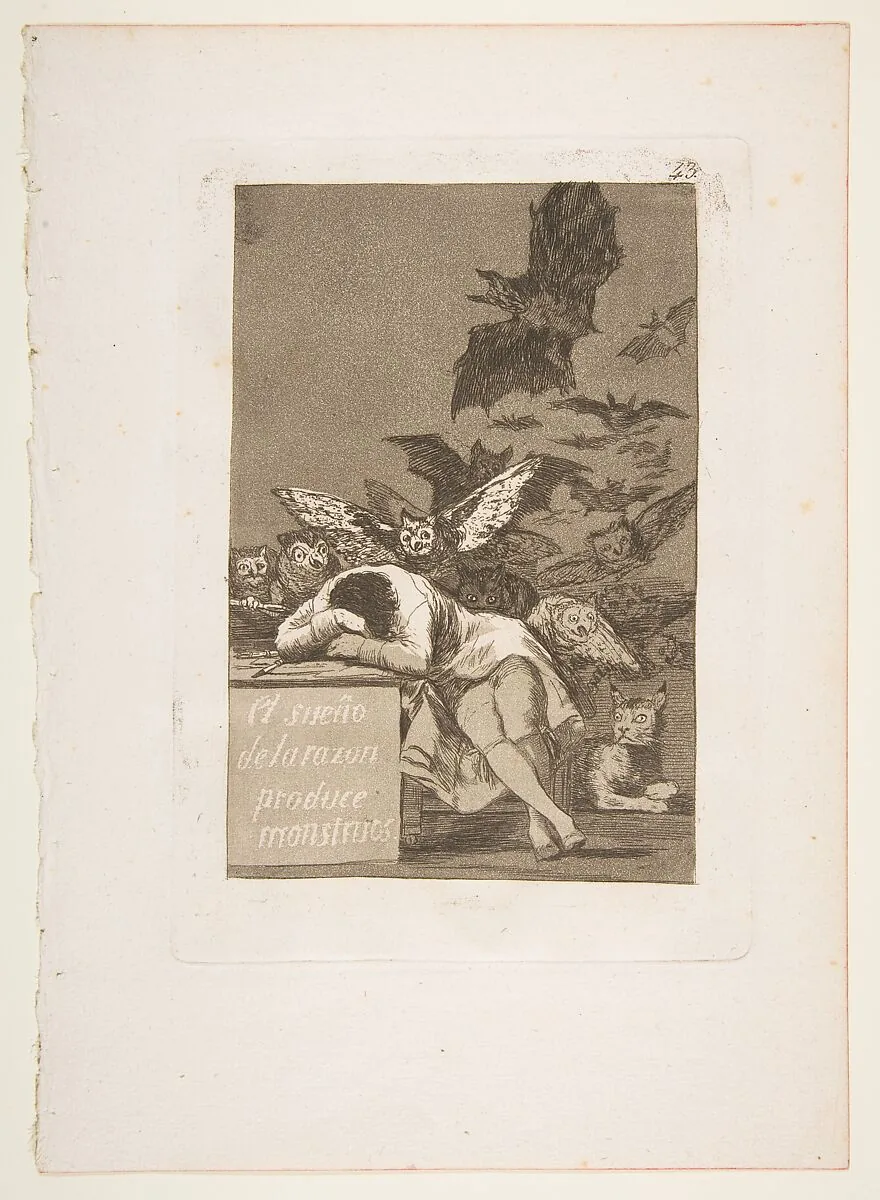
The Sleep of Reason Produces Monsters
Francisco Goya · 1799, etching and aquatint
About the painting: history and details
Plate 43 of Goya’s Los Caprichos shows a sleeping figure surrounded by creatures of the night. Its caption invites reflection on reason and imagination; this is a print, not an oil painting.
The possible trap
Without checking reality, anxious images can begin to feel like the only possible explanation.
Recognise something familiar?
Has a “what if?” ever quietly turned into “this is definitely going to happen”?
A direction worth reconsidering
Check your assumptions before making decisions based on them.
Energy 21 · Living by someone else’s idea of success
Psychological perspective · a theme to explore
A grand ambition that can lose its balance
What may attract you
Scale, recognition, the urge to do everything and achieve a perfect result.
Where the trap lies
When perfectionism prevents you from noticing real achievements and the limits of your energy.
What to notice
You take on more and more, while everything you finish feels insufficient.
A question for yourself: What is already good enough — and where is it time to stop?
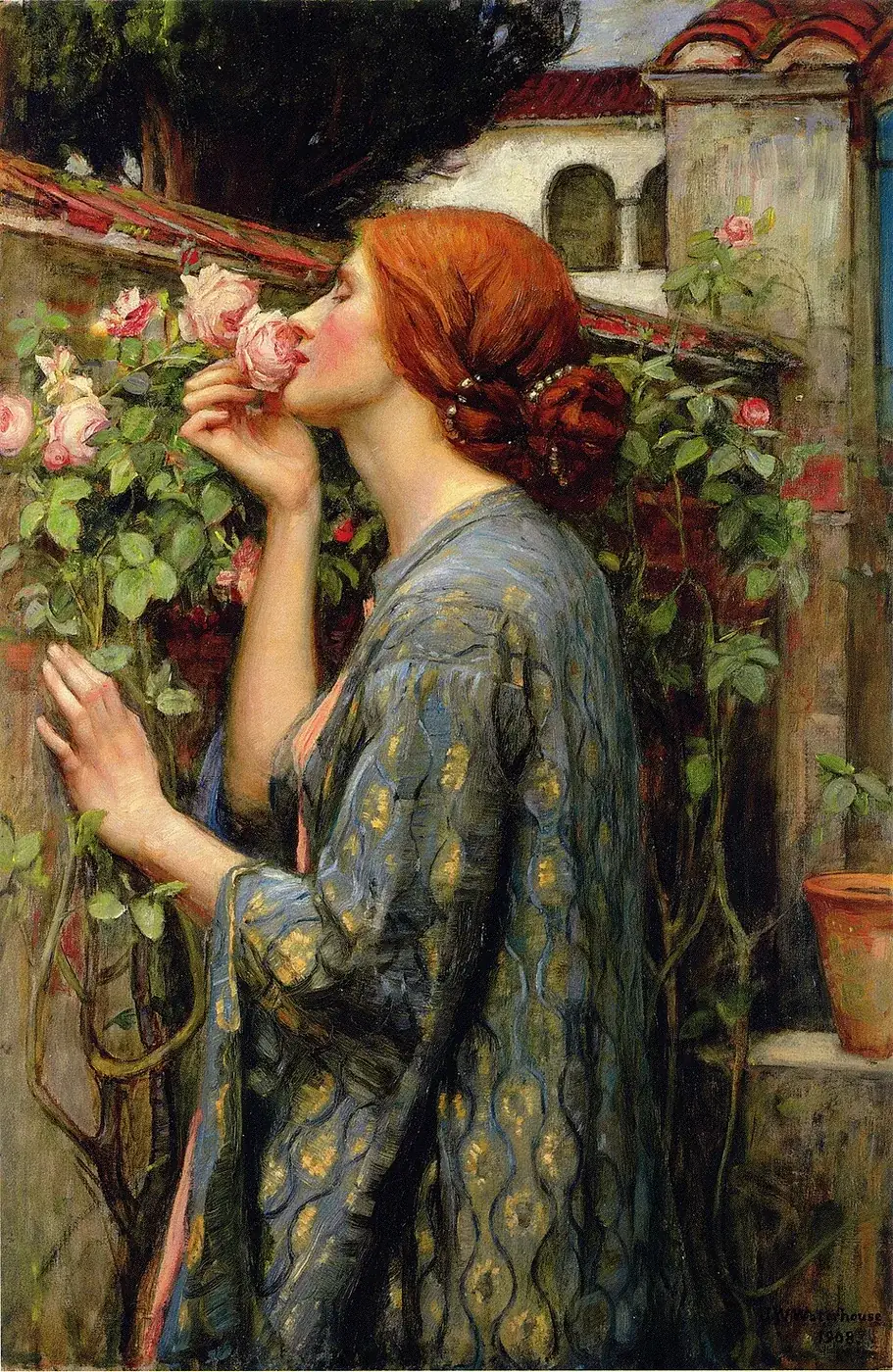
The Soul of the Rose
John William Waterhouse · 1908 (some sources give 1903)
About the painting: history and details
A woman bends towards a rose as if, for a moment, she has forgotten everything around her. Waterhouse makes a private, barely perceptible experience the central event.
The possible trap
External measures of success can make us miss what truly matters to us.
Recognise something familiar?
When did you last do something simply because it brought you quiet joy?
A direction worth reconsidering
Do not dismiss private pleasure just because it does not look like an achievement.
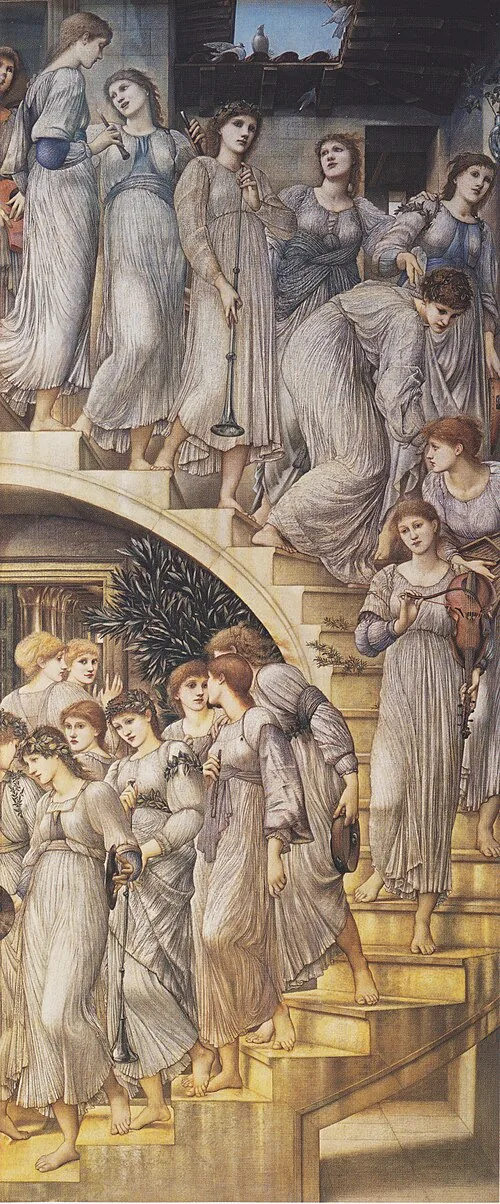
The Golden Stairs
Edward Burne-Jones · 1880
About the painting: history and details
Young women in pale dresses descend a spiral staircase carrying musical instruments. The rhythm of their figures matters more than any individual action; the painting has no single, definitive narrative.
The possible trap
A beautiful shared rhythm can quietly become a model we feel obliged to follow.
Recognise something familiar?
Do you compare your path with someone else’s sequence of supposedly “correct” steps?
A direction worth reconsidering
Someone else’s route does not have to become your timetable.
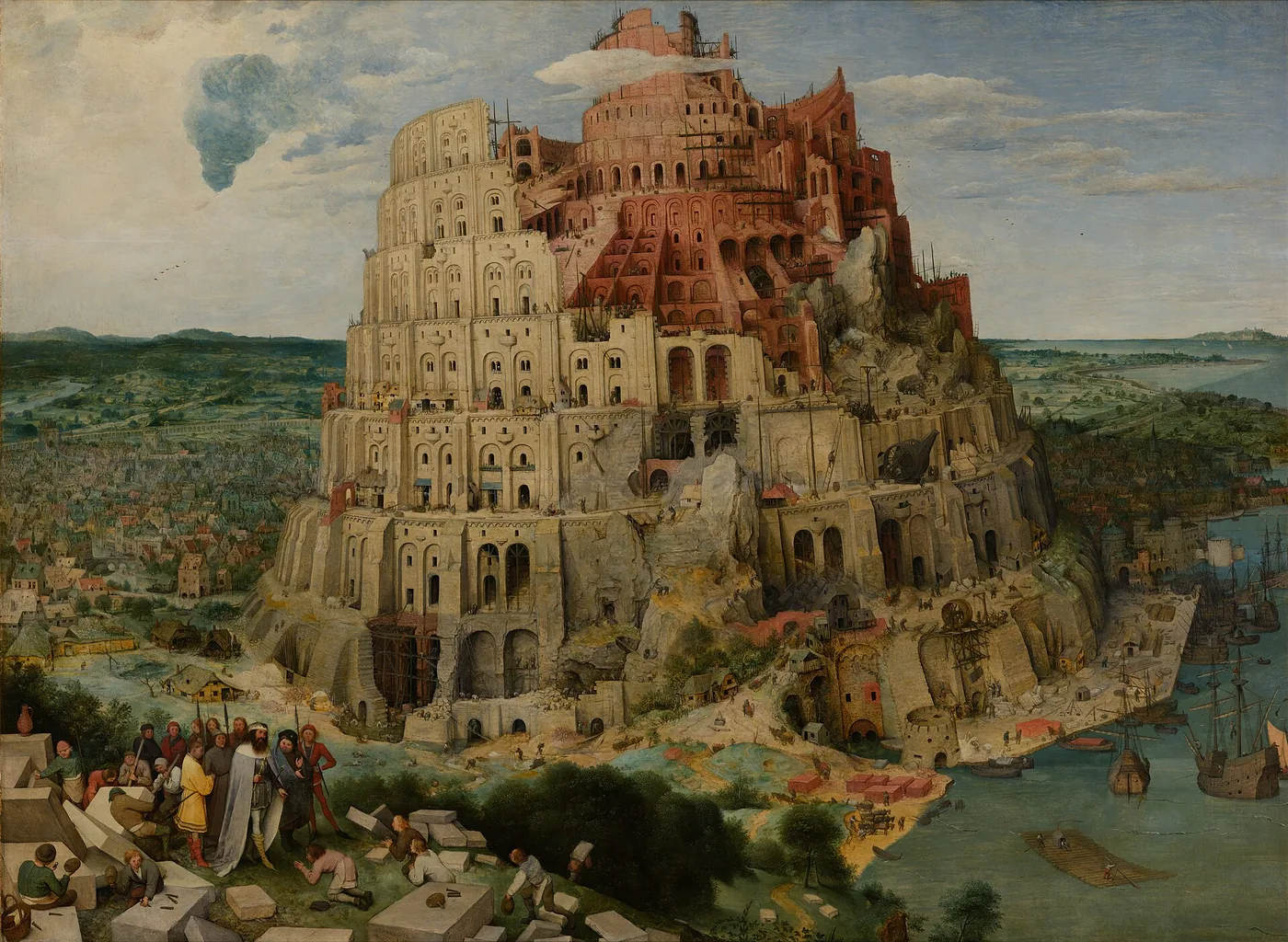
The Tower of Babel
Pieter Bruegel the Elder · 1563
About the painting: history and details
Bruegel depicts a vast construction project from the biblical story of Babel. A ruler and builders appear in the foreground; the enormous tower already shows signs of instability.
The possible trap
Ambition becomes a trap when the scale of a goal matters more than its meaning or cost.
Recognise something familiar?
Are you continuing to build something only because you have already invested so much in it?
A direction worth reconsidering
Ask why your tower is being built — and whether you truly need it.
A SMALL ENCOUNTER WITH ART
An art thought for today
One randomly chosen painting. One thought. One question to take with you.
If you like, leave yourself a thought to remember.
This note is saved only on this device.
×
Press and hold the painting to save it. Tap to close.
My energy map
Behind the scenes of Tanya
The Almost-Daily Diary
Sometimes daily. Sometimes not. A look inside the making of this project.
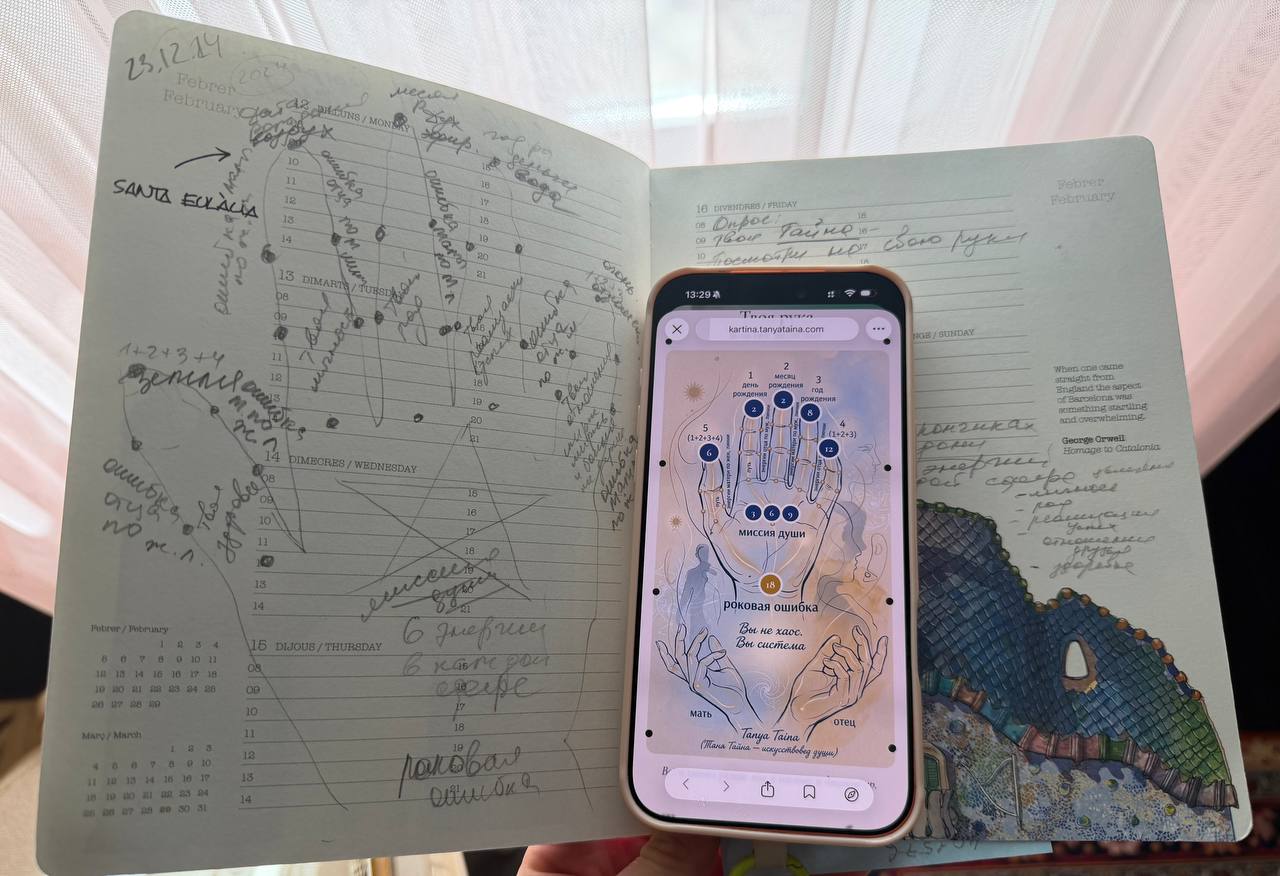
From notebook sketches to a digital hand
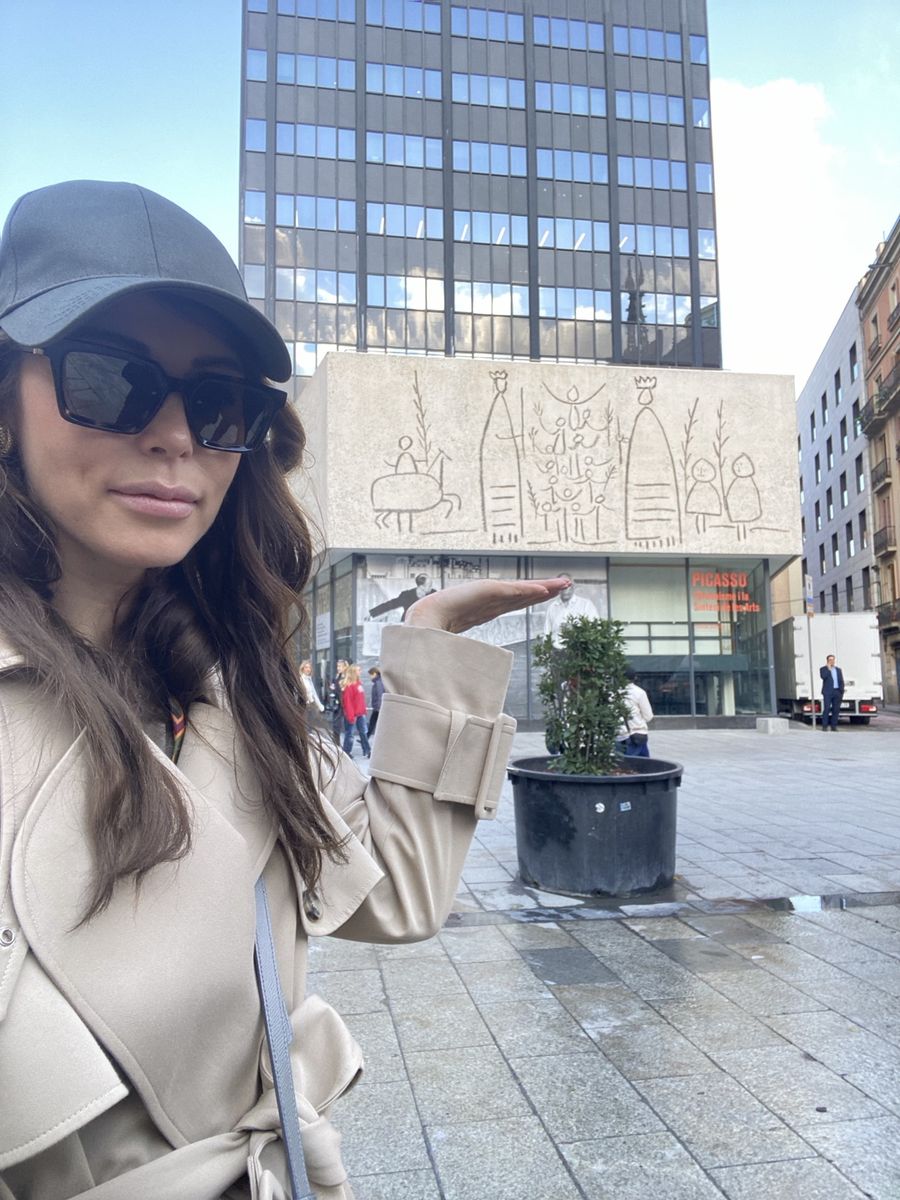
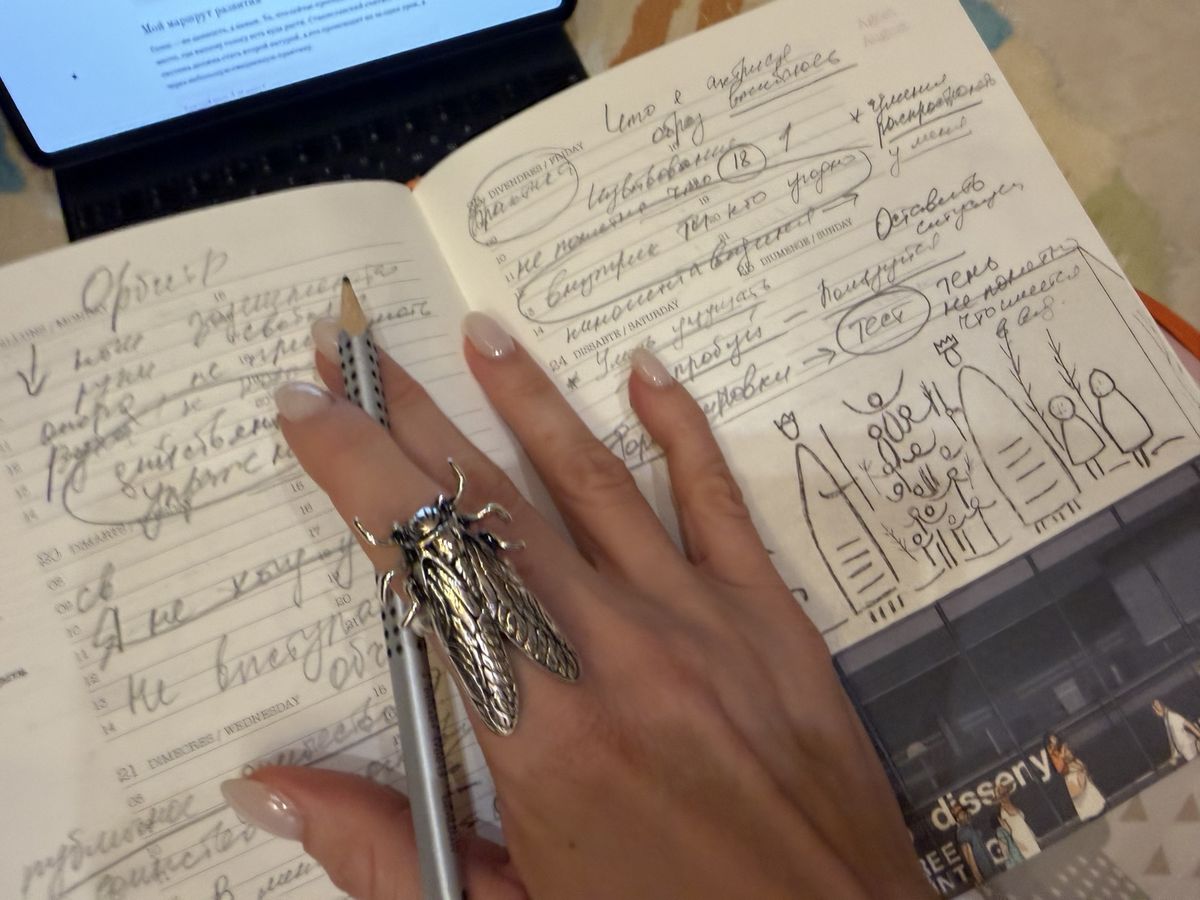
Barcelona, 2024 · The city and my notebook
Already here
A new illustrated welcome, a quick energy map, repeating energies and a downloadable PDF passport. And now the paintings have optional behind-the-frame stories: little art mysteries to open whenever you feel curious. Open them only if you feel curious.
Ideas with Tanya Taina
A personal art gallery: discover new paintings and artists, explore artistic styles, and save the works you want to remember.
A future idea — not yet available.
New: The Almost-Daily Diary
A NOTE FROM THE GALLERY
A letter to Tanya
And now I’d love to hear from you…
Did something surprise you, move you or leave you curious? Write to me — I’d love to read it.
First time here?How the platform works · 3-min video
Contents
Your exhibition, hall by hall
A card for a friend
Your date, your friend’s date and a few words — and the card is ready. Send it to a friend, your mum, your sister.
Your friend’s date is optional — without it, the card shows only your paintings. Dates never appear on the card.
Which painting to send?
Your date of birth isn’t on the card or in the link. Your friend enters her own date and opens her own exhibition.
What’s new
Everything new on the platform appears here
✦ WHAT’S NEW
PRIVATE CHANNEL FOR WOMEN
This is the beginning. The rest is in the channel
My private channel for women. It holds the stories that didn’t fit into the exhibition:
the lives of artists and their heroines: love, choices and what stayed outside the frame
podcasts to listen to on the go
training the eye: seeing more in a painting than its plot
finding familiar plots in the lives of the great — and recognising ourselves in them
You can look at compatibility with anyone: a partner, a friend, your mother, a colleague. All you need are your two birth dates. You will see why you met, what you argue about, how compatible you are in shared work, where your bond is growing and where its strength lies. Paintings by great artists will show your union from the outside.
Check it for yourself and someone close: your love, a friend, your mum. Or for any couple, to give them the card. Add the names and they will appear on the card.
&
This is
The portrait of your union
Two or three minutes, and all compatibility spheres will open. Your answers help me make the platform better. I read every one.
1. How much do you recognise yourself in your paintings?
 Another project
 Personality
 Family line
 Relationships
 Health