Start here · How to look
You look at a painting. But do you see it?
In short
Three questions where looking begins: What’s going on here? · What do you see that makes you say that? · What more can you find?
This is Visual Thinking Strategies: a Harvard-trained psychologist and MoMA’s head of education, thirty years of practice, and medical students taught to observe on paintings. Below: how it works on Vermeer’s Milkmaid, and where your date comes in.
Seeing a painting is not a gift you are born with. It is a skill.
And it can be trained.
And Samuel Morse — yes, the code and the SOS — was a painter who dreamed of teaching America to look. His story is the bonus at the end.
Checked · sources at the end
Visual Thinking Strategies (VTS)
- Based on the research of cognitive psychologist Abigail Housen, doctorate from Harvard, 1983
- Co-founder: Philip Yenawine, head of education at the Museum of Modern Art (MoMA), New York
- More than 30 years of practice, hundreds of schools and institutions worldwide
- Used to train doctors at Harvard Medical School
- About two dozen peer-reviewed studies, according to VTS
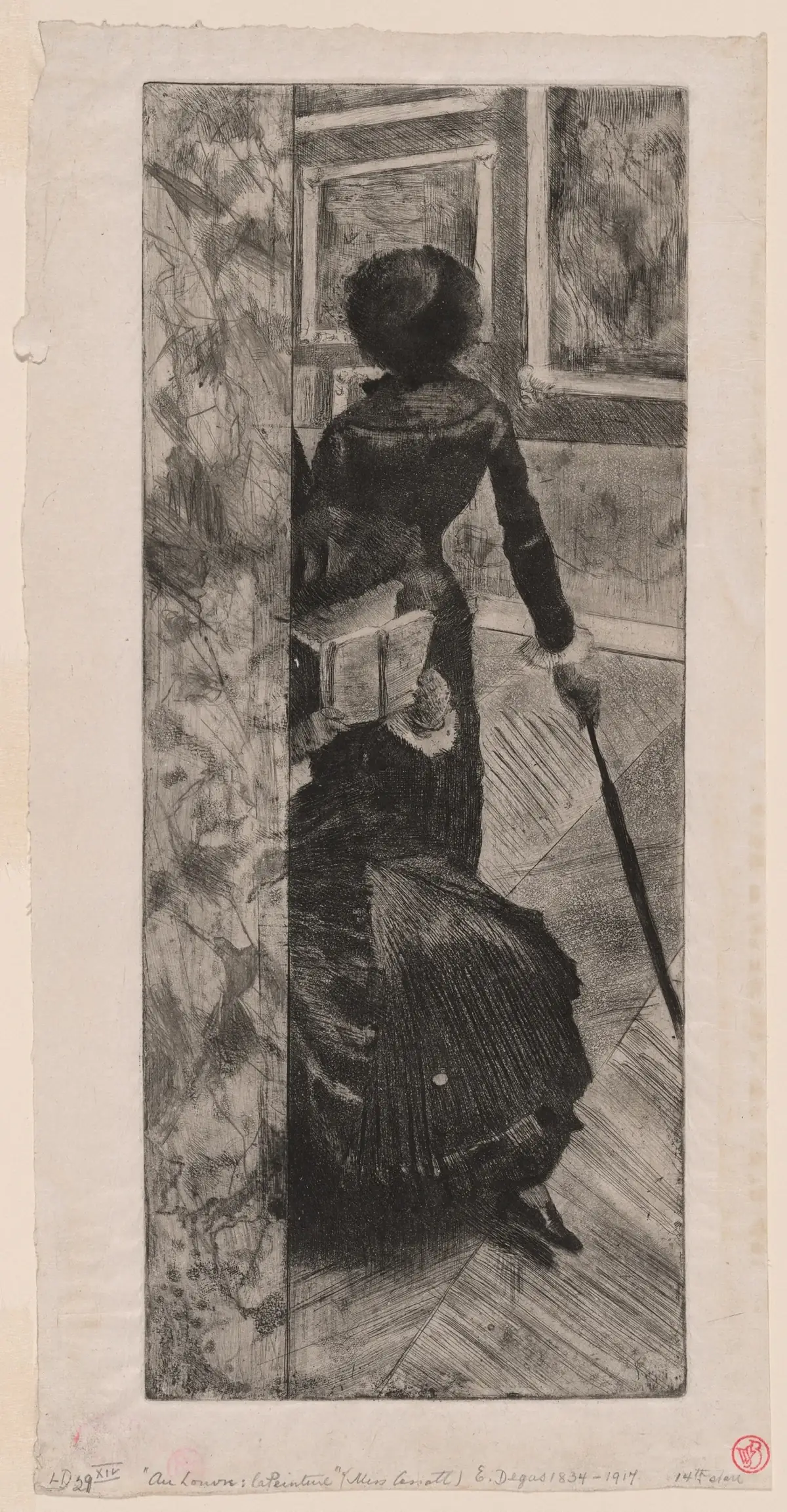
Look at this print. A woman in the Louvre leans on her umbrella and looks. Just looks. Now find the second woman. She is almost hidden: seated behind a marble column, all you see is a hand and an open guidebook. Sound familiar? Both came to the museum, but only one of them actually meets the painting. We often do what the second one does: read the label, learn the artist’s name and move on without ever looking. One of us reads what we are supposed to see. The other one sees.
The woman with the umbrella is Mary Cassatt (22.05.1844–14.06.1926), an American Impressionist painter. Beside her is her sister Lydia. The print is by Edgar Degas (19.07.1834–27.09.1917), the French Impressionist who painted ballerinas and Mary’s close friend. She sometimes posed for him, as she put it, when he found a movement difficult.
Learning to see
In the 1960s and 70s an American cognitive psychologist, Abigail Housen, asked herself a question: why do so few people feel at ease in a museum? And what actually happens to us when we look at a painting? Her teams conducted tens of thousands of interviews. The answer sounds obvious only once you have heard it: seeing a painting isn’t an inborn talent but a skill, and it can be learned. So if a painting leaves you bored or puzzled, it doesn’t mean you “have no taste.” It simply means nobody has trained this skill yet.
In 1983 Housen earned her doctorate at Harvard. In the 1990s she met Philip Yenawine, then head of education at the Museum of Modern Art in New York. Together they created Visual Thinking Strategies. Today it is used by schools, museums, universities and even medical schools, Harvard among them.
The method rests on three questions. First you look in silence. Then you ask yourself:
- What’s going on here?
- What do I see that makes me say that?
- What more can I find?
The first question gives you freedom: anyone can answer it, there is no right answer. The second brings you back to the painting: every thought is backed up by what the eye can see. The third keeps you from stopping at the first impression and takes you deeper.
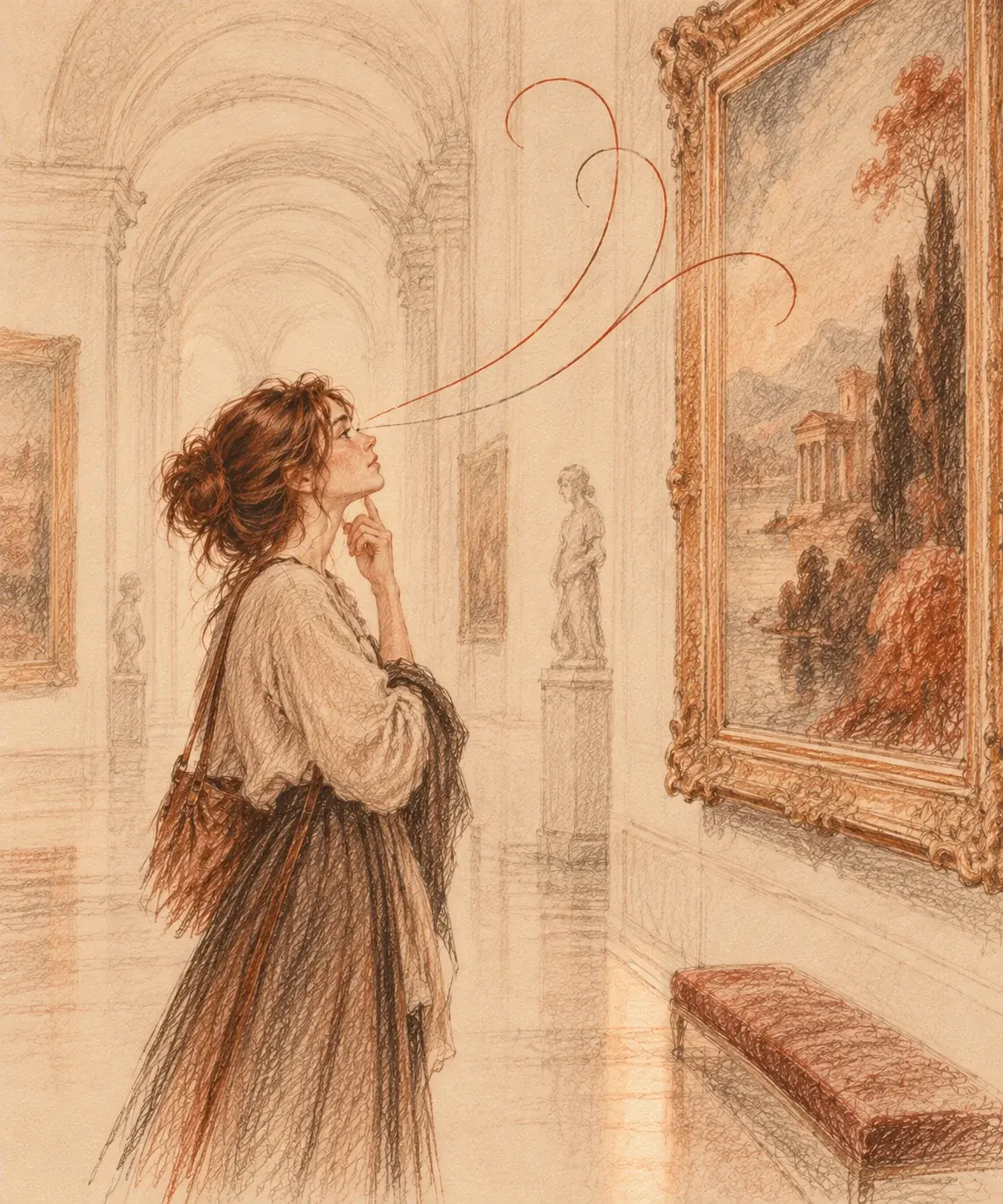
Let’s try it together
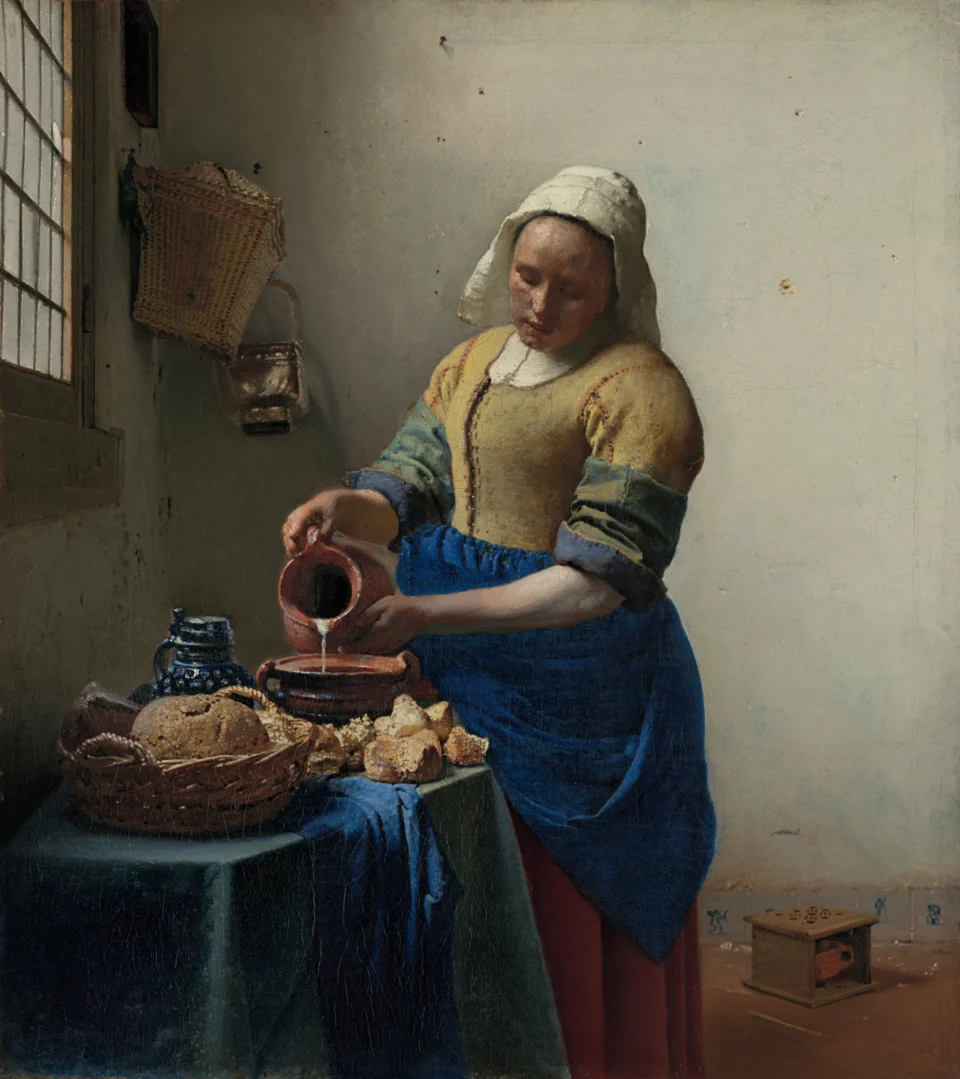
Give it a minute. No rush.
✍ Try it yourself
Your answers stay on your device only and are never sent anywhere.
What’s going on here? A woman is pouring milk. Morning? A kitchen. Silence.
What do you see that makes you say that? Light falls from the window on the left, there is bread and a jug on the table, she is completely focused.
What more can you find? Nail holes in the wall. One nail is still there, and it casts a shadow. Down by the floor, a small wooden box. And on the bread crust the light is scattered in dots, like crumbs.
You have just found, on your own, what art historians write about. The box by the floor is a foot warmer, and in the seventeenth century it was read as a hint of secret desire. The dots of light on the bread look like pointillism, a technique invented two hundred years later by Georges Seurat (02.12.1859–29.03.1891), the French painter who created pointillism. And in 2022 the Rijksmuseum scanned the painting and found, under the paint, a jug holder and a woven fire basket. Vermeer painted them out to keep the silence.
Notice that “Morning?” has a question mark. That’s fine: a guess doesn’t need proof straight away, you test it by looking. The light from the window is soft and diffused, it feels like morning. Or maybe not. Looking is made of exactly these guesses and checks.
Five stages of looking
Housen noticed that our way of looking at art grows in stages.
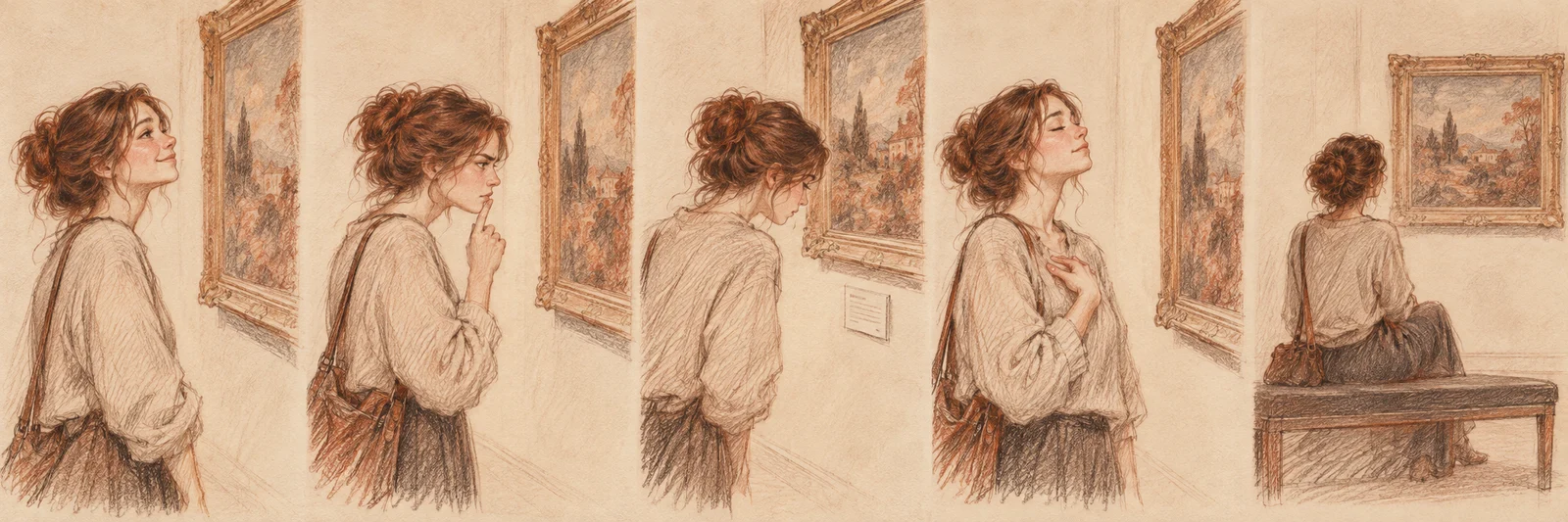
- 1Storyteller. I connect what I see with my own memories and feelings.
- 2Builder. I look for rules: is this realistic, is it painted well or not.
- 3Classifier. I look like an art historian: period, movement, technique, artist.
- 4Interpreter. I want a personal encounter with the work, joining knowledge, feeling and intuition.
- 5Re-creator. A familiar painting is like an old friend: I know every detail, and it still surprises me.
There are no wrong stages here. A storyteller who remembers her grandmother’s kitchen in front of The Milkmaid is already truly looking. Each new stage opens the painting more deeply. And you don’t move up by inspiration, you move up through practice.
But am I seeing it right?
The most common question. And the method has a beautiful answer.
The guide here is not a teacher with a pointer. They ask questions, carefully paraphrase what you said, point to the part of the painting you are talking about, and do not correct you. The museum guide manual says it plainly: resist the temptation to make corrections. Random answers fall away on their own, because the second question always comes back: what do you see that makes you say that?
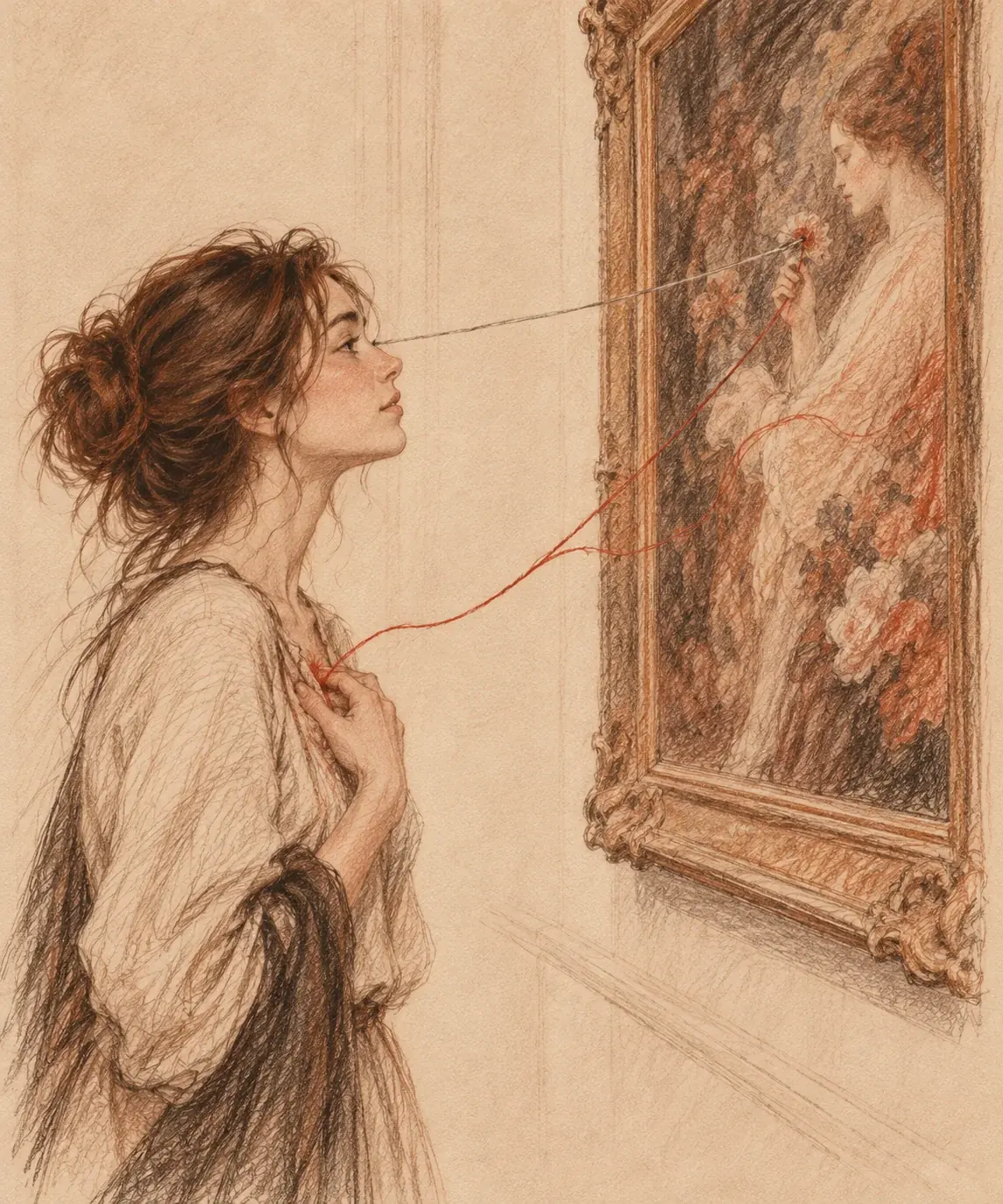
A feeling is never wrong.
A fact can be.
If a painting makes you uneasy, that is your way of seeing, and it matters. But if you say “it’s night” and the painting shows the midday sun, go back and look again. That is how the eye is trained.
What research says
The dream of teaching people to look is an old one. You know Samuel Morse as the inventor of the telegraph and Morse code. But two hundred years ago, before any telegraph, he was a painter, and he put a whole Louvre on one canvas to teach America to see painting. His idea was ahead of its time. Today it can be measured.
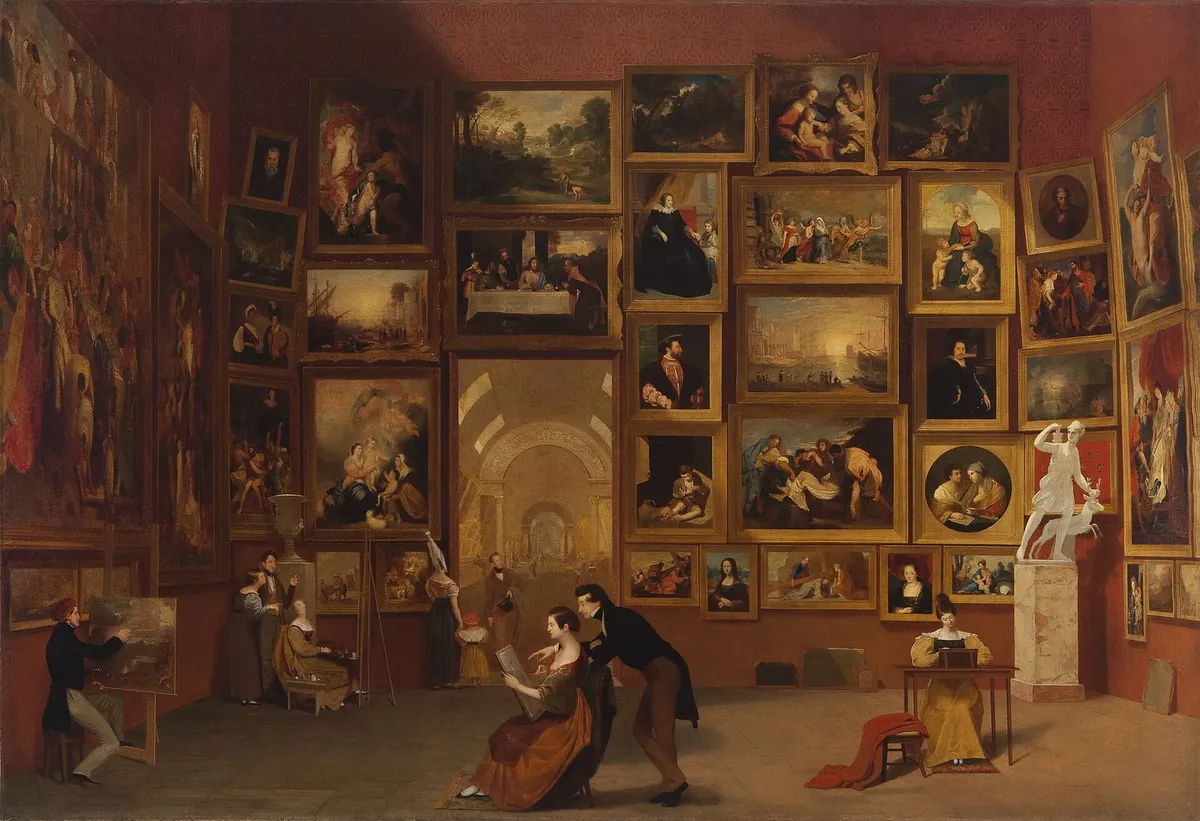
This huge canvas, about six by nine feet, is his “teaching Louvre”. In 1831 he gathered thirty-eight Louvre paintings on one canvas, the Mona Lisa among them, and at the centre painted himself, a teacher leaning over his daughter Susan as she sketches. He wanted to bring Americans a “teaching canvas”, since many had never seen Europe. Critics admired it, while the wider public passed it by. Morse sold the painting and soon devoted himself entirely to invention. But his idea of learning to look at art lives on.
Who was Morse? The painter we never knew
I’ll admit it: I had no idea. I knew Morse code, but that he was a painter took my breath away. Let’s meet him.
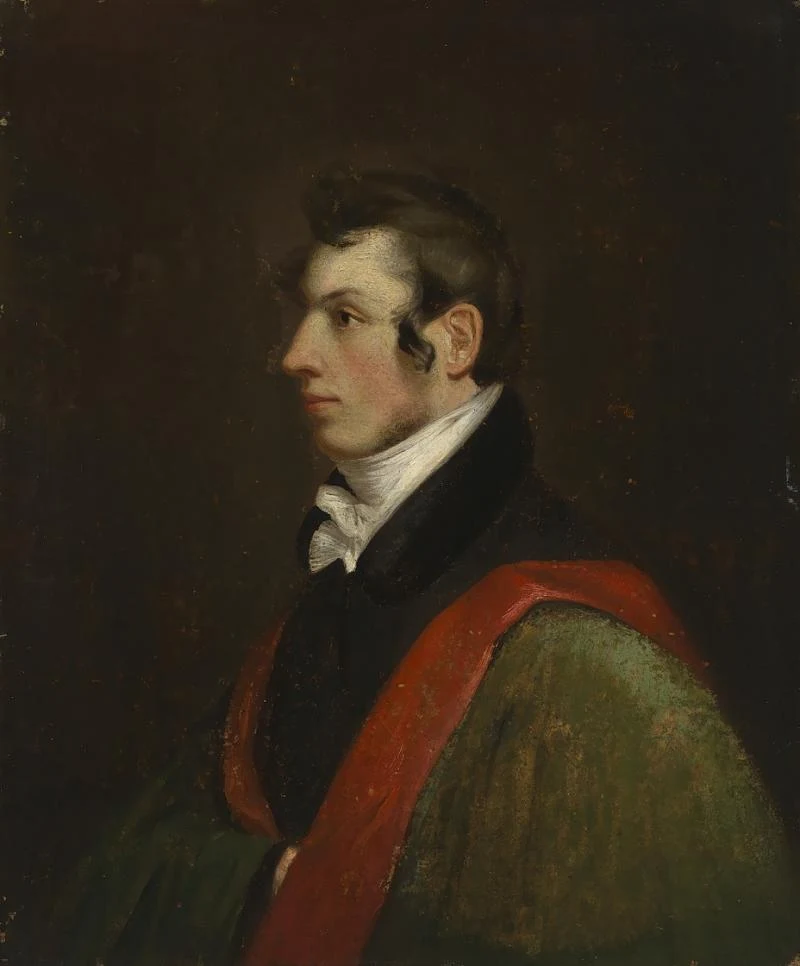
Samuel Finley Breese Morse · 27.04.1791, Charlestown, Massachusetts – 02.04.1872, New York
A geographer’s son and his miniatures
His father, Jedidiah Morse, was a noted geographer and minister, and the family was strict. Yet as a Yale student the son painted miniature portraits, to his parents’ dismay, in the plain, naive manner of provincial American portraitists. And at Yale he also sat in on lectures about electricity. Remember that: both of his callings woke up in one student life.
London, Hercules and a gold medal
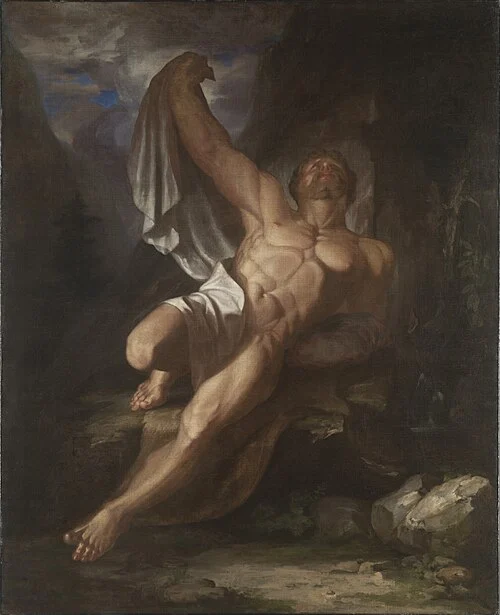
His teacher was the American painter Washington Allston: drawing, anatomy, art theory. In 1811 Morse sailed with him to London, met Benjamin West, the American who headed the Royal Academy, and entered the Academy. His first major work, The Dying Hercules, is nearly two and a half metres tall. Look at his hand: the hero clutches the poisoned robe that is killing him. It is Neoclassicism: a style that took antiquity, myth and the ideal bodies of heroes as its model. For a plaster statuette of the same Hercules, Morse won a gold medal from the Society of Arts in London.
He dreamed of heroes and painted presidents
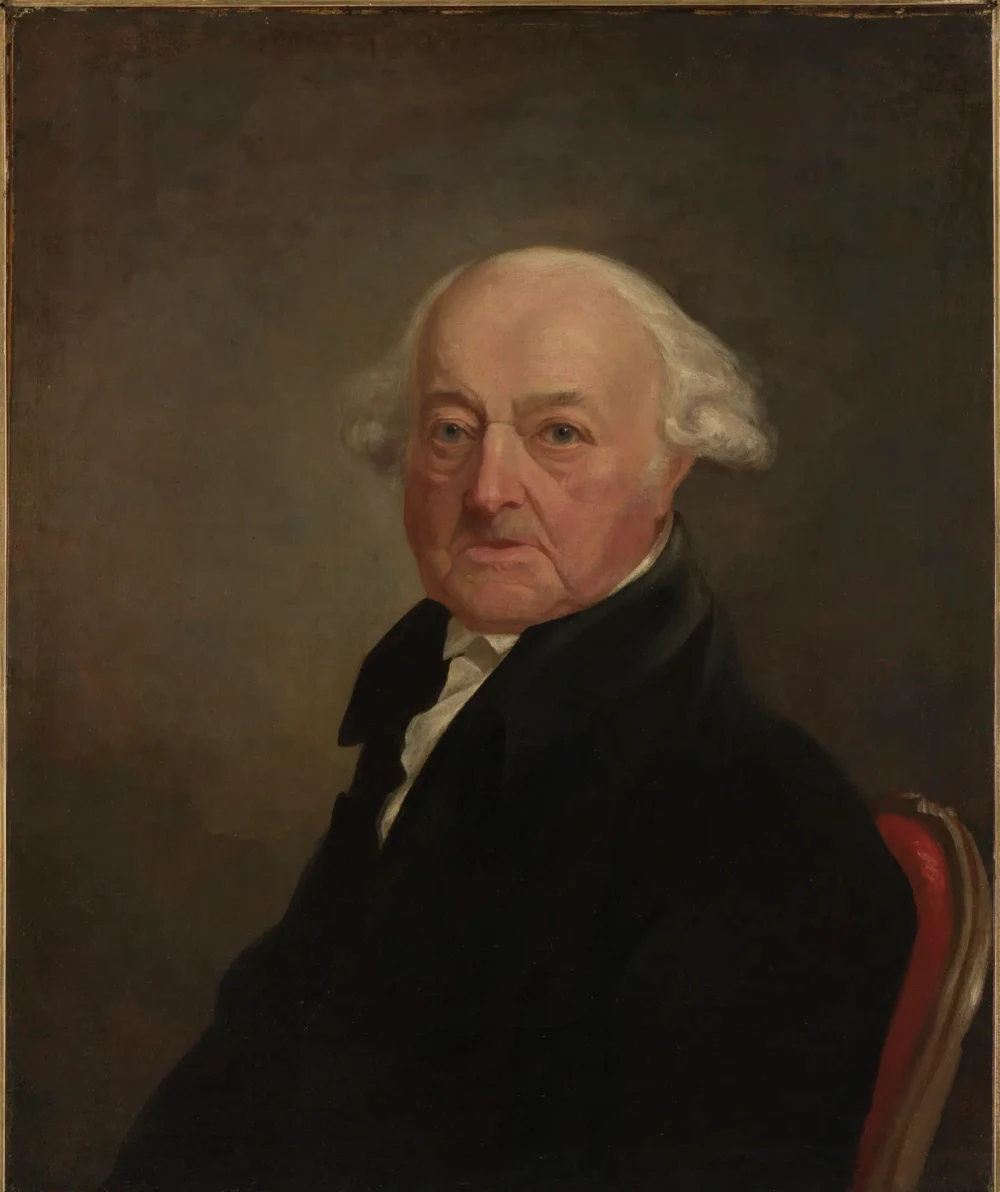
In 1815 he came home dreaming of grand history paintings. America wanted portraits. So Morse became a portraitist, travelling for commissions through New England, New York and South Carolina. Britannica calls his New York portraits some of the finest ever painted by an American artist.
Congress by lamplight
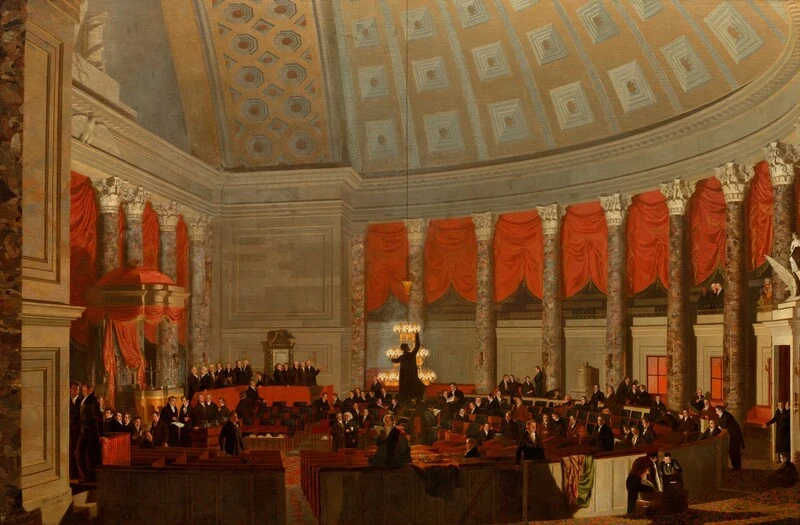
Morse spent four months in Washington painting the House chamber in lamplight before an evening session, with all its congressmen and staff. The painting toured the country, and this idea too was ahead of its time.
Lafayette, and the letter that came too late
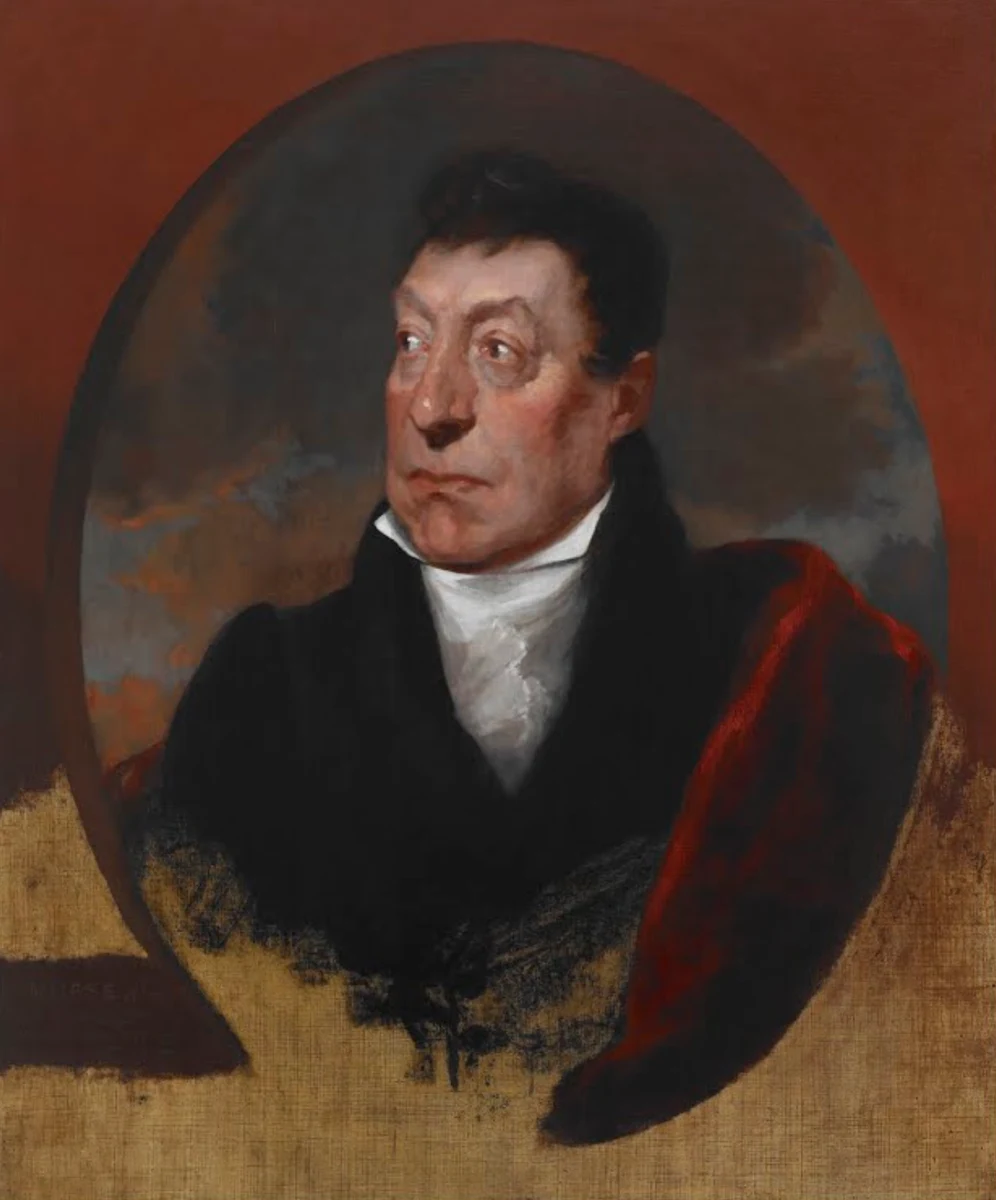
1825 was the peak of his career: a commission to paint the Marquis de Lafayette, the French hero of the American War of Independence. The portrait came out Romantic, in the spirit of Romanticism, where feeling, impulse and drama come first. The full-length portrait hangs in New York City Hall today. While Morse worked in Washington, his wife Lucretia died suddenly at home in New Haven. His father’s letter took so long that Morse arrived after the funeral.
A teacher of artists
In 1825 Morse co-founded the National Academy of Design in New York and was its president for almost twenty years. He wanted America to respect its painters. Later he taught painting at New York University. And in 1831 he went to the Louvre for his “teaching Louvre”.
Farewell to the brush
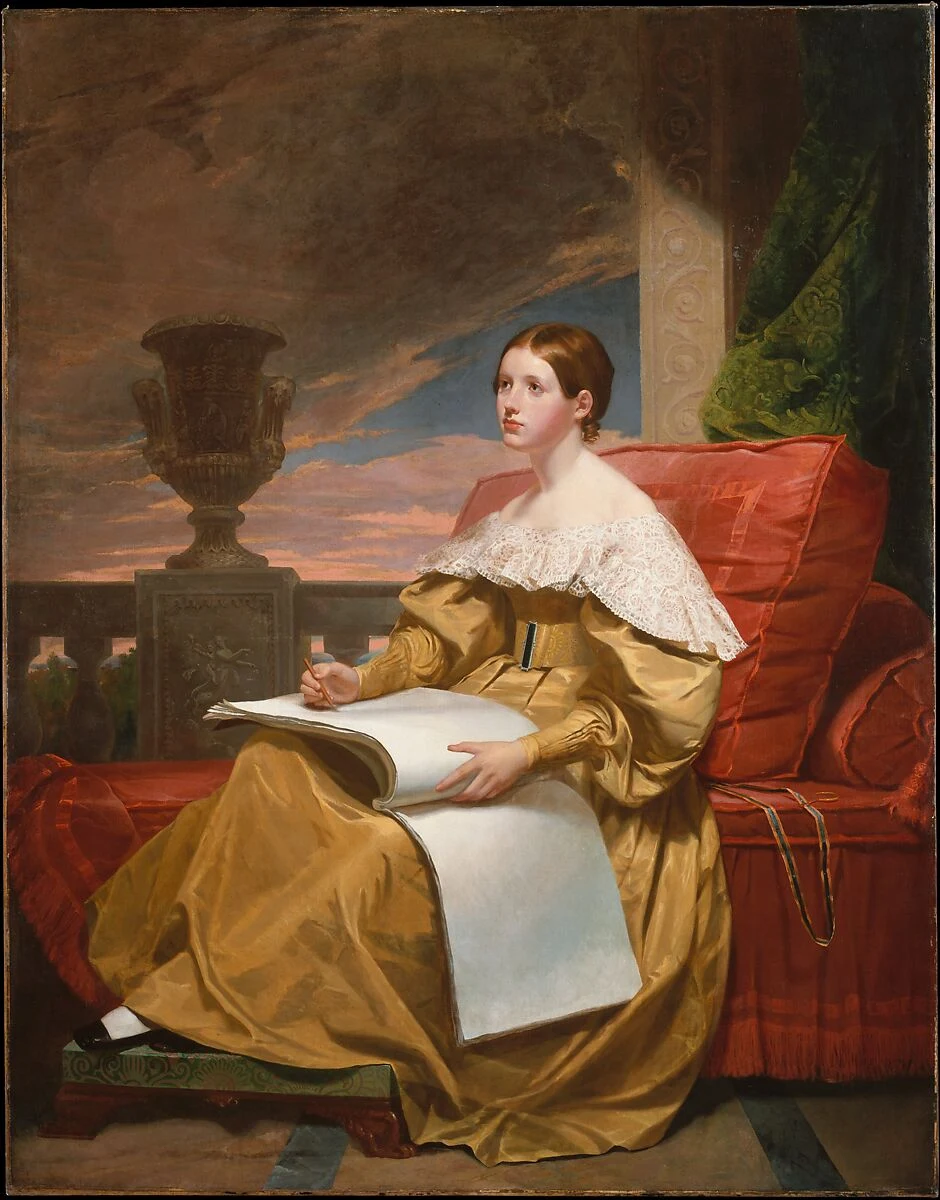
Look at her. This is his eldest daughter Susan, seventeen. The same girl who sketches at the centre of the Gallery of the Louvre. A sketchbook on her lap, a pencil in her hand, eyes raised like a muse. The Met sees his European training here, lessons from Rubens, the Flemish Baroque master, and Veronese, the Venetian Renaissance master, and calls it Morse’s farewell to portraiture: he painted it while already working on the telegraph.
In 1837 Morse hoped to paint a mural for the Capitol Rotunda, but Congress gave the commission to others. Disillusioned, at forty-six he put down his brushes and turned entirely to the telegraph. On 20.06.1840 he received U.S. Patent No. 1,647 for his electromagnetic telegraph, and on 24.05.1844 the first message flew from the Capitol to Baltimore: “What hath God wrought.”
One important detail: the idea of the telegraph came to Morse back in 1832, at the height of his painting career. For five years two people lived in him at once: the painter and the inventor. The disappointment of 1837 closed one door, and he stepped fully through the other.
One more door: the daguerreotype
In March 1839, in Paris, Morse met Louis Daguerre twice. Daguerre had just revealed the daguerreotype, the first photographic process: the image appears on a polished, silver-plated copper plate, and every plate is one of a kind, with no negative and no copies. Morse looked at an image and called it “Rembrandt perfected.” Back in New York he took pictures himself and taught others. Among his students was Mathew Brady, future photographer of presidents, whose Civil War photographs became famous. The artist in him never left: he picked up a new brush: light.
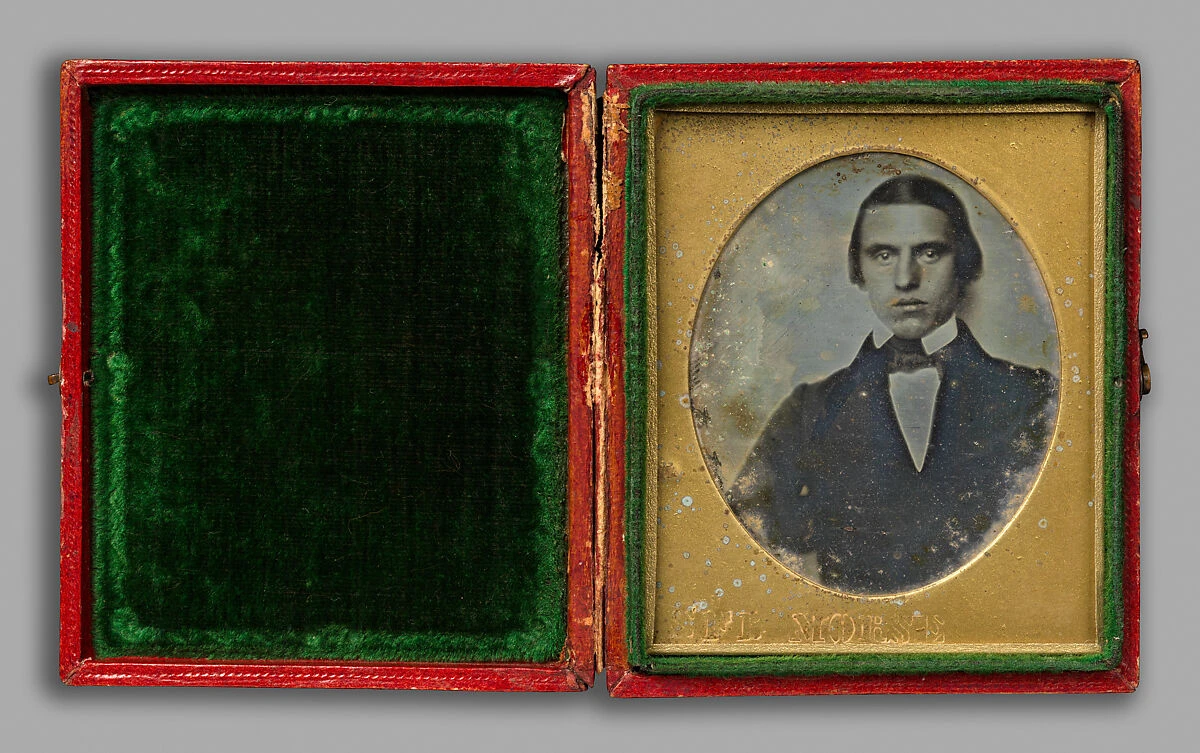
What he left the world
Look how much one person managed. Paintings that hang today in the National Gallery of Art in Washington and the Metropolitan Museum. The National Academy of Design, so that America would respect its artists. He was one of the pioneers of photography in America and a teacher of its first photographers. And the telegraph, with the code that bears his name: words that flew along the wires faster than any messenger.
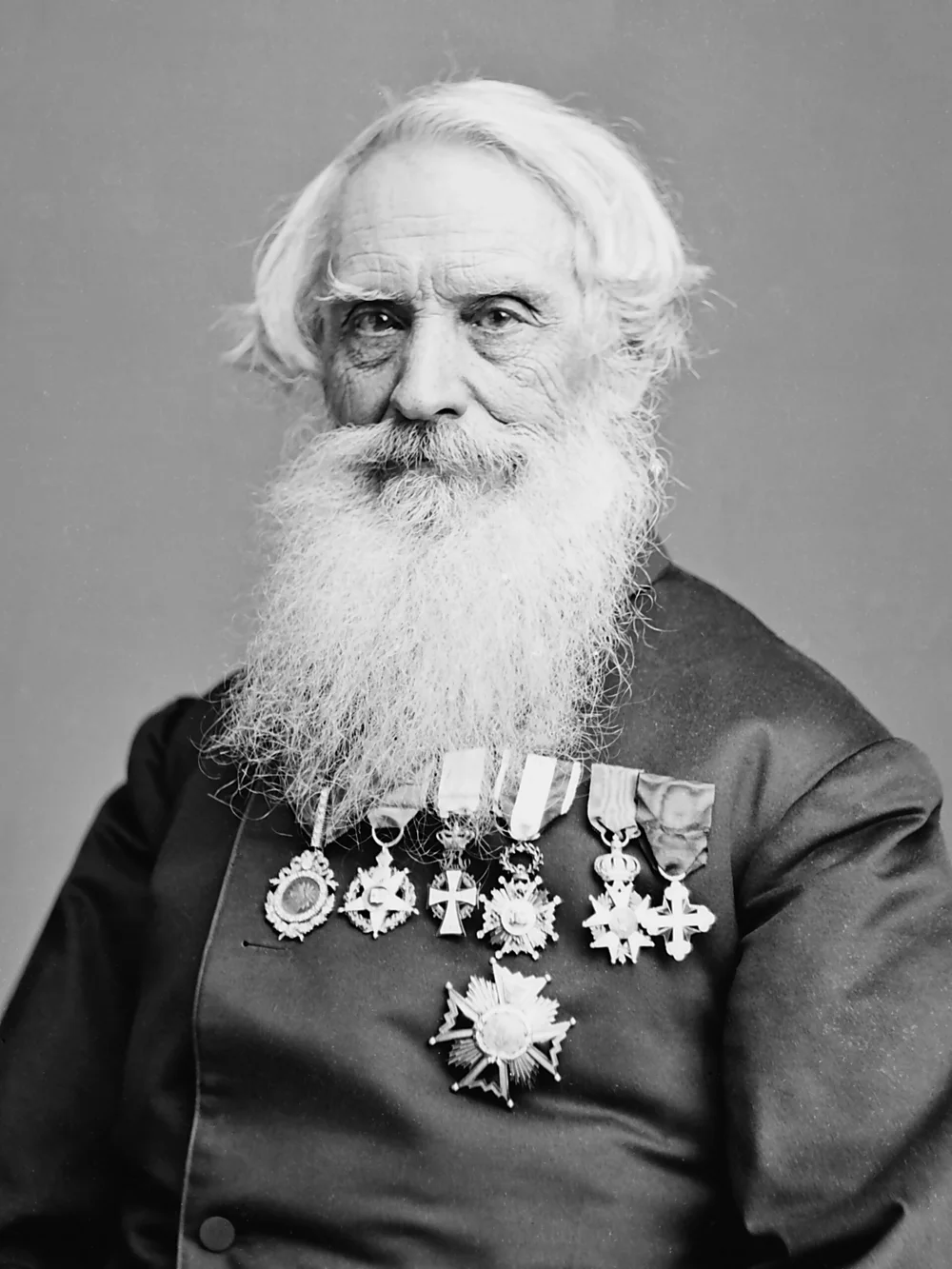
The painter who dreamed of teaching America to see taught the world to hear across distance.
 His signature
✦ The three notes of his date
27 → 9 · Personality. Nine: wisdom, service to the world, the teacher and the person of ideas. The chord 2, 7 and 9: the two of partnership and the seven of searching for truth, a researcher’s mind. In its shadow, nine lives through loss and things left unfinished. The letter that came too late.
04 · Family script. Four: order, system, the gift for building and organising. The zero in front means a reset through the four. The son of a geographer, a man of maps and systems, built two systems of his own: an academy for artists and a code in which every letter became a signal.
1791 → 18 · Scale of realisation. The Moon: imagination, intuition, the artist, the gift of seeing the unseen. The impulse of eighteen is nine again. Realisation opens after thirty-five, and at almost thirty-five he founded the academy.
Nine sounds twice in his date. This is my reading through the hand method. A hint, not a fairy tale.
At Harvard Medical School, first-year students spent eight weeks at the Museum of Fine Arts in Boston learning to observe paintings. They took an observation test before and after the course. Their accurate observations rose by 38%. The study was published in 2008 in the Journal of General Internal Medicine.
In 2020 at the University of Miami, first-year medical students took just two sessions of Housen’s method. Afterwards, on test images, they noticed more clinically relevant details than classmates without the sessions: 6.8 against 5.0 on average. The authors say honestly that the study is small and it is not yet known whether this carries over into medical practice. But the main point is already clear: observation can be trained, like a muscle. If two sessions help future doctors notice more, imagine what regular time with paintings could give you.
And what about me?
You can look this way in any museum, at any painting. But there are millions of paintings in the world. Where do you start?
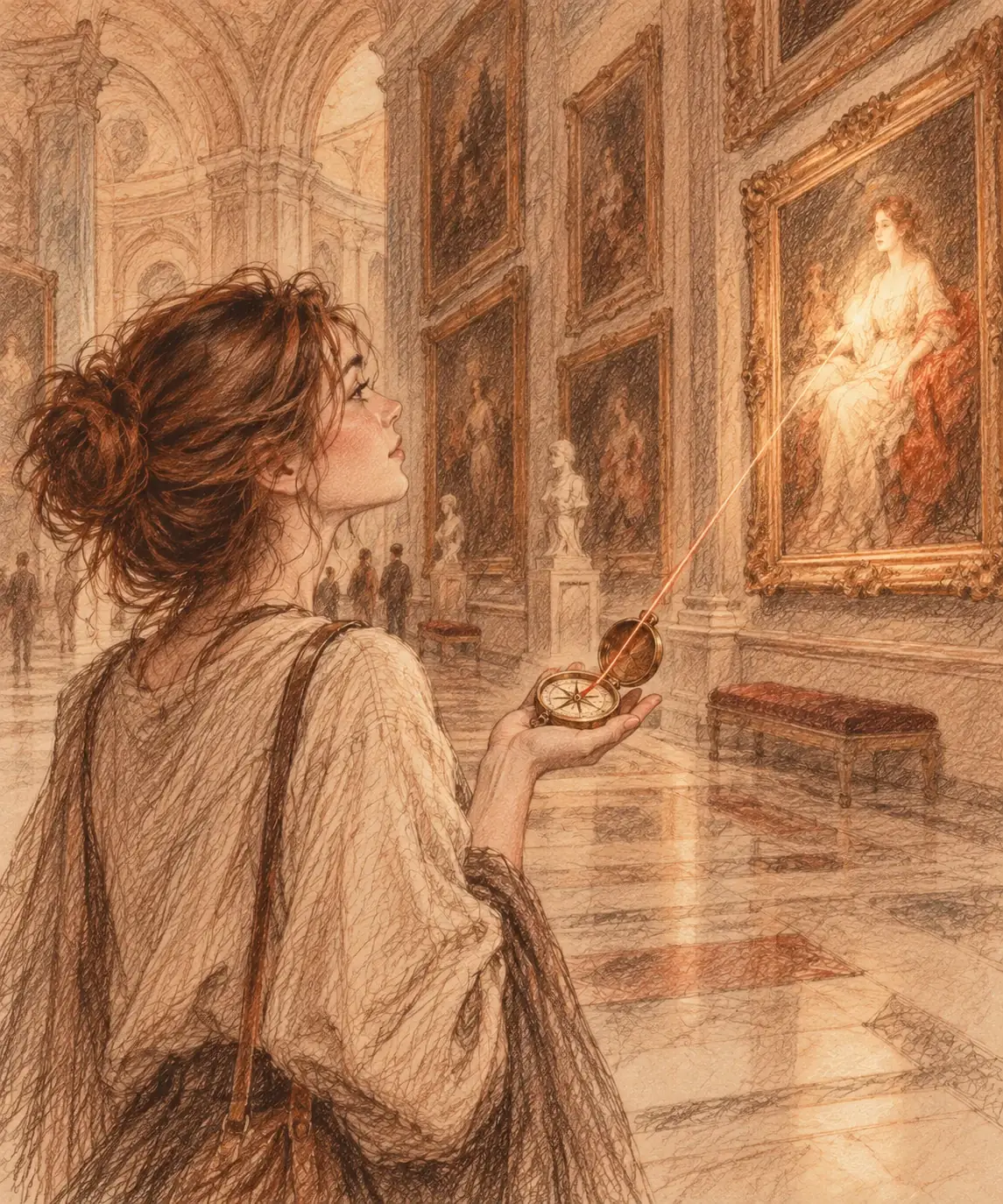
I give you a compass: your date of birth. Your date chooses your first paintings so you don’t get lost in that sea.
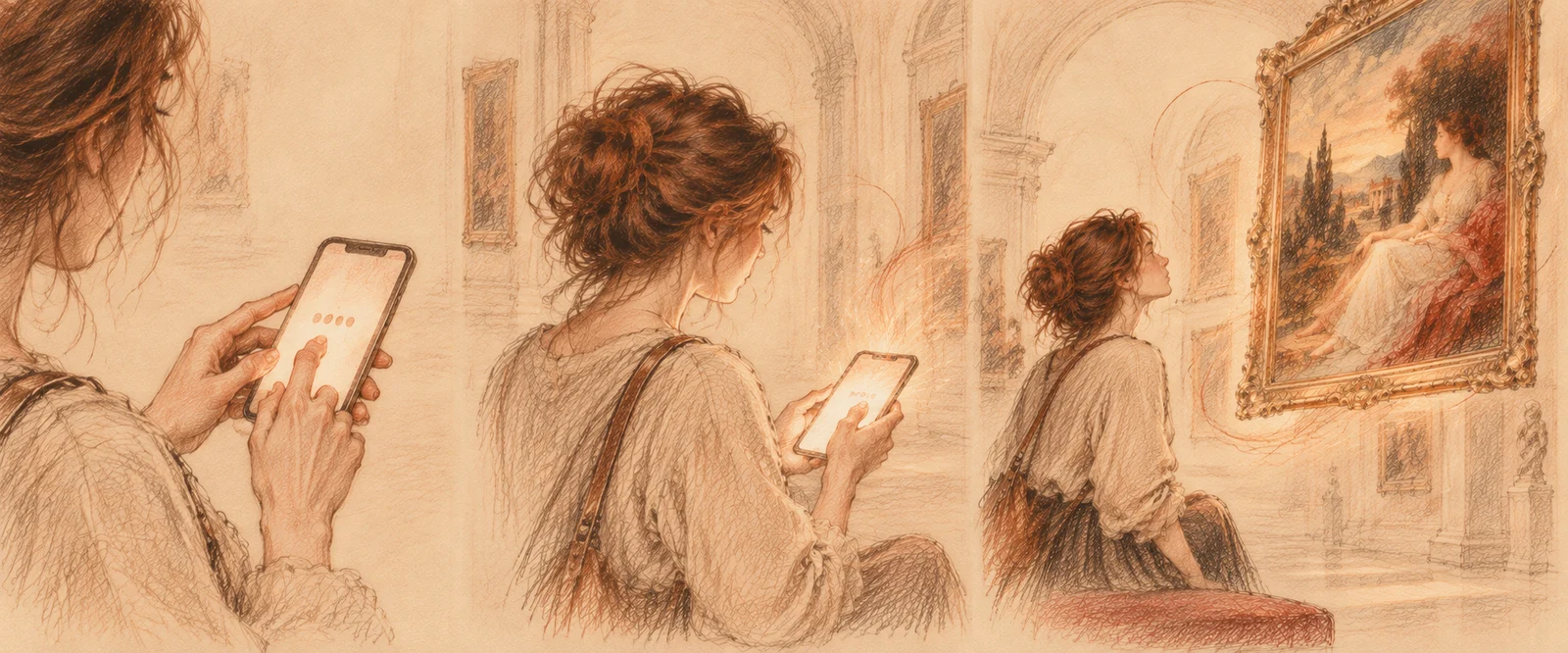
From there, every painting in my gallery takes three steps:
This is not therapy and not a medical course. It is a practice inspired by a recognised method, with one step of my own added: the journey into art starts with you: with your date and your own eyes.
You are the painting. You are the art. Look.
Enter your date and open your exhibitionThe number is the essence, psychology the path, art the mirror.
A hint, not a fairy tale.
Tanya Taina
Can you decode it? ›
It says LOOK in Morse code. The most important word on this platform.
Sources
- U.S. Patent No. 1,647, 20.06.1840: National Inventors Hall of Fame invent.org · Taylor English, “Morse’s patent on the telegraph” taylorenglish.com · Photograph of Morse, Brady-Handy Collection, Library of Congress (via House Divided, Dickinson College) dickinson.edu
- Samuel Morse, The Dying Hercules, 1812: Smithsonian Magazine, “Samuel Morse’s Other Masterpiece”: smithsonianmag.com · Yale University Art Gallery, Society of Arts medal for the model of the Dying Hercules: artgallery.yale.edu
- Britannica, Harvard University: britannica.com · Times Higher Education, World University Rankings 2026: timeshighereducation.com
- VTS, founders: vtshome.org/founders
- VTS, about: vtshome.org/about
- VTS, aesthetic development: vtshome.org/aesthetic-development
- Heckscher Museum, How to use VTS: heckscher.org (PDF)
- Naghshineh et al., 2008, Journal of General Internal Medicine (Harvard): artsedsearch.org
- Agarwal et al., 2020, Journal of Medical Humanities: lowe.miami.edu (PDF)
- Art Institute of Chicago, Mary Cassatt at the Louvre: The Paintings Gallery: artic.edu
- National Gallery of Art, Mary Cassatt at the Louvre: nga.gov
- Britannica, Samuel F. B. Morse: britannica.com · Smithsonian Magazine, Samuel Morse’s Other Masterpiece: smithsonianmag.com
- National Gallery of Art, Samuel F. B. Morse biography: nga.gov · The Met, The Muse: metmuseum.org · Smithsonian NPG, Self-Portrait: si.edu · Brooklyn Museum, John Adams: brooklynmuseum.org · Crystal Bridges, Marquis de Lafayette: crystalbridges.emuseum.com
- Smithsonian Magazine, Morse and Daguerre: smithsonianmag.com · The Met, The Daguerreian Era: metmuseum.org
- The Met, Morse daguerreotype: metmuseum.org
- Terra Foundation, A New Look: Samuel F. B. Morse’s Gallery of the Louvre: terraamericanart.org (PDF)
- Library of Congress, Samuel F. B. Morse Papers, chronology: loc.gov (PDF)
- National Geographic, Morse and Lucretia: nationalgeographic.com
- NGA, The House of Representatives: nga.gov
- Library of Congress Blog, From Art to Invention: blogs.loc.gov
- Huntington, Morse, Gallery of the Louvre: huntington.org
- Rijksmuseum, The Milkmaid: Google Arts & Culture · 2022 discovery: Artnet