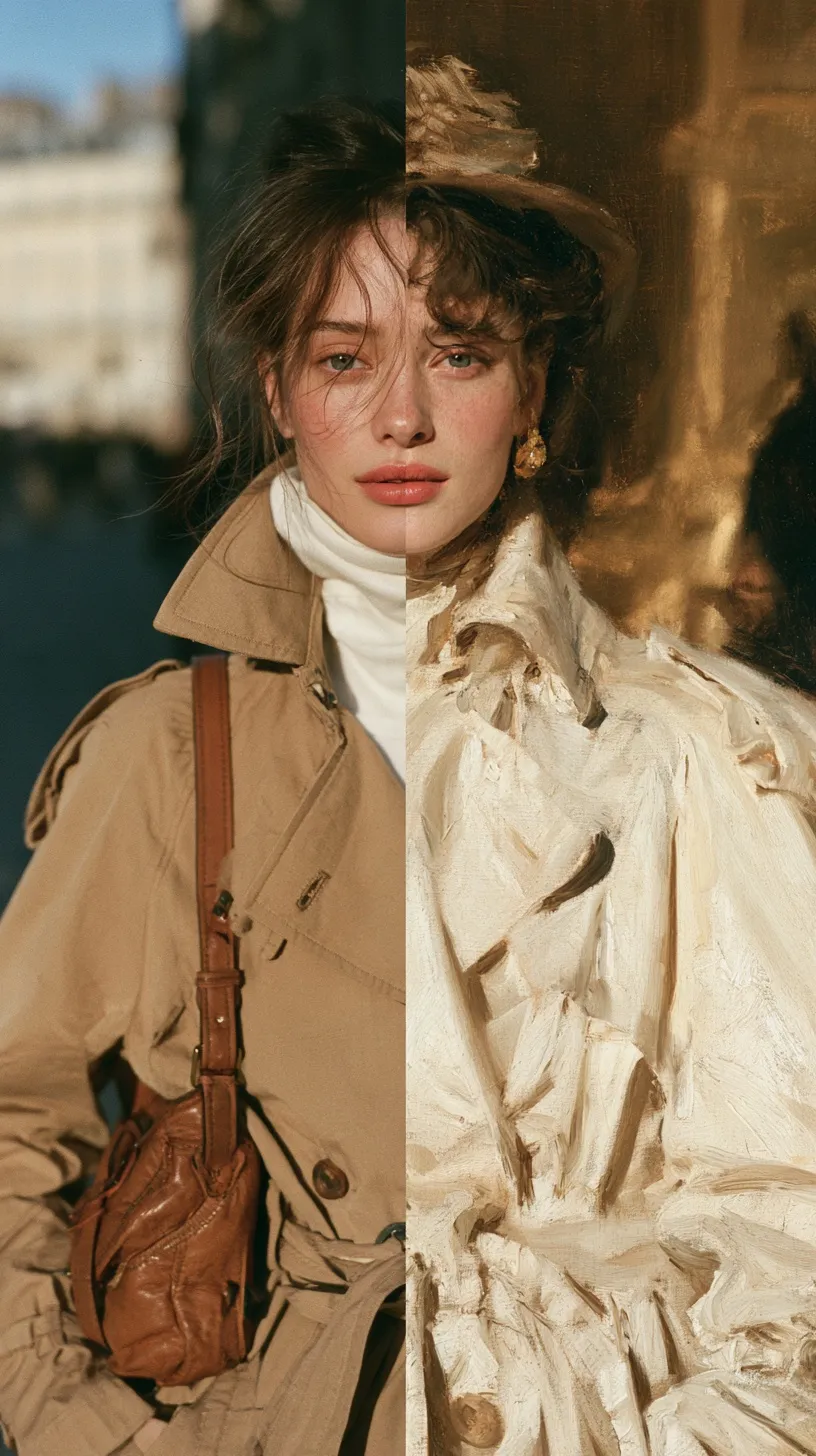
Personality · 6 programmes
Who am I?
Discover your personality from your date of birth: 6 programmes, 6 paintings, your strengths and your shadows.
Illustrations: Tanya Taina. The “You are a painting” concept, created with AI.
Try to answer in one phrase: what am I like?
Usually we answer with roles: mother, wife, professional, friend. And if you take the roles away, what is left? Personality is left. The core you came with.
How to read this
This is one of the ways to look at yourself through your date of birth, not a diagnosis: a diagnosis is made by a specialist, while here you look at yourself and choose what rings true.
The number is the essence. A gentle way in. The date names the makings you came with. It is a hypothesis about you, not a verdict.
Psychology is the path. How to live with it and where to go: Freud, Jung, Berne, modern research, all with sources. If a theme hurts, the path is walked together with a specialist.
Art is the mirror. A painting shows the same thing without words. Look: what in it is about you? The outer reflects the inner.
The science in this article is signed with sources. “6 programmes”, “40%”, “up to 25” are the rules of my method, and they are marked as such. A hint, not a fairy tale.

Roles change. The core stays.
ScienceWhat personality is
In psychology, personality is a stable core: the way you feel, choose and act, year after year and situation after situation.

Scientists look at personality in different ways. Here are the four main views.
Character traits
The “Big Five”
Modern psychology most often describes a person through five big traits: openness to experience, conscientiousness, extraversion, agreeableness and emotional sensitivity. Everyone has their own proportion, the way every painting has its own palette.1
Take note You have neither a “good” nor a “bad” character. You have your own proportion.
Sigmund Freud
“I want”, “I” and “I must”
Inside each of us lives a triangle: desire, the “I” and conscience. Freud described it in “The Ego and the Id” in 1923. Personality is how you negotiate between “I want” and “I must”.2
Take note Notice which one you give in to more often: “I want” or “I must”?
Carl Gustav Jung
The Shadow and the path to yourself
Everyone has a Shadow: what we hide in ourselves and therefore notice in others. Jung called the path to yourself individuation — his word for the process in which a person becomes who they really are.3
Take note What irritates you in others is a hint about your own Shadow.
Eric Berne
The life script
In childhood each of us makes a quiet decision about ourselves and the world: “I have to be easy to be around”, “I’ll manage on my own”. These decisions form a script — an unconscious life plan — and adults often live by it without noticing.4
Take note What quiet decision about yourself did you make as a child?

The core is the light you carry through all your roles.
Roles can be taken off. The core stays.
ScienceWhy by the age of 25
Erik Erikson
The main question of youth
The psychologist Erik Erikson described the stages of human development. The main question of youth, roughly from 12 to 18, was for him exactly this one: “Who am I?”. In these years a person separates from their parents and chooses who to be.5
Take note The question “Who am I?” is asked in youth. The answer can be refined all your life.

Santiago Ramón y Cajal was the first to draw nerve cells. His ink drawings are a classic of both science and art.
The brain
Maturing by 25
The brain grows up in the same rhythm. The frontal lobes — the area responsible for decisions, self-control and plans — mature last, at around 25. That is an average: for everyone it is different.6
Take note Up to 25 personality takes shape. After that, you use it.
In my method
Personality also forms from 0 to 25. After that it works for you.
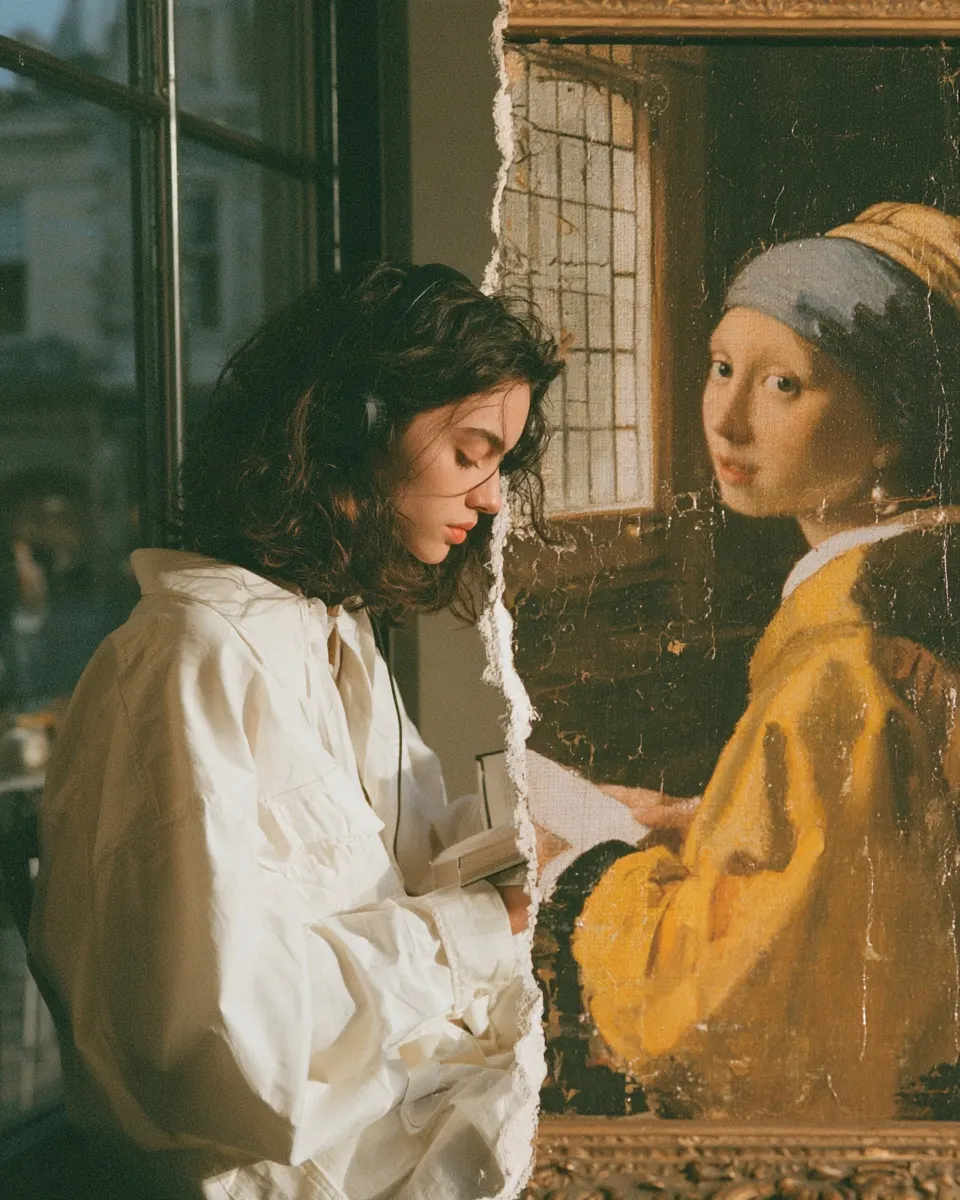
After Johannes Vermeer. The time when you choose who to be.
Personality is a core. You can always come back to it.
Research
Character changes after 30 too
With age, character becomes more stable, but it can change in adult life as well.7 As I say: turn the wheel by one degree, and a year later you are in a different place.
Take note One degree a year is also a change.
Method6 personality programmes

Personality is your crown: you wear it out into the world.
In my method
Personality is about 40% of you. Its leading note is the number of your birthday. But five more sound beside it.
Personality is 6 programmes: 2 of your own and 4 from your family line. Up to 25 they sound the loudest. And then on these legs you walk on: into relationships, into fulfilment, into caring for your health.
Six notes: two of yours, four from your family line.
MethodThe concentrate: where to look
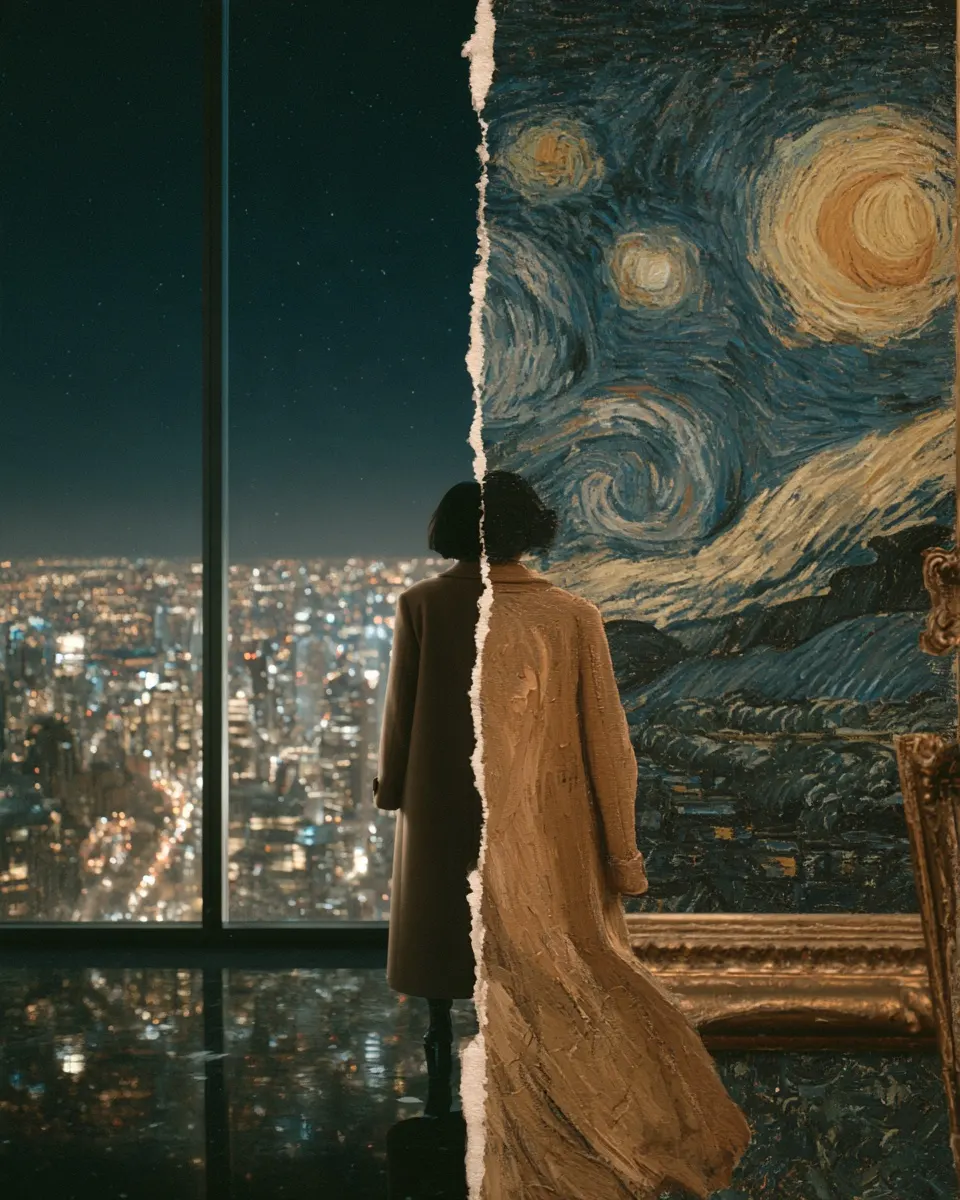
Where the notes repeat, there are the answers.
The most interesting part begins when a personality programme sounds somewhere else too: in the family script, in relationships, in the scale of realisation, in health. That is the concentrate. If you have a question about relationships, money or health, look: it may be your personality showing up again. The answers are there. Stop and think.
Where it repeats, there is the answer.

The number is the essence, psychology is the path, art is the mirror.

The journey to yourself begins with one date.
Try it on yourself
Count your 6 programmes
What you get
A book about you: around 20 pages of PDF
A ticket for the journey, your 6 paintings, a description of each programme: your ground, pluses and minuses, the wound and its gift, talents, Jung, Freud, Berne, the body. Space for notes and an overall conclusion. All of it only about you.
Two buttons at the end: “Save my portrait” with your notes and “Print and write by hand”. The file downloads to your phone: open it, print it, send it on.
For me this is the precision I see again and again. And every time I am amazed at how much a date knows about a person.
Take it for yourself. Enter your date, look at your paintings, read your pluses and minuses. Then mark how much of it rang true and share your impressions: here, with me, or in the channel. Or keep them to yourself.
Treat this as a hint and a switch of perspective. It is not “this is how it will be”, it is about where to turn the wheel by one degree. If you feel resistance or something unpleasant, that happens too: live with this information and come back to it in a while. Train your eye on yourself.
Enter your date, or any other
Yours, your mother’s, a friend’s, a child’s — every date has its own notes. The date stays only on your phone.

You are a painting. And you decide what it will be.
A hint, not a fairy tale.
Tanya Taina
All my projects in one placetanyataina.com →The “You are a painting” platform, “The Secret of the Voice”, podcasts and the channelSources
- McCrae R. R., John O. P. An introduction to the five-factor model and its applications. Journal of Personality, 1992, 60(2): 175–215.
- Freud S. The Ego and the Id, 1923.
- Jung, the Self and individuation: Self in Jungian psychology.
- Berne, the life script: Simply Psychology, Transactional Analysis.
- Erikson, the “identity vs. role confusion” stage: SUNY Cortland, Erikson Stage 5.
- Gogtay N. et al., 2004, PNAS; overview: Simply Psychology, Prefrontal Cortex. Arain M. et al. Maturation of the adolescent brain. Neuropsychiatric Disease and Treatment, 2013: 449–461 (DOAJ).
- Roberts B. W., DelVecchio W. F., 2000, Psychological Bulletin 126(1): 3–25. Terracciano A., Costa P. T., McCrae R. R. Personality plasticity after age 30, 2006 (PMC).
- “40%”, “6 programmes”, “0–25 years”, “the concentrate” are the rules of Tanya Taina’s method.