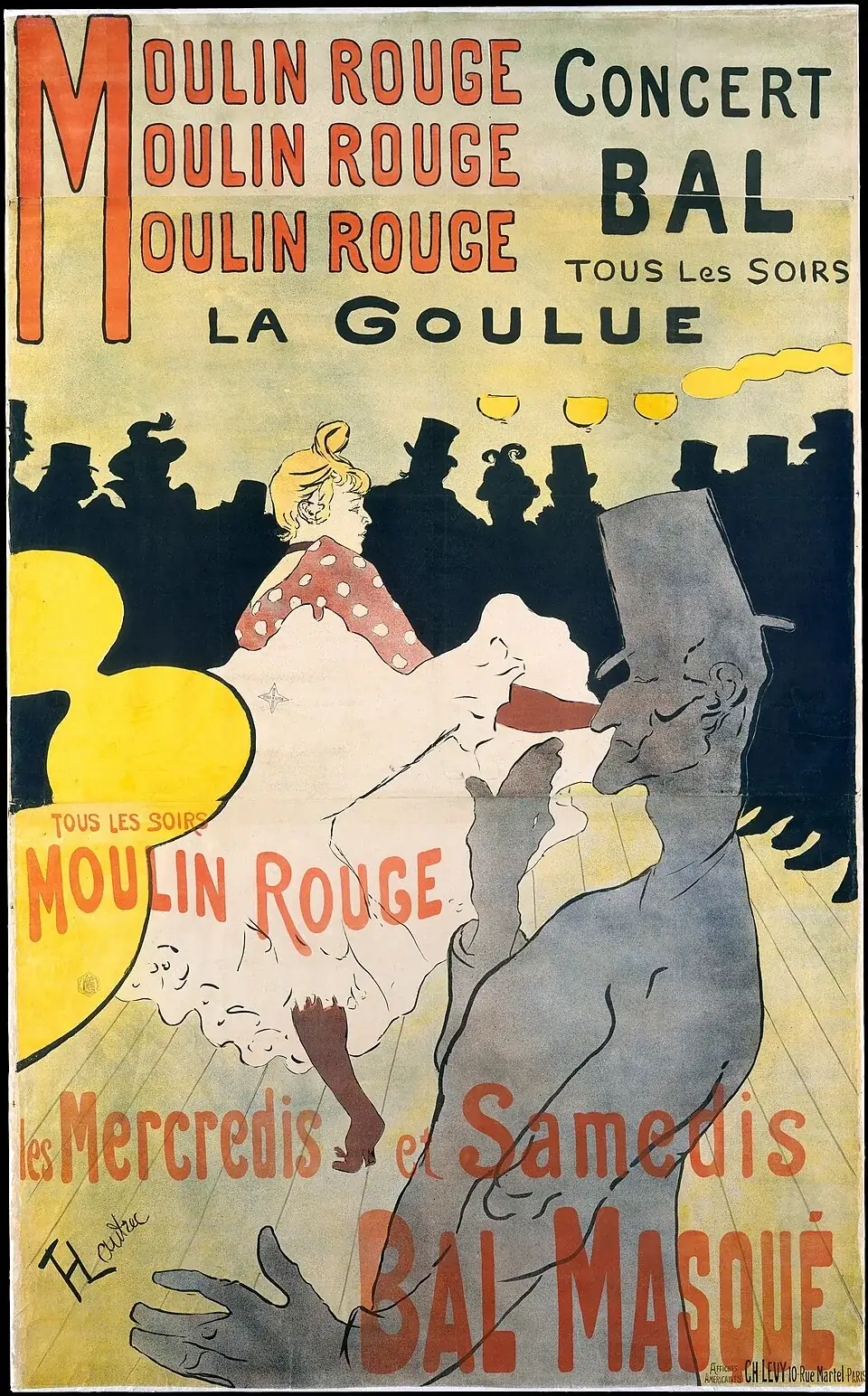
Moulin Rouge: La Goulue, 1891. The Metropolitan Museum of Art
They tore his posters down before the glue was dry
A count born for the saddle and the falcon hunt became the painter of Paris by night. What his date says about it.
This is the poster Parisians peeled off the advertising columns at night, before the glue was even dry. A yellow pool of light, a dancer in a white froth of petticoats, a grey male profile right in front of your eyes.
It was drawn by a man who broke one leg at 13 and the other at 14. The bones healed and stopped growing. Thirteen years later, all of Paris knew his name.
Henri de Toulouse-Lautrec. A count. A wit. A cook. A man who loved dressing up as a samurai. An artist who turned the poster into bold art and the street into his gallery. And a man who managed to destroy himself.
One thing about him always strikes me: how can someone create so much and destroy himself so completely? A life torn wide open, with no middle ground. Glitter and grime, talent and ruin, all mixed together. Perhaps it was written that way: to walk the very edge of the blade, so that almost a century and a half later I would sit over my morning coffee and think about it.
Let’s look at his life together. The number is the essence, psychology is the path, art is the mirror.
Hall 1 · Ages 0–25A boy born for the saddle
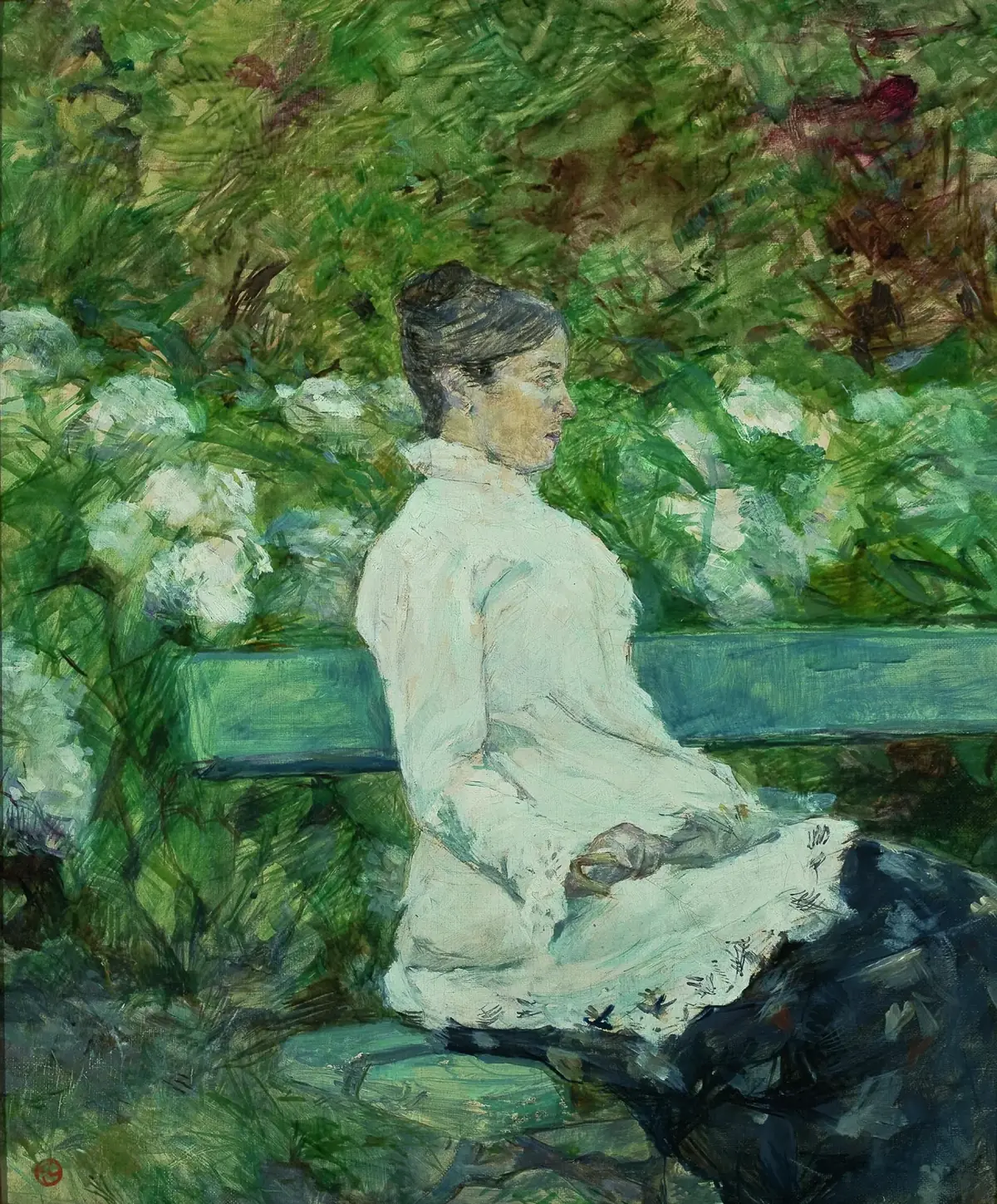
Look
His mother on a green bench. A white dress, a profile, silence. Not a single harsh line. This is how we look at someone we love.
Life is like a layer cake. Each of us is born into our own layer. Henri was born into the very top one: an ancient line of counts, châteaux in the south of France, horses, hounds, falconry. His parents, Count Alphonse and Countess Adèle, were first cousins. The Toulouse-Lautrec Museum in Albi says his bone disease was probably linked to that kinship.
His father lived in the saddle, a falcon on his wrist, and dreamed of a son who would ride. He gave the boy a book on falconry and, according to biographers, wrote in it:
The father was a great eccentric himself. The story goes that he would ride a mare into the Bois de Boulogne, milk her and drink the milk for breakfast, and that he gave his hunting birds holy water so they would go to heaven. The son seems to have inherited his sense of humour and his love of costume.
His father wished him well. In his own way, through his own lens: the way he lived himself. Two years later the son breaks his left thigh, a year after that, the right. His body grows up, but his legs stay a child’s. His father’s life of horses and falcons closes to him for ever.
His mother protected him, loved him, pitied him. What happened to her son became her pain for the rest of her life. He wrote to her until his last years and signed in English: “your boy.” One such letter, from around 1886, is kept at the Morgan Library in New York: he tells his mother about his work and a new drawing for a magazine.
Psychology
Two parental voices sound in each of us. One says “be like us,” the other simply protects. Both are love. A child who grows up different from what was expected asks early on: “So where is my place?”
When we are held back in one place, energy looks for a way out. Psychologists call it compensation. I’ll put it more simply: Lautrec’s pain turned into a desire to be seen. Into line, into colour, into a poster the size of a wall. His father and uncles taught him to draw, and in 1882 he left to study painting in Paris. His legs let him down, so his hands became his support.
Take this with you
Notice where your energy goes when you feel cramped in one place. That is very likely where your gift lives.
His date · 24.11.1864The Sun and the Moon in one hand
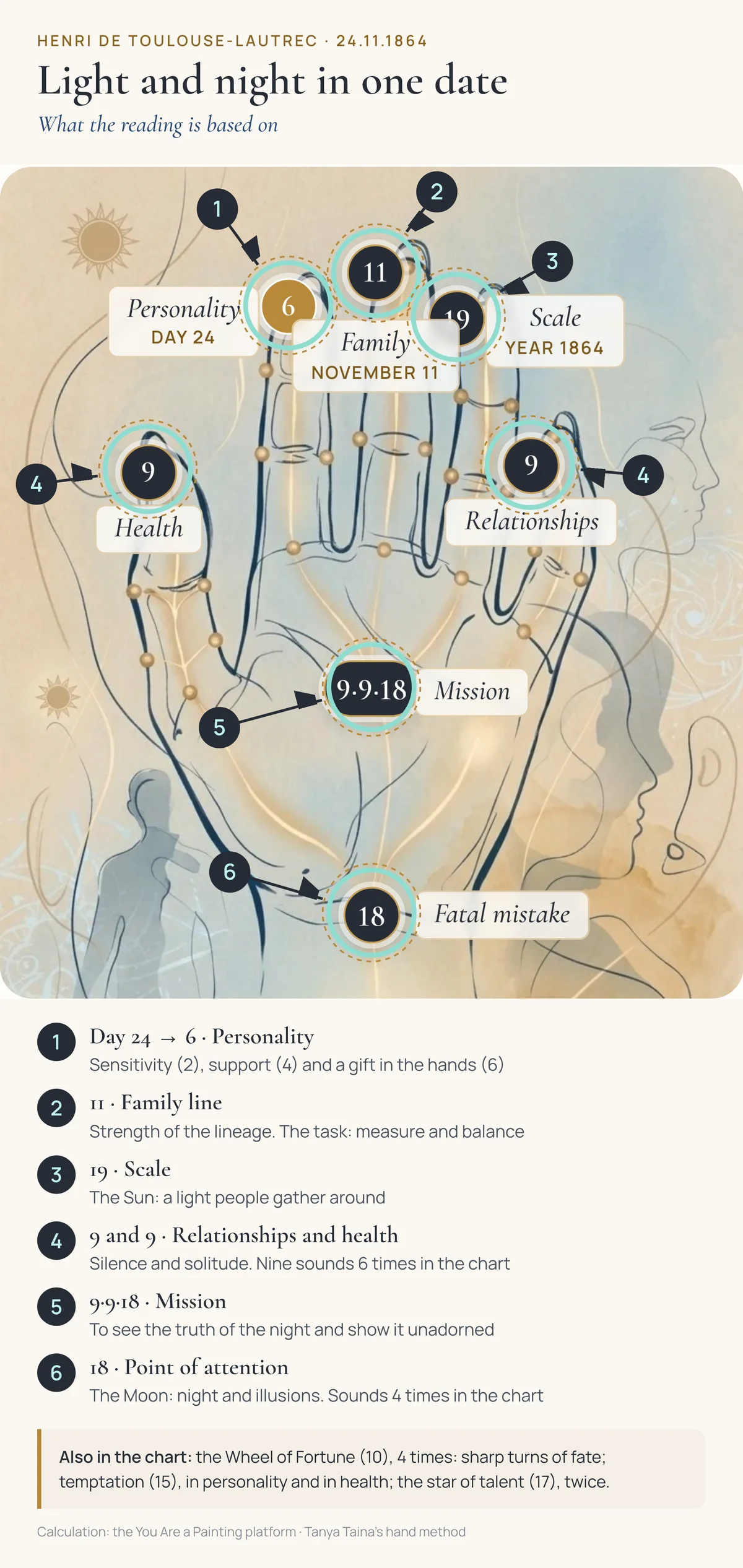
I looked at his date through my hand method. Every number has its light and its shadow. A number is a corridor: it shows where to direct your strength and where to set yourself a limit.
Three notes of fate
Personality: 6. The day is 24, where 2 and 4 also sound: sensitivity, support and a gift in the hands. A very sensitive person for whom being accepted matters.
Family script: 11. The quiet strength of the lineage. The task is measure and balance. Measure is exactly what he lacked all his life.
Scale: 19. The Sun. A light that people gather around.
Now the whole hand. Nine, silence and solitude, sounds six times: it leads both relationships and health. Alone in a crowd: always surrounded by friends, singers and dancers, and silence inside. The Wheel of Fortune, ten, four times: sharp turns of fate. The star of talent, seventeen, twice.
And the main thing. In his scale he has the Sun (19), and at the wrist, in the point of attention, the Moon (18): night, illusions, life in half-light. Light and night in one date. In my method the point of attention is the road not to take. That is exactly where the life of Montmartre lured him.
A hint, not a fairy tale: a date shows which themes will sound louder in a life. What to do with them is up to the person.
Hall 2 · Ages 25–35The street became his gallery
He found his place in Montmartre, the hill of artists, cabarets and dance halls in the north of Paris. He left his own layer for another. A place where he was accepted as he was: witty, sociable, small and great at the same time.
Look at the poster
The man’s grey silhouette is cut off by the edge of the sheet, like a film frame. The yellow lamps are flat patches with no shadows. The crowd is one black ribbon. And on the skirt and the floor, tiny spatters of paint: he flicked them with a brush straight onto the lithographic stone the poster was printed from.
In 1891 the Moulin Rouge commissioned a poster from him. Before him, Jules Chéret, “the father of the modern poster,” had already turned the colour poster into art: cheerful dancing girls, bright colour. Lautrec went further. Flat patches of colour, a large silhouette cropped like a film frame, and those very spatters. Lithography is printing from stone. The artist draws with a greasy crayon and ink on a smooth slab of limestone, and hundreds or thousands of prints are pulled from it. Each colour gets its own stone. Everyone noticed the poster.
Poster mania
Posters were pasted on house walls, fences, newspaper kiosks and round advertising columns. In the 1890s Paris caught a real fever: people began collecting posters like paintings. Collectors bribed the bill-posters to get a fresh sheet before it was pasted up. Others secretly peeled posters off the columns at night, risking the police and a fine.
The writer Maurice Talmeyr complained that the poster imposed itself: there was no escaping it on the street. Art stepped out of its gilded frames and onto the street, and Lautrec became one of its leading artists.
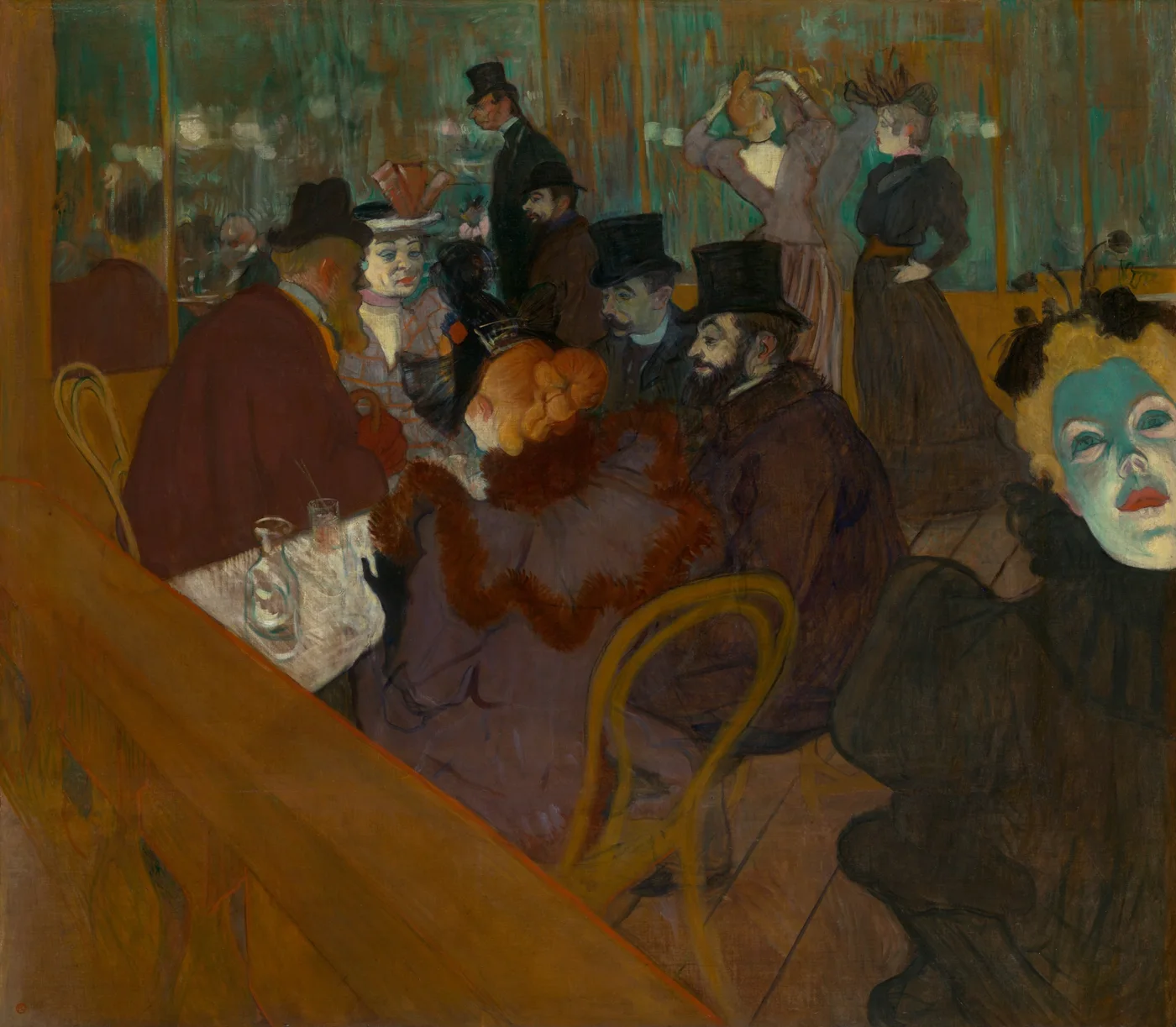
Look
Find the small man in a bowler hat at the back of the room, next to a tall one. That is Lautrec himself and his cousin. And on the right, the face of the dancer May Milton, green in the light coming from below. This strip of canvas was once cut off, apparently to make the painting easier to sell. Later it was put back.
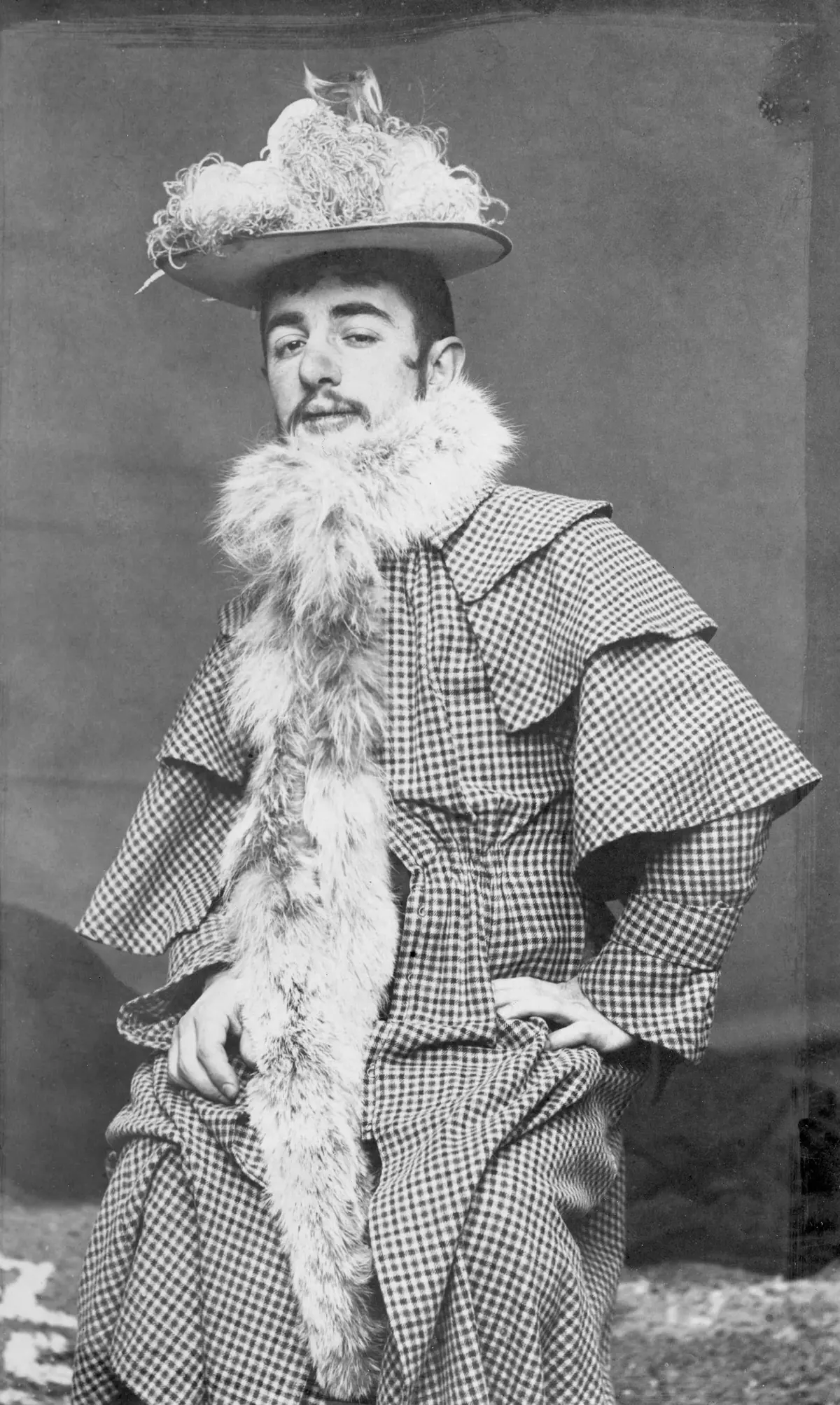
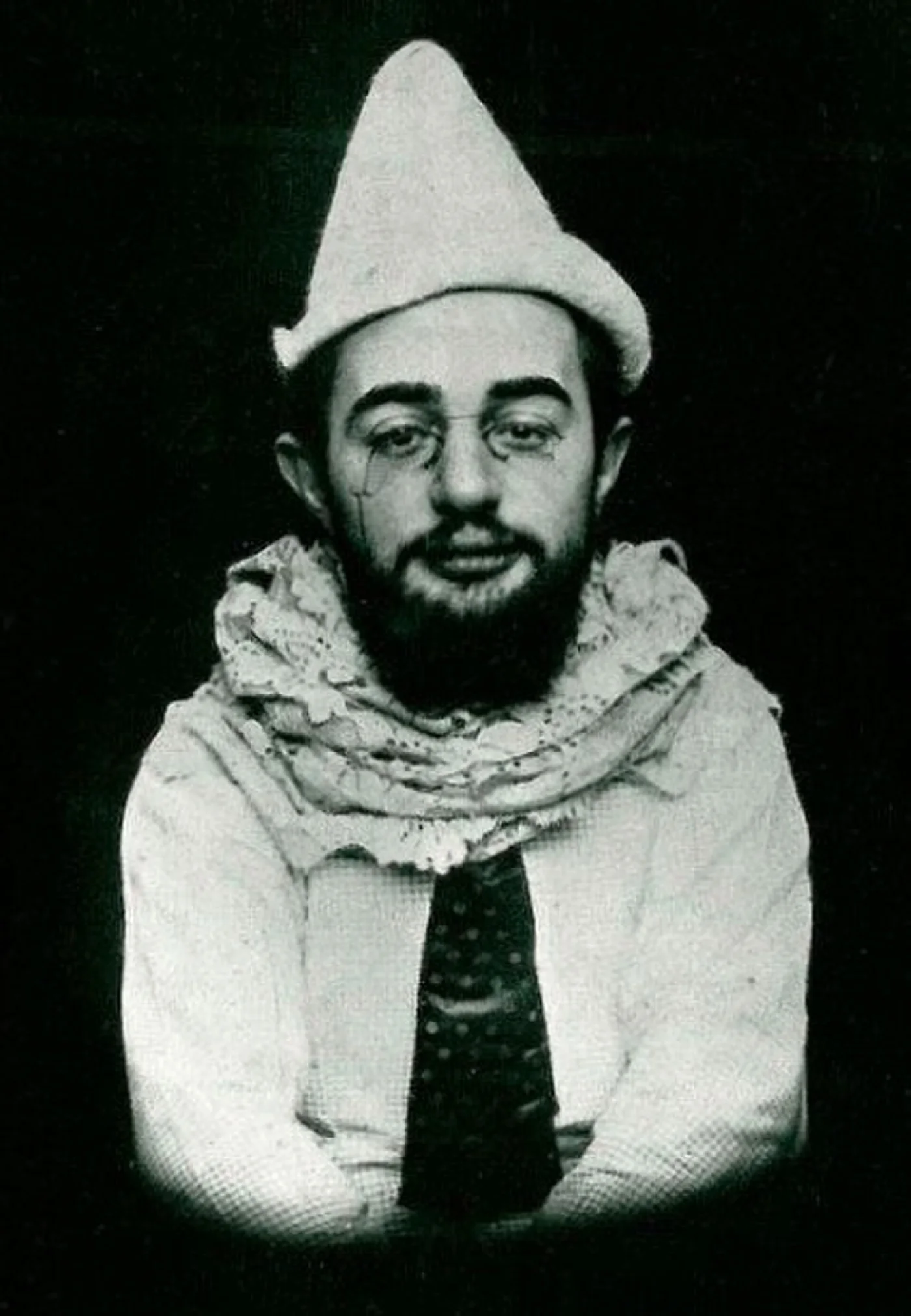
And he could laugh at himself. Lautrec never had a camera of his own, yet his friends photographed him all the time, and he staged the poses himself. A samurai, a clown, a pious altar boy, a dolled-up singer: he adored dressing up. He was also a superb cook: his friend Maurice Joyant later published his recipes as a book, The Art of Cuisine.
Humour is a strong defence. It helps us live when things are hard. But behind laughter there is often a sadness a person shows only to a few.
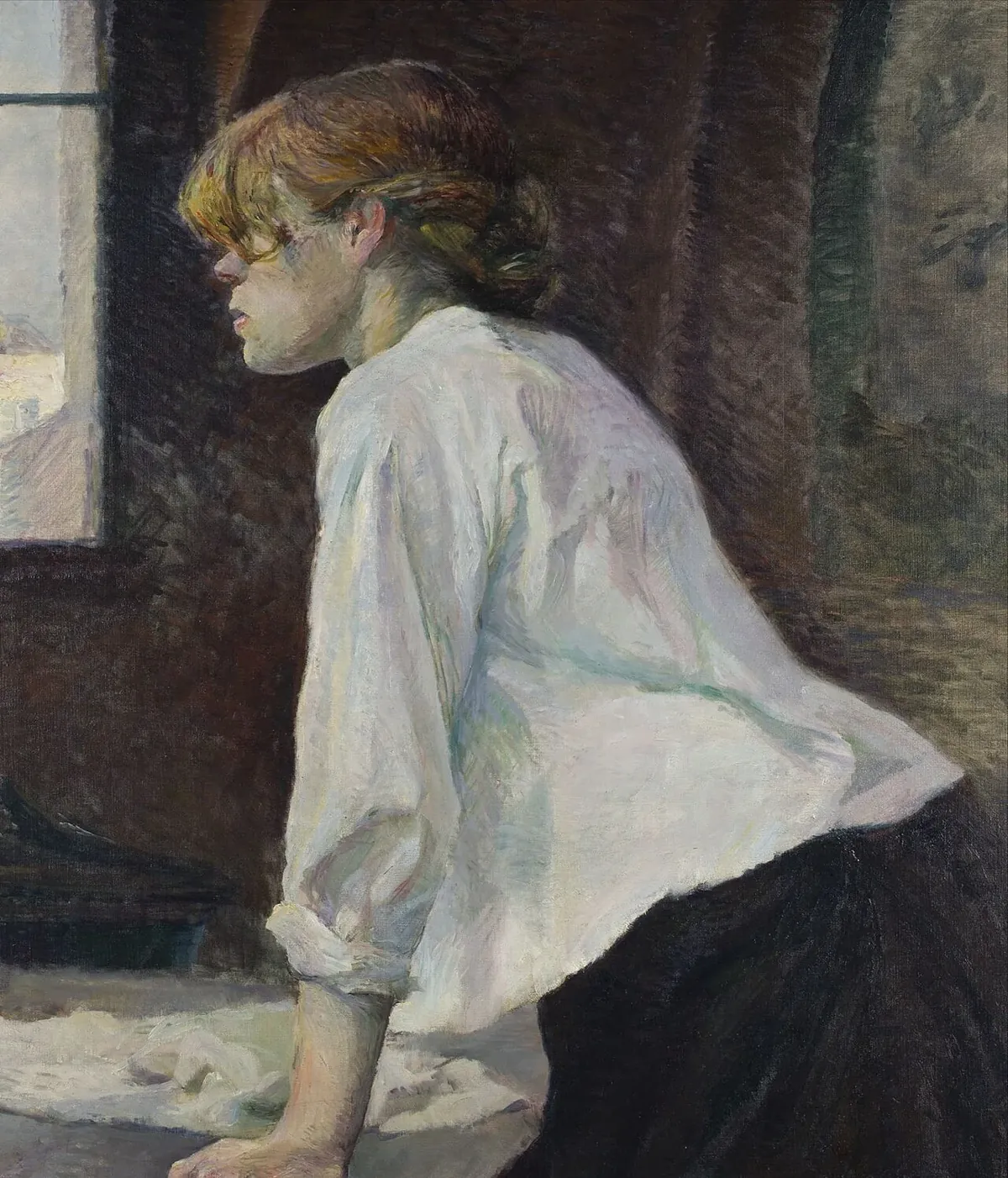
The note of his family line, 11. On my platform the second painting for energy 11 is his own Laundress. A red-haired girl has paused her work for a moment and looks out of the window. An aristocrat, the son of a count, and the quiet strength of his lineage speaks through a woman who works with her hands. In 2005 this painting sold at Christie’s for $22.4 million. It is Lautrec’s record.
Psychology
Everyone needs a place where they are accepted. If the family can’t give it, we find a “chosen family”: friends, a circle, a city. That family gives us wings. And sometimes it charges a price for them.
Hall 3 · The priceThe demi-monde: a life that lures you in
Montmartre had a shadow too. The French called that world the demi-monde: life on the edge of respectable society. Absinthe, sleepless nights, cabarets, chance affairs. This life pulls you in and lures you on. Many took advantage of it, and many were lost in it.
Why did he drink? It is addiction. And those were the times: absinthe was poured in every café, morphine and cocaine were sold in pharmacies as medicine, and people knew far less about addiction than we do now. They slid into it without understanding what was happening.
And I think sadness led him there too. The kind he hid behind humour and showed to only a few. Alcohol often becomes a painkiller: it numbs what hurts to feel. A person looks for relief and pays with their health. Lautrec had been in pain since childhood. And Montmartre gave him both acceptance and anaesthesia at once.
His date
Health: 9, with the pairs 9-6, 9-18, 15-6: solitude, love, the Moon with its illusions, and temptation. Point of attention: 18, the Moon. Exactly what the demi-monde offered so generously.
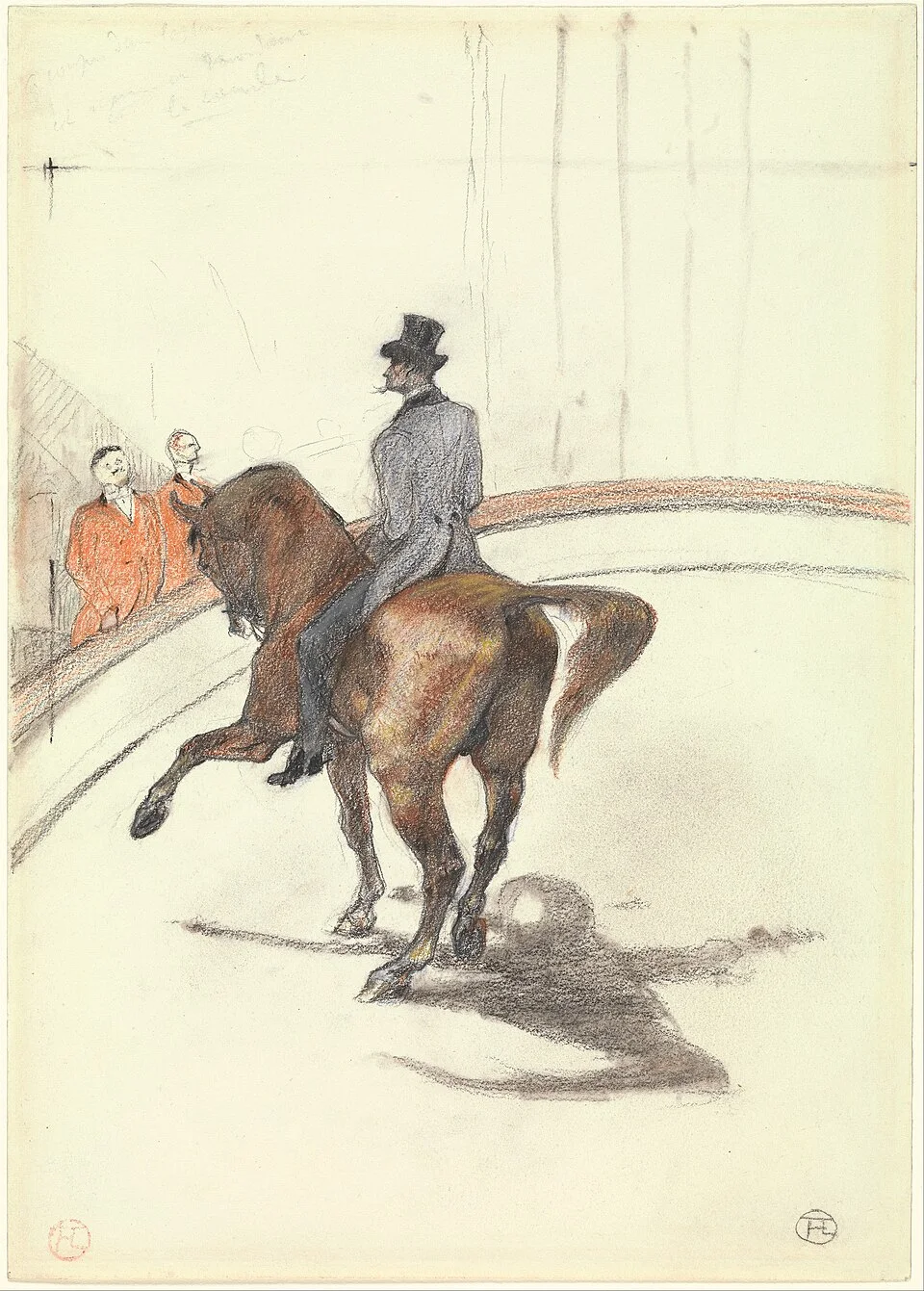
In February 1899 his family placed him in a clinic in Neuilly. And something remarkable happened there: from memory, without a single sketch, he drew the circus. Riders, acrobats, clowns. The mastery of these drawings convinced the doctors that he was better.
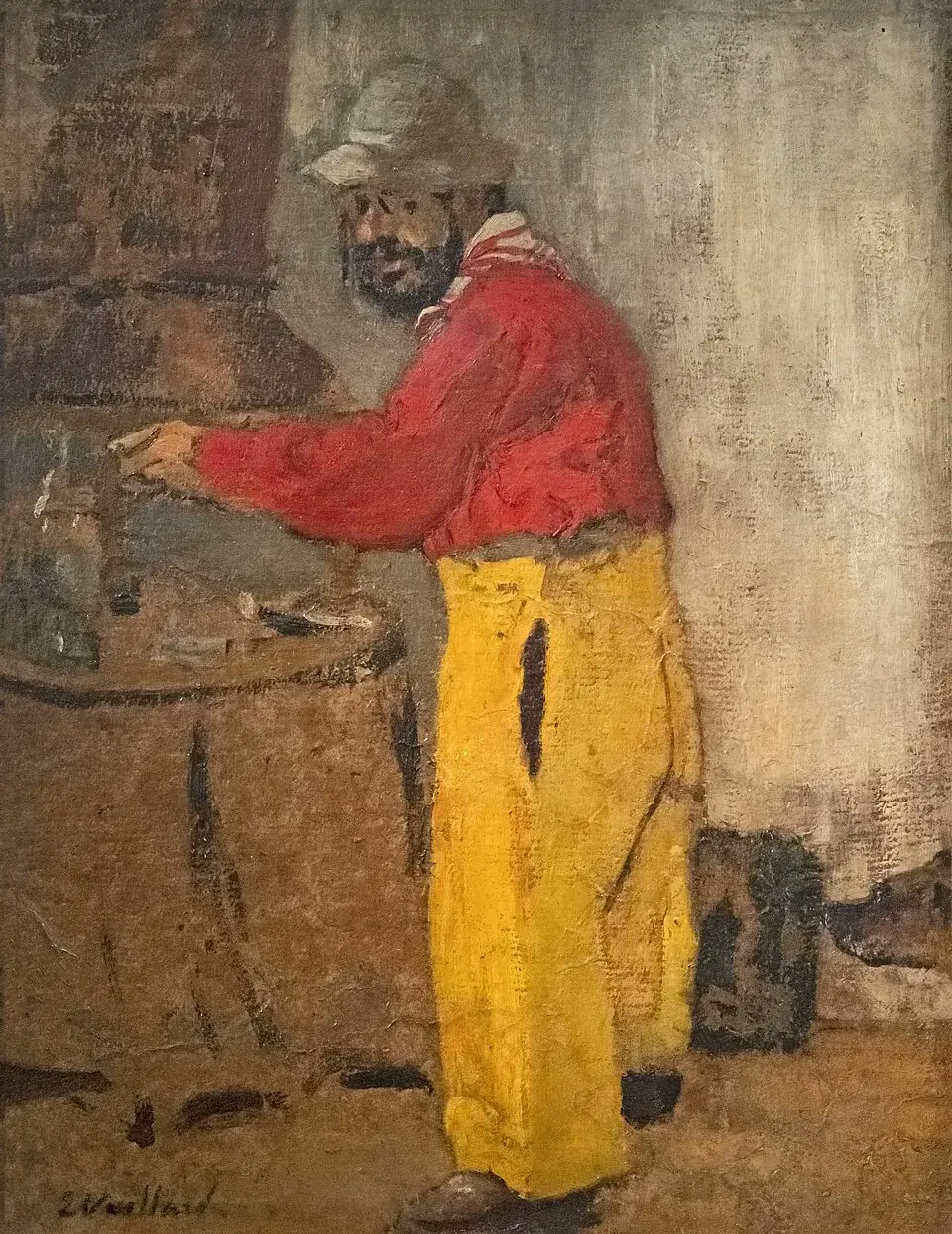
Look
This is how his friend, the painter Édouard Vuillard, saw him. A red shirt, yellow trousers, Lautrec calmly cooking in the kitchen. Here it is, the light of nineteen.
On 9 September 1901 he died at his mother’s estate, Malromé. He was 36. In the hand method, scale unfolds after 35. His Sun began to shine without him.
Take this with you
Each of us has our own “painkiller”: sweets, the phone, a glass in the evening, endless work. Look honestly: which sadness are you numbing with it?
FinaleA mother and a friend
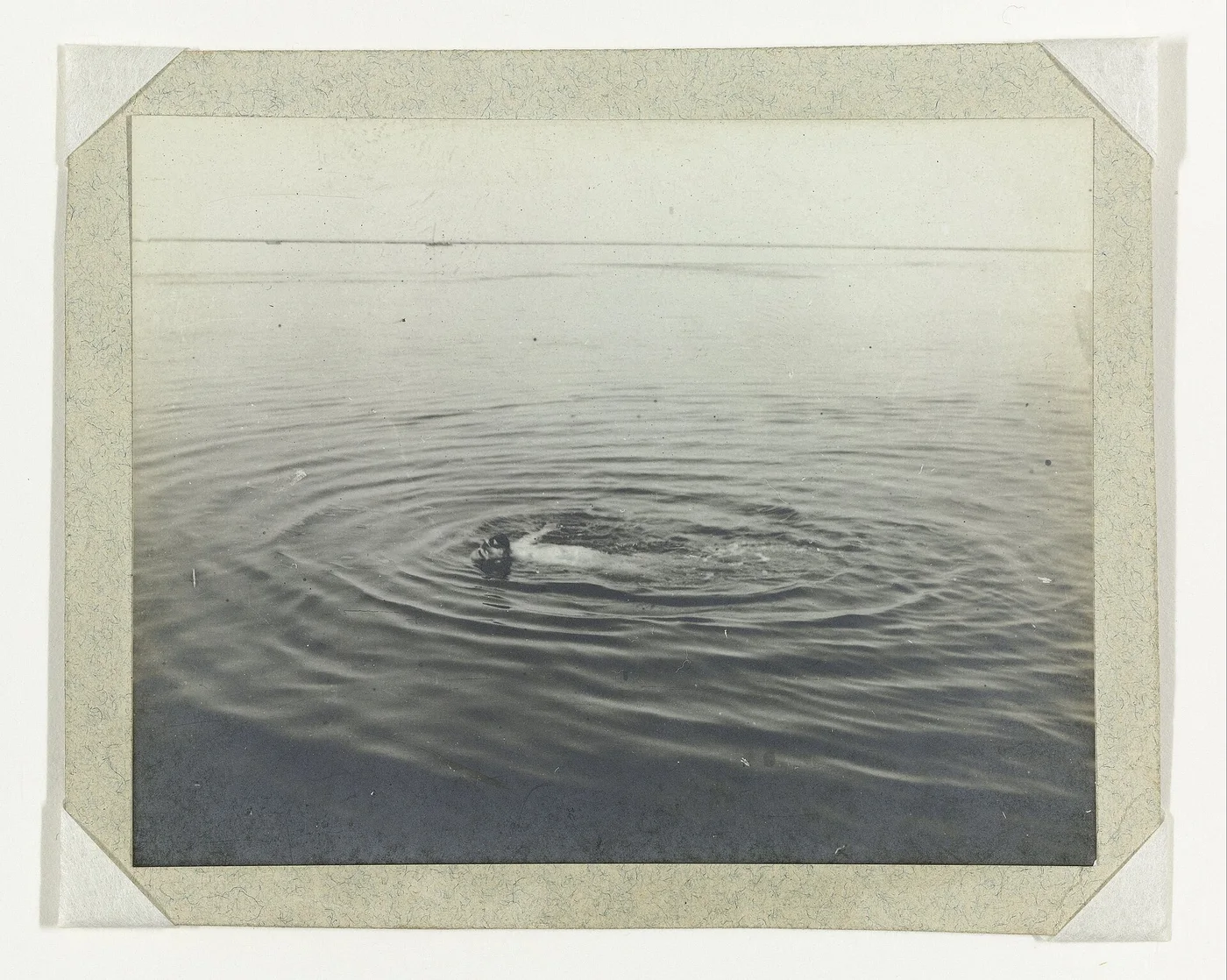
Two people who had loved him since childhood stayed by his side.
His mother, Countess Adèle, had received “your boy” letters all her life. Now she kept his works, and she wanted one thing: for her son’s memory to live.
And a friend. Maurice Joyant had been at the same Paris lycée as Henri. He became an art dealer: when Theo van Gogh, Vincent’s brother, fell ill and left the Paris gallery of Boussod, Valadon, he took his place and knew the worth of talent. It was he who persuaded the mother to give the paintings to Henri’s home town.
In 1922 his mother, his cousin Gabriel Tapié de Céleyran and Joyant gave Albi hundreds of paintings, drawings, lithographs and all his posters. A modest town museum became the world’s leading Lautrec museum. Since then his works have come up at auction more than 11,600 times.
What his light is worth today
Christie’s and Sotheby’s are the two largest auction houses in the world.
| The Laundress, around 1886 | Christie’s, 2005 | $22.4m record |
| In Bed: The Kiss, 1892 | Sotheby’s, London, 2015 | £10.8m ≈ $16.2m |
| Pierreuse, 1889 slang for a streetwalker | Christie’s, 2020 | $9.06m |
| Poster Moulin Rouge: La Goulue, 1891 | Christie’s, London, 2014 | £314,500 ≈ $530k |
That very poster was printed in a run of about three thousand sheets. It was pasted on columns, torn down, soaked by the rain. Very few survive. A sheet that once hung in the street now costs as much as an apartment.
Where to see him in person
- Albi, Toulouse-Lautrec Museum: the largest collection in the world, the gift of his mother and his friend.
- Paris, Musée d’Orsay: Jane Avril Dancing and other paintings.
- Chicago, The Art Institute: At the Moulin Rouge.
- New York, The Metropolitan Museum of Art: posters and circus drawings.
- São Paulo, MASP: the portrait of his mother in the garden.
His gift was saved by a mother’s love and a friend’s loyalty. To them he always remained their boy and their friend.
Where are you accepted just as you are? And what price do you pay for it?
His mother and his friend saw him. But whom did he see? In part two: the women of his light. Why he was so drawn to them, and what they share in their dates.
Part 2 of 2He saw himself in them →Tanya Taina
Which paintings are waiting for you?
Enter your date of birth and open your exhibition: seven paintings by great artists.
Open your exhibition →Sources
- Toulouse-Lautrec Museum, Albi: museum history and the 1922 gift — www.musee-toulouse-lautrec.com
- Museo Thyssen-Bornemisza: biography (fractures in 1878 and 1879, Bonnat, Cormon) — www.museothyssen.org
- Google Arts & Culture: 7 things you didn’t know about Henri Toulouse-Lautrec — artsandculture.google.com
- Google Arts & Culture: Jane Avril — artsandculture.google.com
- Sotheby’s: 21 facts about Toulouse-Lautrec (2019): cooking, posters, clinic, Vuillard — www.sothebys.com
- Art & Object: The Laundress and Pierreuse at Christie’s — www.artandobject.com
- Le Lit / Au lit: le baiser, Sotheby’s 2015 — en.wikipedia.org
- Paul Fraser Collectibles: Moulin Rouge poster at Christie’s, 2014 — www.paulfrasercollectibles.com
- Antiques Trade Gazette: print run of the La Goulue poster — cdn.antiquestradegazette.com
- Artprice: auction statistics and the 2026 exhibition in Aix-en-Provence — news.artprice.com
- Driehaus Museum: Poster Maniacs, collectors of the Belle Époque — driehausmuseum.org
- Britannica: Jules Chéret — www.britannica.com
- Kunstmuseum Bern: Toulouse-Lautrec and Photography — www.kunstmuseumbern.ch
- University of Glasgow: Maurice Joyant — www.whistlerpaintings.gla.ac.uk
- Morgan Library: letter to his mother, MA 4374 — www.themorgan.org
- The father’s inscription in the falconry book, after biographer Paul Domski — stephenbodio.com
- Count Alphonse de Toulouse-Lautrec — en.wikipedia.org
- Rijksmuseum: Toulouse-Lautrec Swimming in the Bassin d’Arcachon — www.rijksmuseum.nl
- Art Institute of Chicago: At the Moulin Rouge — www.artic.edu
- The Met: At the Circus: The Spanish Walk — www.metmuseum.org
- Phillips Collection: Jane Avril — www.phillipscollection.org
- Paris Zigzag: Jane Avril and the Salpêtrière — www.pariszigzag.fr
- Ministère de la Culture: Suzanne Valadon, Degas and the 1894 Salon — www.culture.gouv.fr
- Centre Pompidou: The Blue Room — www.centrepompidou.fr
- Images: Wikimedia Commons, public domain