Know Art · Episode 1 · Prehistoric Art
know yourself through art
The Inner Stands
What the cave painter knew about fear 36,000 years before psychologists
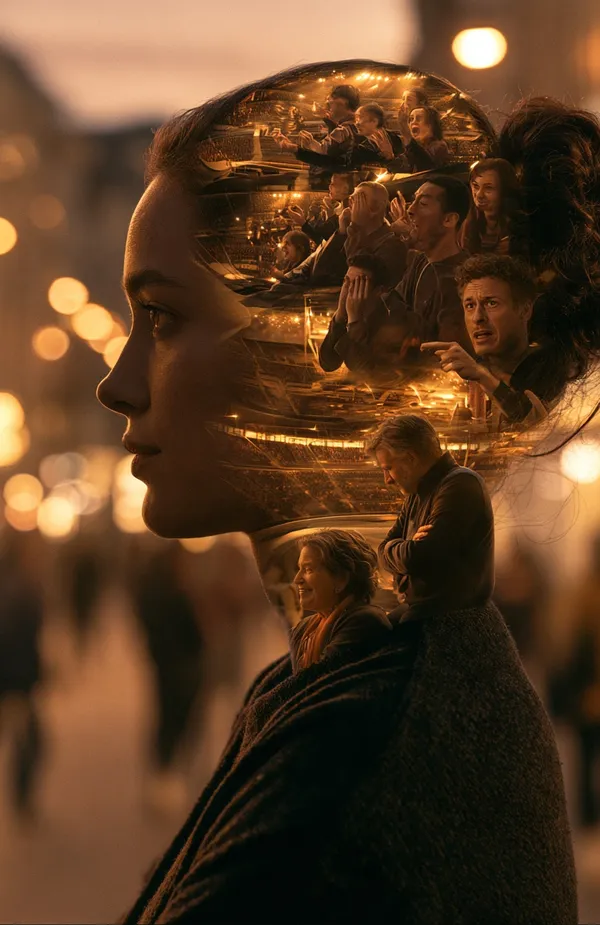
Stands in your headEvery row has its own emotion

Voices in your heartWarm and cold. Mother and father sit closest
Illustrations: Tanya Taina · made with AI
Close the film and the article waits for you right where you left it
Darkness. The smell of smoke and wet stone. The flame in your hand trembles, and the shadows on the wall come alive: the flank of an animal, or just a bulge in the rock? Tomorrow is the hunt. The beast is ten times stronger than you. You pick up a piece of charcoal and trace its outline.
This may be how art began. Not with beauty, but with fear. And with the wish to give it a shape.
What this article is about
Why did the first paintings appear in the deepest parts of caves? What do three discoveries of 20th-century psychology tell us about a drawing on a rock? Why did Picasso keep casts of a prehistoric Venus, and why did Miró start painting with his fingers after Altamira?
And the main question: who sits in your inner stands when you take a step?
At the end: your start by birth date and a practice called “Your Own Wall”.
In this article
Fact-checked · sources at the end
What is fact and what is interpretation
- Cave dates and the Altamira story are checked against scientific and museum sources
- Psychology studies are named with authors, years and journals
- The famous lines about caves attributed to Picasso and Miró are legends, and we call them that
- The inner stands and the reading of the date are my own interpretation through the hand method
The girl nobody believed
Cantabria, Spain, 1879. Eight-year-old María peeks into a low chamber of the Altamira cave, where her father has come to look for finds. The adults are looking at the ground. She looks up. On the ceiling: bison, red and black, huge, as if alive.
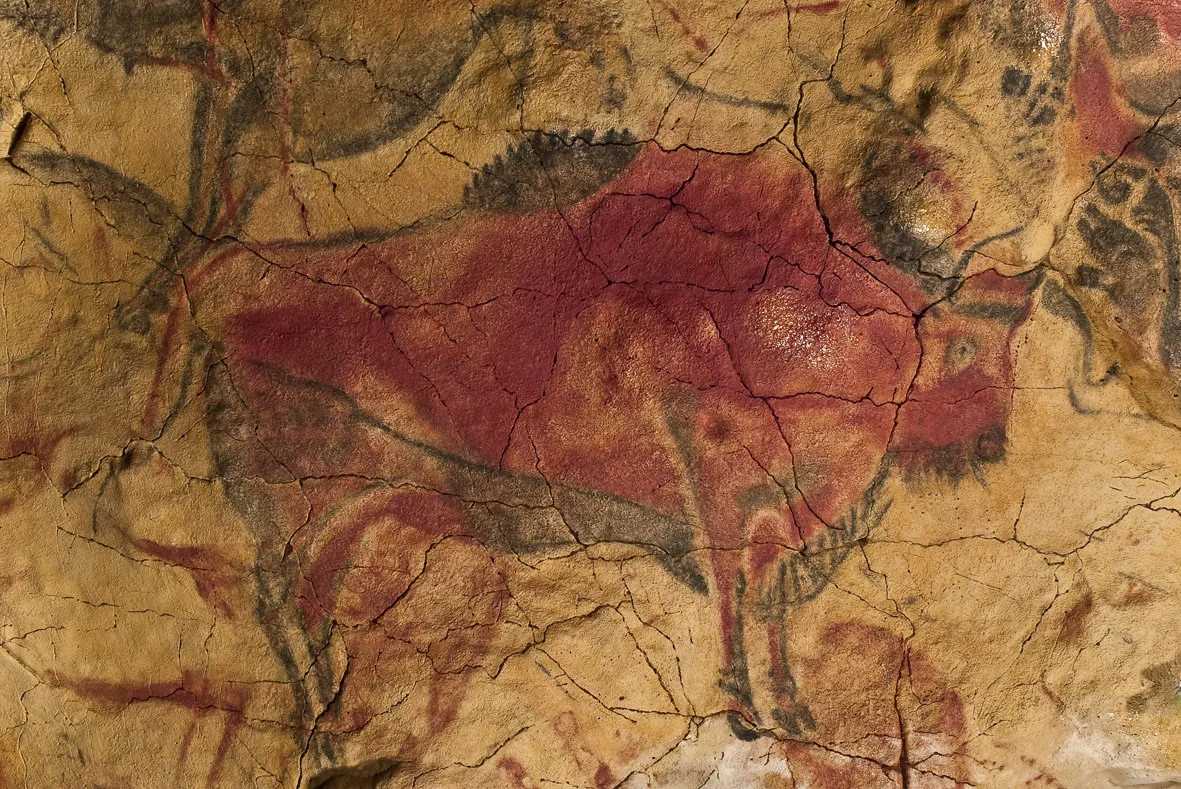
Her father, Marcelino Sanz de Sautuola, published the find in 1880. The scientific world replied: a forgery. Too good for “savages”. Sautuola died without seeing his discovery accepted. Only in 1902 did the French archaeologist Émile Cartailhac publish an article with a telling title: “Mea culpa d’un sceptique”, a sceptic’s confession.
The grown-up world argued for twenty years with what a child saw in a second.
Let’s remember that. Sometimes, to see something new, you just need to look up.
They ate reindeer, but painted horses
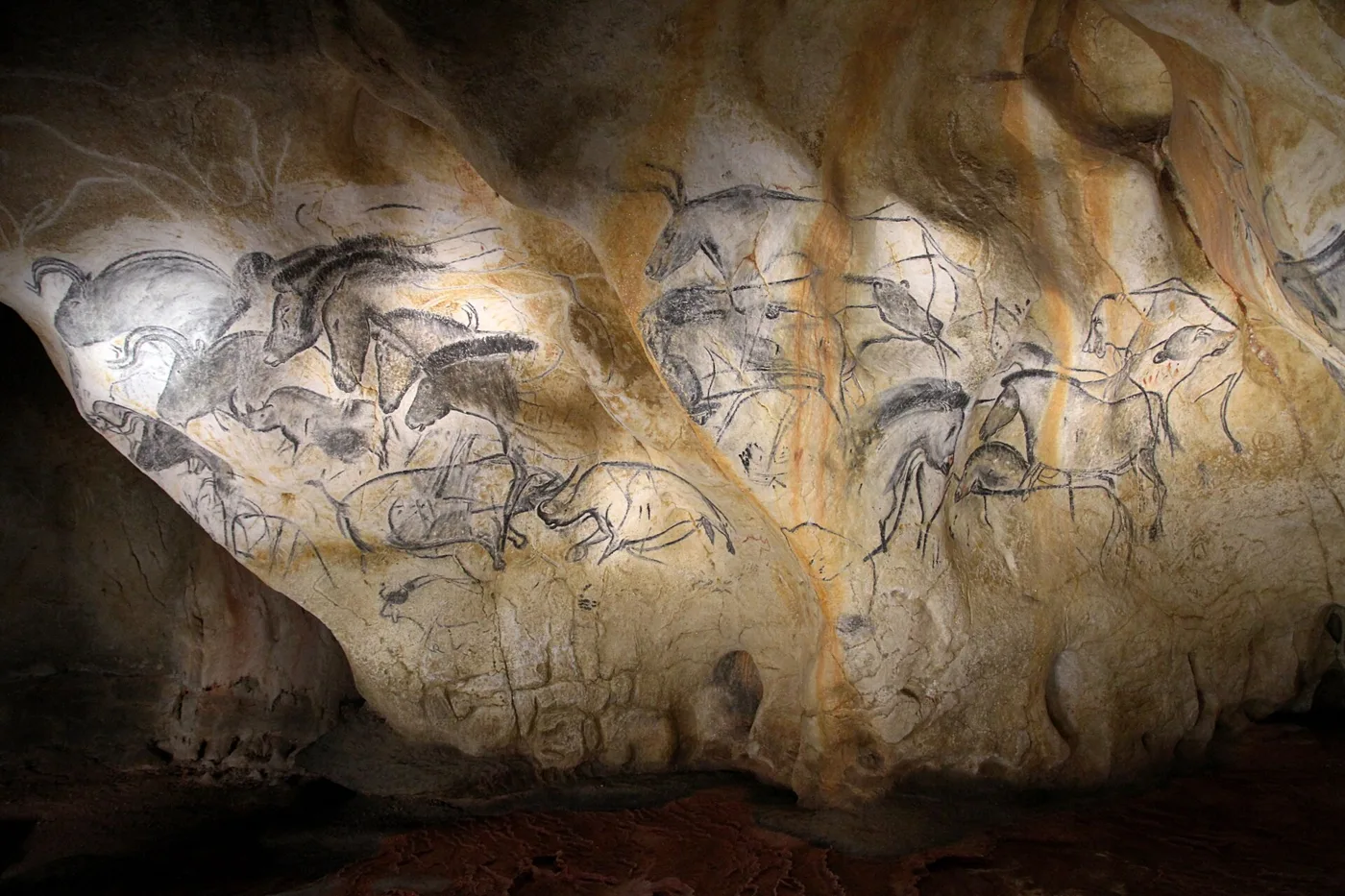
Chauvet in the south of France is about 36,000 years old. Lascaux is about 17,000 years old; it has been closed since 1963, and the photos you see today are taken in replicas. A hand stencil in the Spanish cave of El Castillo is more than 37,300 years old. Perhaps the oldest signature in history: “I was here.”
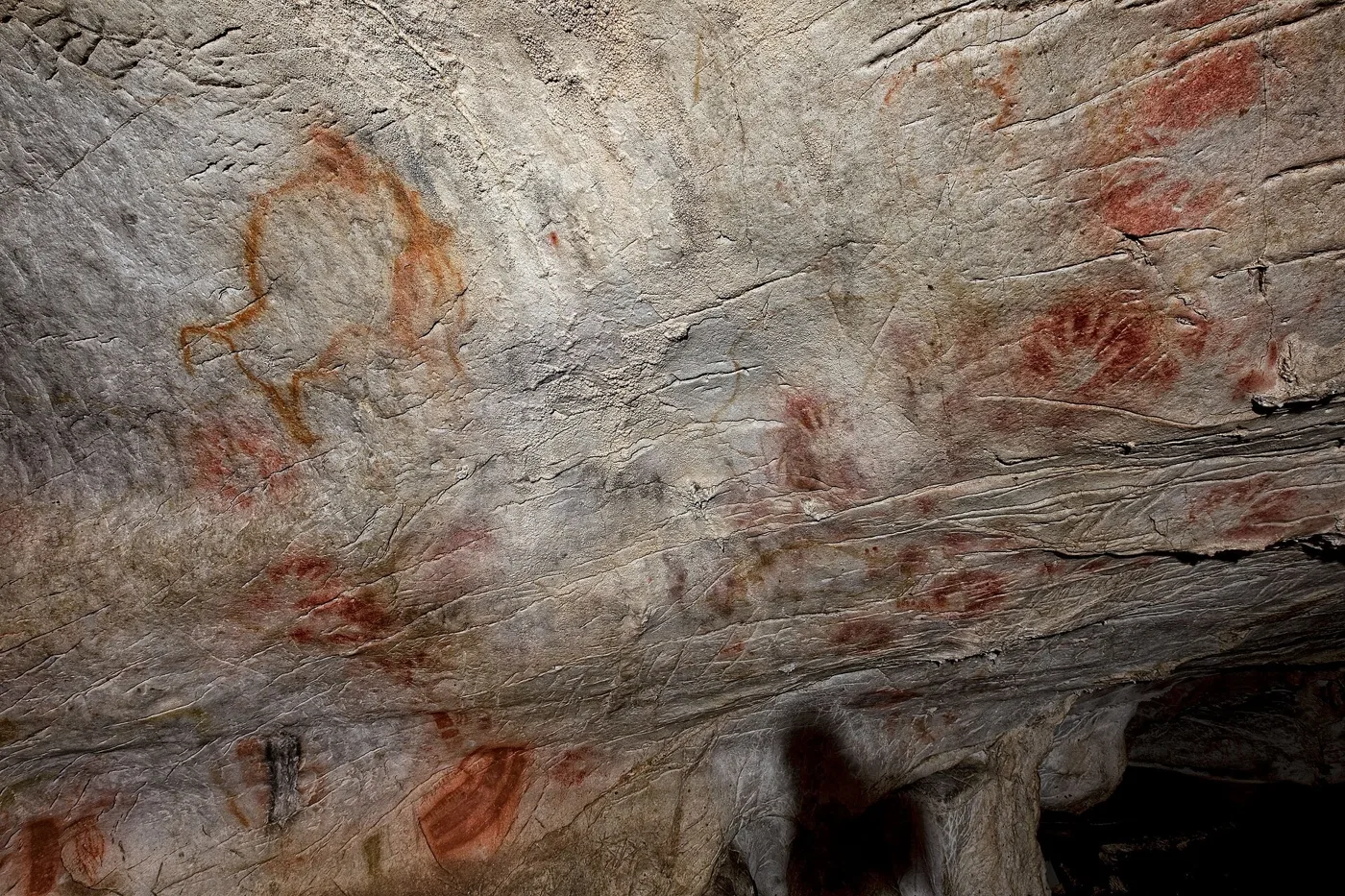
Why did they paint? The honest answer: we don’t know. Abbé Henri Breuil, the “pope of prehistory”, saw the paintings as a ritual before the hunt: depict the animal, and it is yours. A beautiful theory. But one detail breaks it.
The fact that surprised scientists
They ate reindeer, but painted horses
At Lascaux, most of the bones left from meals belong to reindeer, while the walls are dominated by horses. The painting was not a shopping list. It was something bigger.
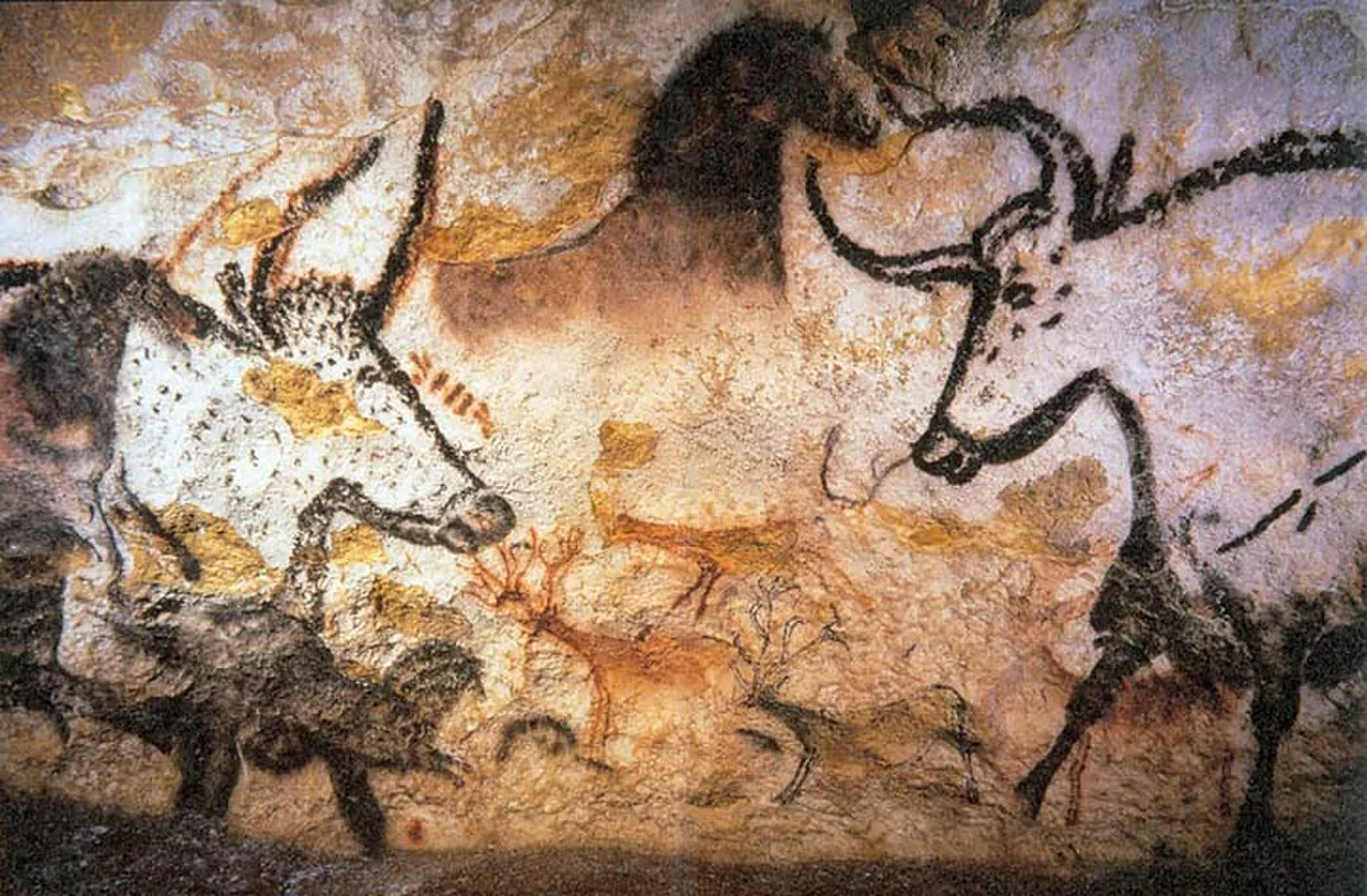
In 1955 the philosopher Georges Bataille called his book “Lascaux, or the Birth of Art” and placed the “miracle of Lascaux” above the famous “Greek miracle”. His idea: in the cave, humans first did something beyond mere usefulness. They began to play. They began to look.
What the cave knew before psychologists
The 20th century and the early 21st discovered three things about fear. Each of them can be found on cave walls.
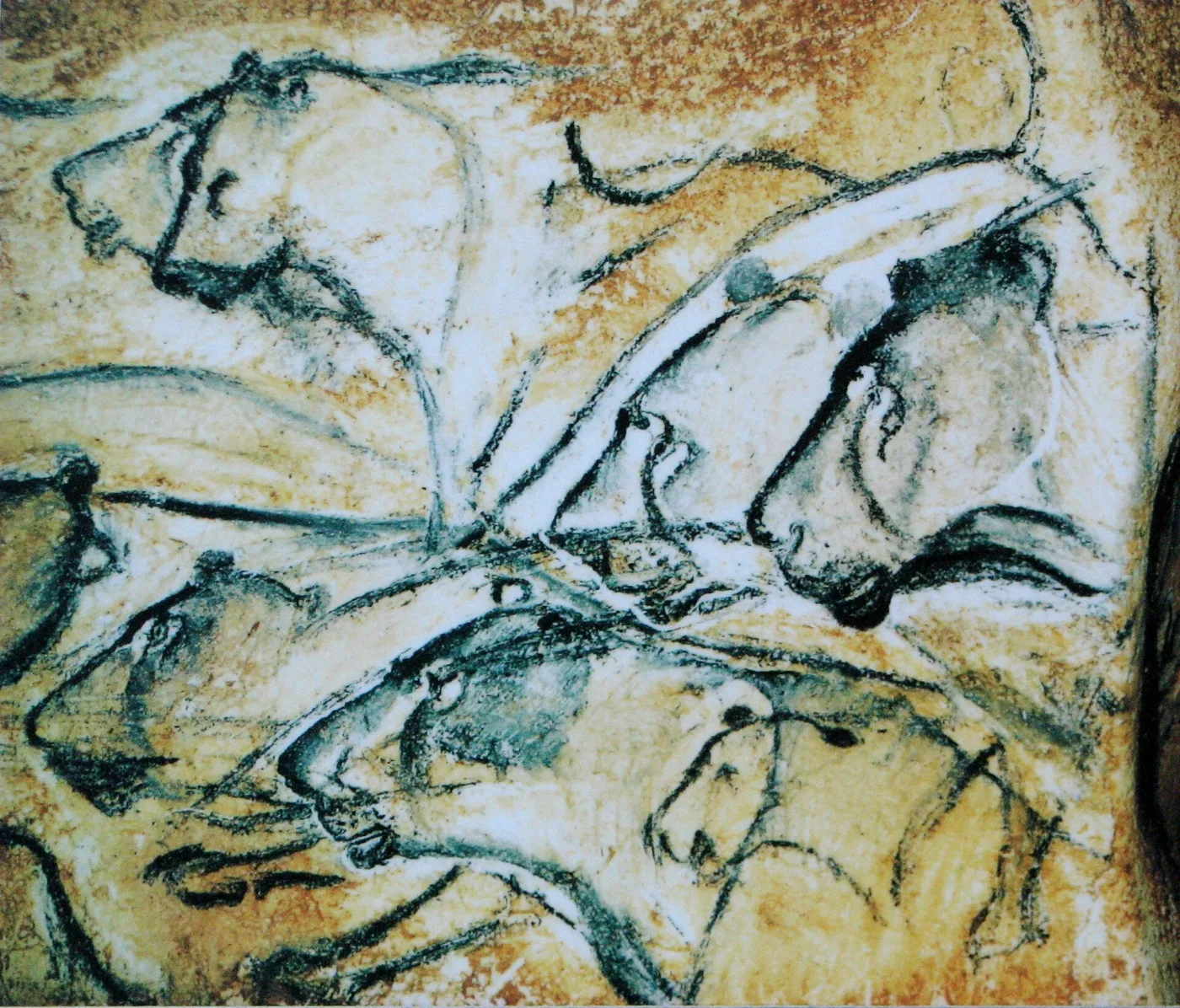
Discovery 1 · 2007
Name it, and it gets quieter
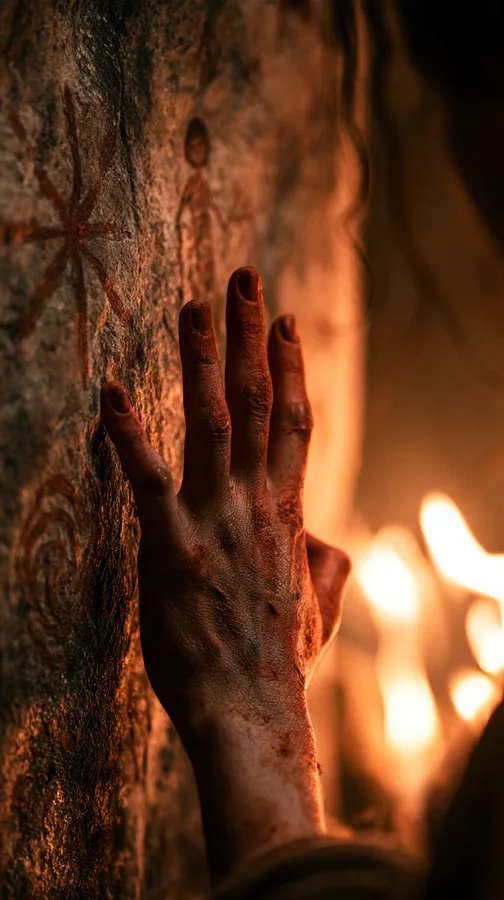
Name itA fear with a name sounds quieter
Psychologist Matthew Lieberman of UCLA showed 30 participants photos of faces with strong emotions and watched their brains at work. When people put the emotion into words, the brain’s “alarm centre”, the amygdala, responded more weakly. Lieberman himself compared it to hitting the brakes. The study appeared in Psychological Science.
In the cave: an animal that has been given an outline is a fear that has been given a name.
Discovery 2 · 1980s
The problem, apart from you
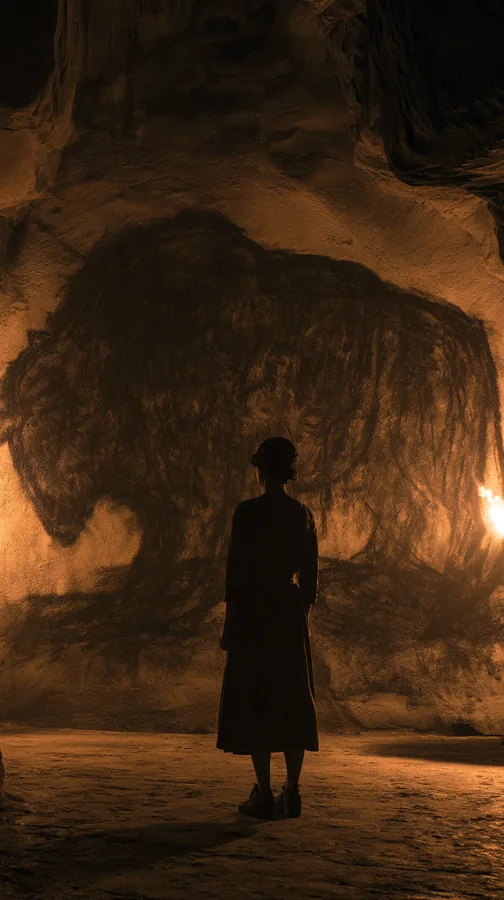
The problem apartFear on the wall. You stand in front of it
Australian family therapist Michael White, together with David Epston, created narrative therapy. Its key formula: “The person is not the problem; the problem is the problem.” The problem is moved outside: given a name, a shape, a character. And then you can talk to it.
In the cave: fear no longer lives inside you but on the wall. You can look at it from the outside.
Discovery 3 · 1994 and 2020
See the goal before the start
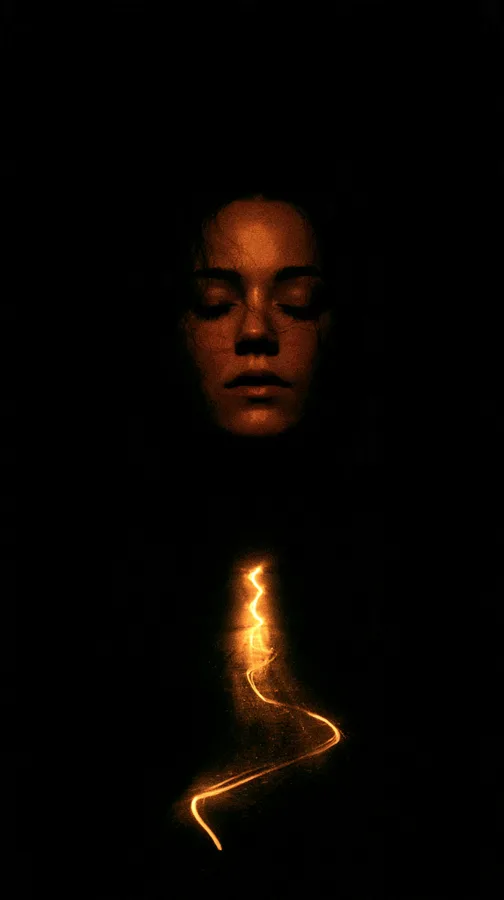
See the goalLive the path before the first step
Sports psychology has long known mental rehearsal: living through a movement in your head, step by step, before you make it. A large 2020 review in Psychology of Sport and Exercise brought together 37 studies and confirmed it: the effect is small but steady. Mental practice works.
In the cave: the hunter sees the animal on the wall the night before meeting it.
To draw a fear is to name it, move it outside and rehearse the meeting.Three discoveries in one gesture
This is my interpretation, not a proven theory of archaeologists. But you have to admit, it’s a beautiful coincidence.
The inner stands

The startThe body is ready. You can already hear the stands
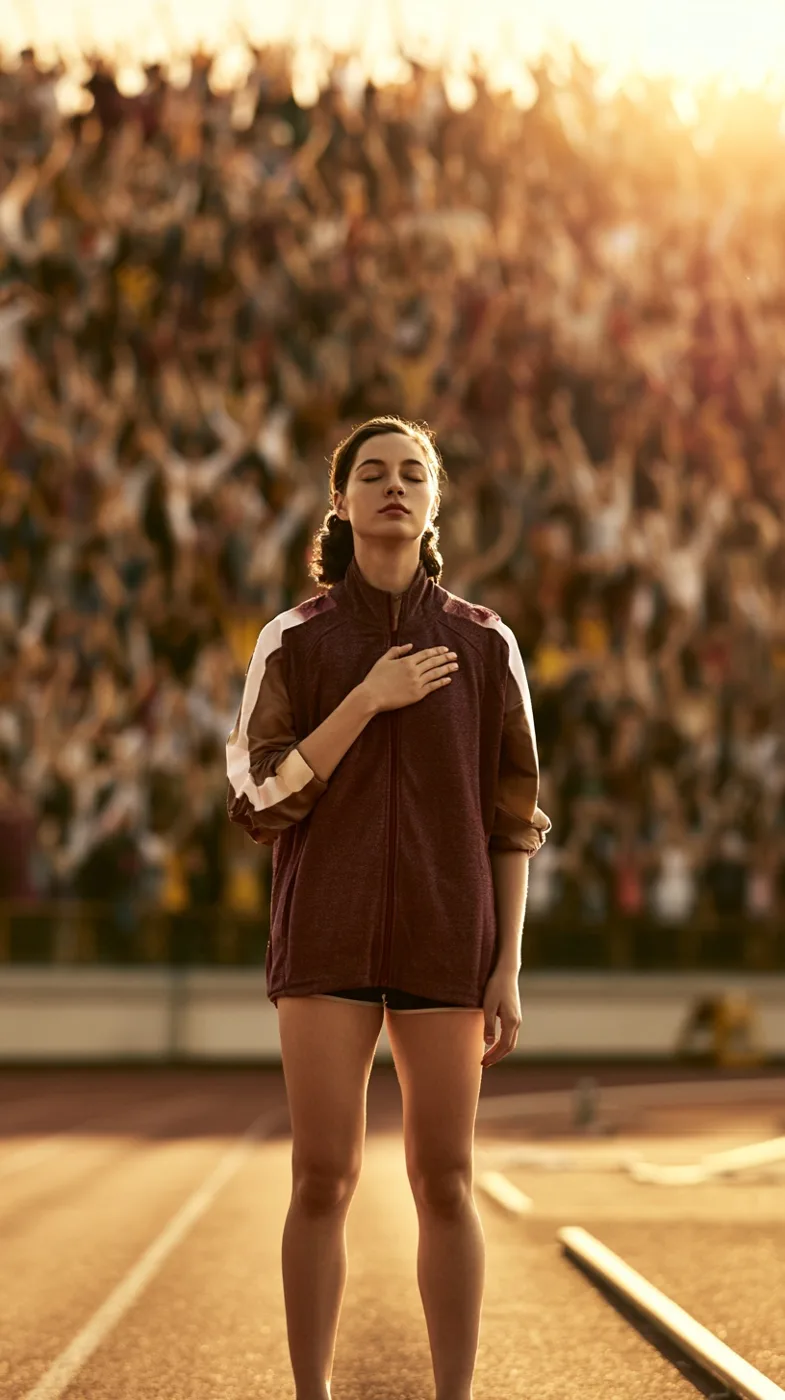
The inner standsVoices that sound at the moment of the step
Illustrations: Tanya Taina · made with AI
I spent many years in professional sport, and I know this moment from the inside. You stand at the start. Your body is ready. And then you hear the stands.
Some voices shout “Go!”. Others whisper “You can’t”. Others are silent in a way that is worse than shouting.
An experiment from 1898
With a rival beside you, you ride faster
American psychologist Norman Triplett noticed that cyclists ride faster with a rival next to them than alone against the clock. His study is often called the first experiment in social psychology.
Later, psychologist Robert Zajonc refined the idea: the presence of others helps with what you already know and gets in the way of what is new. So practise new things on your own first, and step out in front of the stands with what you have already mastered.
Everyone has inner stands. They are the voices that sound inside you at the moment of the step. Who sits there decides whether you take it.
Perhaps this is exactly what the prehistoric painter was doing: gathering their stands before an important step. The image of the beast. The handprints of loved ones. The light of a shared fire. In the darkness of the cave, they were not alone.
Who sits in your stands
The voices in the stands are not random. Psychologists call them introjects: other people’s words that we once swallowed whole and now hear as our own. “Sit still.” “Don’t stick your neck out.” “You can do it.” Most often, these are the voices of our mother and father.
You are not the only one in your stands.
Your family line sits there too.
Look at who sits in yours. Enter your birth date: it will show where your courage comes from and who deserves a seat in the front row.
✦ Your start
How it works in my method. The day of birth is your personality, which unfolds up to the age of 25. The month is your family scenario, which sounds between 25 and 35. The year is your scale of realisation, the height of your flight. Of the 6 personality programmes, 2 are your own, and 4 come from your mother and father and speak in their voices.
The date also hints at where your courage comes from. Some people already carry the spark inside. Others need a second person for their strength to sound. Others need to step out of the shadow into the light.
The spark within
Birth day: 1, 10, 19, 28 · 7, 16, 25 · 8, 17, 26
You pick up the charcoal and walk to the wall yourself. The risk lies elsewhere: running alone and not hearing the stands. Your task is to let yourself be supported.
- 1 · fear of carrying others’ responsibility → the gift of mature support. In the stands: someone who lets you stop carrying everyone
- 7 · fear of uncertainty → the gift of trusting the path. In the stands: someone who says “move, the map will appear”
- 8 · fear of injustice → the gift of truth and scale. In the stands: a witness who sees your work
Strength in a pair
Birth day: 2, 11, 20, 29 · 5, 14, 23 · 6, 15, 24
Your gift unfolds next to another person: a mirror, a teacher, an ally. Your task is to lean on someone and stay yourself.
- 2 · fear of rejection → the gift of accepting yourself. In the stands: a person who mirrors you
- 5 · fear of dependence → the gift of freedom. In the stands: a teacher who lets you go
- 6 · fear of helplessness → the gift of inner support. In the stands: an ally by your side, not a rescuer
Into the light
Birth day: 3, 12, 21, 30 · 4, 13, 22, 31 · 9, 18, 27
The strength is there, but hidden, like the bison of Altamira that no one saw for thousands of years. Your task is to raise the torch yourself and show it.
- 3 · fear of humiliation → the gift of dignity and voice. In the stands: an audience that applauds
- 4 · fear of guilt → the gift of honesty. In the stands: a coach instead of a judge
- 9 · fear of abandonment → the gift of closeness. In the stands: the people waiting for you at the cave’s exit
✦ Example: the date 17.03.1985
17 → 8 · Personality. A chord of 1, 7, 8 and 17. The leading energy is 8, the spark within: the impulse is there, and it needs a witness.
03 · Family scenario. From the family line comes the theme of stepping into the light, of voice and dignity. A zero in front: a reset through the three.
1985 → 23 → 5 · Scale of realisation. The leading number is 5, with keys 2 and 3. The scale unfolds through study, teachers and a second person.
All three starts in one date. This happens often: we need different stands at different times in life. This is my reading through the hand method. A hint, not a fairy tale.
From beast to sign and stone
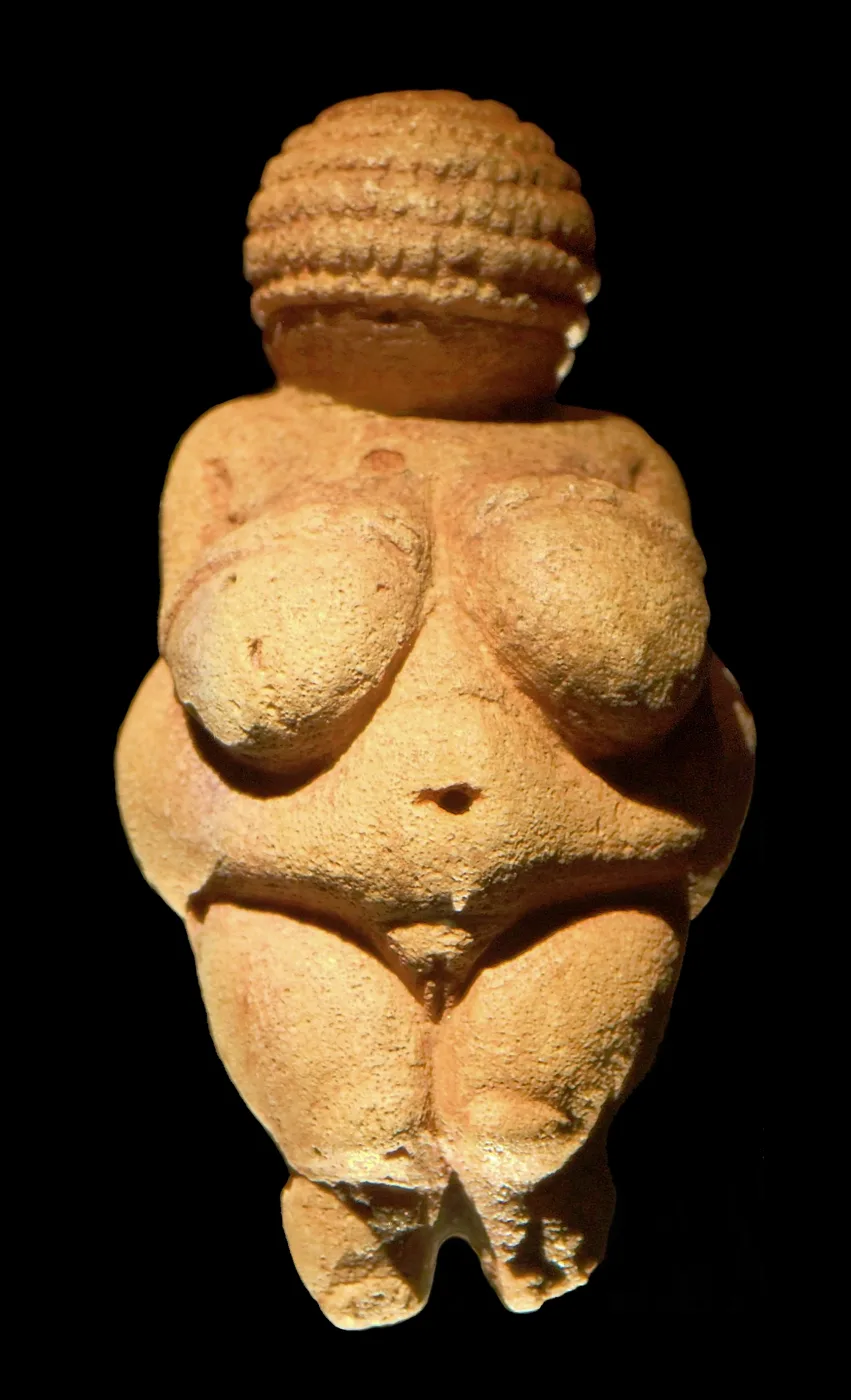
Alongside the paintings, the first sculptures appear. Palaeolithic “Venuses” have almost no face. But they have a body full of life.
Did you know?
“Venuses” were found even in Siberia
More than 200 are known, from Western Europe to the sites of Mal’ta and Buret’ near Irkutsk. The same idea of the female body travelled thousands of kilometres.
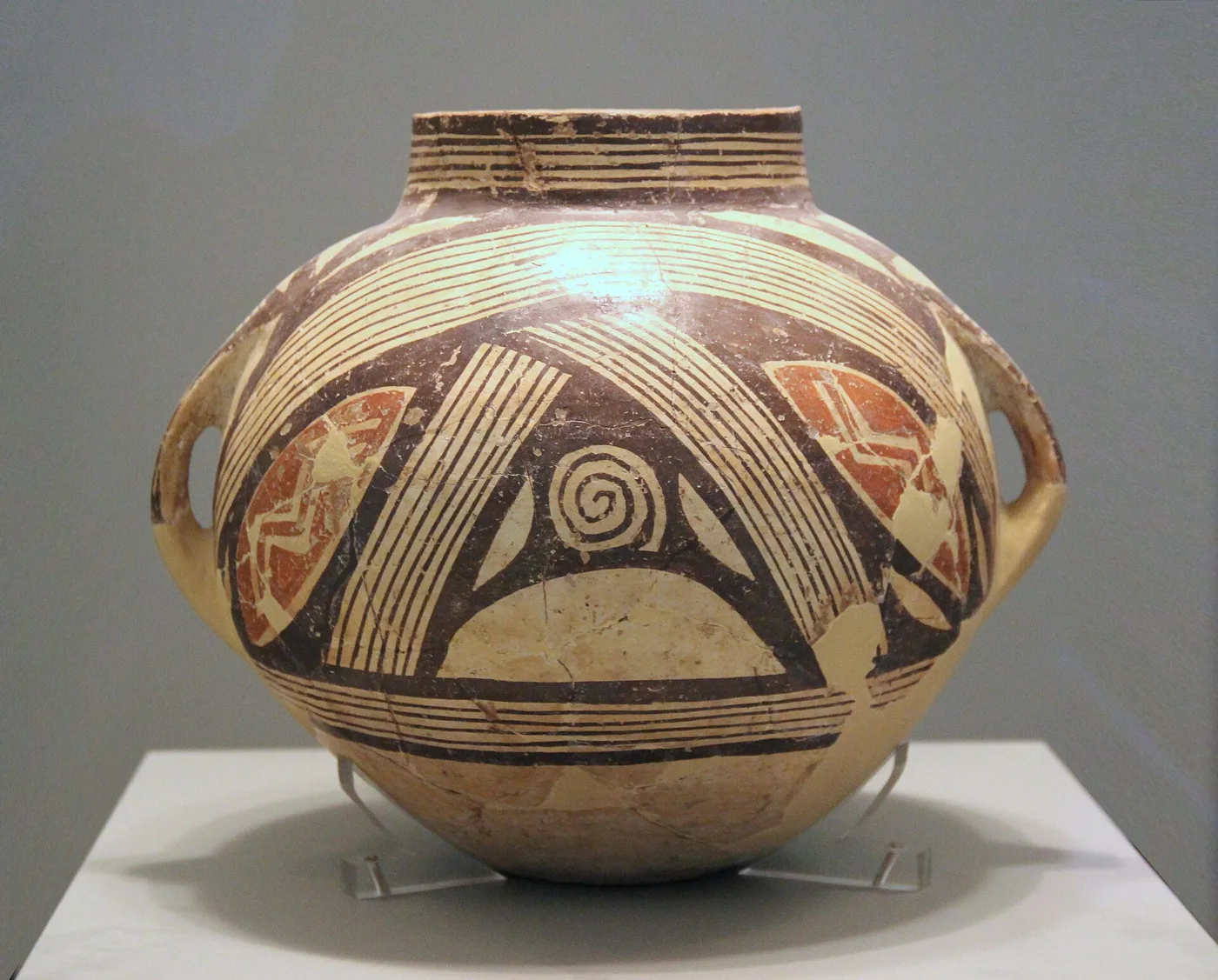
Then the beast on the wall gives way to the sign. On a vessel from Dimini, a Neolithic settlement in Greece (5300–3300 BC), there is no hunt any more. There is a spiral, a rhythm, an ornament. People draw not what they see, but how the world is arranged.
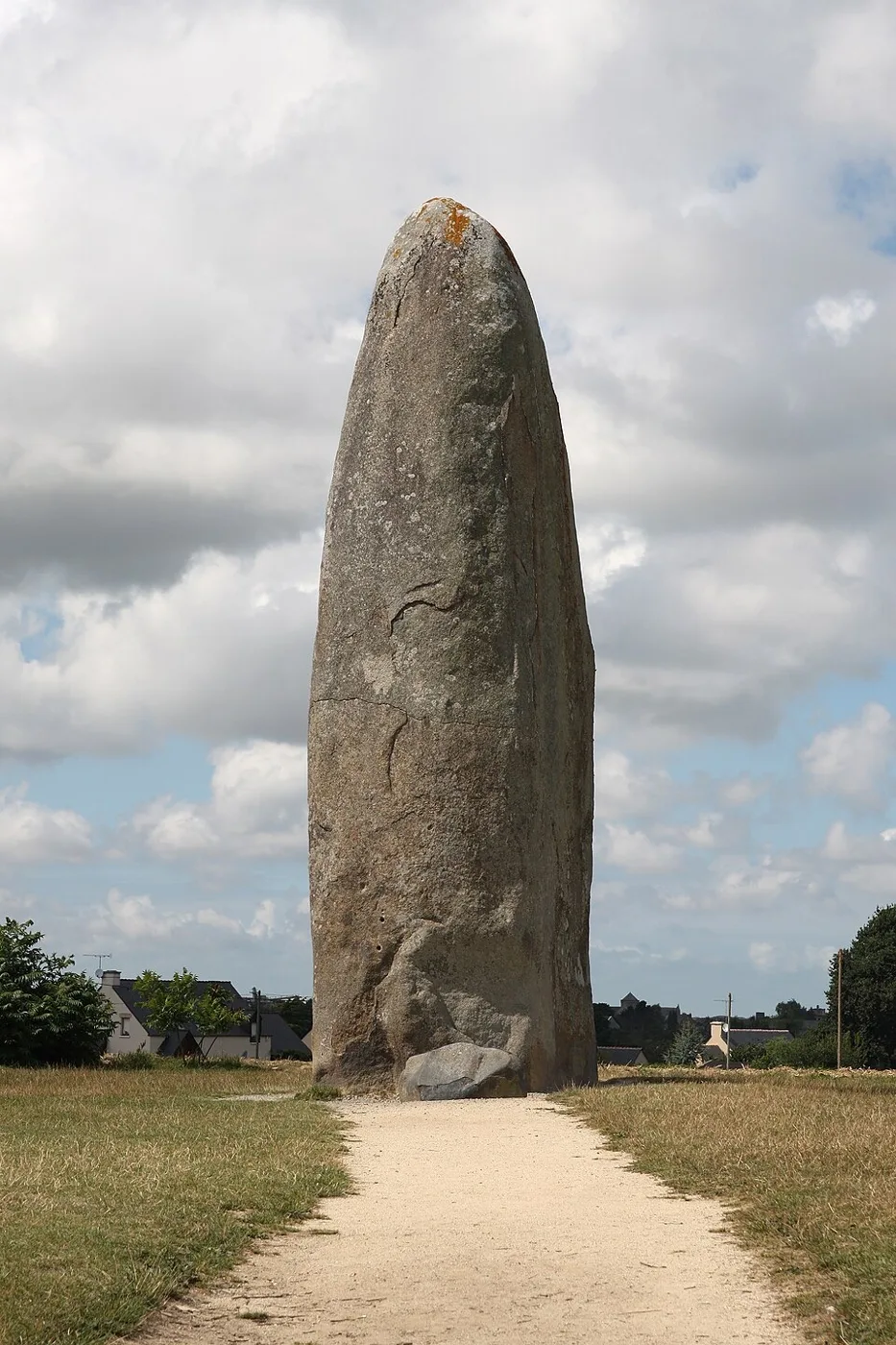
And then people begin to speak in stone. A menhir is a single standing stone. A dolmen is a slab on upright stones. A cromlech is a circle, like Stonehenge. Post and lintel will become a principle for thousands of years: temples will be built on it.
An echo across millennia
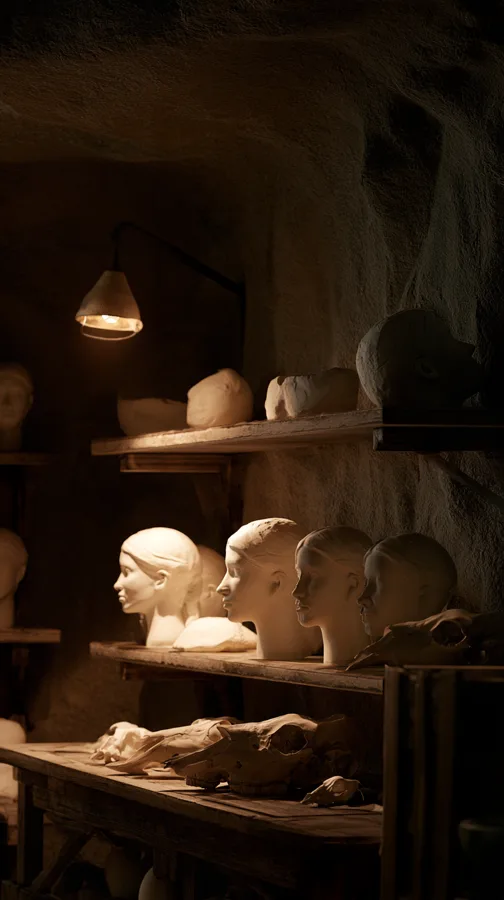
Studio as a cavePlaster heads, skulls and a single lamp: a fantasy of the studio at Boisgeloup
Picasso: the cave he never visited
A legend under the magnifying glass
“We have invented nothing”
Picasso is supposed to have said this on leaving Lascaux. The line has no source. And according to the curators of the Musée de l’Homme, Picasso never visited Lascaux or Altamira: he knew the caves from reproductions in the magazine Cahiers d’art.
What he did have were two casts of the “Venus of Lespugue”, found in 1922. And from the summer of 1927 his women become rounded, swollen, almost faceless. Open the 1931 bust and picture it next to the Venus above.
“Bust of a Woman (Marie-Thérèse)”, 1931Compare with the Venus above: round forms, almost no faceLook › Picasso, “Woman Throwing a Stone”, 1931Musée national Picasso, ParisLook ›In this painting the body is built from boulders. Human and stone are made of the same substance. The Palaeolithic master thought the same way, recognising the flank of a bison in a bulge of rock. In 1936 Picasso made an etching with the print of his own hand, and in 1945 he stood a gas-stove burner upright and called it “Venus of Gas”.
And here is a line he really did say, in 1923, to Marius de Zayas for the New York magazine The Arts: “To me there is no past or future in art.” He went on: if a work of art cannot live always in the present, it must not be considered at all.
Miró: the descent into Altamira
Miró did go down into the cave. In March 1957 he came to Altamira with his friend, the ceramist Josep Llorens Artigas. They were making two ceramic walls for UNESCO in Paris and went to see the first mural in the world. In 1958 the “Wall of the Sun” won the Guggenheim International Award. And after the cave, Miró began to paint with his fingers, right on the floor, in ochre and earth tones.
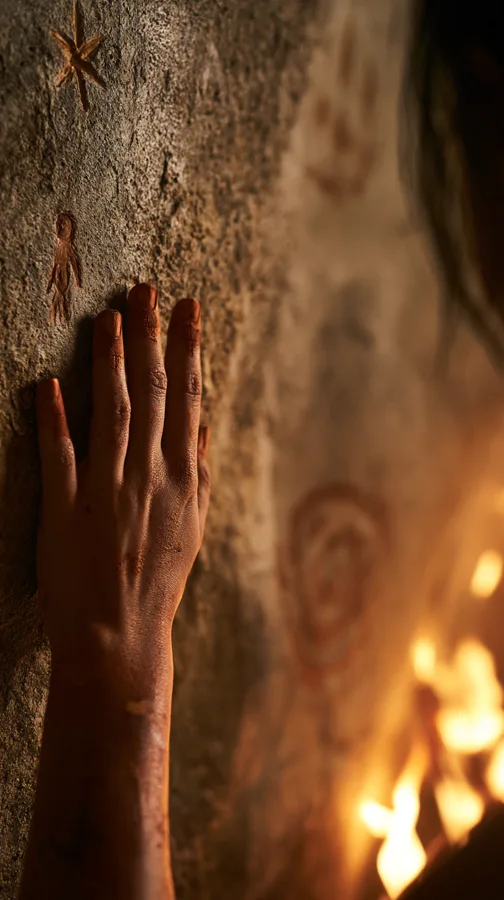
Signs on the wallA star, a figure, a spiral: the language Miró spoke
On this sheet: a figure with a round head, an animal next to it, a star above them. Miró does not copy the cave. He speaks its language.
Our contemporaries
- Miquel Barceló, Mallorca. He saw Chauvet in 2005, filled a notebook with felines inspired by its lions, and says he is as contemporary as the Chauvet cave.
- Richard Long, Bristol. His stone circles lie right on museum floors: our cromlech, moved into the gallery.
- Jeremy Deller, London. For the 2012 Olympics he made a life-size inflatable Stonehenge, where people bounce barefoot.
- Werner Herzog, film. In 2010 he filmed Chauvet in 3D: “Cave of Forgotten Dreams”.
Glossary
- Syncretism
- when art, belief, knowledge and daily life are not yet separate. A drawing on the wall is at once a prayer, a lesson and a memory
- Menhir · dolmen · cromlech
- a single standing stone · a slab on upright stones · a circle of stones, like Stonehenge
- Externalisation
- moving a problem outside yourself: giving it a name and a shape so you can look at it from the outside
- Introject
- other people’s words and rules that we once absorbed whole and now hear as our own
- Social facilitation
- when the presence of others helps you do what you already know how to do
Try it yourself: “Your Own Wall”
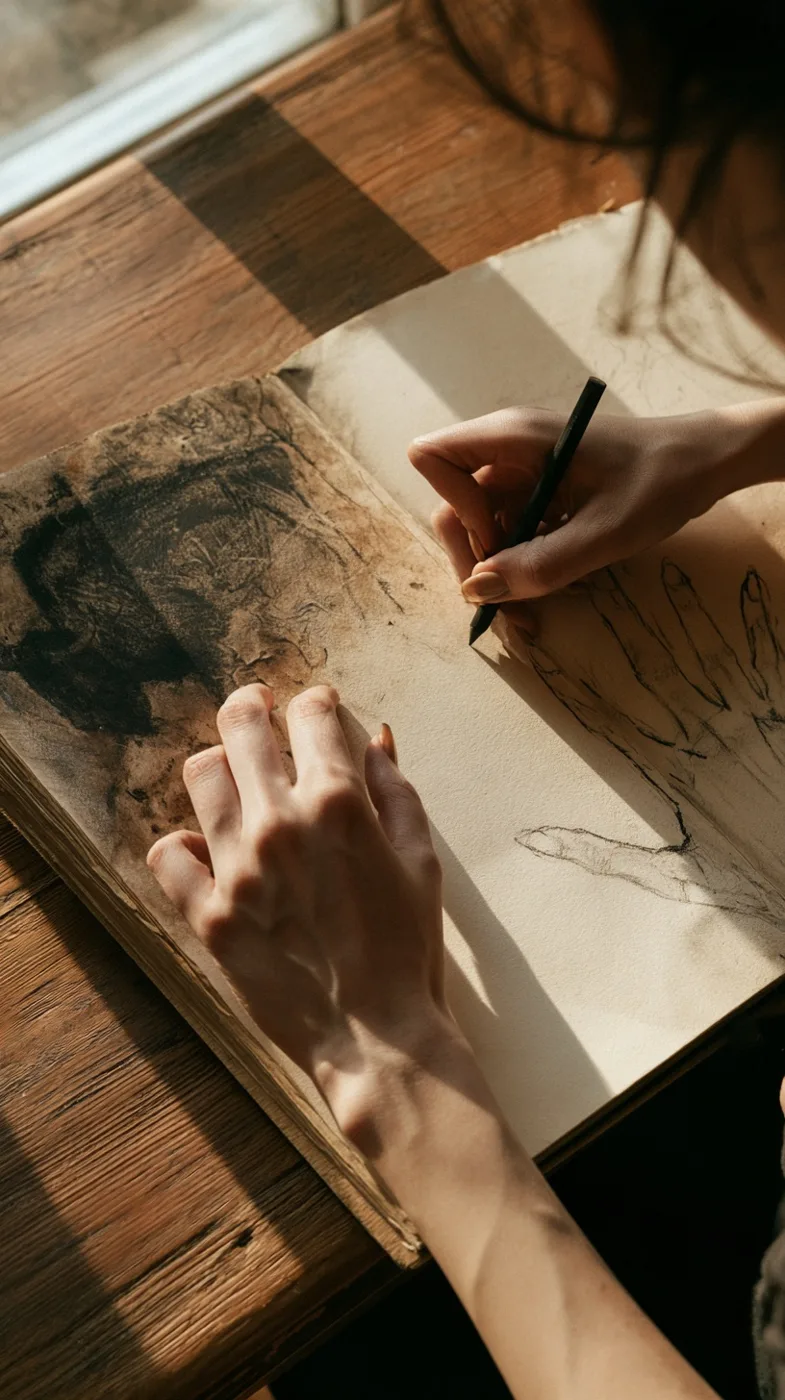
Draw the beastStep 2: fear gets an outline
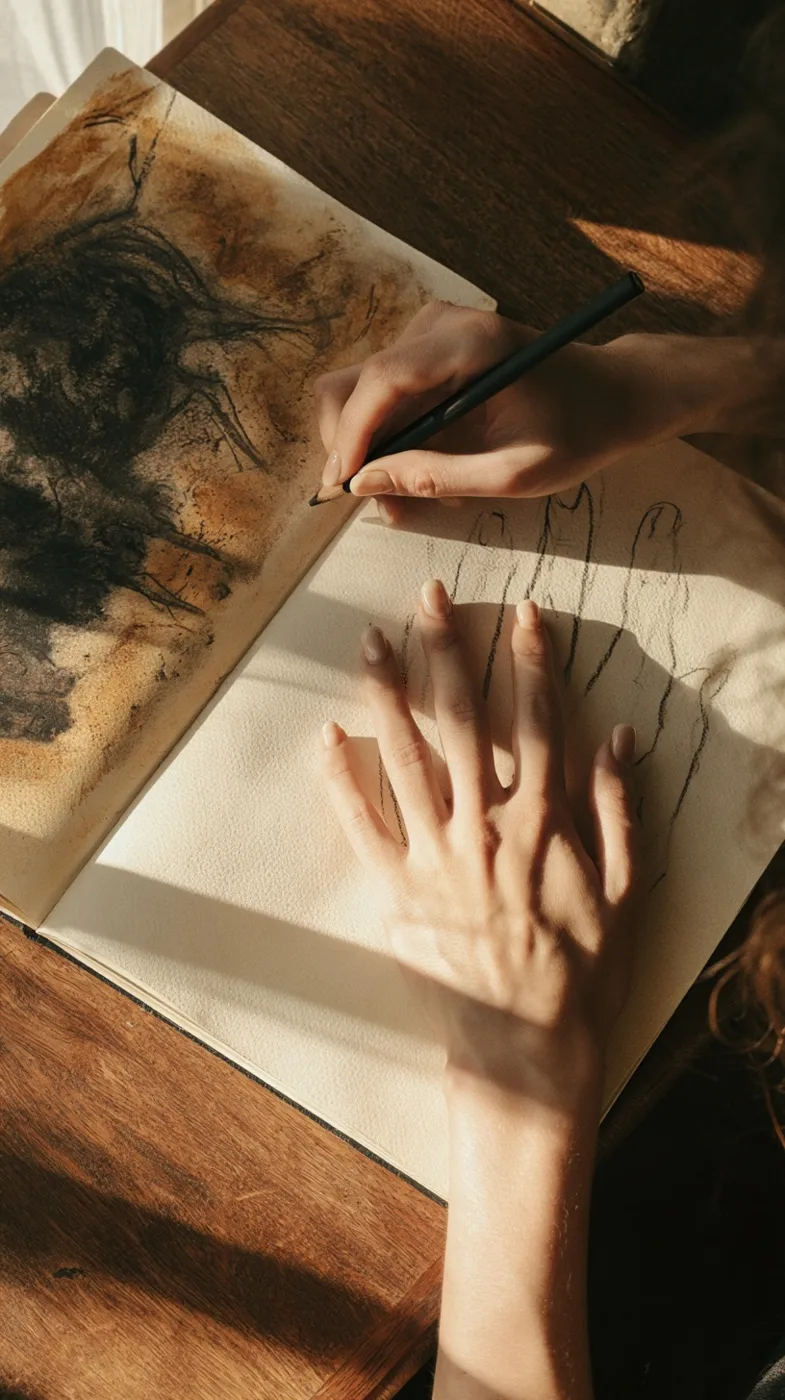
Trace your handStep 4: a voice by every finger
Illustrations: Tanya Taina · made with AI
A notebook, a soft pencil or charcoal, and 20 minutes of quiet. You can dim the lights and light a candle.
- Name the beastThink of a step you keep putting off. Write in one sentence what you are afraid of. This is Lieberman’s discovery in action.
- Trace itDraw the fear as an animal, in a single outline. Let a smudge or a crease in the paper become part of the drawing, like a bulge in the rock. This is externalisation, as in Michael White’s work.
- Put yourself beside itDraw your own figure next to the beast. How big is it? Where is it looking?
- Trace your handBy each finger, write one voice from the stands: what it says and whose voice it is. Index finger: personality. Middle: family line. Ring: scale. Little finger: relationships. Thumb: health.
- Move one voiceFind the loudest “you can’t”. Write next to it who will take that seat instead: a witness, a mirror, a teacher, a coach or an audience.
- Leave your markThe date and one step for the next 7 days. Close your eyes and live through it, like an athlete before the start. This is your “I was here”.
✍ Write it here
Your notes stay on your device only and are never sent anywhere.
What to take with you
- A fear that has a shape no longer rules you completely. Name it. Draw it.
- The voices in your stands are often the voices of your family line. You can choose who sits in the front row.
- Practise new things alone; step out in front of the stands with what you already know.
A fear you have drawn does not disappear.
But now it is on the wall,
and you stand in front of it with your stands.
In the next episode
Ancient Egypt. Why does Hesy-Ra on his relief stand in profile and full face at once? And how did the post and lintel of the cromlech become a temple?
You are art. You are a painting. Your life is already a masterpiece.
Enter your date and open your exhibitionThe number is the essence, psychology is the path, art is the mirror.
A hint, not a fairy tale.
Tanya Taina
Where to see the works
- Picasso, “Woman Throwing a Stone”: pablopicasso.org
- Picasso, “Bust of a Woman (Marie-Thérèse)”: wikipedia.org
- Picasso, “Venus of Gas”: artnet.com
- Exhibition “Picasso and Prehistory”: mnhn.fr · artinwords.de
- Miró, UNESCO walls: successiomiro.com · “Grans rupestres”: fundacionbotin.org
- Barceló and Chauvet: culture.gouv.fr · Long: moma.org · Deller: artforum.com
Sources
- Lieberman M. D. et al., “Putting Feelings Into Words: Affect Labeling Disrupts Amygdala Activity in Response to Affective Stimuli”, Psychological Science, 2007, 18(5): 421–428: pubmed · UCLA summary: sciencedaily.com
- Michael White and externalising: Dulwich Centre dulwichcentre.com.au
- Mental practice: Toth A. J. et al., “Does mental practice still enhance performance?”, Psychology of Sport and Exercise, 2020, 48: 101672 ul.ie
- Triplett, 1898, and social facilitation (Zajonc): simplypsychology.org · a 2025 replication: nature.com
- Picasso and prehistoric art: Musée de l’Homme mnhn.fr · AFP inkl.com · on the legendary line: aeon.co
- Miró at Altamira: fundacionbotin.org · schirn.de
- Bataille, “Lascaux, or the Birth of Art”, Skira, 1955: bnf.fr
- Barceló: The Brooklyn Rail, 2024 · Herzog: documentary.org
- Picasso, “Picasso Speaks”, statement to Marius de Zayas, The Arts, New York, May 1923 (translated from Spanish); reprinted in Alfred H. Barr, “Picasso: Fifty Years of His Art”, MoMA, 1946
- Caves, Venuses, Dimini: facts checked for video episode 1, 8 November 2026. Photo authors and licences are given in the captions