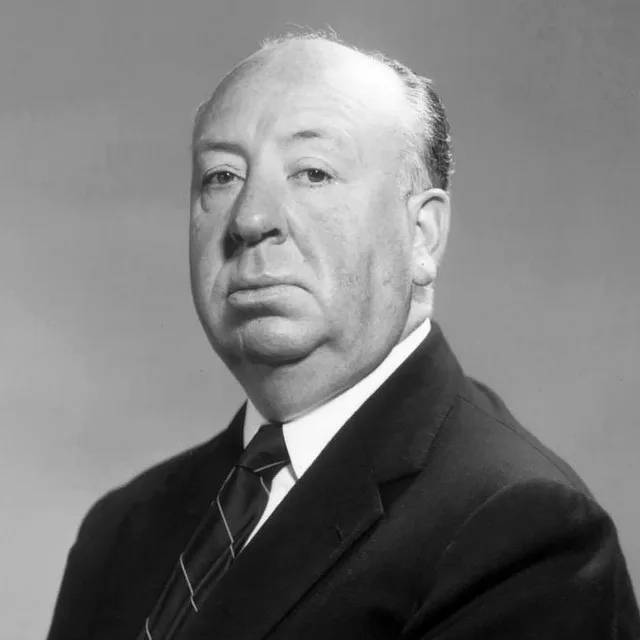
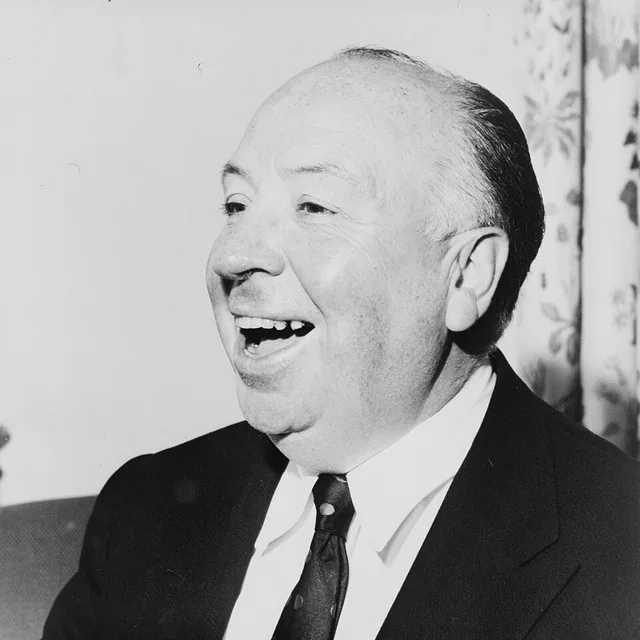
Alfred Hitchcock. Studio portrait. Public domain
Art Detective · Part 1 · The Man · about 12 minutes to read, useful for much longer
Alfred Hitchcock: The Art of Waiting
Fear, the body, character and the woman who kept him in balance
Prologue · London, summer 1945
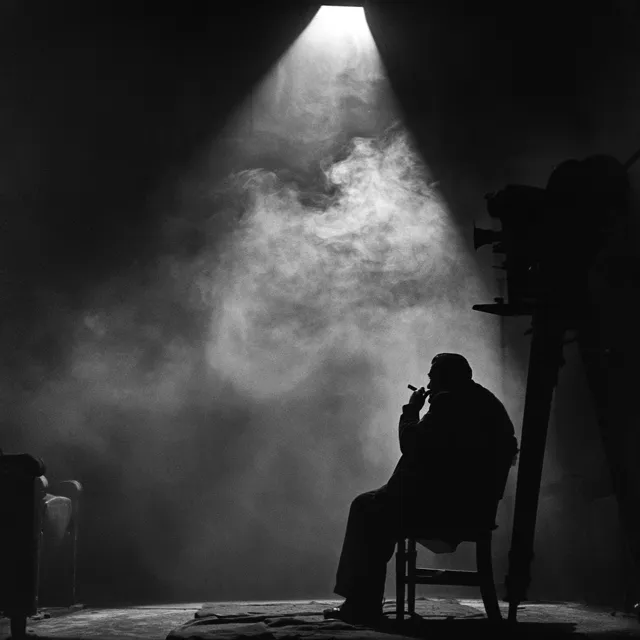
London, late June 1945. The war in Europe ended a few weeks ago. In Soho, in a small screening room, the lights go down and the projector starts to whirr.
In the seat sits a heavy man in a dark suit. He knows everything about fear: for twenty years he has earned his living by frightening people. But what is on the screen now could never be invented. It is footage from the liberated Nazi camps, shot by British army cameramen. He makes himself watch. Reel after reel.
His name is Alfred Hitchcock. His old friend, the British producer Sidney Bernstein, called him over from Hollywood. The British authorities were preparing a documentary about the Nazi camps to show to the Germans themselves, and Bernstein asked Hitchcock to be a consultant: to advise on how to build a film out of a vast archive of war footage. Hitchcock came to London and worked for about a month, unpaid.
All his life this man sold fear to audiences. Invented fear, precisely calculated, the kind you can switch off. Here the fear is real. And the master of suspense does what nobody expects of him: he forbids himself any tricks. No clever cuts, only long takes, so that no one could ever say “fake”.
Where did it all come from: the fear, the skill to control it, and the resolve to give that skill up? To understand, let us go back forty years, to his father’s greengrocer’s shop on the edge of London. I will tell the story of summer 1945 in full in Part 2.
Meet him
The Londoner who conquered Hollywood.
Some surnames become common nouns. In Russian they say someone “drives like Schumacher”, after Michael Schumacher, seven-time Formula One world champion. They call a record-breaking worker a “Stakhanovite”, after the miner Alexei Stakhanov, who in 1935 beat his quota fourteen times over in a single shift. Say “Hitchcockian” and everyone understands: it will be frightening and beautiful. The Merriam-Webster dictionary dates the first use of the word to 1930. Hitchcock was 30 at the time.
In 1968 the Academy did give Hitchcock an award, just a different one: the Irving G. Thalberg Memorial Award, which goes to producers. Many called it a consolation prize. He walked on stage, said just five words and left:
Thank you… very much indeed.
Alfred Hitchcock, Thalberg Award, 19681968Irving G. Thalberg Memorial Award from the Academy
1979American Film Institute Life Achievement Award
1980Knight of the British Empire, “Sir Alfred”
But here I am interested in something else. How did a shy, plump boy from a greengrocer’s shop become a man who directed the gaze of millions? Where is the fear, where is the body, and where is the character? As usual, I use three tools: art history, psychology and the language of numbers. And I try it all on us.
Chapter 1 · Childhood
A joke or a lesson?
A fear nobody explains to a child becomes anxious anticipation. Later Hitchcock would give it to millions of viewers.
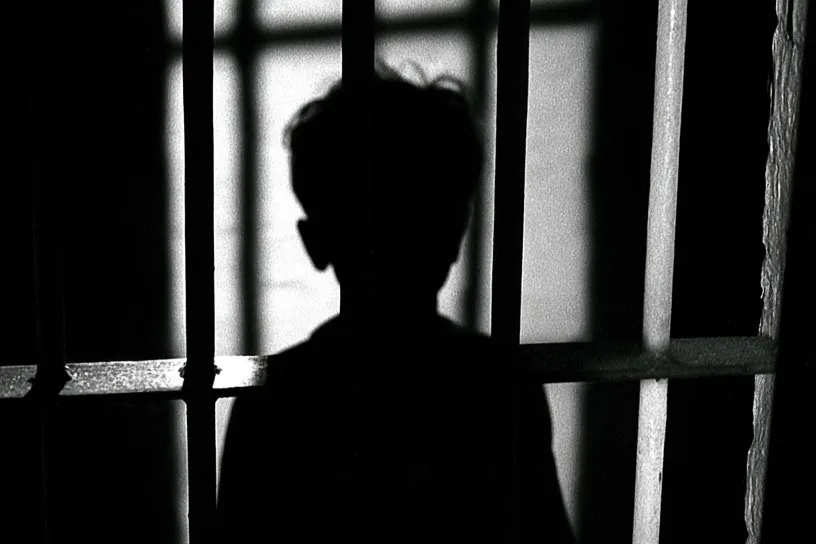
Picture it: London, early 20th century. His father, the greengrocer William Hitchcock, hands his five-year-old son a note and sends him to the police station. The duty officer reads it, takes the boy by the hand and locks him in a cell. For five minutes, maybe ten. “This is what we do to naughty boys.”
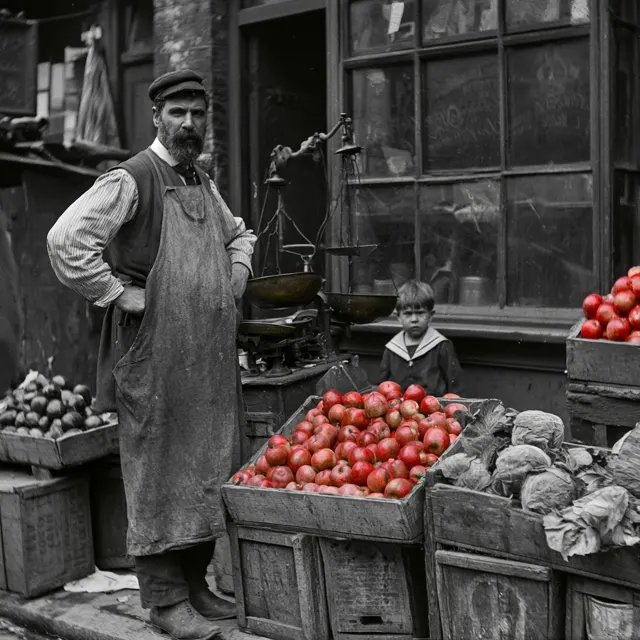
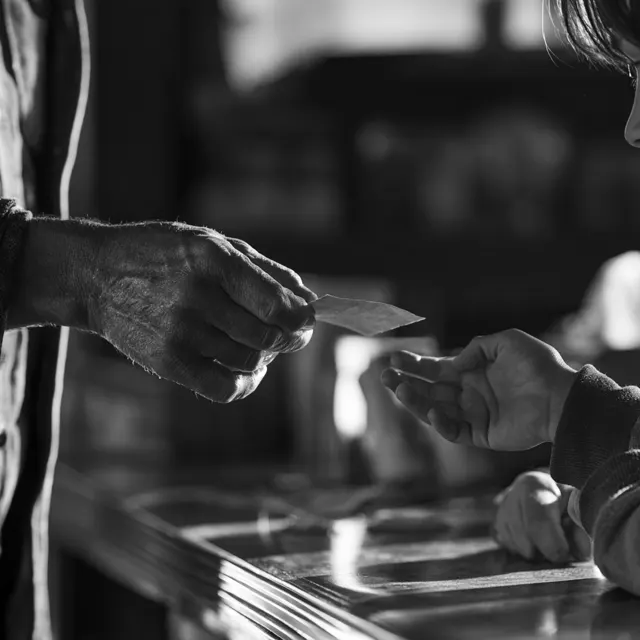
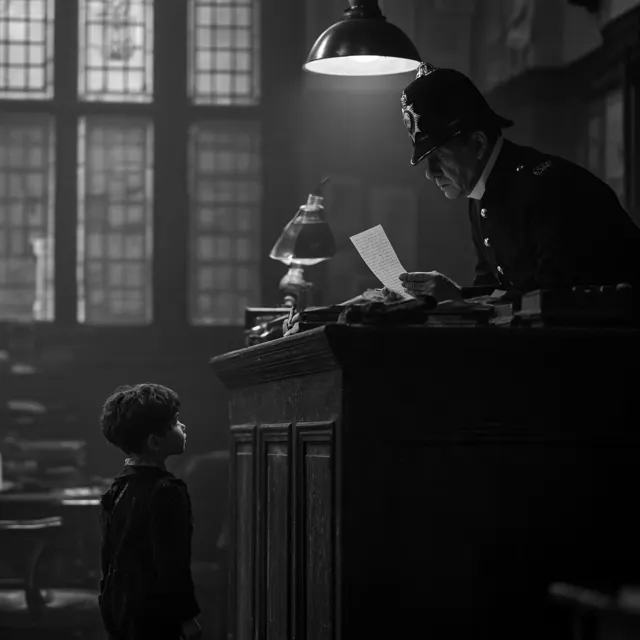
Sixty years later Hitchcock told this story to the French director François Truffaut* and admitted that he never understood what he had been punished for.
Why did his father do it? As a joke? To teach him a lesson? To frighten him so he would remember? Hitchcock never found out. The same father had a tender name for his son:
My little lamb without a spot.
What his father called young AlfredA tender nickname and a police cell, from the same man. And when Alfred was 15, his father died, and there was no one left to ask.
To understand the father, it helps to remember the times. Hitchcock was born in 1899, while Queen Victoria was still on the throne. This was Victorian England, where children were to be seen and not heard. Strictness passed for love, and corporal punishment in schools was routine. From 1910 Hitchcock was taught by the Jesuits*, at St Ignatius’ College in London. Punishment there was the ferula: a flat, springy strap of hard rubber brought down on the open palm. Hitchcock admitted to Truffaut that he was terrified of it. And one important detail: the punishment was carried out at the end of the day, so the culprit sat through his lessons all day, waiting. Do you recognise the suspense to come? According to Hitchcock, it was at school that he developed “a strong sense of fear, of moral fear”. He was afraid of the police all his life and joked about it: “I’m not against the police; I’m just afraid of them.” Later he made a whole film about it, “The Wrong Man” (1956): an innocent musician is arrested by mistake, and it is a true story.
Is punishment needed at all?
I can’t resist a question that touches almost every family. Were you punished as a child? How? Made to stand in the corner, no sweets, the belt, silence? And most importantly: were you told why?
50 years of research160 000+ children
In 2016 the American psychologists Elizabeth Gershoff and Andrew Grogan-Kaylor brought together half a century of studies.
Their conclusion: physical punishment does not make children more obedient. It is, however, linked to anxiety, aggression and difficulties in relationships in adult life.
My family has a story like this too. As a boy, my dad was beaten by my grandmother with a skipping rope. Yet he never once raised a hand to me. One word was enough, sometimes just a look. In that sense I was very lucky.
My dad’s leading programme is 3, the Empress, along with 8, Justice. In my observation, these energies seek not force but a word and a fair rule. My mum has 15 and 11, Temptation and Strength. She is an emotional person, and that is not a bad thing: there is a lot of life and fire in these energies.
What follows is no longer about my family but about what I see in many people. Strong energy needs a channel. Sport, movement, creativity, work. Psychologists speak of healthy ways to release tension. Without a channel, the energy spills over onto those closest to us: shouting, outbursts, a raised hand. This is what is called difficulty with emotional regulation. And of course past experience plays its part: how we ourselves were treated.
Psychologists call this intergenerational transmission: we often bring up our children the way we were brought up. But the chain can be broken. My dad broke it.
You surely have stories like this too. Perhaps about you, perhaps about your parents. Perhaps you never stopped to think what was happening to them when you blamed them for something.
A question for yourselfWhich childhood punishment do you still remember? And what from your family’s experience are you passing on, and what have you decided to leave in the past?
Chapter 2 · Birthday
Birthday energy: 13
Now let’s look at Hitchcock through the psychology of numbers. On the You Are a Painting platform I gave every number a painting, so that the number can be seen. A view, not a diagnosis. A hint, not a fairy tale.
He was born on the 13th, and the painting for his number is “The Convalescent” by the Finnish artist Helene Schjerfbeck: a girl after an illness, still in her chair among the pillows, holding a twig with its first leaves. 13 is Transformation: letting go of the old to begin the new.
Inside 13 sound three more numbers: 1, 3 and 4. Four paintings of one energy, the energy of his birthday. It is the peak of his personality, but not the whole of it. What else sounds in his numbers I’ll show a little further on.
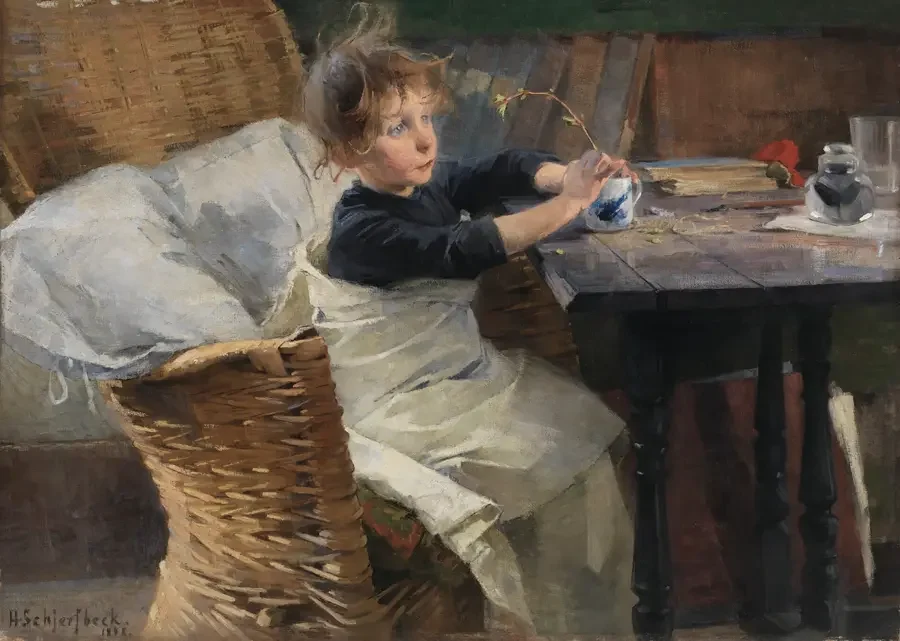
Paintings from the You Are a Painting platform: this is what birthday energy 13 looks like
But 13 never sounds alone. Three forces drive it. 1 — impulse, leadership, the wish to be first. 3 — being seen, the body, the stage. 4 — structure and support, and with it the theme of the father, which shows itself through the events of a life. It also matters which programmes in the date support and soften these energies, masculine and feminine. So everyone with 13 will share common traits, but each will have their own shades. You may recognise yourself here and perhaps find the reason for what is happening to you.
The number is the essence, psychology is the path.
There can be several paths. Sometimes all the answers are within us, and only we can change how we see a situation. Sometimes you need a specialist. And sometimes the soul is wounded so deeply that a whole team of specialists is needed. What matters is at least to understand which path you need.
Personality is the legs we walk on into relationships, into our family line, into realisation. If the legs are weak, a person is either afraid to take a step or soars high but cannot hold the height. Then the inner voices grow louder: addiction, other people’s opinions, fear. Hitchcock’s legs were strong, and that is why he held on to his scale.
1 · The First: stubbornness and the ladder
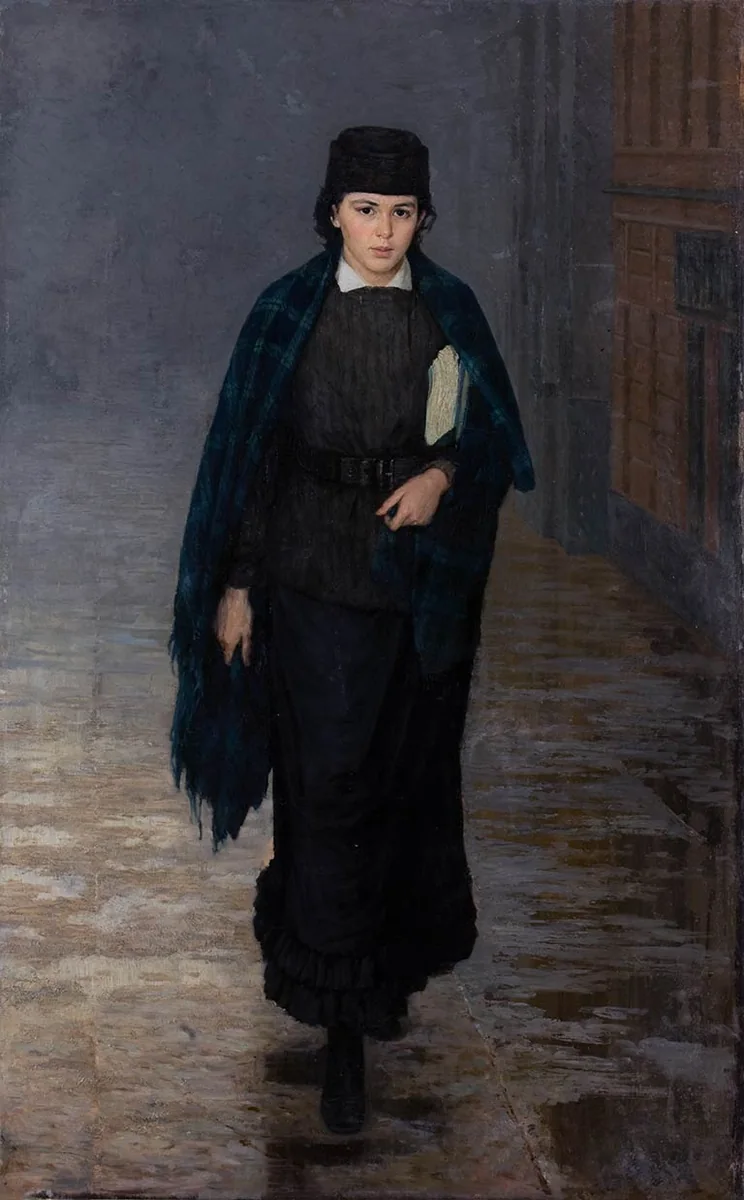
Look at Yaroshenko’s “The Student”: a young woman walks straight towards us down a wet street, books pressed to her side, her step sure. That is how someone walks who has chosen her road and isn’t waiting for company. This is 1: will, leadership, the wish to be first.
In Hitchcock this will shows in his career. In 1920 he is drawing title cards for silent films at a London studio. Five years later he directs his first film. Fourteen years after that he is in Hollywood, and by the 1950s his name on the poster is bigger than the title. He climbed the career ladder himself, without skipping a single rung: from title cards to art direction and screenwriting, then to directing, from London to Hollywood.
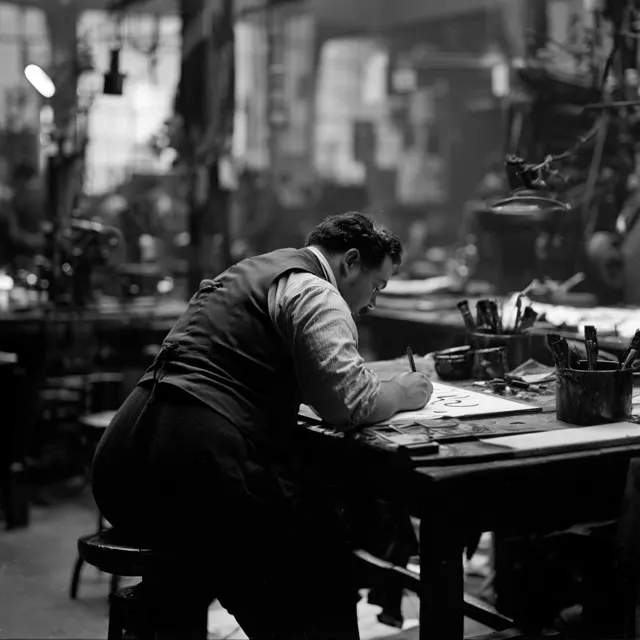
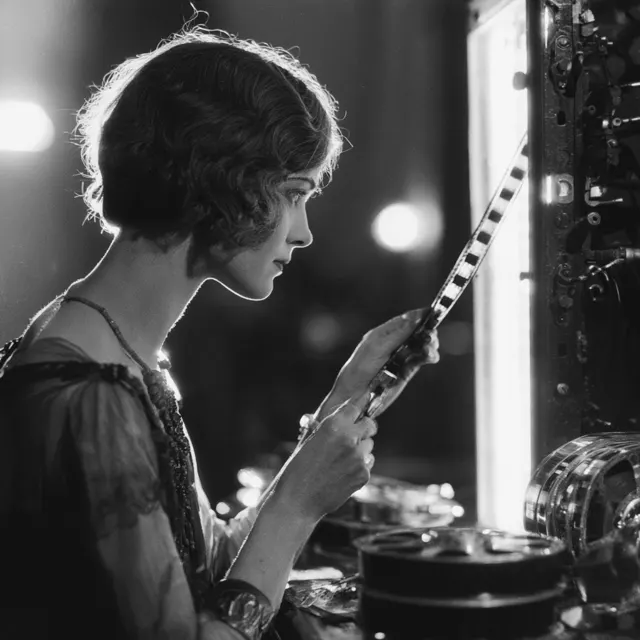
But 1 has a flip side: stubbornness, obsessiveness, the urge to keep everything in hand. Hitchcock storyboarded his films down to the last detail and said a film was finished for him before shooting began. He disliked actors improvising.
3 · The Empress: a body that wants the stage
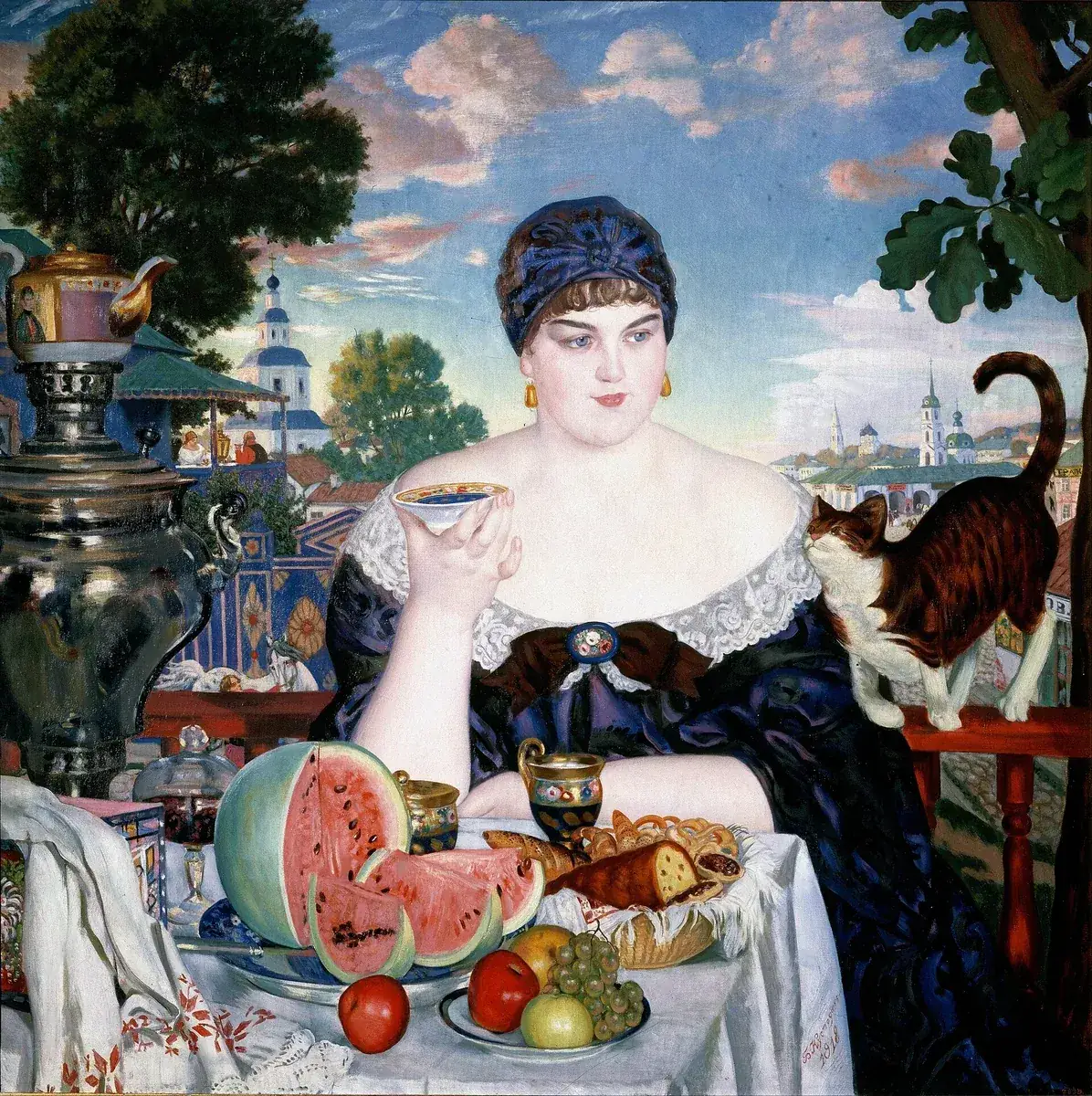
Now Kustodiev’s “Merchant’s Wife at Tea”. Plump, pleased with herself, a saucer in her hand and a cat at her shoulder. A body that isn’t ashamed of itself. 3 is the Empress: abundance, a taste for life and the wish to be seen.

And here is the most interesting part. Hitchcock was ashamed of his weight. As a child he was quiet and heavy, and in 1917 an army board passed him fit “only for sedentary work” while boys his age went off to the First World War. He fought his weight all his life: he lost almost 45 kilograms, then put it back on. He told journalists that on a diet he had only a cup of coffee for breakfast and lunch, and steak and salad for dinner. I understand him there: I love coffee myself, only black.
Can the body and fear be connected? I think so. When you are ashamed of yourself, you start watching very closely how others look at you. And then there are two paths: hide, or take the gaze into your own hands.
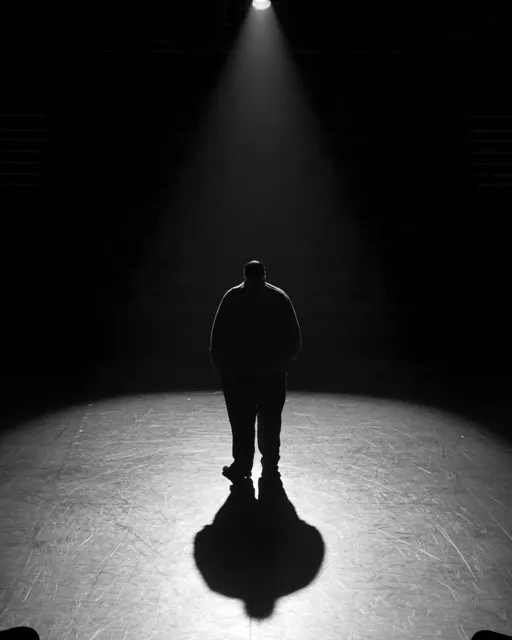
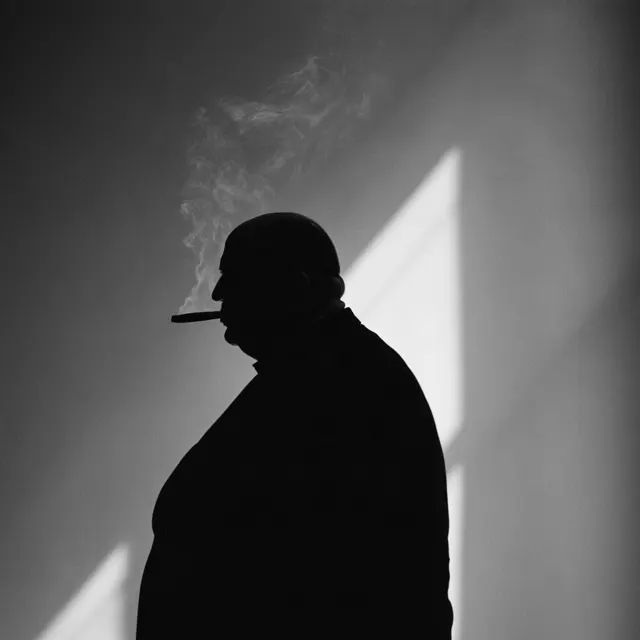
Hitchcock chose the second path. The Empress did get on stage: he appeared for a few seconds in 40 of his own films. Boarding a bus, carrying a double-bass case, flashing past in a newspaper photo. Audiences hunted for these seconds so eagerly that he began to appear right at the start, so as not to distract from the plot. And from 1955 he hosted his own television show, every episode opening with his profile drawn in a few lines.
The silhouette he was ashamed of became cinema’s most recognisable sign.
I worked as a fitness trainer, and sport and the body have been part of my whole life. From experience and from talking with women I know: our relationship with the body matters to every one of us, and a conversation about weight almost always turns out to be a conversation about shame. I have my own story with the body. For many years I lived with chronic tonsillitis, and my throat, and with it my voice, was my weak spot. I tried all kinds of treatment. I think my work played its part too: flights, changing time zones. And psychology as well. Everything is connected.
Then I took up raw food. First I gradually cut out sugar, flour and sweets: I wanted to reset my immune system. In the end I gave up meat too, and I still don’t eat it, and I try to stay away from dairy. The chronic tonsillitis is behind me. I don’t call myself a vegetarian and don’t belong to any camp. I simply live more comfortably this way, and I feel the difference in my body.
Hitchcock argued with his body all his life. Despair led me to a truce. In my observation, in programmes 3 and 6, in everything to do with the body, one formula works: me first, then everything else. It isn’t selfishness. It is what we call self-love: hearing your body before other people’s expectations.
This is my personal experience, not a recommendation. Medical tests and attention to your health still matter.
4 · The Emperor: order as protection
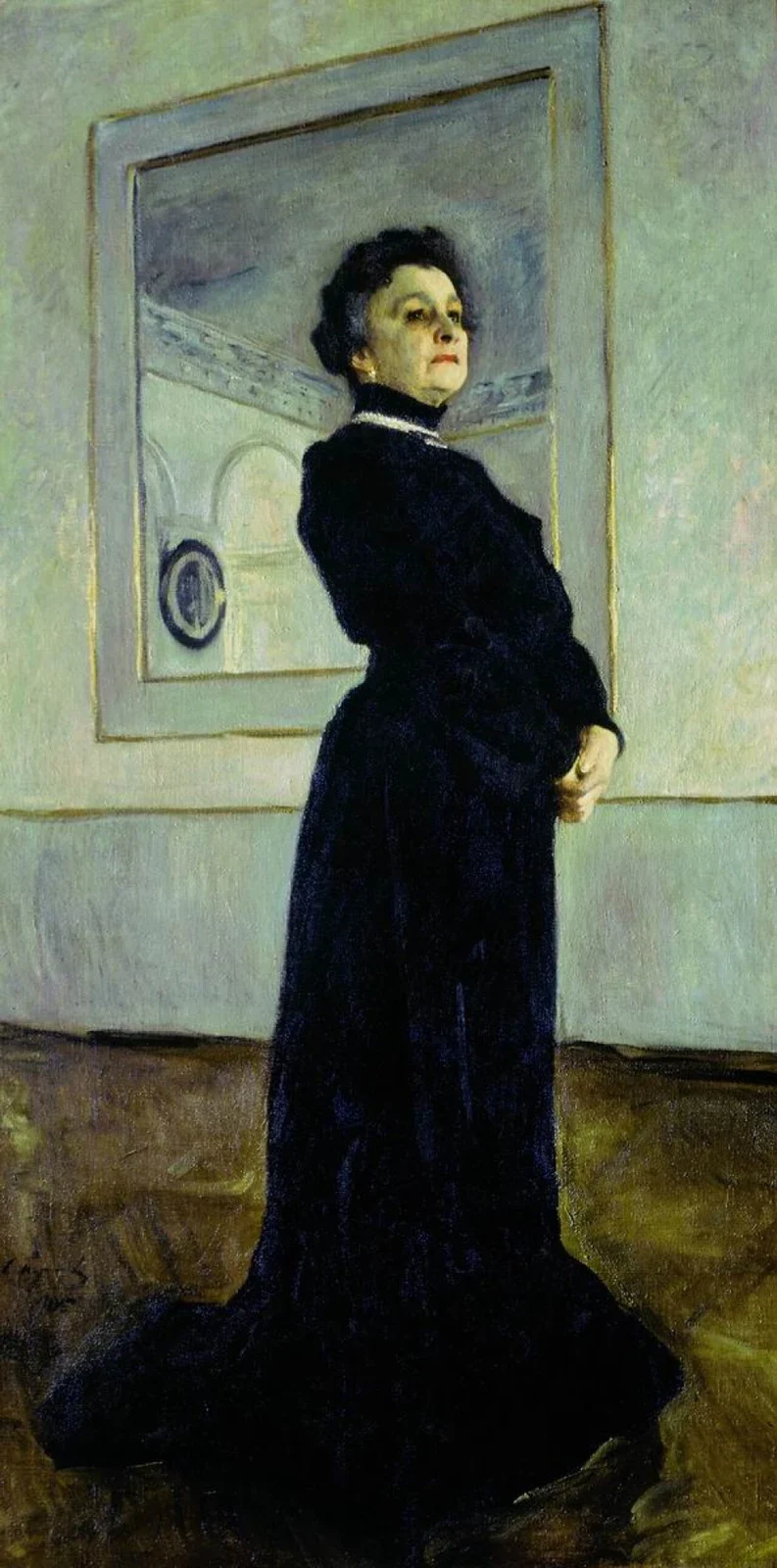
Serov paints the actress Maria Yermolova from slightly below, as if from the stalls, and the figure in black rises like a column. 4 is the Emperor: support, order, control. In Hitchcock this order shows in the storyboards, in the identical dark suits, in the habit of deciding everything in advance. Order as protection against the chaos the boy in the cell feared so much.
13 is the peak of his personality. But character shows best in what repeats. In Hitchcock’s numbers three numbers sound four times each.
Repetitions are what drive a person.
In personality, family script, scale and relationships. This is recognition and scale: when your own yard is too small and you need the whole world. Psychologists call this drive achievement motivation: success alone is not enough, you need recognition on a big stage. Hitchcock’s name became a word in many languages.
The ability to see the familiar from an unexpected angle. In psychology a similar skill is called perspective-taking. For Hitchcock it is the main tool: the camera from above, from the window opposite, through a glass, and the hero of “Vertigo” hanging from the edge of a roof above the street.
Wisdom and scale, but also distance. Hitchcock kept people at arm’s length all his life, and only one person stayed close: Alma.
One more detail. Both 21 and 12 have the same 3 at their core. 3 sounds in him louder than it seems: the body, the stage, the wish to be seen. That was his main engine.
This is my view through the psychology of numbers, not a diagnosis. A full reading of Hitchcock’s numbers, with family script, health and the soul’s mission, is in my Telegram channel.
Chapter 3 · Money and risk
8 · Justice: the director who counted money
The greengrocer’s son risked his own money and always bet on himself.
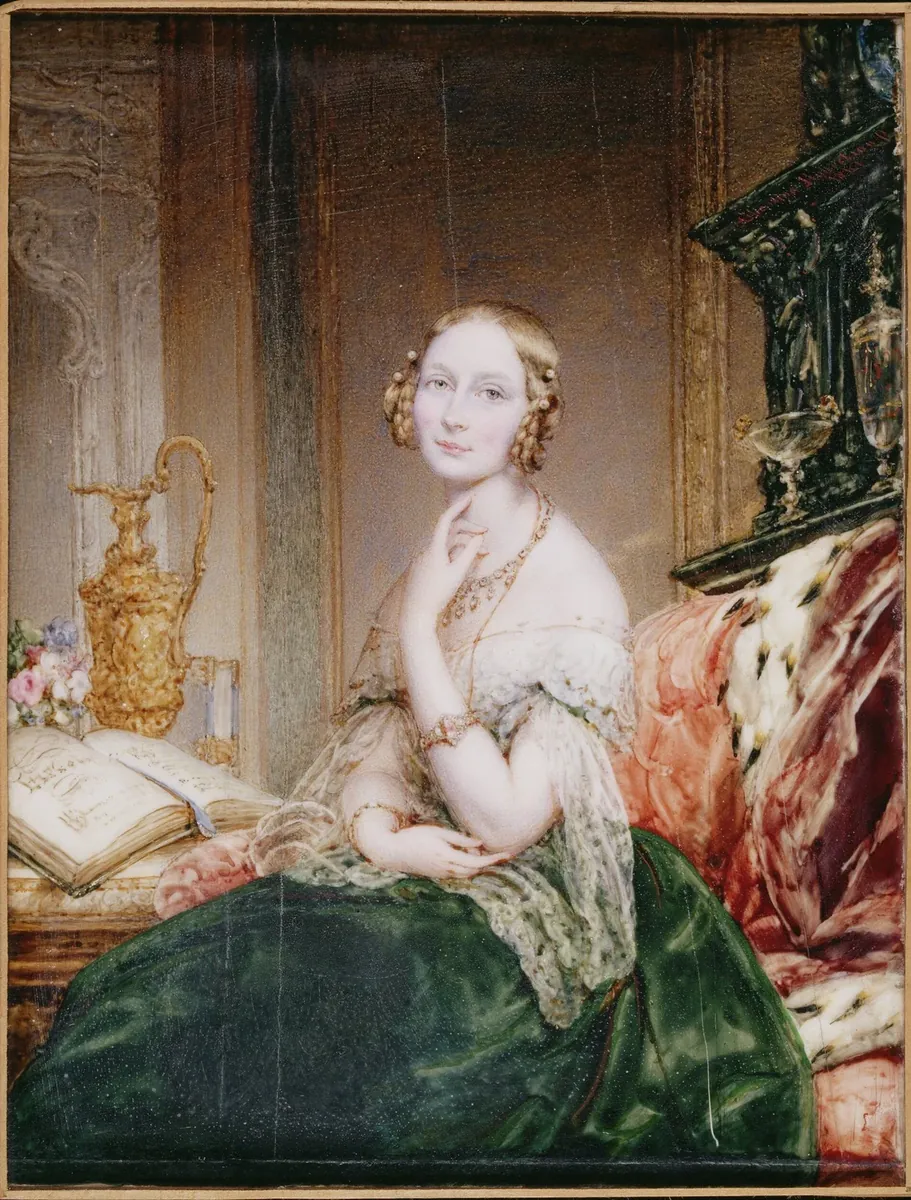
His birth month, August, gives 8, Justice. This is the family script: how the family dealt with power, law and money. On the platform it is the portrait of Grand Duchess Elena Pavlovna by the Scottish painter Christina Robertson: a hand at her chin, an open book beside her. She thinks before she decides.
The tradesman’s son became a truly big businessman. And a great risk-taker. “Psycho” shows it best.
- He bought the rights in secret. Robert Bloch’s novel was bought through an intermediary, without Hitchcock’s name, for just 9,000 dollars. After commissions Bloch received about 5,000, with no share of the profits. Fair? You decide.
- He risked his own money. Paramount disliked the story and didn’t want to pay for it. So Hitchcock made the film largely with his own money, in black and white, with his television crew, and gave up his fee in exchange for 60 per cent of the film.
The budget of “Psycho” was 807,000 dollars; it took about 50 million worldwide. It is the most profitable film of his career. 8 loves risk if it is calculated.
Hitchcock had his own method: a secret purchase, hard calculation, a bet on himself. He deserved an Oscar. But he did not always act fairly. Some people cut a corner once in their lives; others make it their method.
Let me tell you a story I know well. Imagine a young woman who has 8 in her chart. She has no time for driving school, so she simply buys her licence. That is how it worked out; she means no one any harm: what is the big deal? But in her own way she is honest: she confesses to an instructor and asks him to teach her until he himself says “you are ready”. Some time later she has an accident. It is not her fault, the airbags work, she is unhurt, but the car is towed away and spends three months in repair. Exactly as long as she would have spent at driving school.
Coincidence? Perhaps. But people noticed such patterns long before us, hence the proverbs: “what goes around comes around”, “you reap what you sow”, the law of the boomerang. Watching life scripts, I see a connection here. 8 is a justice you do not need to fight for: it takes back its own regardless. If the lesson is learned, the story does not repeat. If not, life will lead you through it again.
Art Historian of the SoulChapter 4 · Scale
9 · The Hermit: a scale as wide as the world
Filmmakers still learn from his shots. But scale has a price: loneliness.
His birth year gives him 9, the Hermit. This is his scale.
On the platform 9 is “Interior, Strandgade, Sunlight on the Floor” by the Danish painter Vilhelm Hammershøi: a woman sits with her back to us, and the real subject is the patches of sun on the floor. Light born in silence. The Hermit walks alone and lights the way for others.
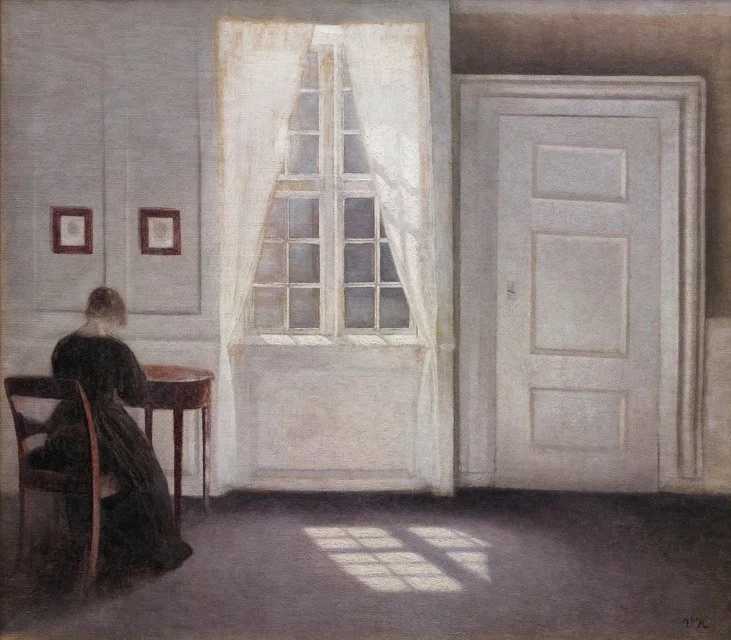
Directors born after his death learn from Hitchcock’s shots. That is the scale of 9. And the shadow of that scale is loneliness and control. He had no friends as a child, and as an adult he kept his distance even from actors he was close to.
3 Relationships: 3. The Empress again! In relationships he needed a partner beside whom he could show himself. That person was Alma.
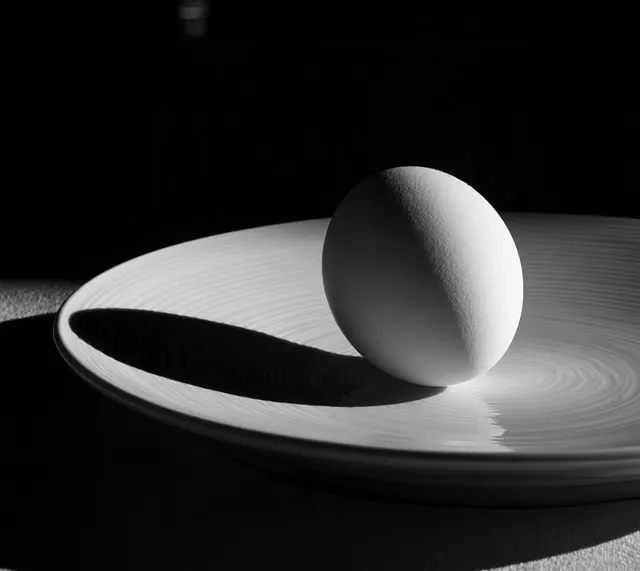
6 Health: 6. This is about the body, habits and everyday choices. Diets and lapses, coffee instead of breakfast, and the funny fear of eggs he loved telling journalists about.
Can you see how 3 sounds again and again? His personality wanted the stage, and shyness kept him in the wings. All his life he looked for a way between them.
Chapter 5 · Painting
Paintings in his frames
He thought in pictures: many of his shots grew out of painting.
Before cinema Hitchcock studied drawing. He went on thinking in pictures.
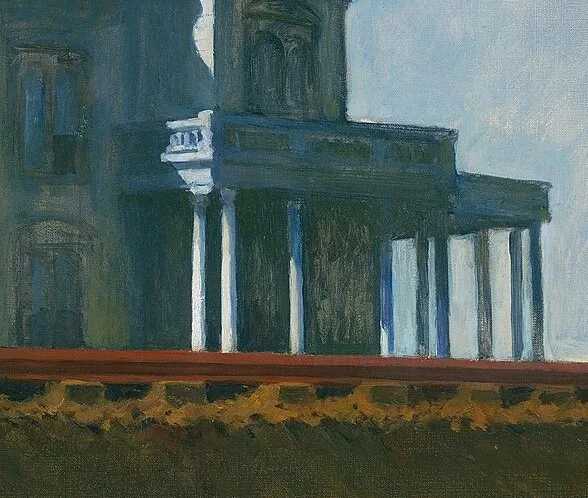
The house from “Psycho”. Remember the gloomy house on the hill above Norman Bates’s motel? Its model is believed to be “House by the Railroad” (1925) by the American painter Edward Hopper. Hopper is the master of loneliness: empty streets, night cafés, people at windows. Look how the rails cut the house off from below: it seems impossible to reach.
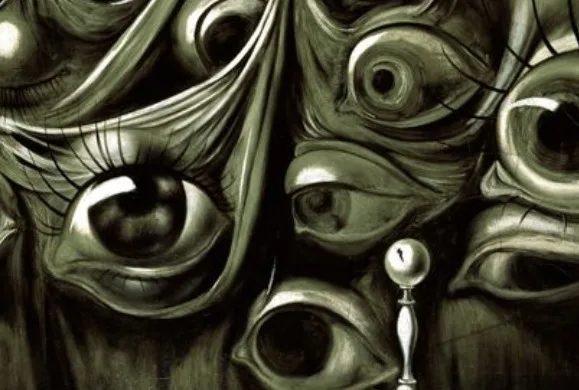
A dream by Dalí. For “Spellbound” (1945), about a psychoanalyst played by Ingrid Bergman, Hitchcock brought in the Spanish Surrealist Salvador Dalí. The producer David O. Selznick assumed Dalí was there for publicity. Hitchcock explained it differently: he wanted Dalí for the architectural sharpness of his work. Dreams in films were then shot in a soft haze, and he wanted a dream that was sharp and frighteningly clear.
Paintings on the walls at home. Hitchcock and Alma collected art together, and like many couples they had different tastes. He adored Paul Klee, the Swiss-born artist who painted in signs, as if in code: “Klee could have made good storyboards.” Alma loved Maurice Utrillo and his quiet streets of Montmartre.
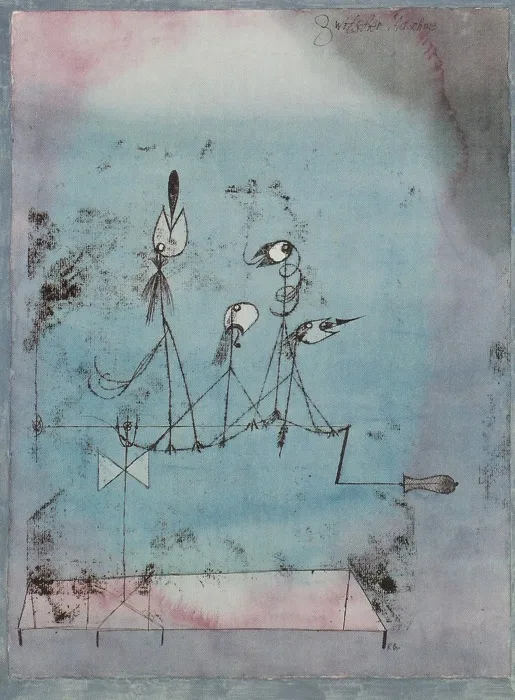
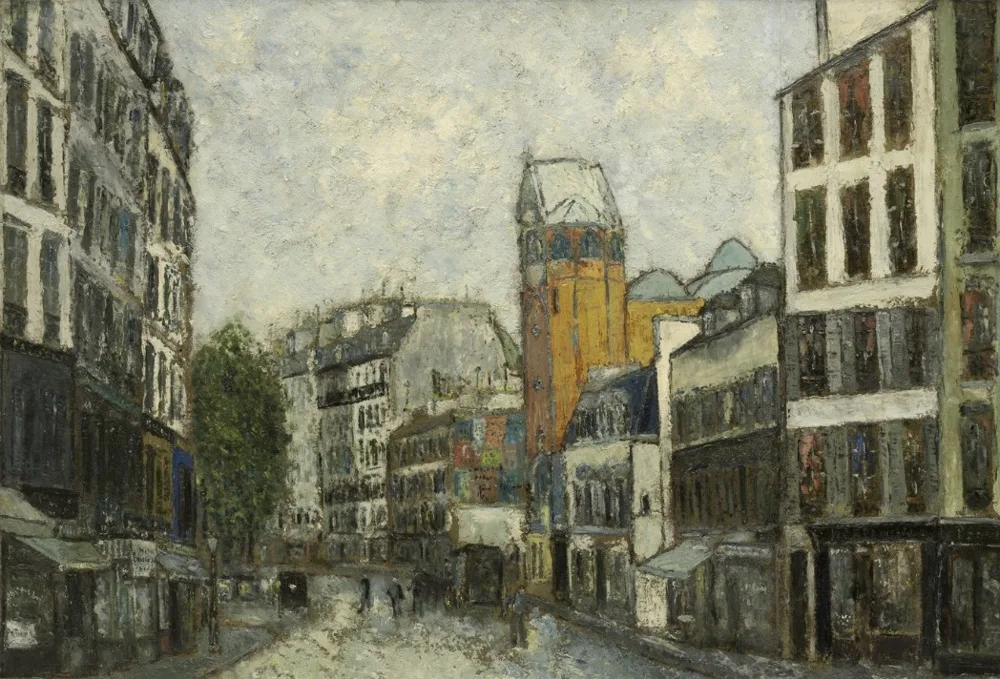
Look at the Klee: four little birds on a wire, and at the side a crank that seems to wind them up. Sweet? Sweet. And a little bit creepy. Just like Hitchcock’s “The Birds” (1963).
He chose mystery, she chose light. And it all hung in one house.
Chapter 6 · Alma
Alma, or four hands
Hitchcock’s main co-author was not in the credits. Her name was Alma.
In 1920, when Hitchcock came to draw title cards at the London studio of the American company Famous Players-Lasky, Alma Reville was already working there as an editor. She was born on 14.08.1899 in Nottingham, exactly one day after him. She came into film earlier, so she was the senior one.
Their first film together, “Woman to Woman”, came out in 1923. In 1926 they married, and they were together for 54 years. Alma wrote scripts, “Shadow of a Doubt” (1943) among them, read drafts, watched the edit. Her opinion was the final word.
The Hitchcock touch had four hands, and two were Alma’s.
Charles Champlin, film critic, Los Angeles Times, 1982On 07.03.1979 Hitchcock received the American Film Institute’s Life Achievement Award. He went on stage and begged permission to name only four people who had given him the most affection, appreciation and encouragement:
The first of the four is a film editor, the second is a scriptwriter, the third is the mother of my daughter, Pat, and the fourth is as fine a cook as ever performed miracles in a domestic kitchen.
Alfred Hitchcock, American Film Institute Life Achievement Award, 07.03.1979And he added: all four are named Alma Reville.
Where did Alma’s authority come from?
You’d think: a small woman in the cutting room, her name hardly ever on a poster. Yet she has the last word. Where does that strength come from? Look at her numbers.
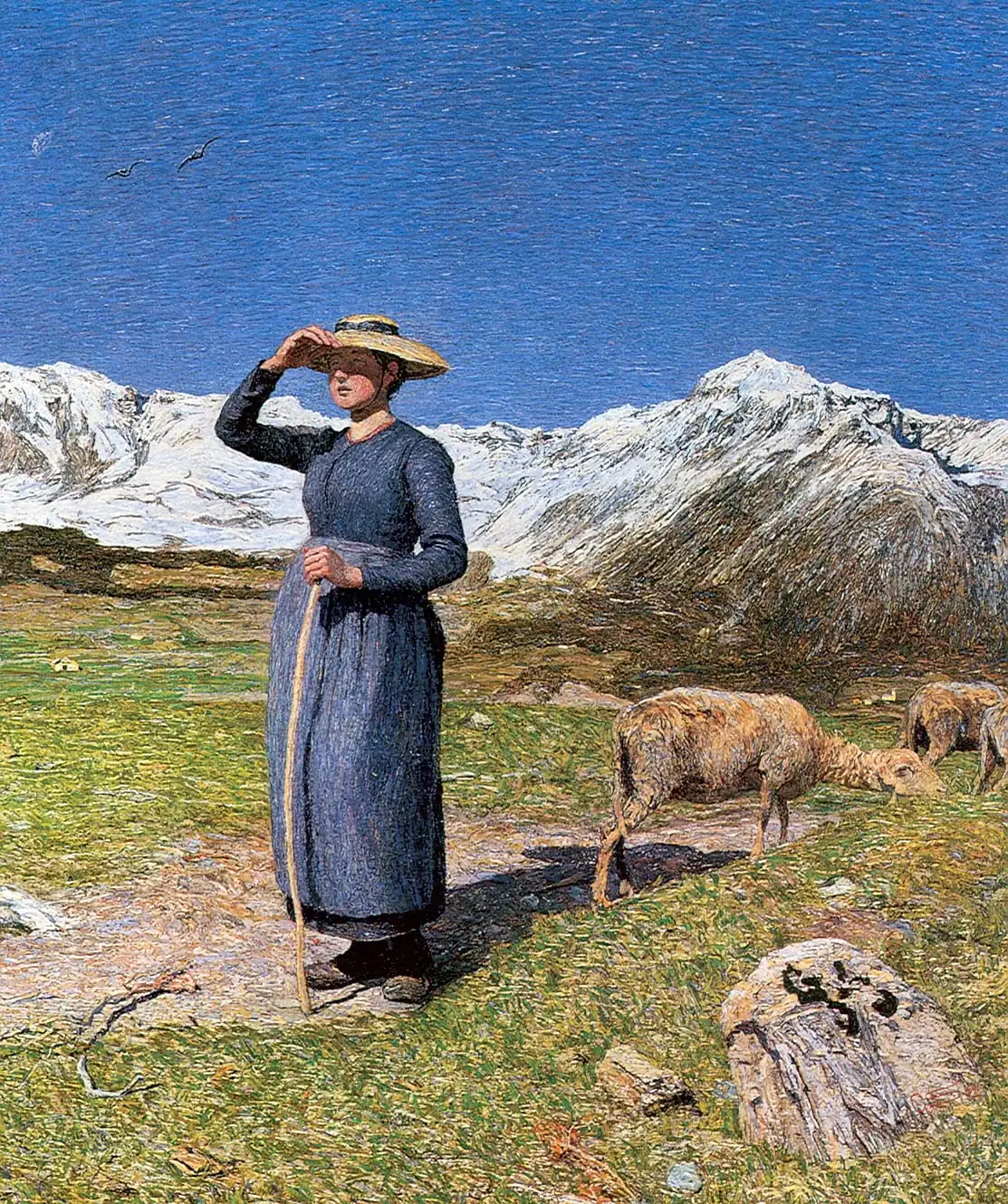
She was born on the 14th, and on the platform this is “Midday in the Alps” by Giovanni Segantini: a shepherdess stands exactly halfway between the sky and the meadow, in balance. 14 is Temperance, balance. But inside 14 sound 1, 4 and 5. 1, the First: will and leadership, like Hitchcock. 4, the Emperor: order and power. 5, the Teacher: the one who knows how things should be done. So much for “quiet” Alma.
| Alfred 13.08.1899 | Alma 14.08.1899 | |
|---|---|---|
| Birthday | 131 · 3 · 4 | 141 · 4 · 5 |
| Family script | 8 | 8 |
| Scale | 9 | 9 |
| Relationships | 3 | 4 |
| Health | 6 | 8 |
| Point of attention | 9 | 12 |
Shared numbers are highlighted. Their family script and scale are the same: both about power, money and a big reach. And 8 sounds twice in Alma, in family script and in health.
Now the most interesting part: relationships. Hitchcock has 3, the stage and being seen. Alma has 4, order and control. He wants to shine, she holds the frame. He is change, turning everything upside down; she is the balance that keeps it from flying apart. The result is a union in which the stage and order are always negotiating who is in charge today.
He was change, she was balance. And that balance had power.
A question for yourselfWhich of your work stays invisible? And who does invisible work for you?
Their daughter Pat
Hitchcock and Alma had one child, their daughter Patricia, Pat. She was born on 07.07.1928 in London, moved to Los Angeles with her parents in 1939 and became an actress. Her father cast her in small parts in three films, among them “Strangers on a Train” (1951) and “Psycho”, where she plays the heroine’s colleague. On the set of “Strangers”, knowing his daughter was afraid of heights, he bet her 100 dollars she wouldn’t ride the Ferris wheel. That was the father: loving, with black humour and that same urge to test people with fear.
Pat had three daughters. She lived to 93 and guarded her father’s memory to the end.
Chapter 7 · Heroines
His heroines
Perfect blondes on screen. And behind the ideal, the wish to control.
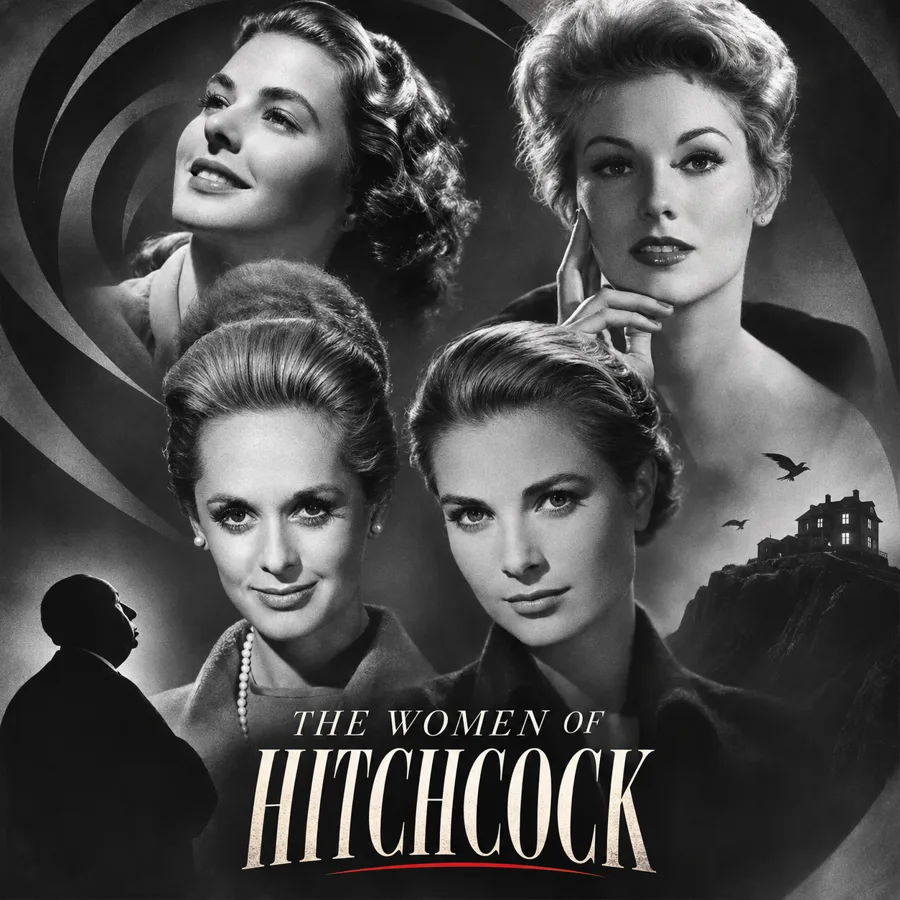
Hitchcock had his favourite kind of heroine: a reserved, impeccably dressed blonde who seemed out of reach. Ingrid Bergman, Grace Kelly, who later became Princess of Monaco, Kim Novak, Tippi Hedren.
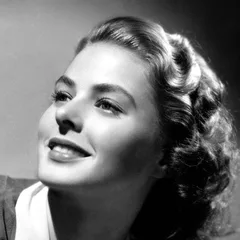
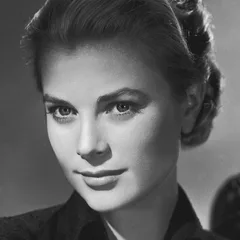
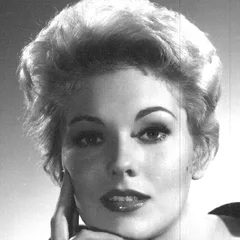
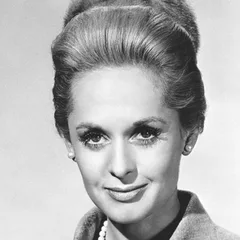
Studio publicity portraits
As a woman I see two feelings at once in his heroines: admiration and the wish to control. This story has a dark side. In 2016 Tippi Hedren wrote in her memoir that Hitchcock made advances to her and, after she refused, by her account obstructed her career:
While Hitchcock may have ruined my career, I never gave him the power to ruin my life.
Tippi Hedren, memoir “Tippi”, 2016He filmed unattainable women and trusted only one.
- A childhood fear nobody explained became the language of cinema: Hitchcock passed his own anticipatory anxiety on to his audience.
- Shame about his body made him a keen observer, and the silhouette he was shy of became a sign known around the world.
- Order and calculation were his protection and his strength: he took risks, but bet on himself.
- Beside him was a woman who kept him in balance. Without her invisible work there would have been no Hitchcock as we know him.
The boy was locked up for five minutes and never told why. The grown-up Hitchcock locked millions of viewers into waiting. The fear stayed the same. Now he held the key.
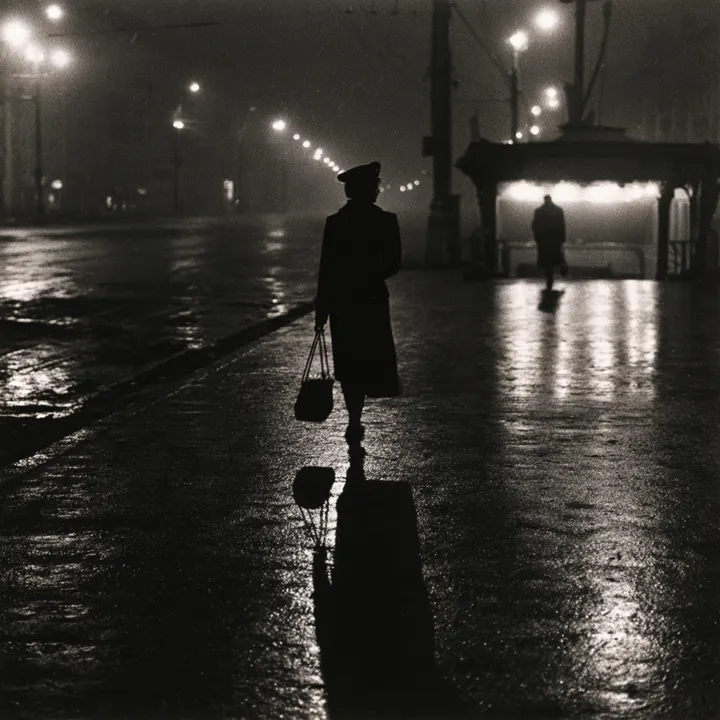
March 2010, early morning, Moscow. I had only just finished my trainee period as a flight attendant. I’m walking to the metro station in uniform; I have a flight. The street is lit, there is almost no one around. Someone runs up behind me, and a second later I’m attacked. He hit me in the face. For some reason I managed to notice in that moment that he had no knife. I didn’t give up my bag, I broke free and ran into the metro. No one stepped in: it was too early.
If you can say “lucky” about a story like this, I was lucky. Nothing broken, my things still with me. Bruises, swollen eyes, damaged soft tissue and suspension from flying. It was the only sick leave of my whole career in aviation. A mild scenario, but I became a victim in the literal sense of the word. Now I know for certain: no things are worth your health. If this ever happens to you, give up the bag.
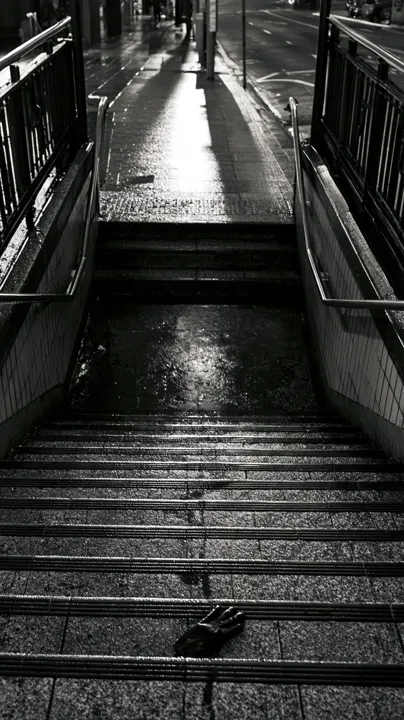
The body healed quickly. The fear didn’t. It lived with me for several years. The danger was gone, but the sound of someone running behind me stayed. I flinched at footsteps. I carried pepper spray, then a stun gun.
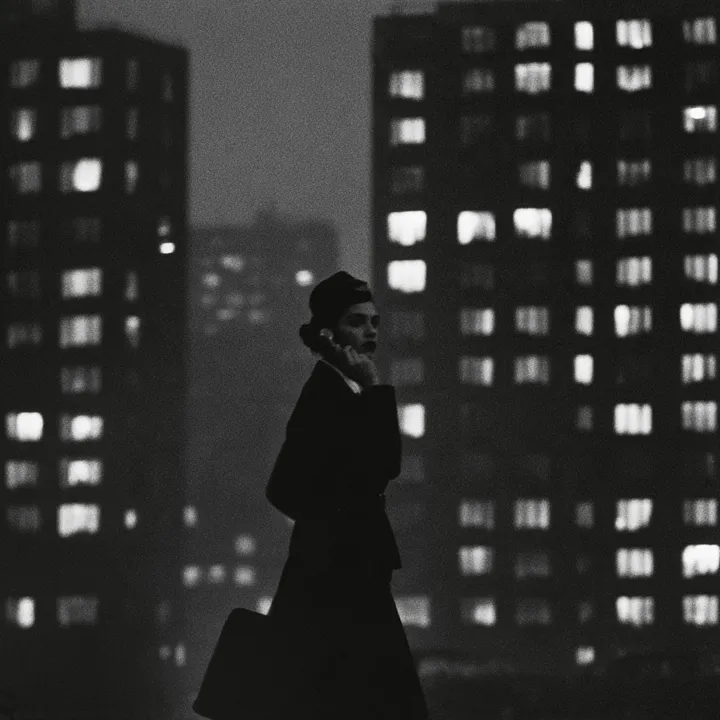
If I had to walk in the dark, for an early check-in or after a late arrival, I warned my mum in advance, and she stayed with me on the phone all the way. It felt calmer that way. And I started getting home before dusk.
This is the very anticipatory anxiety this whole article is about. The attack lasted a minute. Waiting for it to happen again lasted years. Hitchcock knew this better than anyone: what frightens is not the bomb, but the ticking under the table.
I still don’t know why it happened. Sometimes things just happen. But I learned a lesson for life: you never fully know who is in front of you, so care is needed everywhere. In time I found some good in this story too. I moved and found a new flat. I became more careful: I choose routes I know and get home while it’s light. Every cloud has a silver lining. And God protects those who protect themselves.
Since then I protect myself in what I watch, too. Horror films and explicit scenes of violence are not my genre. I am a sensitive person with a vivid visual imagination, and I live such images too deeply. The hard past I can watch from a distance: black-and-white newsreel, archives. Though even that sometimes wounds deeply if you truly take it in. But violence on screen and news of what is happening right now, I cannot watch. I feel them like a barometer and set myself a filter: what to let in and what not. This is my self-care. I don’t think I am the only one who finds it this hard. It isn’t weakness; it’s my way of living without breaking myself.
I coped without a specialist. But honestly, I think the fear would have gone much faster with a psychologist. My scenario was mild. When the soul is hurt more deeply, fear stays for a very long time and distorts how we see the world. So don’t wait for it to “pass on its own”. Asking for help is also a way of looking after yourself.
This is my personal experience. If fear after what you have been through gets in the way of living, it is better to face it together with a psychologist.
In 1999 the American psychiatrist Daniel Siegel described the window of tolerance: the zone in which we can live through something hard without losing our footing. Distance in time, a black-and-white image, the ability to stop watching keep us inside that window. Choosing what to watch and how is a normal way of looking after yourself.
Practice
Practice: make a film about your fear
Hitchcock never got rid of his fears. He turned them into material. Let’s try the same, just on a sheet of paper.
- Write down one of your fears in a single sentence.
- Remember the scene where it began. Where were you, how old were you, who was standing nearby?
- Now look at that scene as a director. What is the key detail in it? Where is your “bomb under the table”?
- Write a different ending for it. In this one you are no longer a little girl, but the author.
This is a practice for self-knowledge, not therapy. A very painful memory is better worked on together with a specialist.

You are both the pilot and the air traffic controller of your own flight. Which means you are also the director of your own script.
 Read on · Part 2Summer 1945: The Truth Without TricksOnce in his life, the master of invented fear met real fear. What did he do?Read Part 2 ›
Why did the greatest master of suspense never win his Oscar? I have my own theory. More details and analyses in my Telegram channel. Subscribe.
Enjoyed it? Share it with someone who loves cinema. More stories, podcasts and readings are in my Telegram channel.
Sources
François Truffaut. “Hitchcock/Truffaut”, 1966; revised edition 1985.
Hitchcock interview in “Film Makers on Film Making”, Indiana University Press: publish.iupress.indiana.edu
Alfred Hitchcock; Alma Reville: Wikipedia (biographical data, army category C3, art collection); Artsy, “Inside Alfred Hitchcock’s Art Collection”, 2019.
Hitchcock’s speech at the American Film Institute Life Achievement Award, 07.03.1979.
Edward Hopper, “House by the Railroad”: moma.org
Dalí and “Spellbound”: Artnet, “Art Bites: Inside the Feverish Dream Sequence Dalí Concocted for Hitchcock”.
McClelland D. C. The Achieving Society, 1961 (achievement motivation).
Mulvey L. «Visual Pleasure and Narrative Cinema», Screen, 1975.
Gershoff E. T., Grogan-Kaylor A. Spanking and child outcomes: Old controversies and new meta-analyses. Journal of Family Psychology, 2016.
Psycho (1960), Wikipedia; Box Office Mojo (budget and box office); Mental Floss, “14 Facts About Psycho” (rights to the novel, self-financing).
Pat Hitchcock, Wikipedia; CBS News, 2021 (daughter, the Ferris wheel bet).
List of awards and nominations received by Alfred Hitchcock, Wikipedia (Oscar nominations, Thalberg Award).
Arlene Kaplan Daniels. «Invisible Work», Social Problems, 1987.
St Ignatius’ College and the ferula: Wikipedia, “Alfred Hitchcock” (Early life); Truffaut, “Hitchcock/Truffaut”, chapter 1.
Tippi Hedren. “Tippi: A Memoir”, 2016.
Actresses’ dates of birth: IMDb (Ingrid Bergman, Grace Kelly, Kim Novak, Tippi Hedren).
Siegel D. J. The Developing Mind, 1999 (window of tolerance).
Lerner M. J. The Belief in a Just World, 1980.
The coffee diet: The Alfred Hitchcock Wiki, “The Incredible Shrinking Hitchcock” (after Patrick McGilligan’s biography).
Dalí and Selznick: MoMA, “Hitchcock interview”, 1999.
Tippi Hedren quotation: memoir “Tippi” (2016), as published by Vice and the Daily Mail.
Arntz A., Weertman A. Treatment of childhood memories: theory and practice, 1999; White M., Epston D. Narrative Means to Therapeutic Ends, 1990.
The Hopper and Dalí details are reproduced for analysis, with links to the museums.