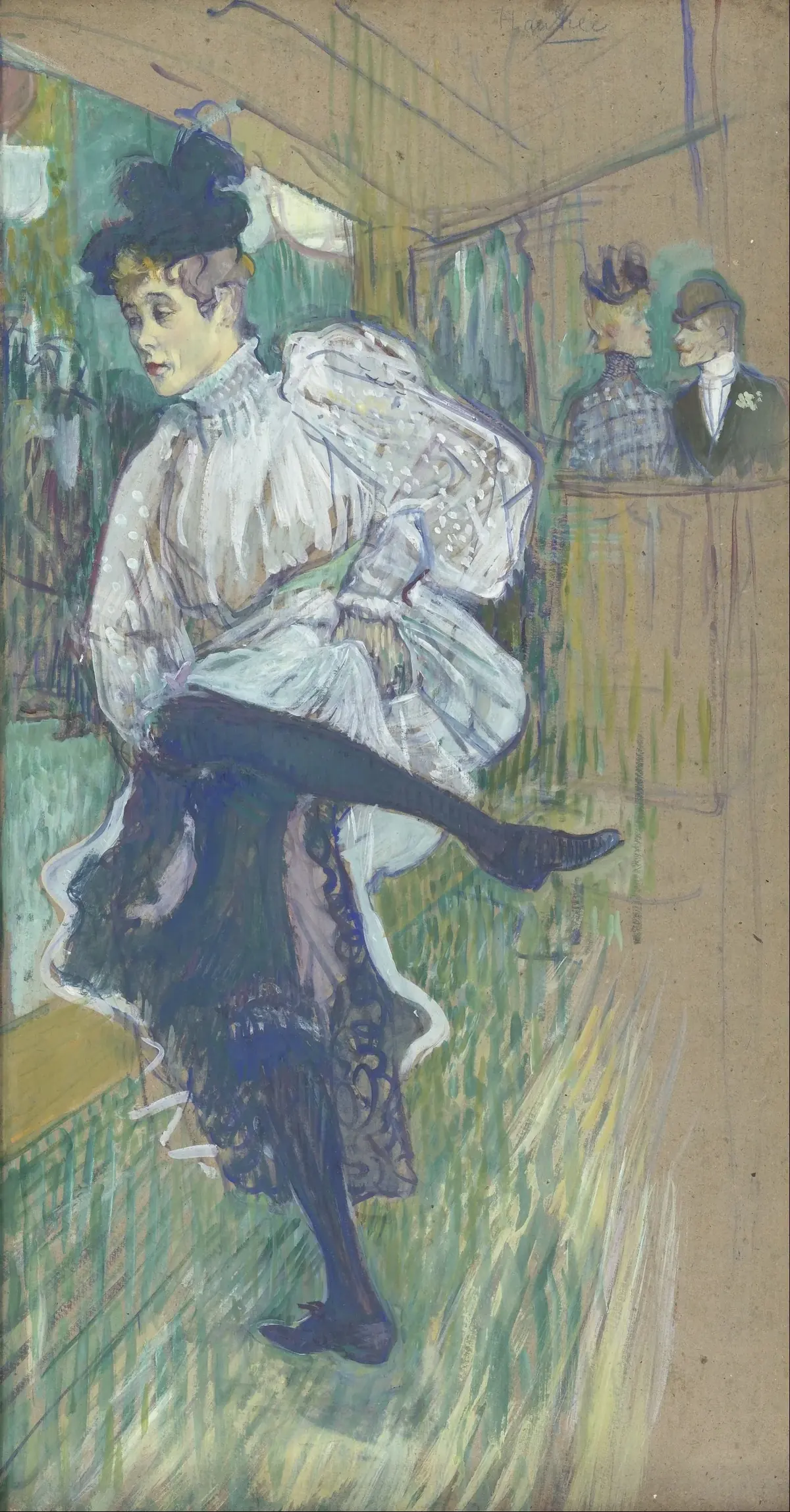
Jane Avril Dancing, around 1892. Musée d’Orsay, Paris
He saw himself in them
Jane Avril and Suzanne Valadon: why he was drawn to them and what they share in their dates.
Do you know what draws us to people? What is already in us. We look at someone and see something of our own. Often it is a vulnerability. But in truth it is a quality.
Henri de Toulouse-Lautrec, the count with a child’s legs, spent his life painting the women of Paris by night: dancers, singers, models, laundresses. He saw in them what he knew about himself. Fragility hidden behind boldness. Pain hidden behind a dance. Talent that breaks through everything.
Perhaps he never fully understood it himself. But he felt it, showed it and put it before the world. He saw the light in those whom Paris saw only at night.
I entered the dates of the two most important women in his life into my platform and looked at what they share with him. The coincidences surprised even me.
UnisonJane Avril: dance as rescue
Slender, nervous, distant. Jane was born in Paris on 9 June 1868. At 13 she ran away from a cruel mother and spent a year and a half at the Salpêtrière hospital under the famous Dr Charcot. There, at a hospital costume ball, she danced for the first time. Later audiences called her “La Mélinite,” after an explosive, and “Crazy Jane.”
Look
Her legs dance, her skirts fly, yet her face is calm, her gaze lowered. She is on stage and somewhere very far away at the same time. Sound familiar? The body does what is expected of it, while the soul withdraws inward.
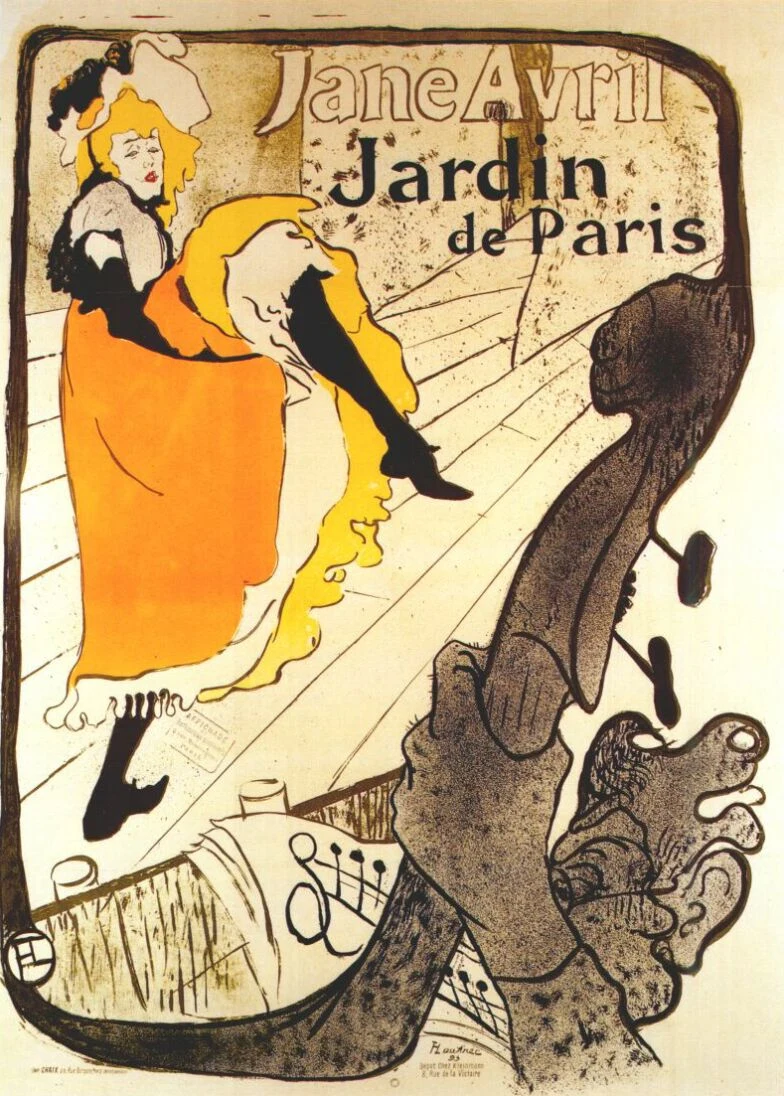
In 1893 Lautrec made her a poster for the Jardin de Paris, a fashionable café-concert on the Champs-Élysées, and she became a star. They were friends, and, as biographers write, he shared with her the pain of his body.
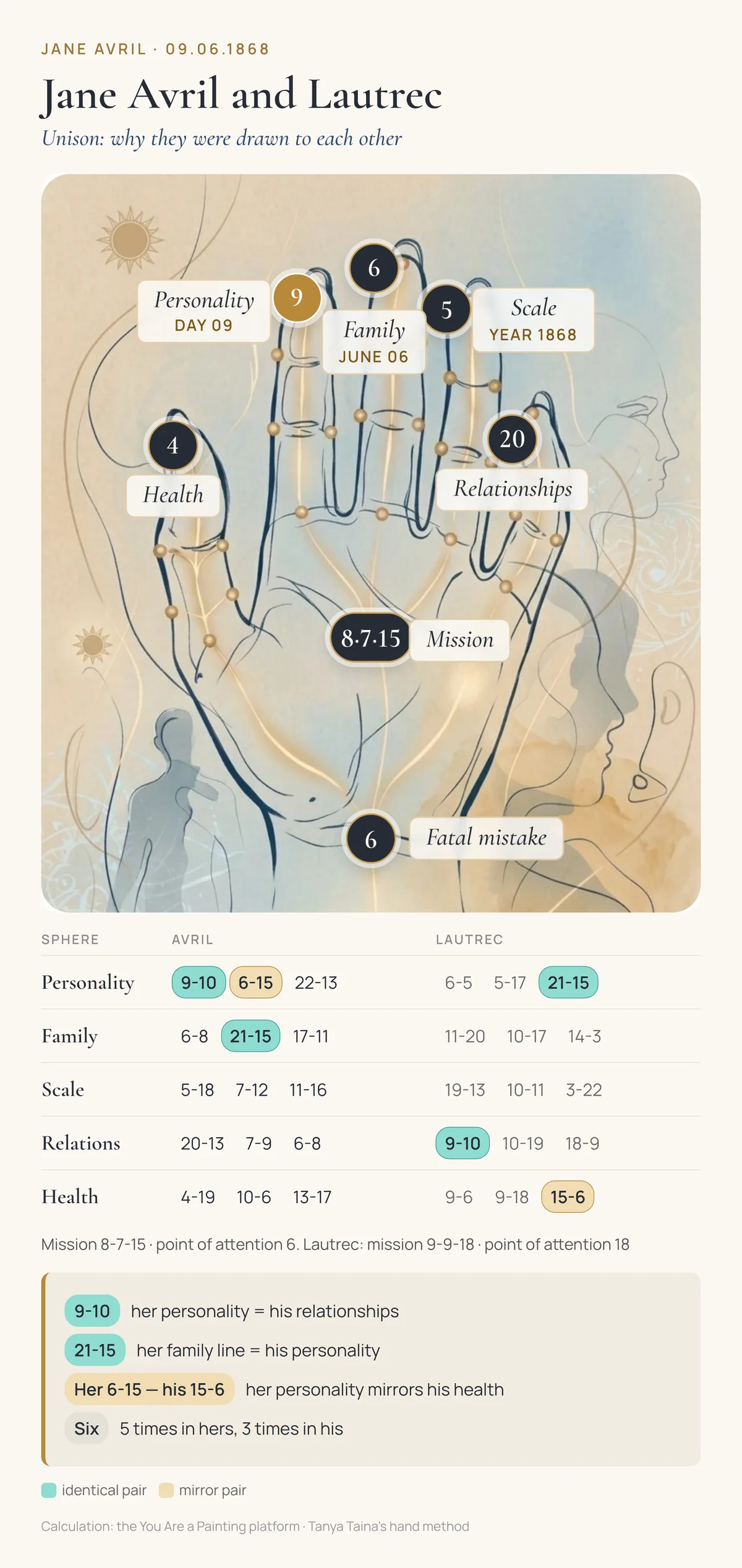
Shared notes
Two pairs match completely: 9-10, her personality and his relationships, and 21-15, her family line and his personality. And her 6-15 mirrors his 15-6 in health. Six, love, sounds five times in her chart and three times in his.
A hint: her personality speaks the language of his relationships. Perhaps that is why they found it so easy together. He saw himself in her: someone saved by their gift.
MirrorSuzanne Valadon: from model to painter
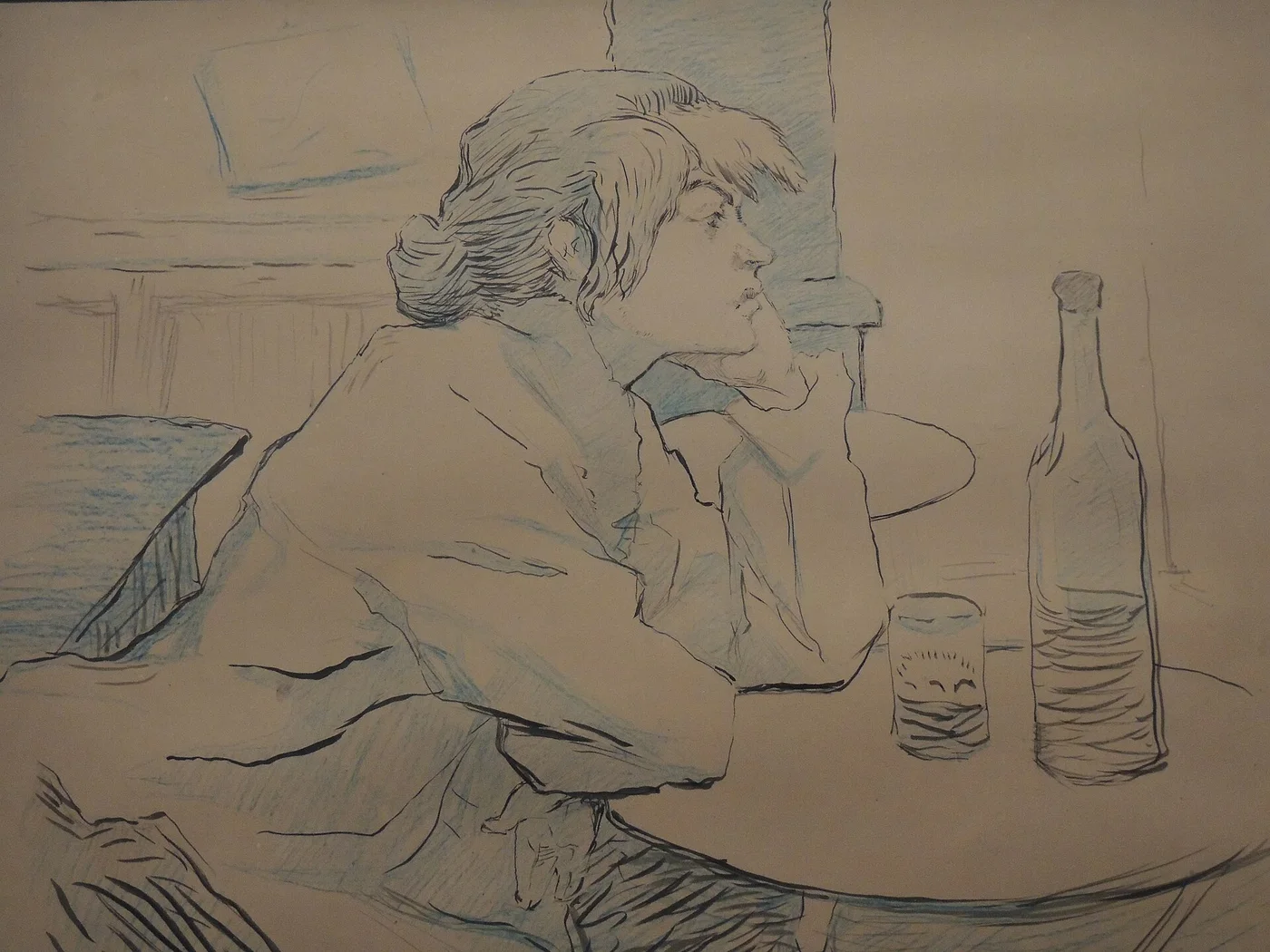
A laundress’s daughter, a circus acrobat. After an injury, a model for Renoir, Puvis de Chavannes and Lautrec. The title was given by the singer Aristide Bruant, in whose cabaret the painting hung.
Look
She sits at a table, chin in her hand. A bottle and a glass in front of her. Her gaze drifts far away. A hangover comes in many kinds. The obvious one is from wine. But there is a hangover from built-up emotions, from tiredness, even from euphoria: the party is over, and you are left alone at the table.
Shared notes
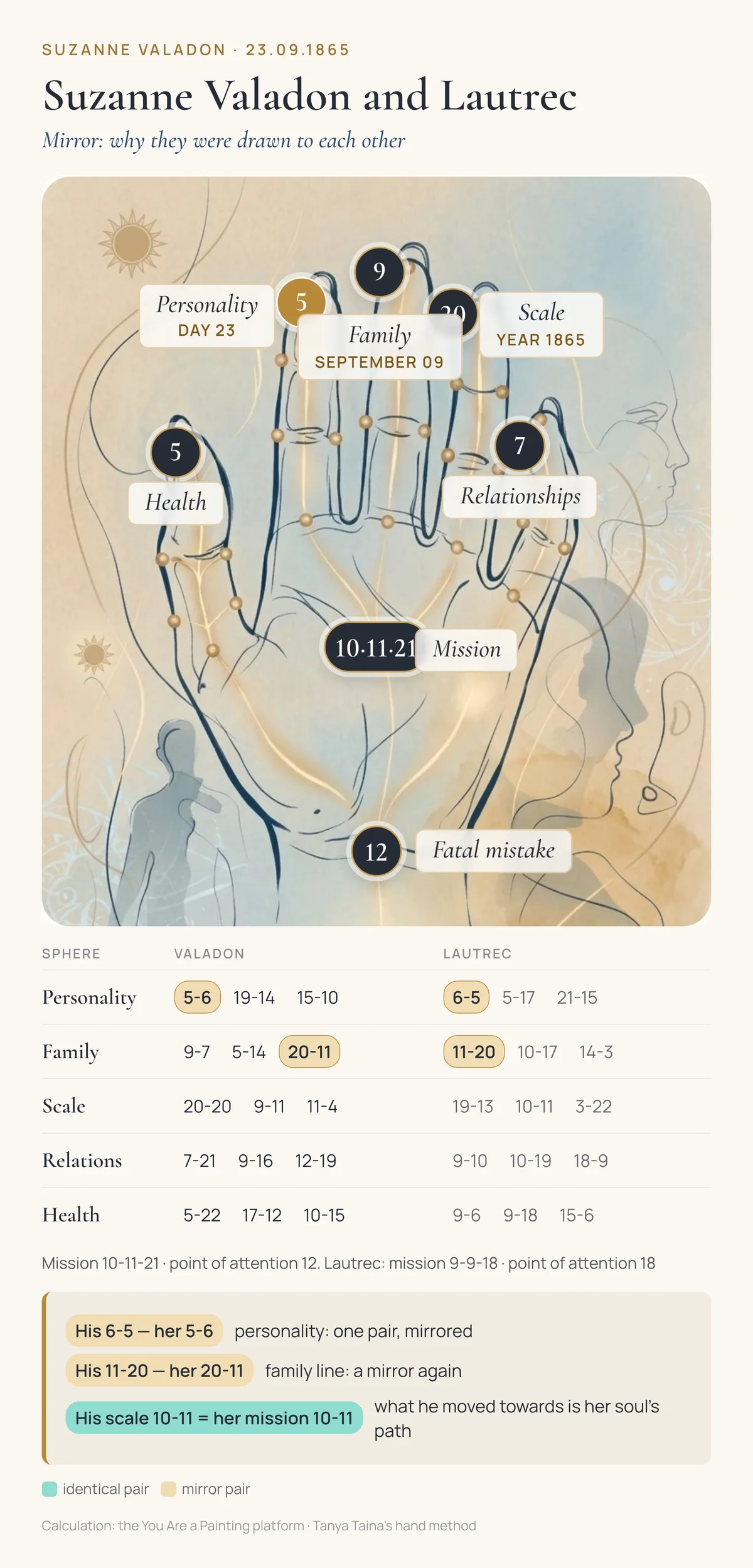
Two mirror pairs: his 6-5 and her 5-6 in personality, his 11-20 and her 20-11 in the family line. And his scale, 10-11, matches her mission, 10-11.
A hint: he saw himself in her, reversed, and she saw her own path in him. She watched him work. And one day she picked up the brush herself.
Psychology
We are drawn to people in whom our own notes sound: as a mirror, in unison, in a shared pain. Beside them we recognise ourselves. And what we think of as our weakness, someone else suddenly sees as strength.
ExitSuzanne picks up the brush
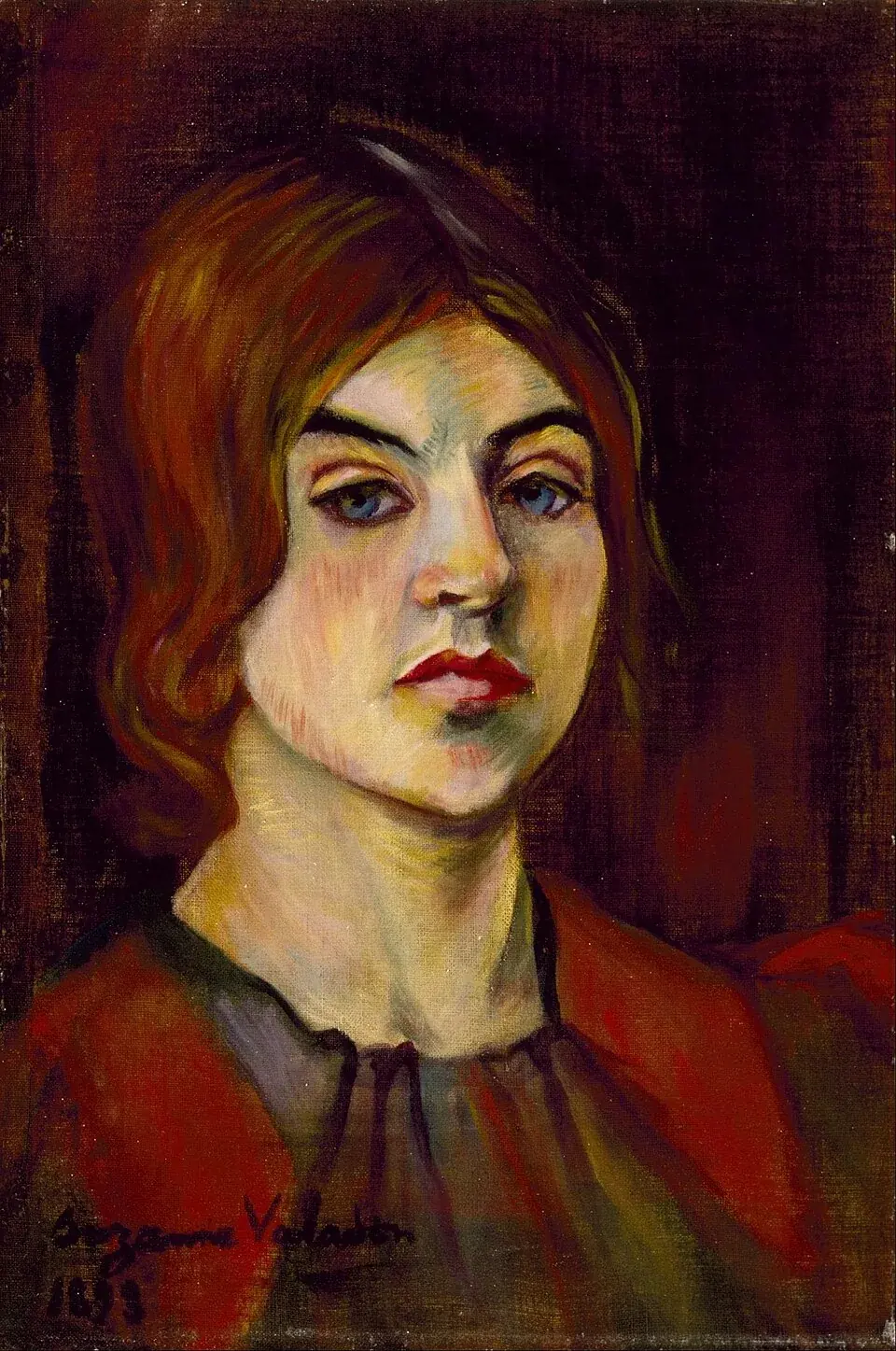
Suzanne learned by watching others work. Edgar Degas saw her first drawings and encouraged her path as a painter. In 1894 she became the first woman admitted to exhibit at the Salon of the Société nationale des beaux-arts, one of the main art exhibitions in Paris.
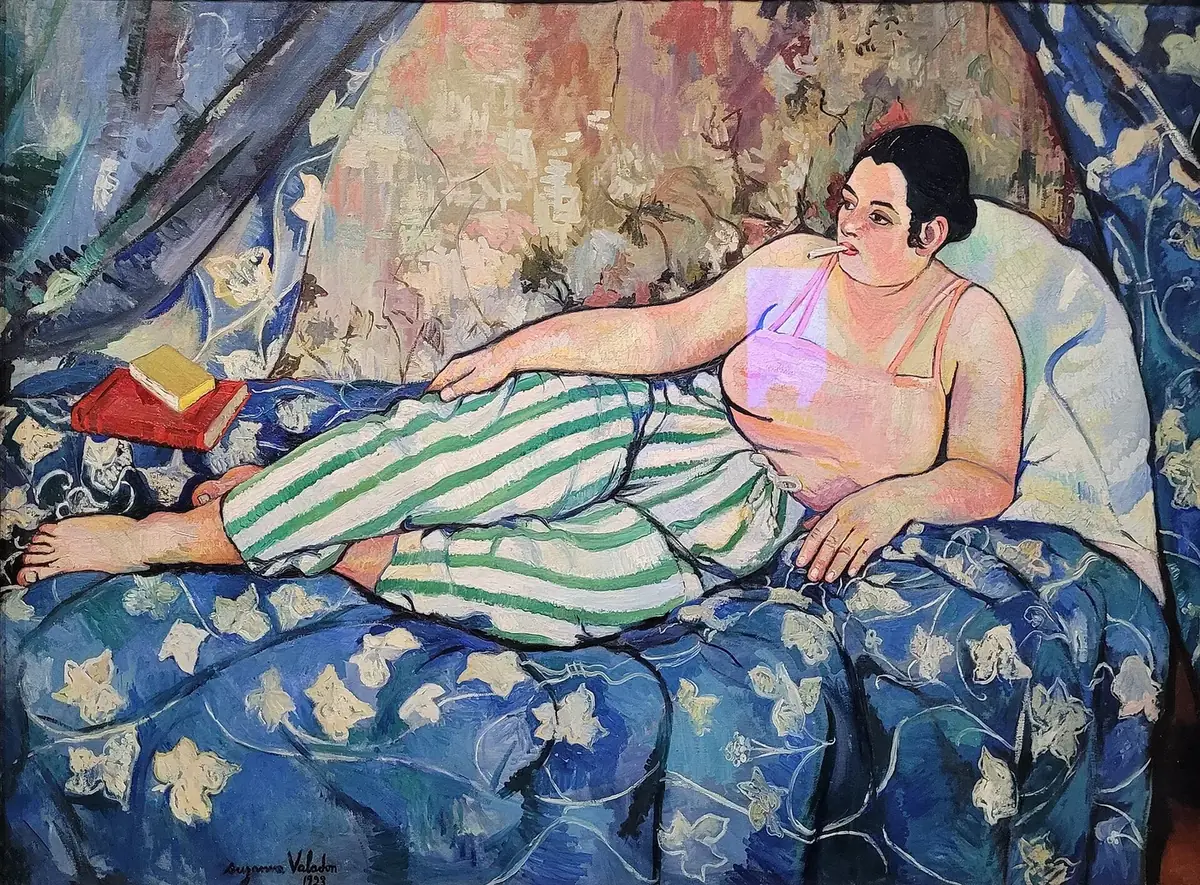
Look
A woman lies on a bed in striped trousers, a cigarette, books beside her. Free, herself, with no posing and no coquetry. This is a woman painted by a woman who was long a model herself. From the one who is looked at to the one who looks.
It is a mix of everything: glitter and grime, talent and ruin, the party and the hangover. Lautrec showed life whole, without embellishment. Maybe that is why we recognise ourselves in his paintings. We are perfect in our imperfection.
I often wonder what keeps a person at the edge. For Lautrec: his mother, his friend, and the women in whom he saw his own light. For Suzanne: the courage to pick up the brush herself one day.
He saw the light in the women of Paris by night. His mother and his friend saw his. Suzanne saw her own.
Who has seen your light?
And whose light can you see today?
See which paintings are waiting for you in your exhibition. A hint, not a fairy tale.
Tanya Taina
Which paintings are waiting for you?
Enter your date of birth and open your exhibition: seven paintings by great artists.
Open your exhibition →Sources
- Toulouse-Lautrec Museum, Albi: museum history and the 1922 gift — www.musee-toulouse-lautrec.com
- Museo Thyssen-Bornemisza: biography (fractures in 1878 and 1879, Bonnat, Cormon) — www.museothyssen.org
- Google Arts & Culture: 7 things you didn’t know about Henri Toulouse-Lautrec — artsandculture.google.com
- Google Arts & Culture: Jane Avril — artsandculture.google.com
- Sotheby’s: 21 facts about Toulouse-Lautrec (2019): cooking, posters, clinic, Vuillard — www.sothebys.com
- Art & Object: The Laundress and Pierreuse at Christie’s — www.artandobject.com
- Le Lit / Au lit: le baiser, Sotheby’s 2015 — en.wikipedia.org
- Paul Fraser Collectibles: Moulin Rouge poster at Christie’s, 2014 — www.paulfrasercollectibles.com
- Antiques Trade Gazette: print run of the La Goulue poster — cdn.antiquestradegazette.com
- Artprice: auction statistics and the 2026 exhibition in Aix-en-Provence — news.artprice.com
- Driehaus Museum: Poster Maniacs, collectors of the Belle Époque — driehausmuseum.org
- Britannica: Jules Chéret — www.britannica.com
- Kunstmuseum Bern: Toulouse-Lautrec and Photography — www.kunstmuseumbern.ch
- University of Glasgow: Maurice Joyant — www.whistlerpaintings.gla.ac.uk
- Morgan Library: letter to his mother, MA 4374 — www.themorgan.org
- The father’s inscription in the falconry book, after biographer Paul Domski — stephenbodio.com
- Count Alphonse de Toulouse-Lautrec — en.wikipedia.org
- Rijksmuseum: Toulouse-Lautrec Swimming in the Bassin d’Arcachon — www.rijksmuseum.nl
- Art Institute of Chicago: At the Moulin Rouge — www.artic.edu
- The Met: At the Circus: The Spanish Walk — www.metmuseum.org
- Phillips Collection: Jane Avril — www.phillipscollection.org
- Paris Zigzag: Jane Avril and the Salpêtrière — www.pariszigzag.fr
- Ministère de la Culture: Suzanne Valadon, Degas and the 1894 Salon — www.culture.gouv.fr
- Centre Pompidou: The Blue Room — www.centrepompidou.fr
- Images: Wikimedia Commons, public domain