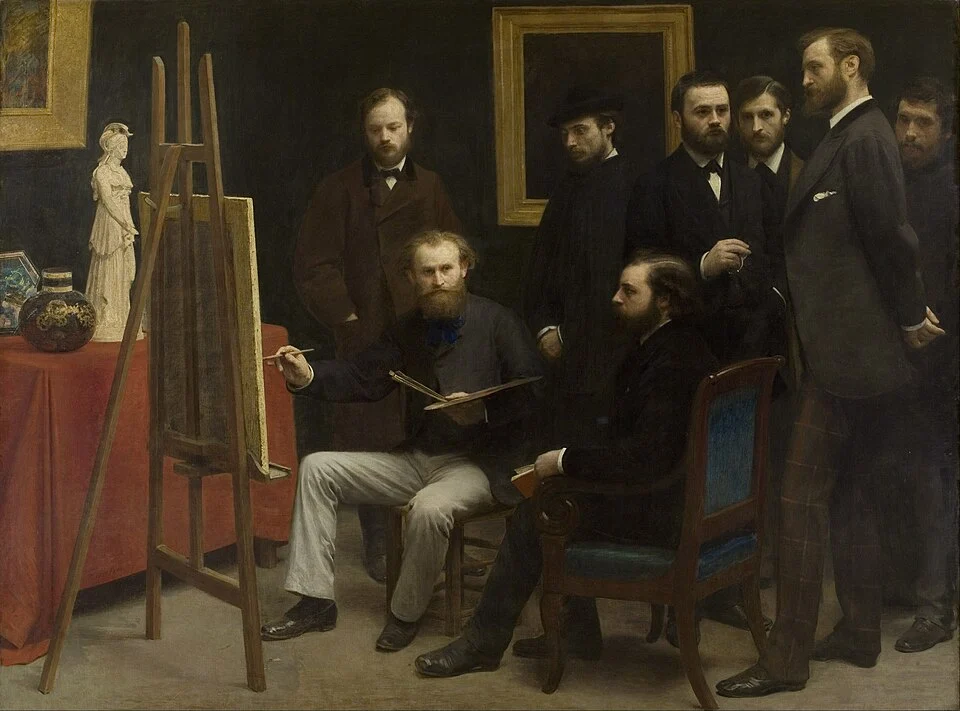
Henri Fantin-Latour, A Studio at Les Batignolles, 1870. Musée d’Orsay, Paris
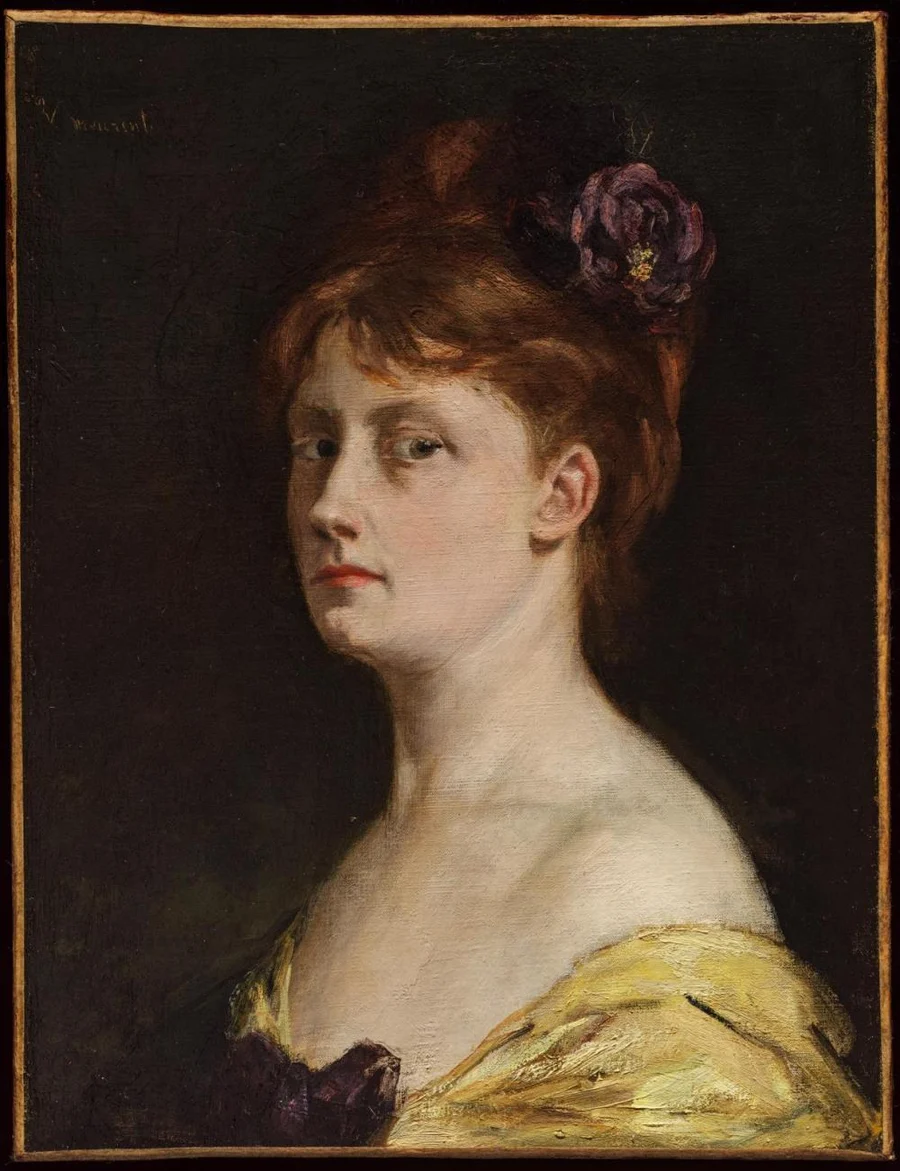
Who are you, Olympia? · Part 2
A glass of water, please, or Why Manet was not an Impressionist
In the same circle as the Impressionists but never one of them: who Manet really was. And I’ll start with a glass of water.
✈ From the past · more than ten years in the sky
“Could I have some water?”
“I’m not a doctor, I wouldn’t know if you can.”
It’s an old cabin-crew joke. Of course the water arrives. Almost always.
Almost. Sometimes you’re heading to the back of the plane on an errand, the passenger in row twelve asks for water, you say “just a moment” and honestly keep it in mind. The flight ends, you’re home, and in the middle of the night you sit bolt upright: I never brought it.
More than ten years in civil aviation: economy, business, first class, business aviation. That experience taught me a lot:
- to work twice as fast when the crew is minimal, without the passenger ever noticing;
- to read in a glance who is thirsty and who is scared.
But on a plane there’s no second chance: the passenger is already in another city.
And now, about today. Not long ago I told you about the Impressionists on my channel and got so carried away with Olympia and the scandal around her that I left out the main thing: Manet was not an Impressionist. That’s the glass I never brought. Only here, unlike on a plane, there is a second chance.
Row twelve, your water: Manet was not an Impressionist.
Fasten your seatbelts: I’m bringing everything I promised.
Same circle, different group
12345678⤢ Enlarge- 1Otto Scholderer
- 2Édouard Manet
- 3Pierre-Auguste Renoir
- 4Zacharie Astruc
- 5Émile Zola
- 6Edmond Maître
- 7Frédéric Bazille
- 8Claude Monet
Look at the painting. It is by Henri Fantin-Latour (14.01.1836–25.08.1904), a friend of these artists and a master of portraits and still lifes. In the centre, at the easel, is Édouard Manet (23.01.1832–30.04.1883). Next to him sits Zacharie Astruc, sculptor and journalist. Standing are the German painter Otto Scholderer, Pierre-Auguste Renoir (25.02.1841–03.12.1919) in a hat, the writer Émile Zola, champion of the new painting, Edmond Maître, a Paris city-hall clerk and friend of painters, Frédéric Bazille (06.12.1841–28.11.1870), who would be killed in the war a few months later at twenty-eight, and, on the far right, Claude Monet (14.11.1840–05.12.1926).
In the evenings painters and writers argued about art at the Café Guerbois, and Manet was one of them. One critic called him “a point of departure, the symptomatic precursor of a revolution.”
But when they held their first exhibition in 1874, Manet declined. And he declined the seven that followed too. He wanted to win where the old masters had won: at the official Salon. He sent work there all his life: accepted one year, rejected the next, with the scandal over Olympia happening in that very Salon, and only in 1881, two years before his death, did he win a second-class medal.
A conversation with the classics
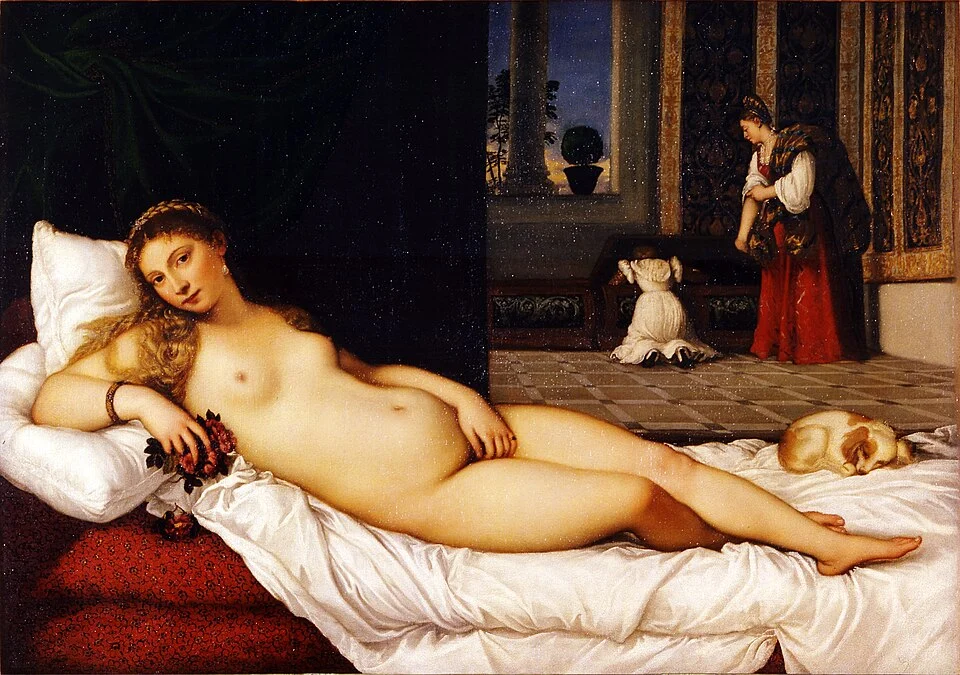
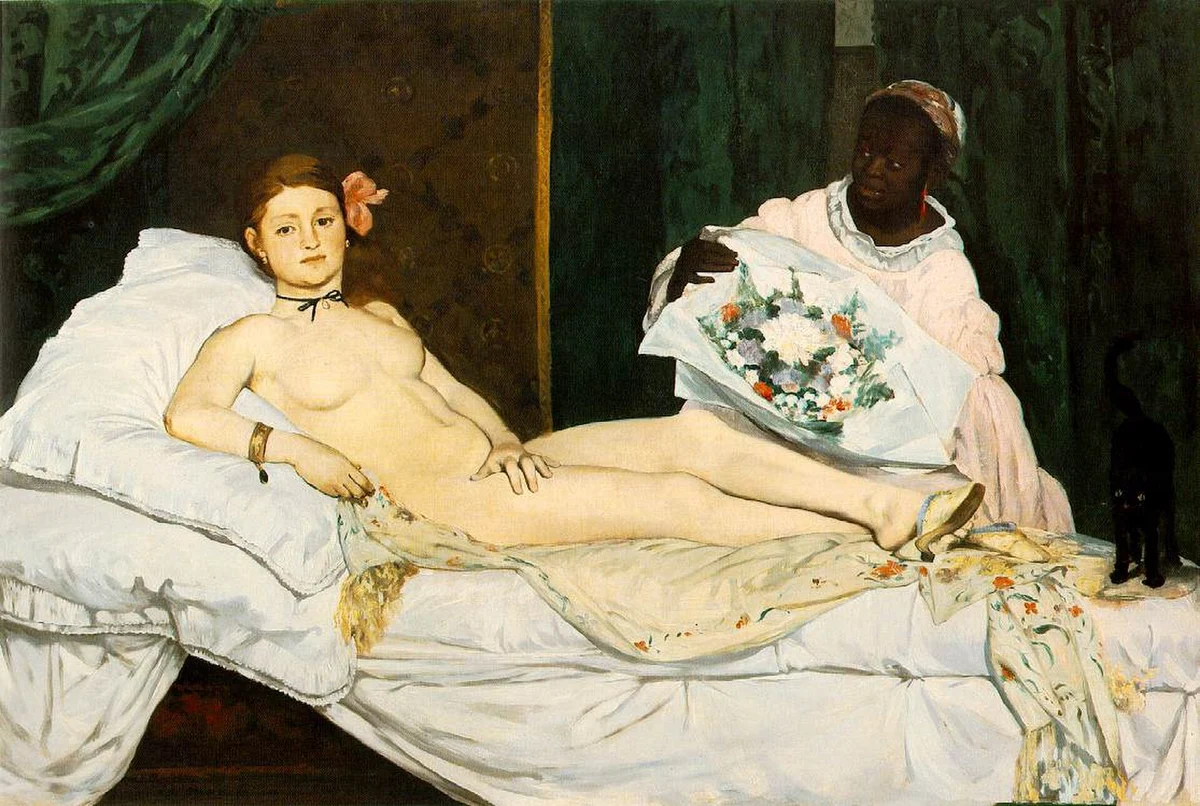
Olympia answers Titian’s Venus of Urbino. The same pose, the same hand, the same white sheets. Only instead of a goddess there is a living Parisian woman, and instead of a sleeping lapdog, a black cat with its tail up.
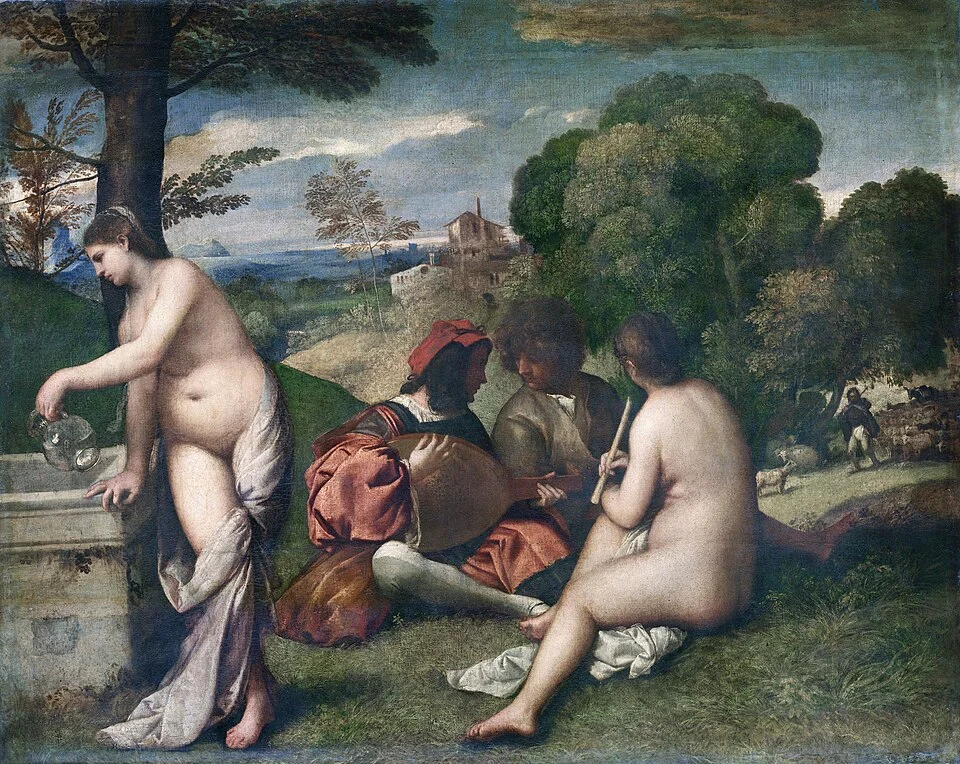
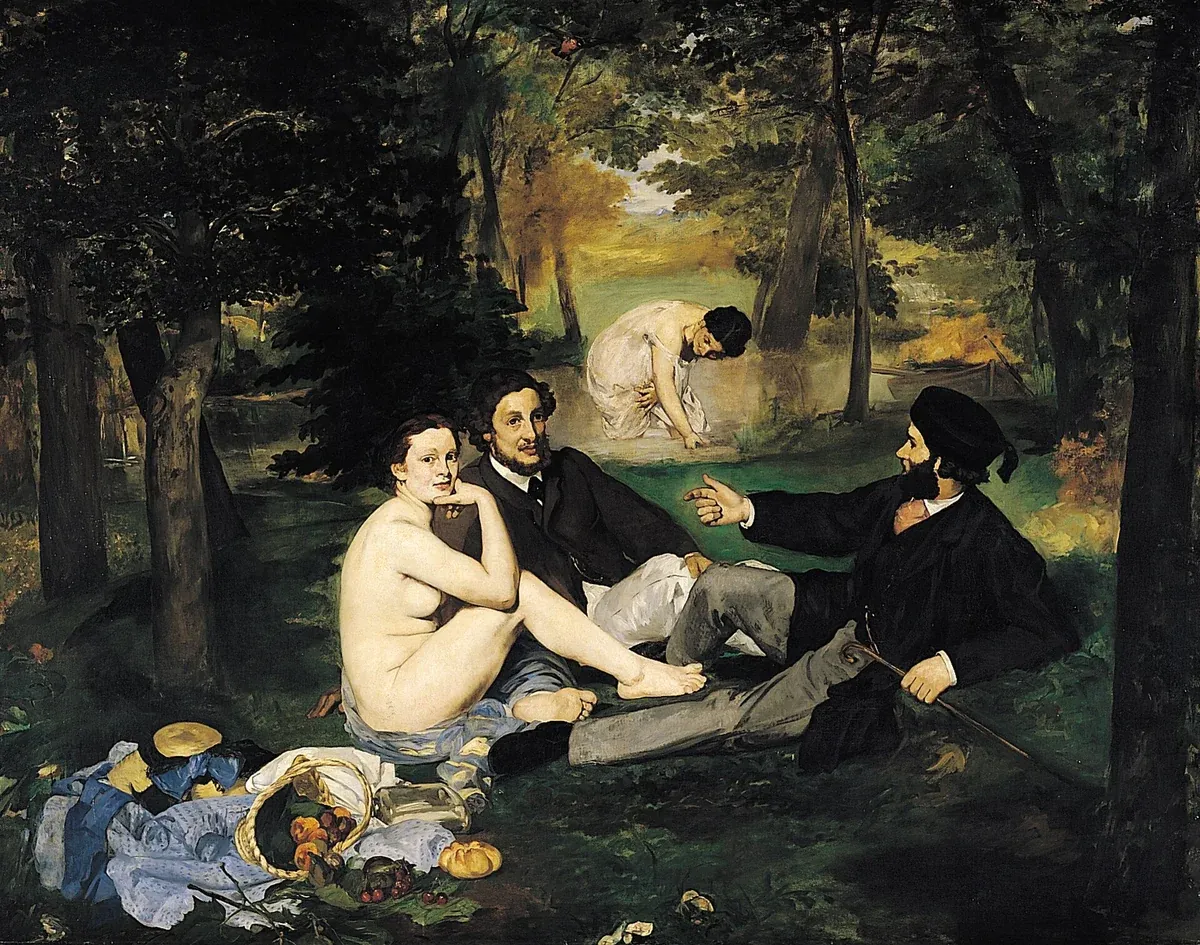
Le Déjeuner sur l’herbe echoes an old masterpiece in the Louvre: naked women beside clothed men in the open air. For the old masters it was an allegory. For Manet it was a picnic of Parisians in modern dress. He retold a classic in today’s language. In 1863 the Salon jury rejected it; shown at the Salon des Refusés, it became the main attraction of the show, drawing both laughter and outrage.
Where the word “Impressionism” came from
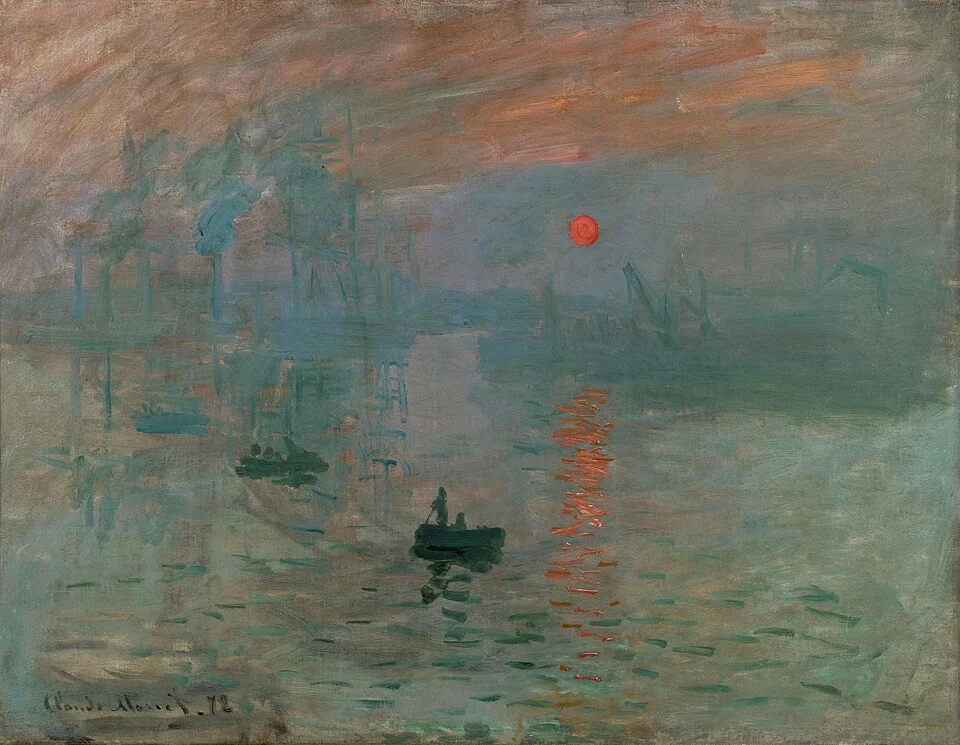
For the catalogue of the 1874 exhibition Monet titled this painting Impression, Sunrise. The critic Louis Leroy mocked the show in the satirical paper Le Charivari with an article called “The Exhibition of the Impressionists.” A few days later the critic Jules Castagnary took the word seriously in Le Siècle on 29.04.1874: they are impressionists, he wrote, because they render not the landscape but the sensation it produces. And so a jibe became the name of a whole movement. Impressionism, from the French impression: painting the moment, light and air, often outdoors, en plein air. Look at the difference.
- MonetAir, mist, trembling light. Almost no black, short strokes, everything dissolves.
- ManetSharp patches of light and shadow, flatness instead of volume. Black sounds at full strength: Olympia’s ribbon, the cat, the suits. Manet owed a great deal to the Spanish masters Diego Velázquez (baptised 06.06.1599 – 06.08.1660), the Spanish Baroque master, and Francisco Goya (30.03.1746 – 16.04.1828), author of Los Caprichos, and in 1865 he travelled to Spain to see their paintings.
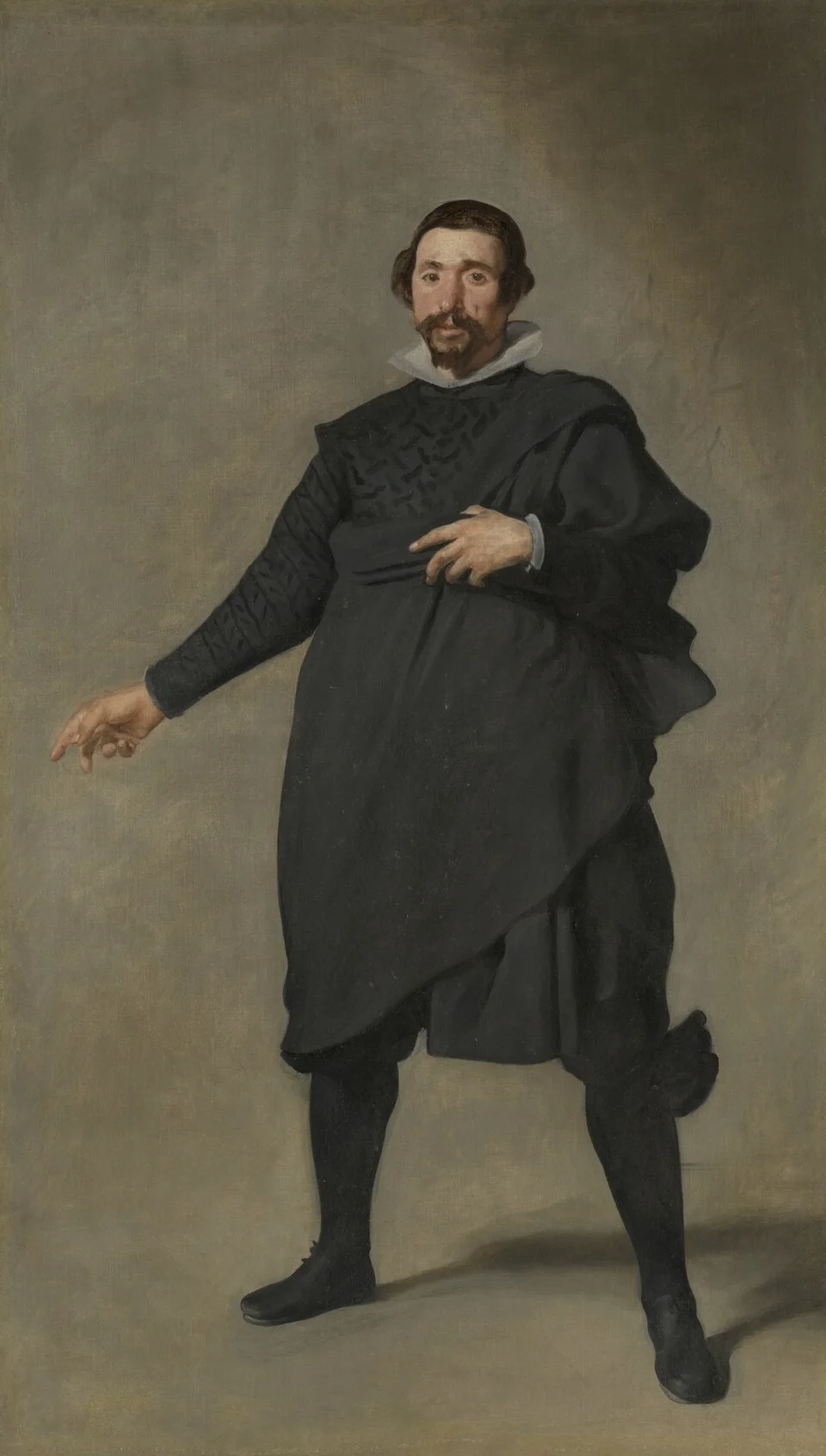
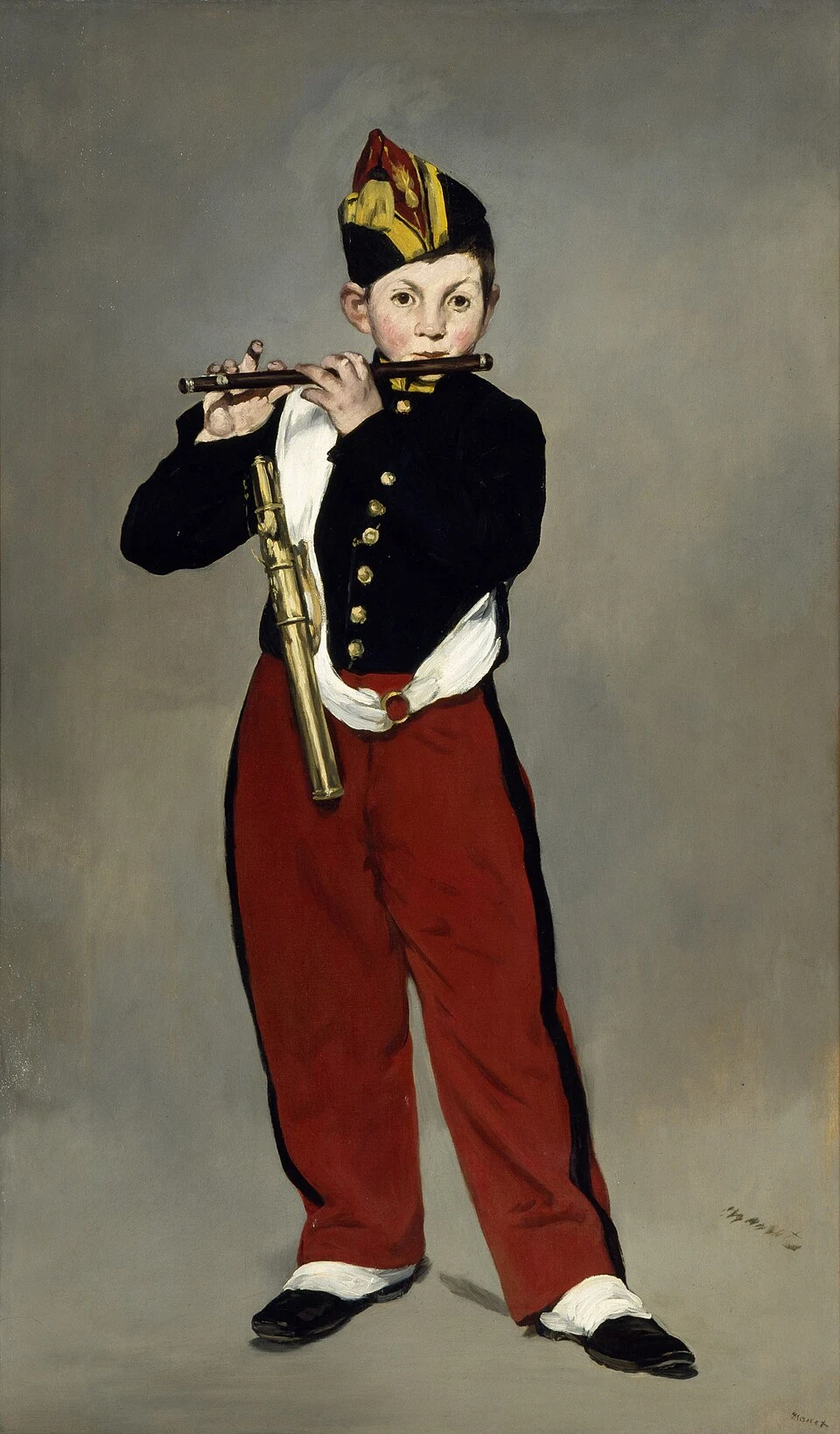
Here is the lesson of Spain. In 1865 Manet saw Velázquez’s paintings at the Prado in Madrid, and it was a revelation. What struck him most was the portrait of the court actor Pablo de Valladolid: Manet called it the most astonishing painting ever painted. Look at the pair: in both, the figure stands in emptiness, held in place only by the shadow at its feet. A year later he painted this boy fifer: an almost empty, flat background, no floor, no wall, and a jacket and shoes in sharp black. The Salon jury rejected it, and Émile Zola defended Manet in print.
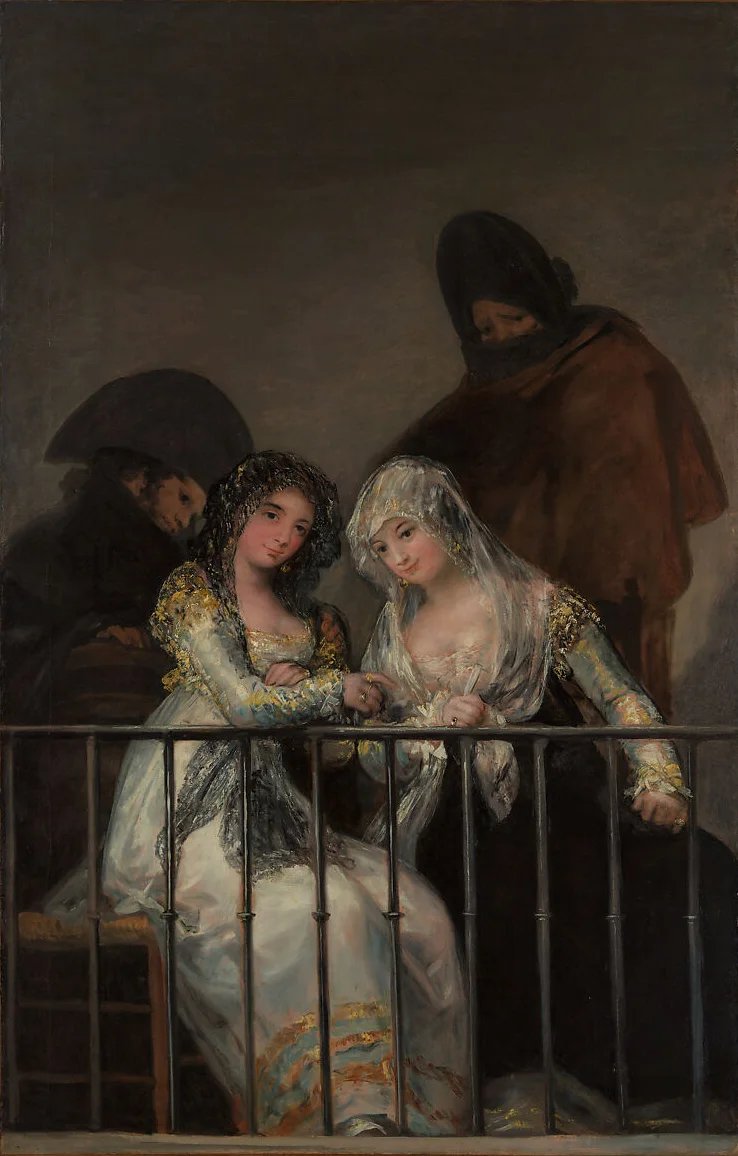
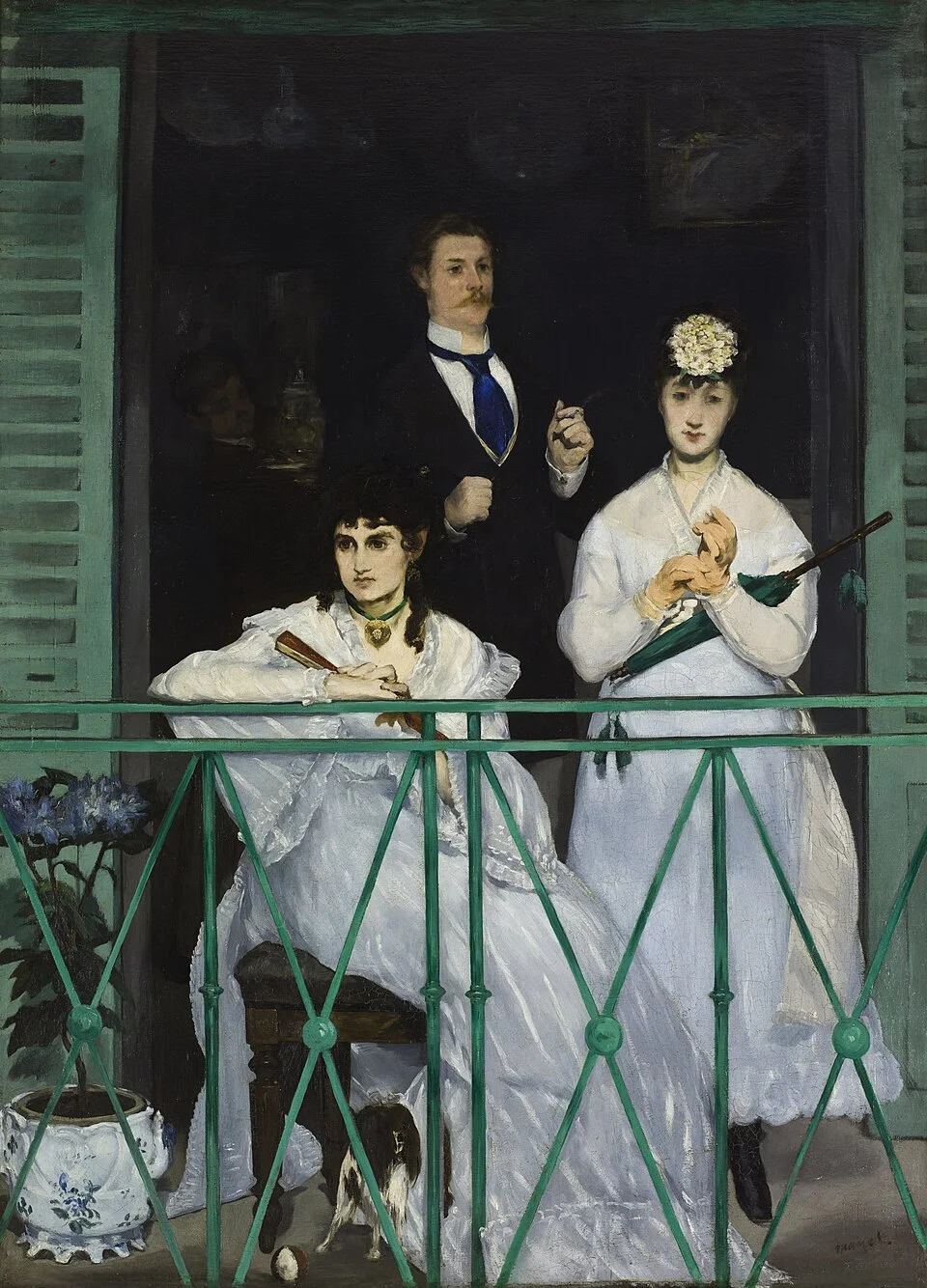
From Goya, Manet borrowed the balcony. Look at the pair: two women at the railing, behind them the dark depth of a room and a male figure. The Metropolitan Museum writes that Goya’s balconies inspired Manet as he painted Parisian life in the late 1860s. In Manet’s picture Berthe Morisot is seated; more about her shortly. Beside her stands the violinist Fanny Claus, a friend of Manet’s wife, and behind them the landscape painter Antoine Guillemet. The Spanish scene became Parisian, but the silence stayed: all three look in different directions.
Two women, two brushes
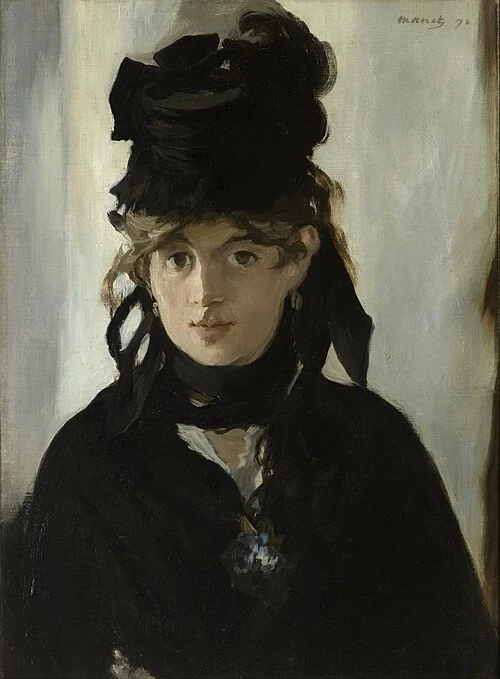
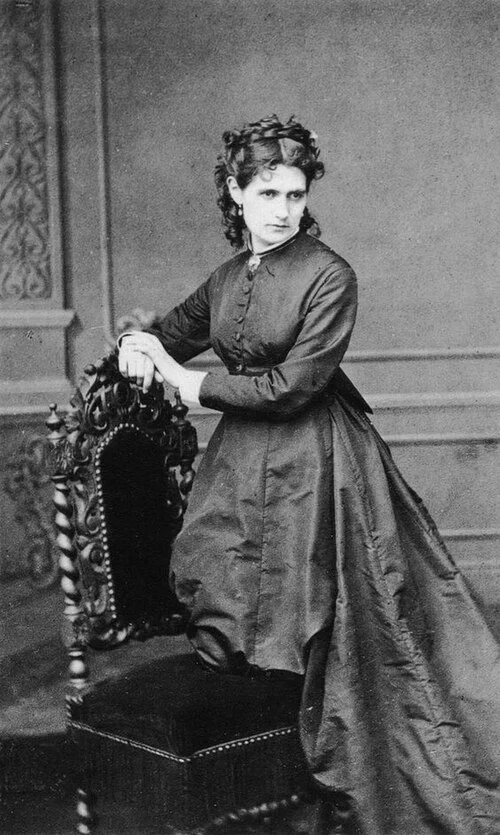
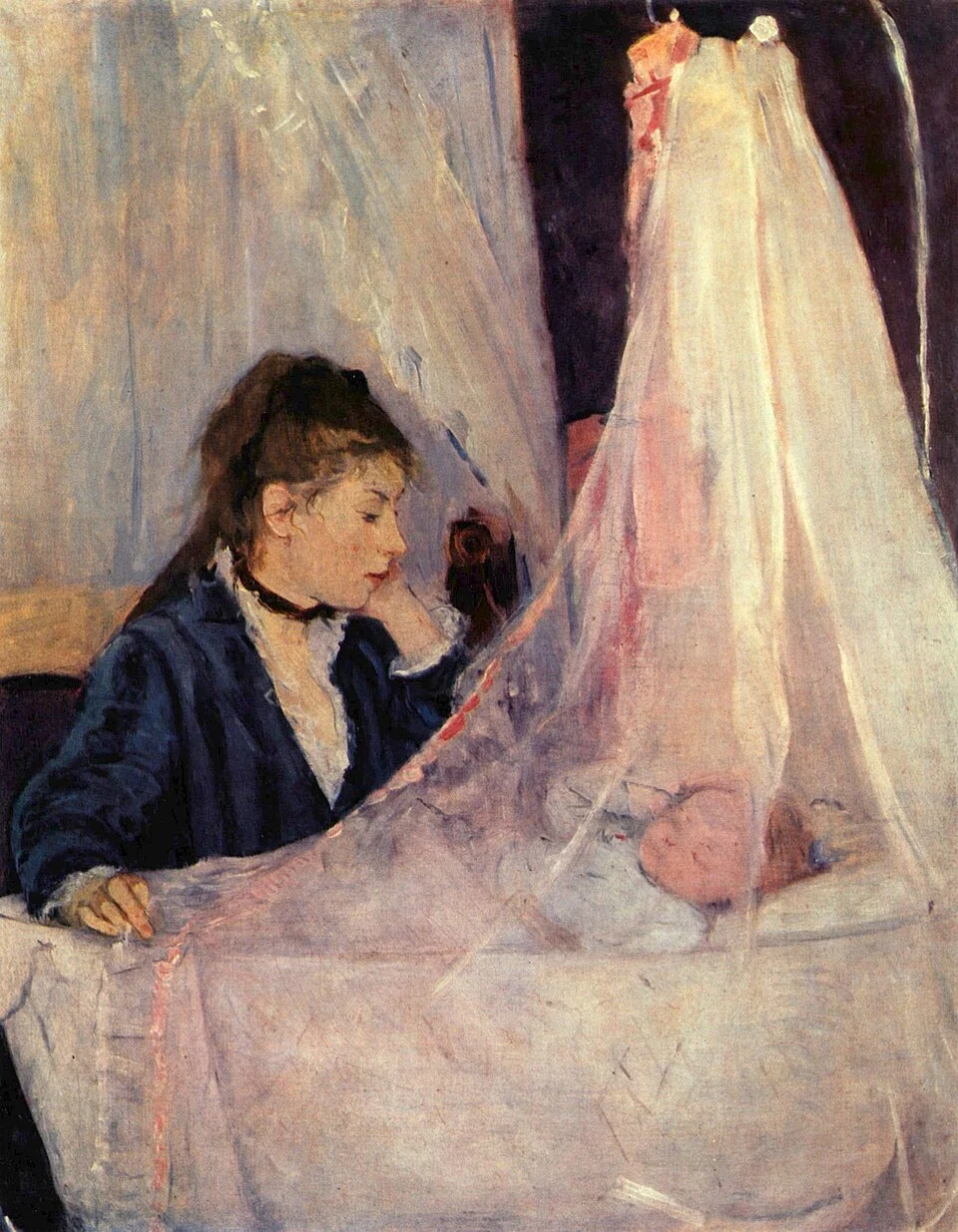
Here is a striking parallel with Victorine. Berthe Morisot (14.01.1841–02.03.1895) also posed for Manet. And she painted too. But Morisot joined the Impressionists, exhibited with them, and later married Manet’s brother.
Victorine took another road: she trained with the academic portraitist Étienne Leroy and exhibited at the very Salon Manet longed to conquer. Two women on one painter’s canvases. And two different roads to a brush of their own.
A gaze that catches yours
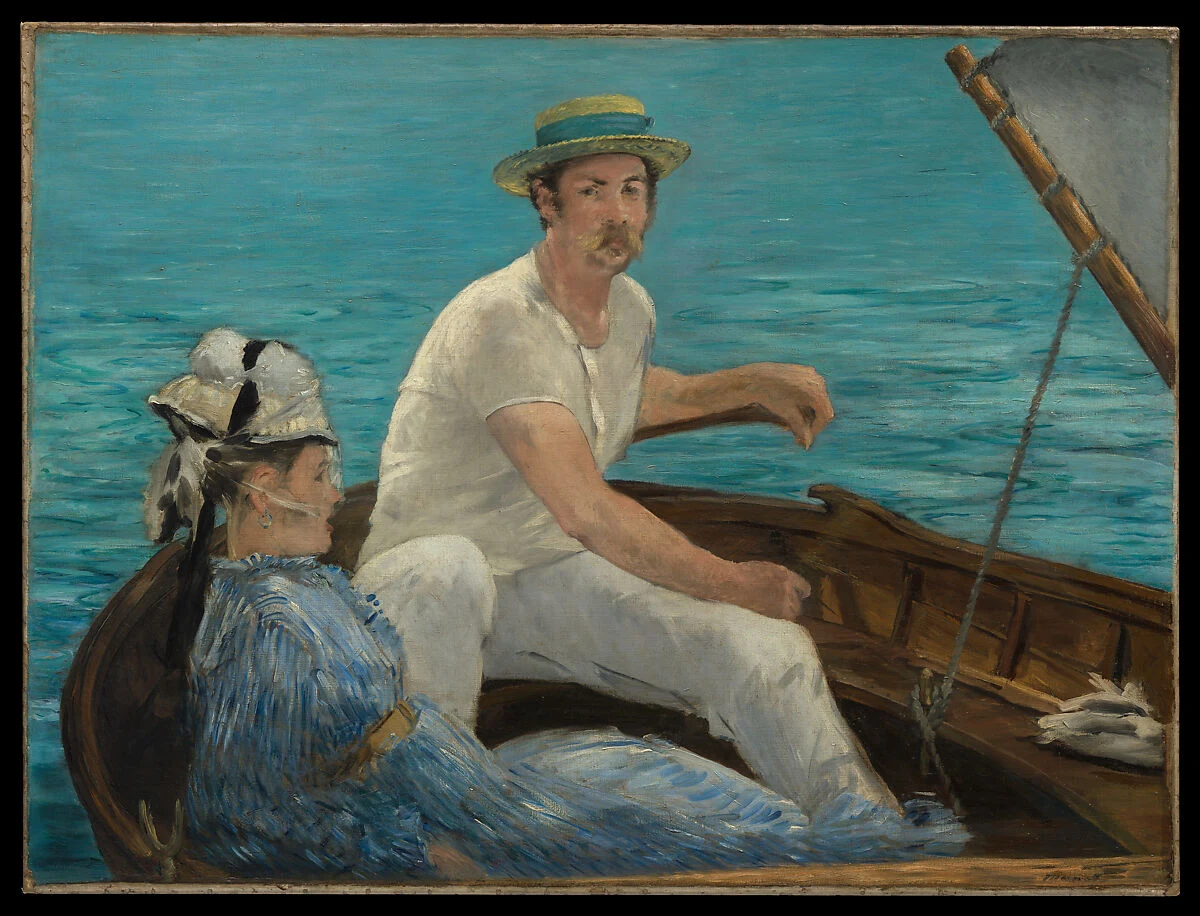
In the summer of 1874 Manet stayed at Gennevilliers, across the Seine from Argenteuil, and often saw Monet and Renoir. Boating was painted then. The Met sees Manet taking on his younger friends’ lighter touch and brighter palette here, and borrowing broad planes of colour and strong diagonals from Japanese prints. It was shown at the Salon of 1879, and the American Impressionist Mary Cassatt (22.05.1844–14.06.1926) called it “the last word in painting.” Still, Manet never exhibited with the Impressionists.
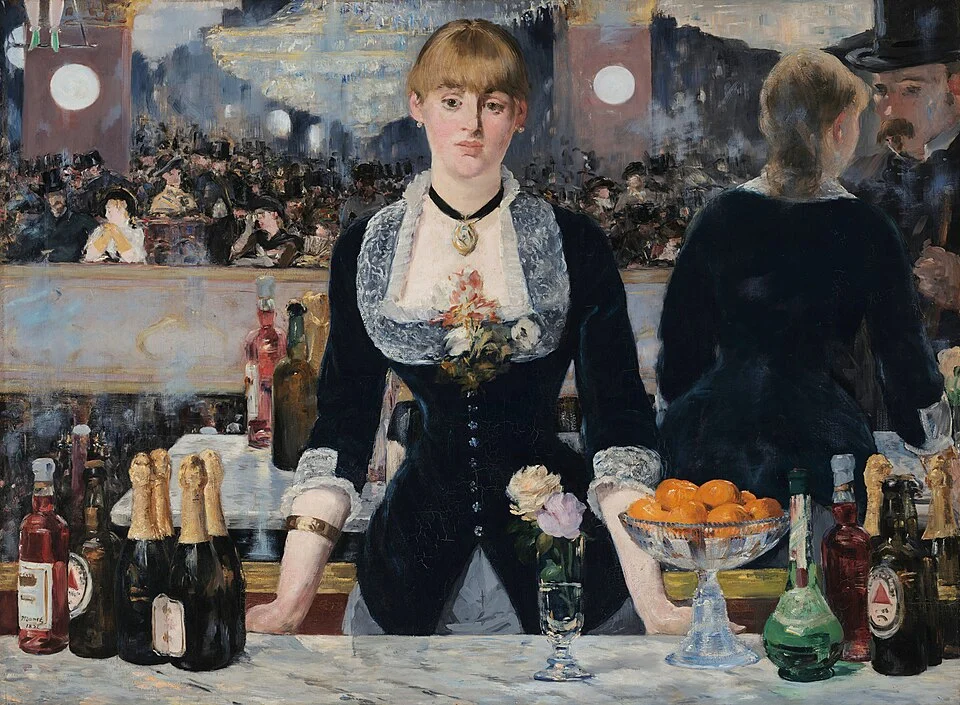
In A Bar at the Folies-Bergère the crowd behind the barmaid is painted in light, loose strokes, and electric lamps glow above the hall: it is one of the first paintings to show electric lighting. Manet built the bar in his own studio and asked a real Folies-Bergère barmaid, Suzon, to pose. But look at her. She stares straight at you, like Olympia, and yet seems detached from everything around her. And her reflection in the mirror is strangely shifted to the right, facing a gentleman in a top hat. Who is he? Could it be us? Perhaps Manet puts us in that customer’s place, and the barmaid is looking straight at us, waiting for our order. Manet stayed himself to the end: same circle, different group.
Look.
All his life Manet painted a gaze that catches yours. Olympia, Berthe, the barmaid at the Folies-Bergère. Like a flight attendant in the cabin: look someone in the eye and you’ll see what they need. Sometimes just a glass of water. Sometimes the truth they have long been waiting to hear.
A question for yourself: which glass of water did you promise and still haven’t brought?
‹ Part 1. Who are you, Olympia?
Numbers are the essence, psychology is the path, art is the mirror.
A hint, not a fairy tale.
Tanya Taina
Sources
- Goya (attributed), Majas on a Balcony, The Metropolitan Museum of Art metmuseum.org · Manet, The Balcony: sitters and the link to Goya, Fashion History Timeline, Fashion Institute of Technology (New York) fashionhistory.fitnyc.edu
- Velázquez, Pablo de Valladolid, Museo del Prado; Manet’s words: Iberdrola España on the Prado restoration, 2026 iberdrolaespana.com · dated c. 1635: The Art History Project arthistoryproject.com
- Jules Castagnary, Le Siècle, 29.04.1874, as quoted in MIT “Modern Art and Mass Culture”, lecture 9: MIT OpenCourseWare
- The Met, Édouard Manet (1832–1883): www.metmuseum.org
- Musée d’Orsay, A Studio at Les Batignolles: www.musee-orsay.fr
- Musée d’Orsay, Olympia: www.musee-orsay.fr
- Musée d’Orsay, Luncheon on the Grass (Google Arts & Culture): artsandculture.google.com
- Musée Marmottan Monet, Impression, Sunrise: www.marmottan.fr
- The Courtauld, A Bar at the Folies-Bergère, A closer look (PDF): courtauld.ac.uk
- The Met, Boating: metmuseum.org
- Smartify, The Fifer (Musée d’Orsay): smartify.org
The paintings by Manet, Titian, Monet, Morisot and Fantin-Latour and the 19th-century photographs are in the public domain.