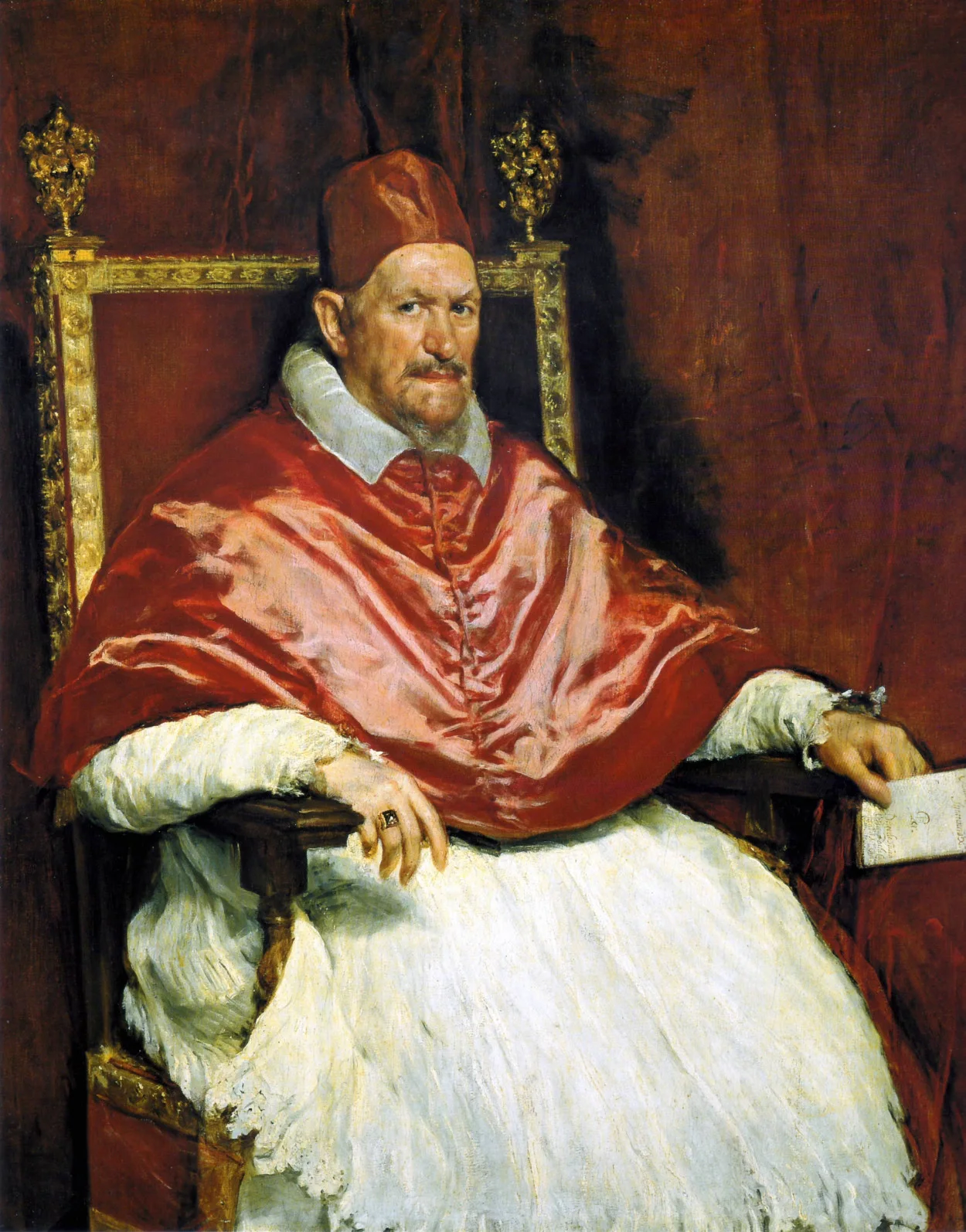
Diego Velázquez, Portrait of Pope Innocent X, c. 1650. Galleria Doria Pamphilj, Rome
Art on art
Too true: portraits their sitters refused to recognise
A pope, Coco Chanel, Francis Bacon and Alfred Sisley. How others see us, and who we really are. I entered their dates into my gallery, and the paintings told what the sitters themselves would rather have kept quiet.
A portrait always takes two: the one who looks and the one being looked at. Sometimes the artist sees more than we are ready to show. And then we say, “That’s not me.” But what if it is me, just the part I keep hidden?
A portrait is a meeting of two dates. The artist paints not only you, but also themselves.
Every date holds a Sun, what we show the world, and a Moon, what we keep for ourselves. Sometimes the artist sees the Moon. And sometimes brings their own onto the canvas. Let’s see how it went for four sitters.
Rome, 1650. “Too true”
When Pope Innocent X saw his portrait by Velázquez, legend has it he said: “È troppo vero!” — “Too true!” Historians doubt he ever said it, but the line stuck, because nothing could put it better. Look at the eyes: suspicious, heavy, sharp. The red silk and white linen are glorious, yet the gaze belongs to a man who trusts no one.
First came the assistant
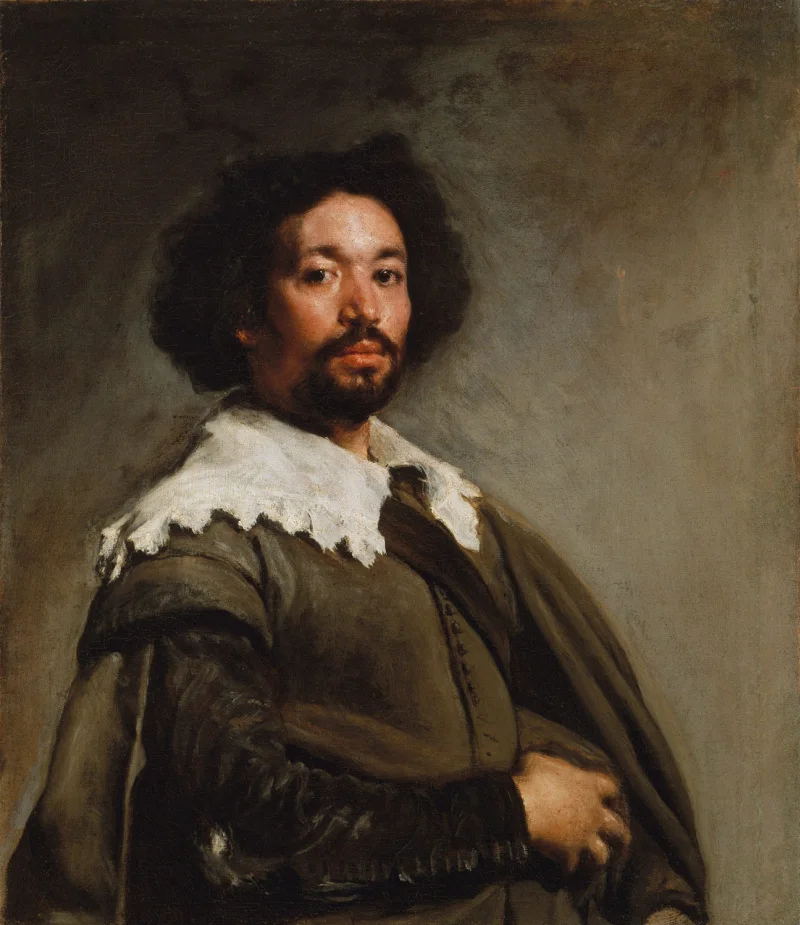
To win the Pope over, Velázquez first painted his assistant, Juan de Pareja. When the portrait was shown in Rome, people said it seemed about to speak. That same year Velázquez gave Pareja his freedom.
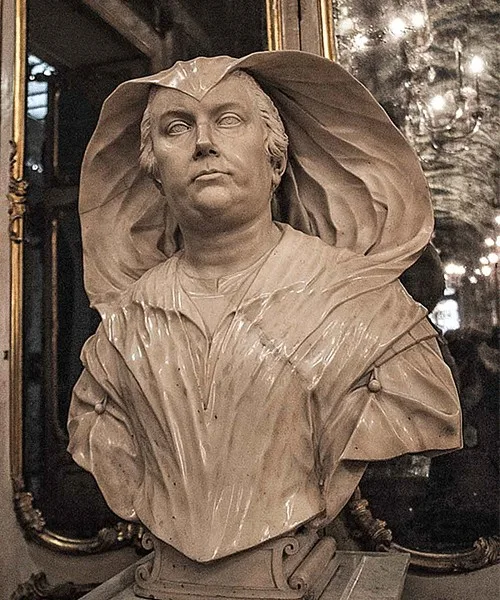
And Rome whispered that a woman stood behind the Pope: his sister-in-law, Olimpia Maidalchini. Romans mockingly called her the “papessa” and punned Olim pia, nunc impia — “once pious, now impious”. She had a hand in appointments and is credited with the rebuilding of Piazza Navona. It wasn’t Velázquez who portrayed her but Algardi, in marble, and the marble holds the same sharpness as the Pope’s gaze.
07.05.1574 is Innocent X’s date of birth (some encyclopaedias give 6 May; I follow the main biographies). My gallery starts in 1800, so I worked out his chart by hand. Personality 7, relationships 11, Strength, soul mission 8-7-15. Keep these numbers in mind; we’ll meet them again.
Three hundred years later: the scream
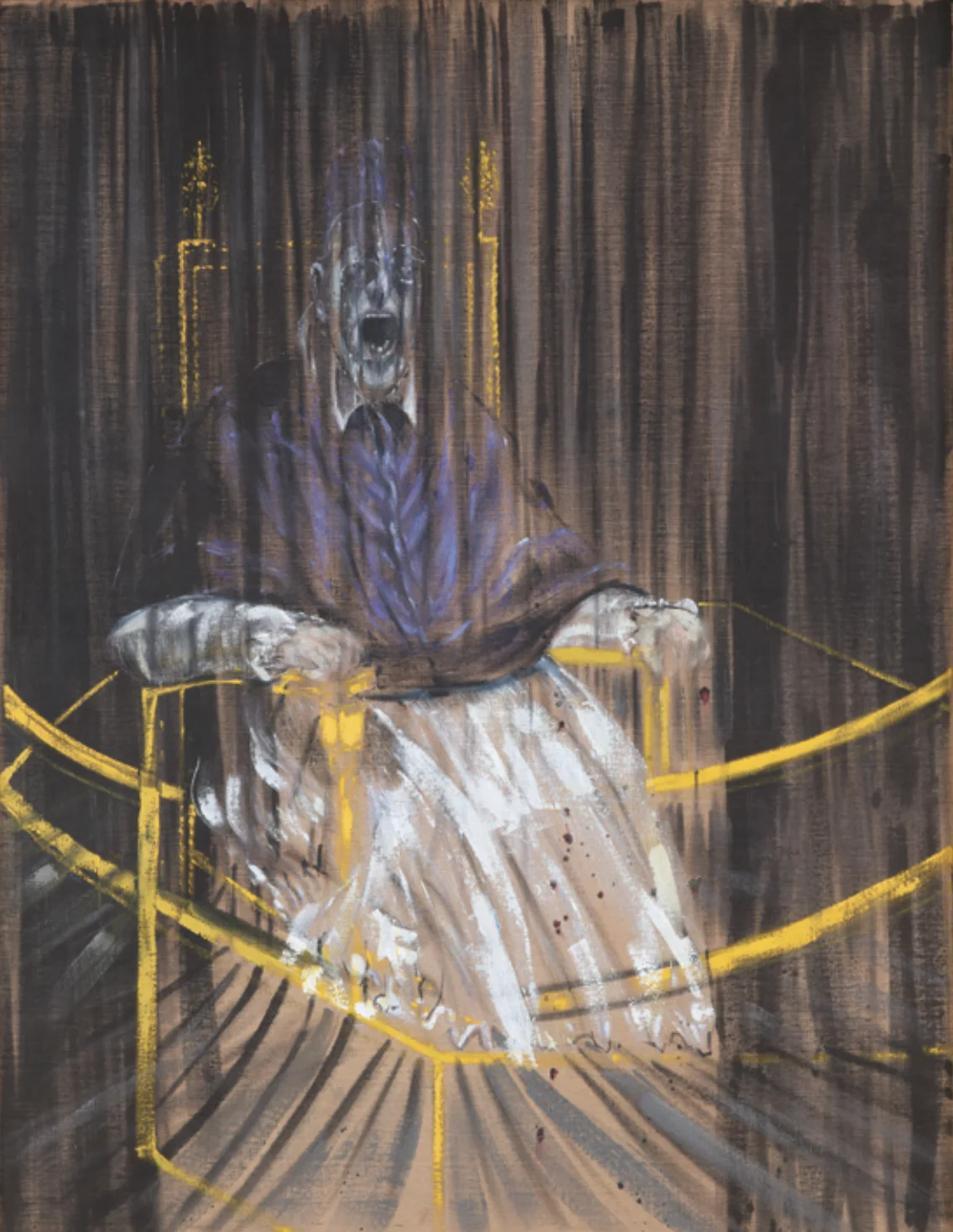
Francis Bacon painted some fifty popes between 1949 and 1971, and destroyed many of them himself. Why did this one portrait give him no peace?
He adored it. “I think it is one of the greatest portraits that have ever been made,” he said, and admitted: “I’ve had a crush on it.” Velázquez was his favourite old master, and Bacon wanted to do to him what Velázquez had once done to Titian: make it his own.
He feared it. For years he avoided the original and worked from reproductions, out of fear, he said, of seeing the real Velázquez after all his tampering with it. He saw the original only late in life.
Power and fragility. What gripped him was that the most powerful man on the throne was, in fact, vulnerable. So his Pope screams, dissolves, sits trapped in a glass cage.
The father. Bacon’s father was cold and strict, and threw his son out of the house at sixteen. The critic David Sylvester, who talked with Bacon for years, saw the father in those popes, a figure of authority. Bacon himself rejected such readings. But fifty popes over more than twenty years speak for themselves.
Where the scream came from
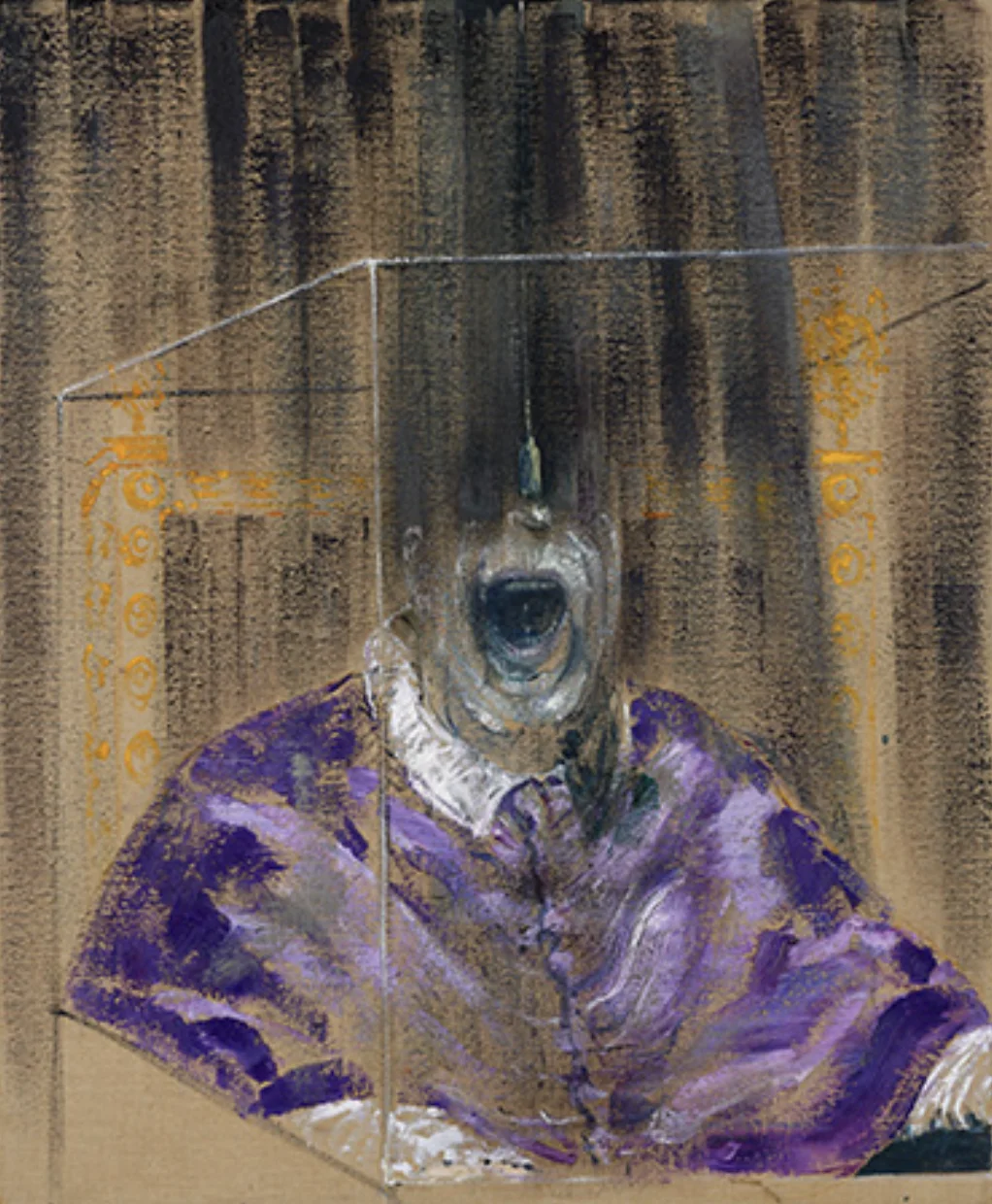
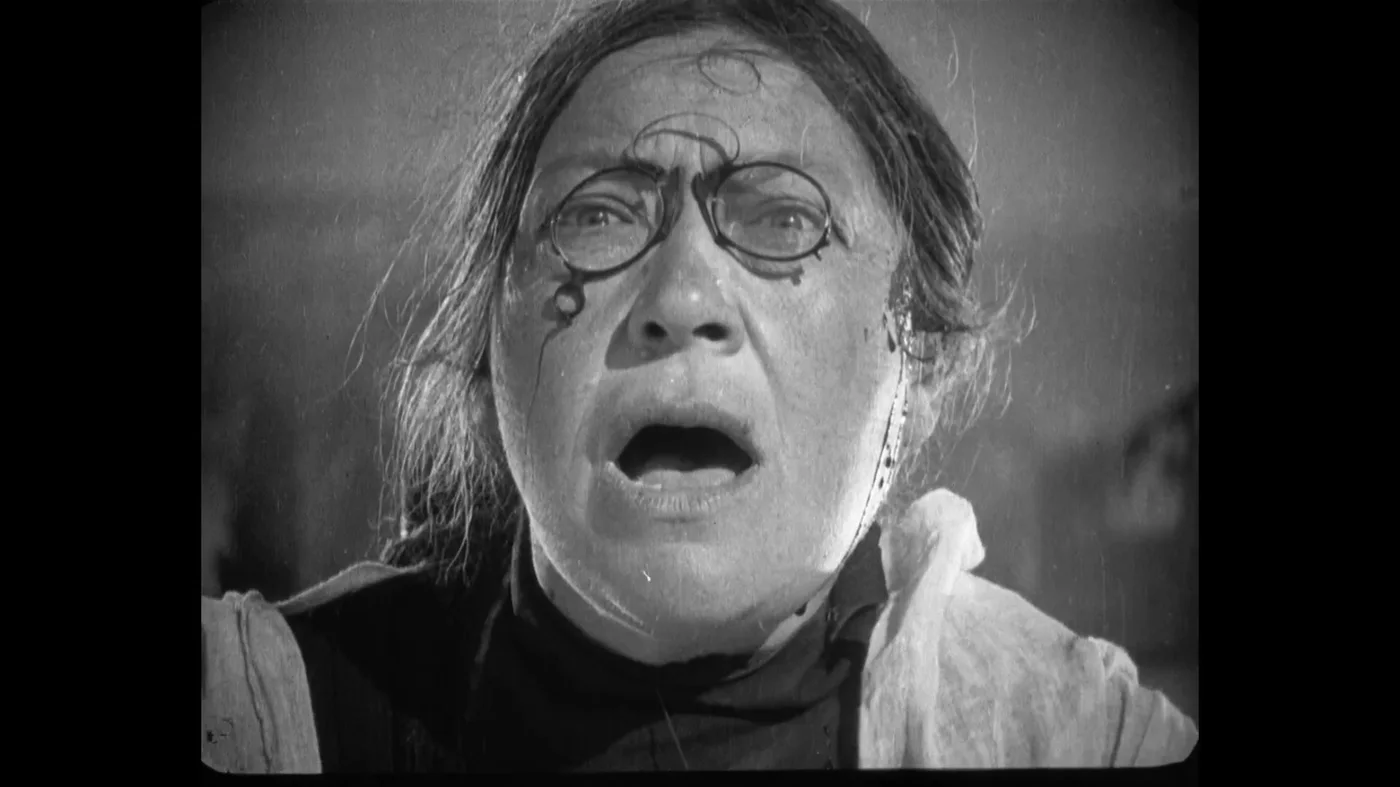
Bacon took the scream from a Soviet film: the woman in pince-nez on the Odessa Steps in Battleship Potemkin. He said himself that the image never let him go.
Now his date. Bacon was born on 28.10.1909.
- 4 × 3The Emperor sounds three times in his chart: father, power, authority. And it sits in his very family script, 10-4. The Pope on his throne is his Emperor.
- 16 × 3The Tower, three times as well: destruction. He painted popes and destroyed them.
- 3 × 4Three sounds most often of all. Three is the voice, being seen and heard. And his Pope screams.
- 18The Moon as his point of attention: fears, and what we hide even from ourselves.
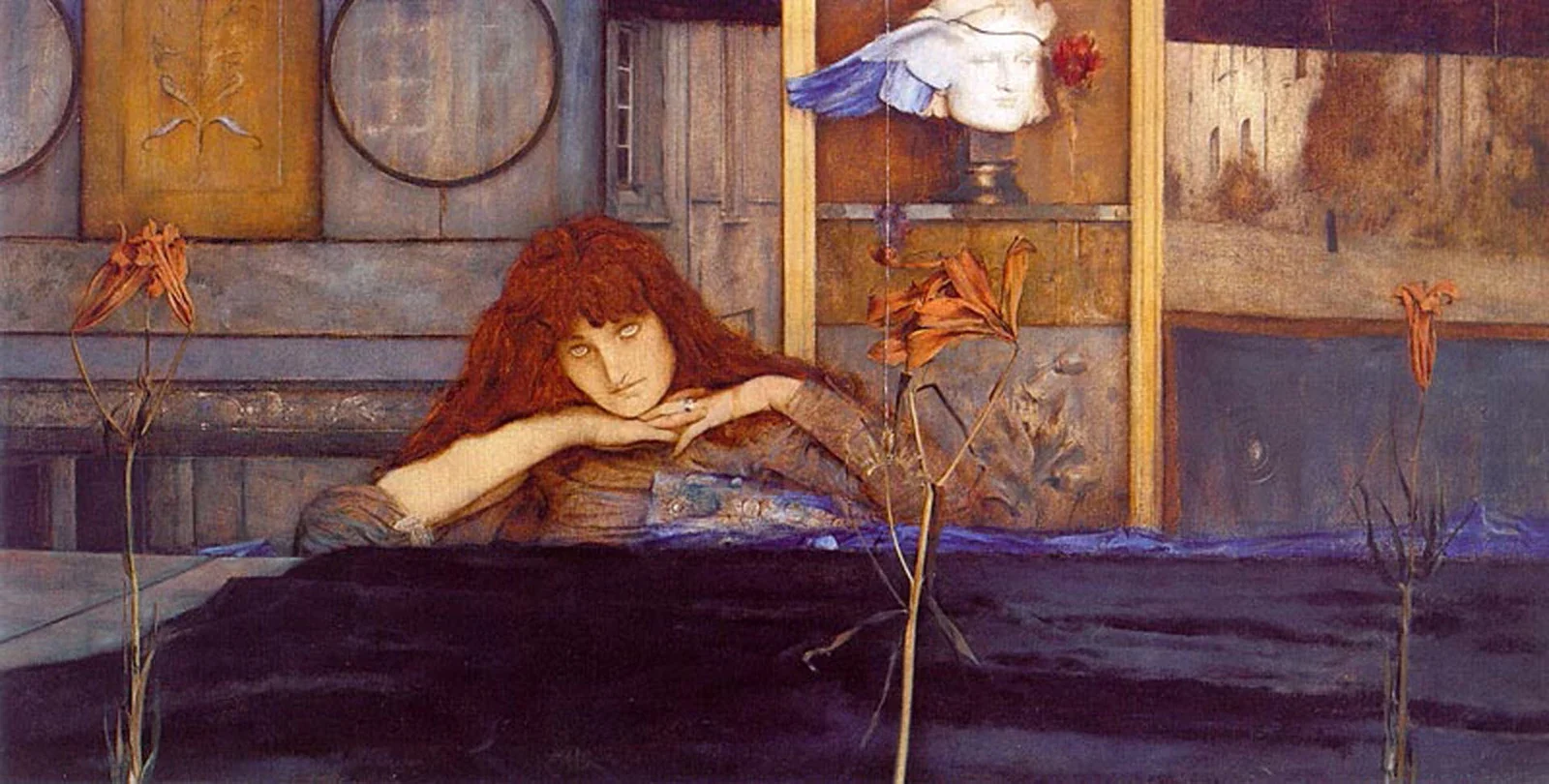
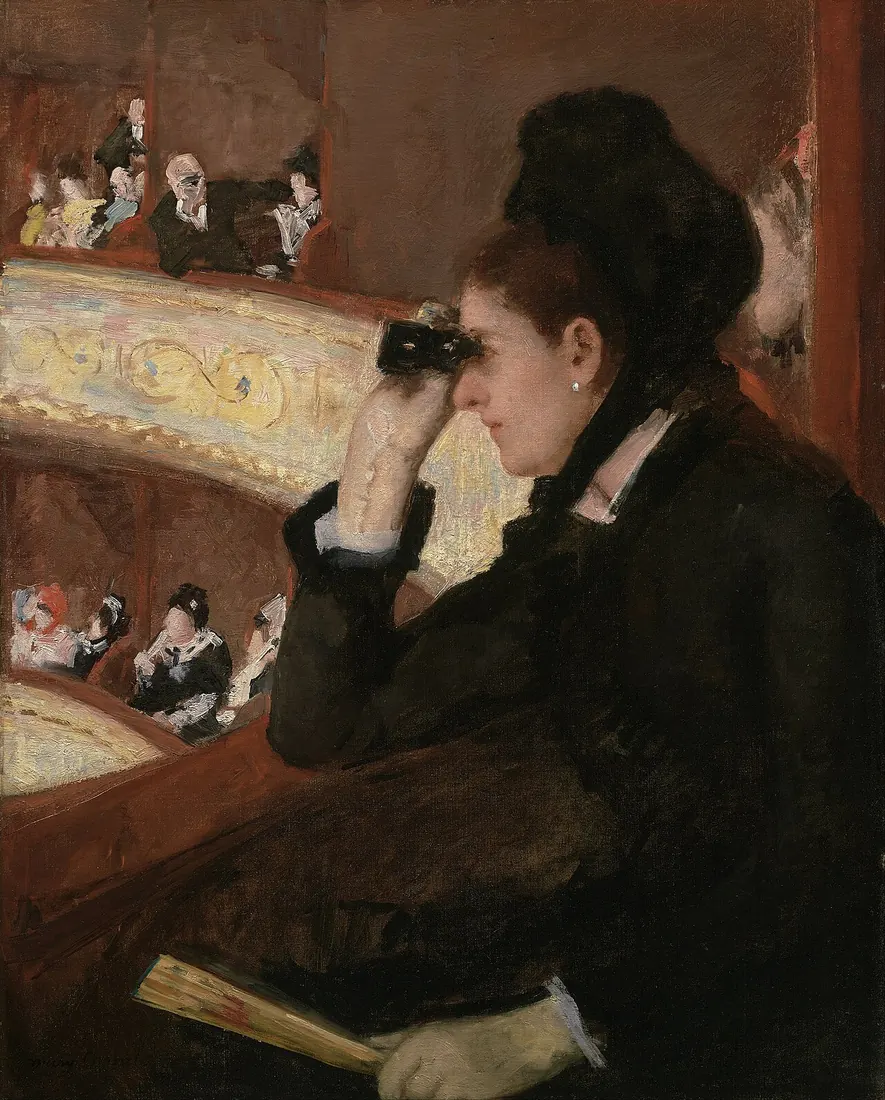
In my gallery eighteen opens with Khnopff’s I Lock My Door upon Myself. Isn’t that the man who kept the door locked on the original for years? And in relationships Bacon has 12, “a different way of seeing”, and the gallery shows Mary Cassatt’s In the Loge: a woman at the theatre looking through opera glasses. A number helps me get closer to a person, like opera glasses at the theatre: you see every detail.
Paris, 1923. Chanel didn’t recognise herself
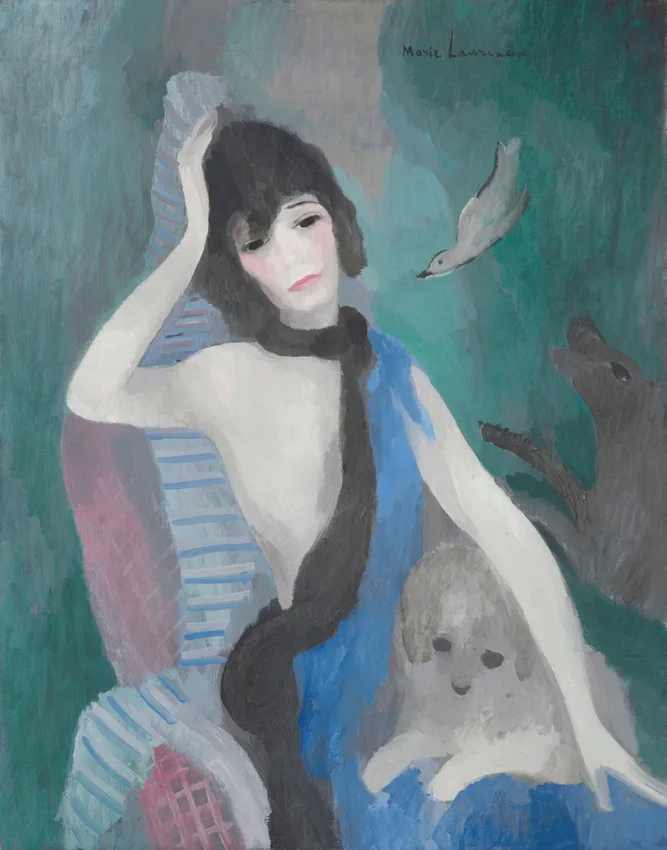
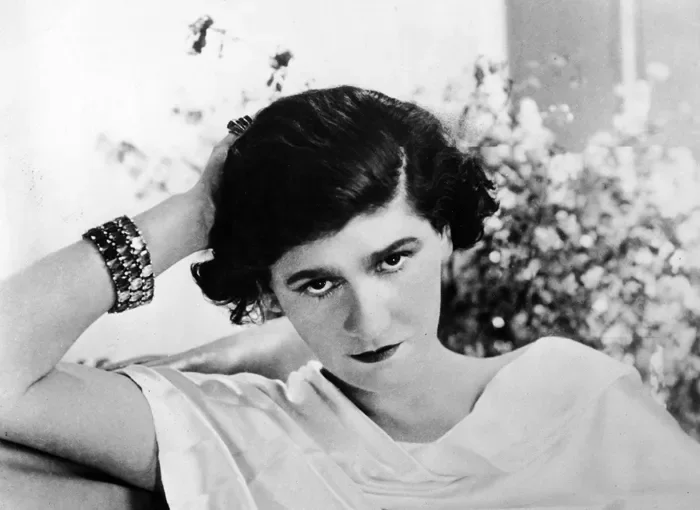
Already rich and famous, Coco Chanel commissioned a portrait from Marie Laurencin. Laurencin painted her languid and pensive, head resting on her hand, a white poodle on her lap and a dove descending towards her from the sky. Chanel disliked it and refused to take it. Laurencin, furious, would not paint another and kept the original. Today it hangs in the Musée de l’Orangerie.
Why didn’t Chanel recognise herself? I opened her chart. Chanel was born on 19.08.1883.
| Chanel | Laurencin | |
|---|---|---|
| Personality | 19 | 4 |
| Family | 8 | 10 |
| Scale | 20 | 20 |
| Relationships | 11 | 7 |
| Health | 13 | 5 |
| Point of attention | 6 | 12 |
| Soul mission | 8-16-6 | 10-11-21 |
Chanel’s personality is 19, the Sun: light, fame, “look at me”. Her family script is 8, Justice: strength, power, her own rules. Relationships, 11: Strength. That’s how she knew herself, and that’s how she built her empire.
But beneath the Sun lies a second, quieter layer. Six sounds six times in her chart, more than any other number. Six is love, family, beauty, a gift in the hands. And the wound of six is helplessness. A girl left by her father in the convent orphanage at Aubazine after her mother’s death learned never to depend on anyone. Nine and eighteen sound in her chart as well: the Hermit and the Moon, a loneliness and longing that are kept out of sight.
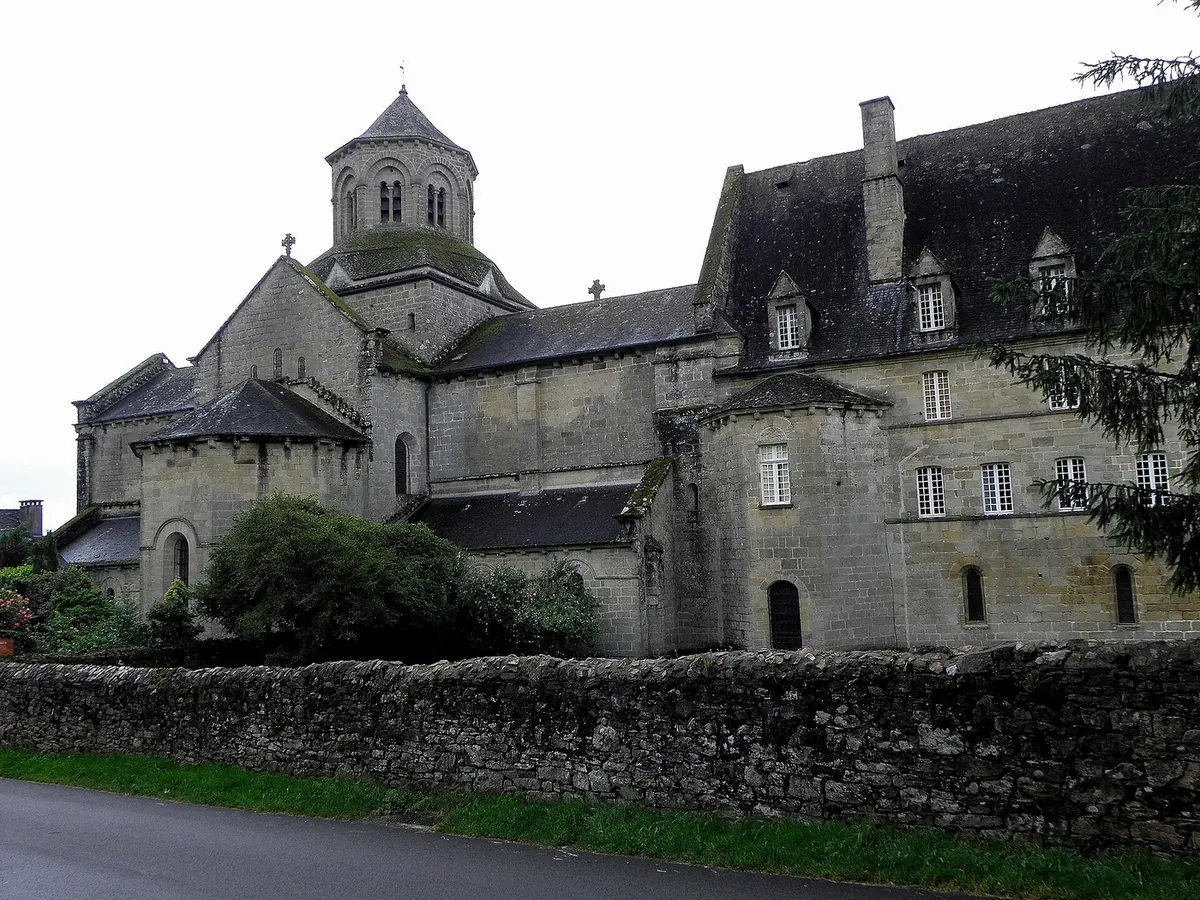
Chanel saw 19 and 8 in herself. Laurencin painted her 9 and 6.
The languor and pensiveness of the portrait are the lonely girl from Aubazine. Chanel didn’t recognise herself — or perhaps she recognised herself all too well. Too true.
A painting they share
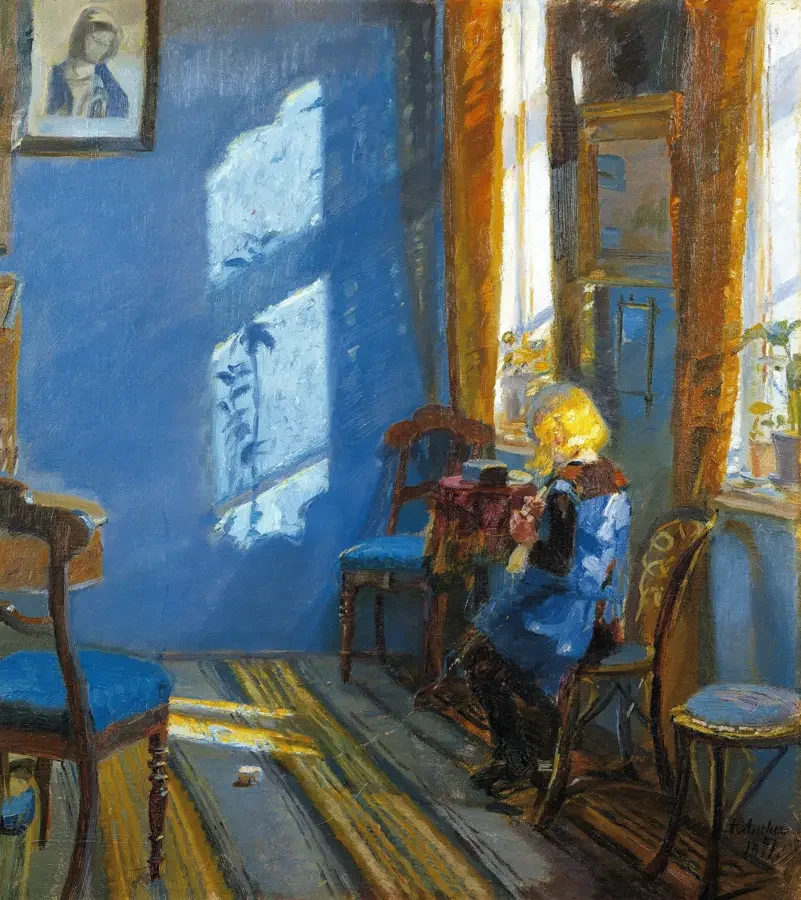
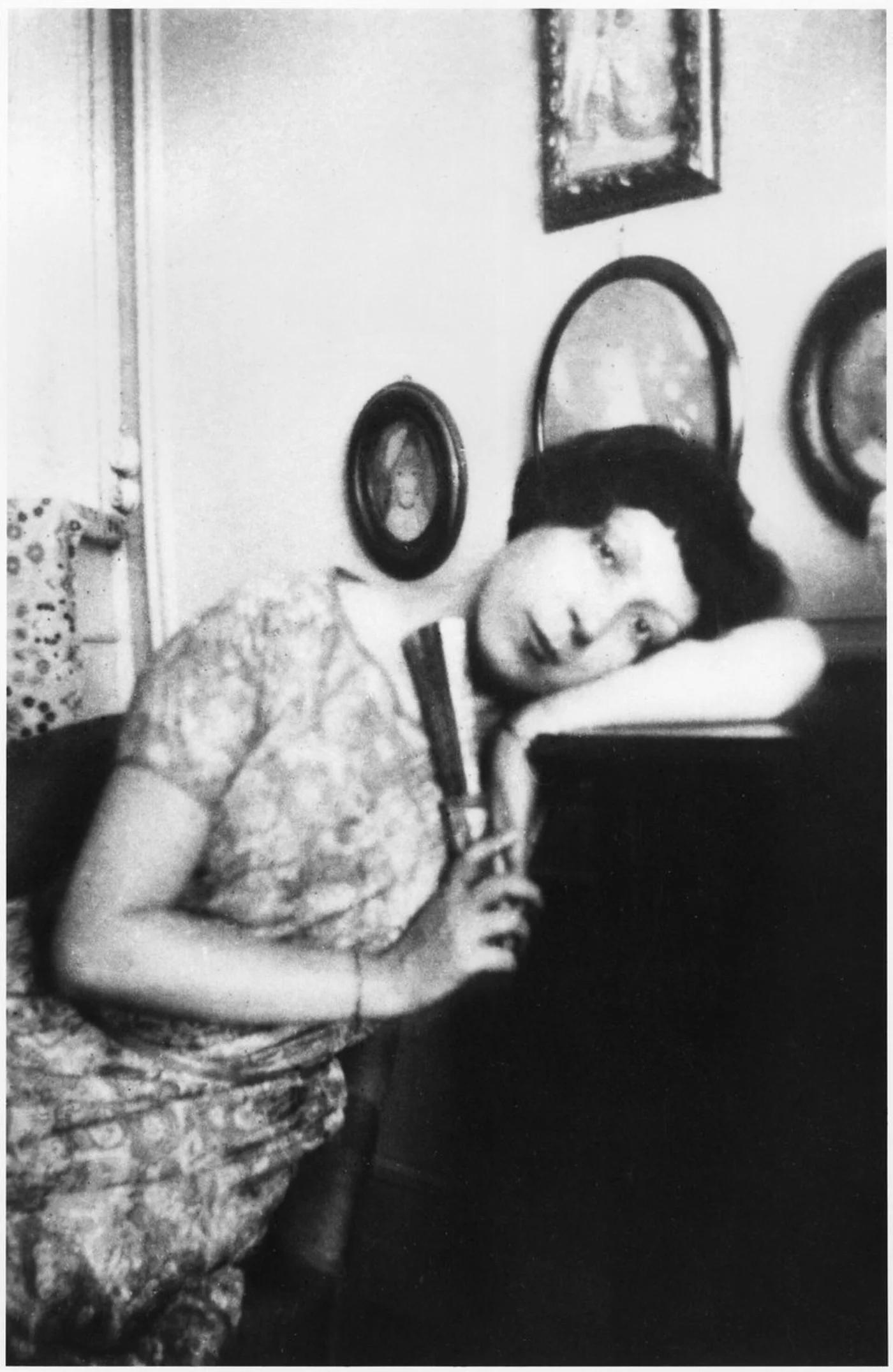
They couldn’t agree on a portrait, yet they share a painting. Both were born in 1883, and both have a scale of realisation of 20, “Awakening”. In my gallery that twenty opens with the very same work: a girl knitting in a room flooded with sun. Both grew up without a father. And both went on to make their own names.
So why was it Laurencin who saw the nine in Chanel? Nine sounds four times in Laurencin’s own chart: the same abandonment, the same longing. And twelve sounds four times too — “a different way of seeing”, the gift of looking at a person from the other side. She painted into Chanel what she knew from herself.
The only woman among the Cubists
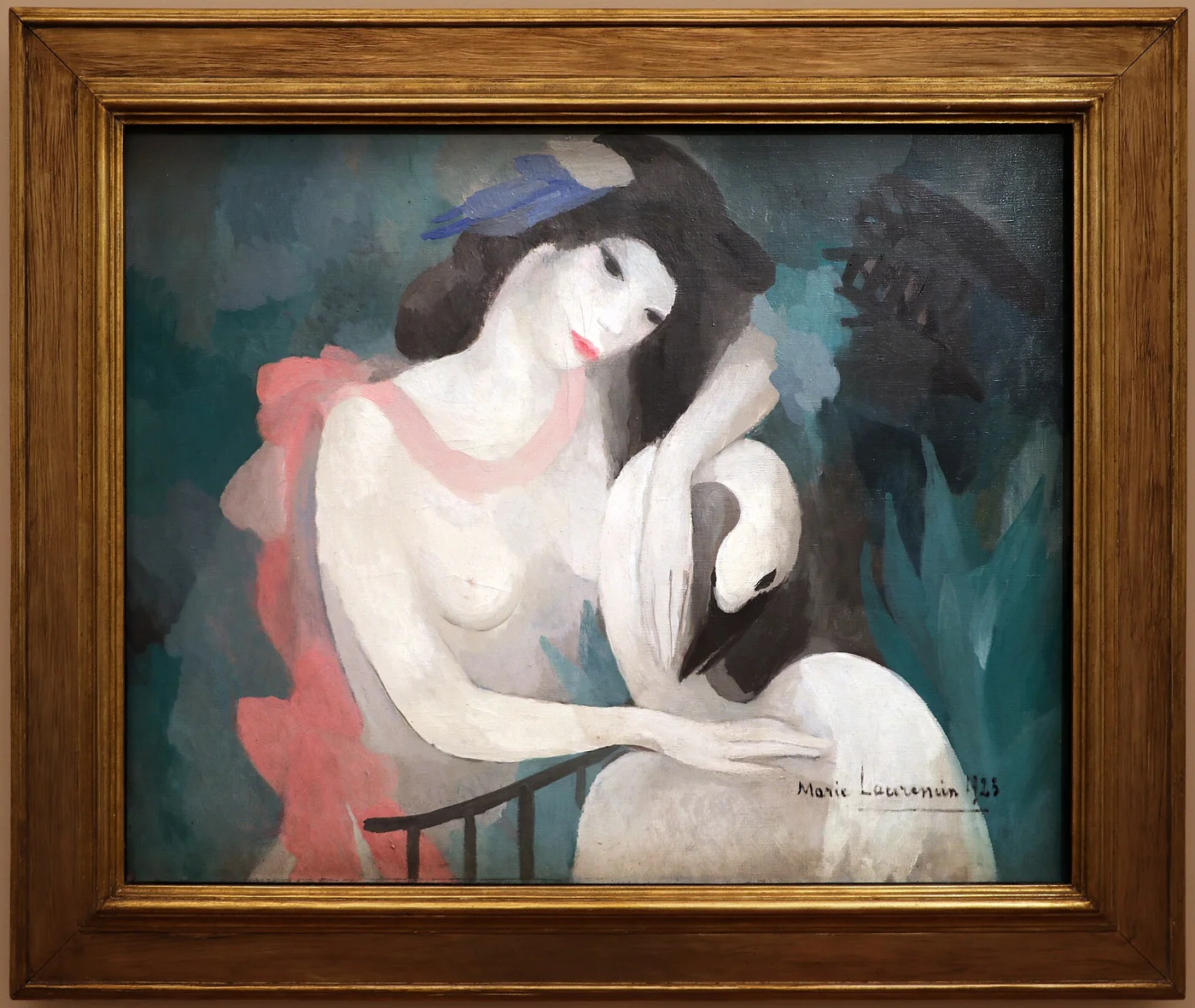
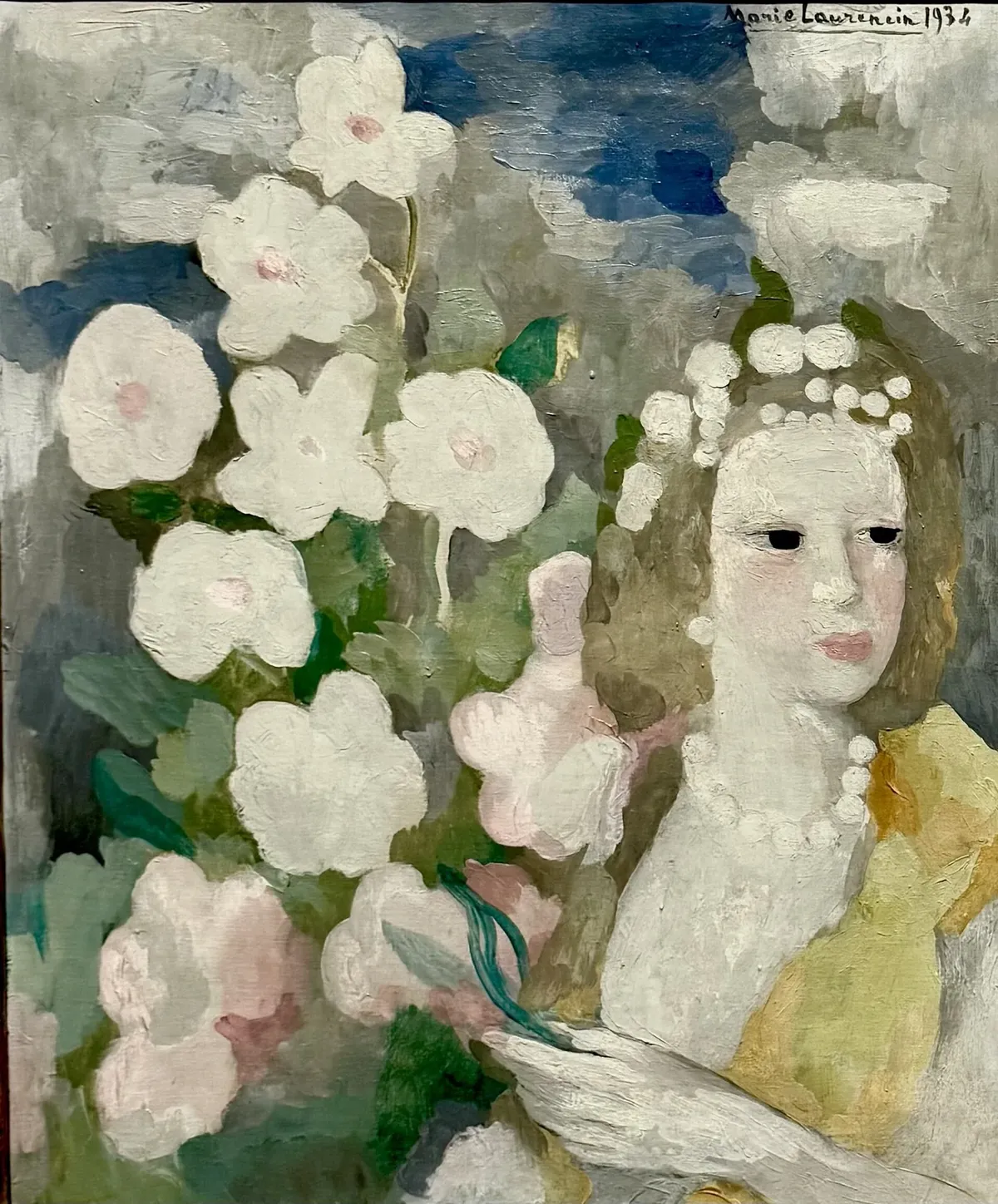
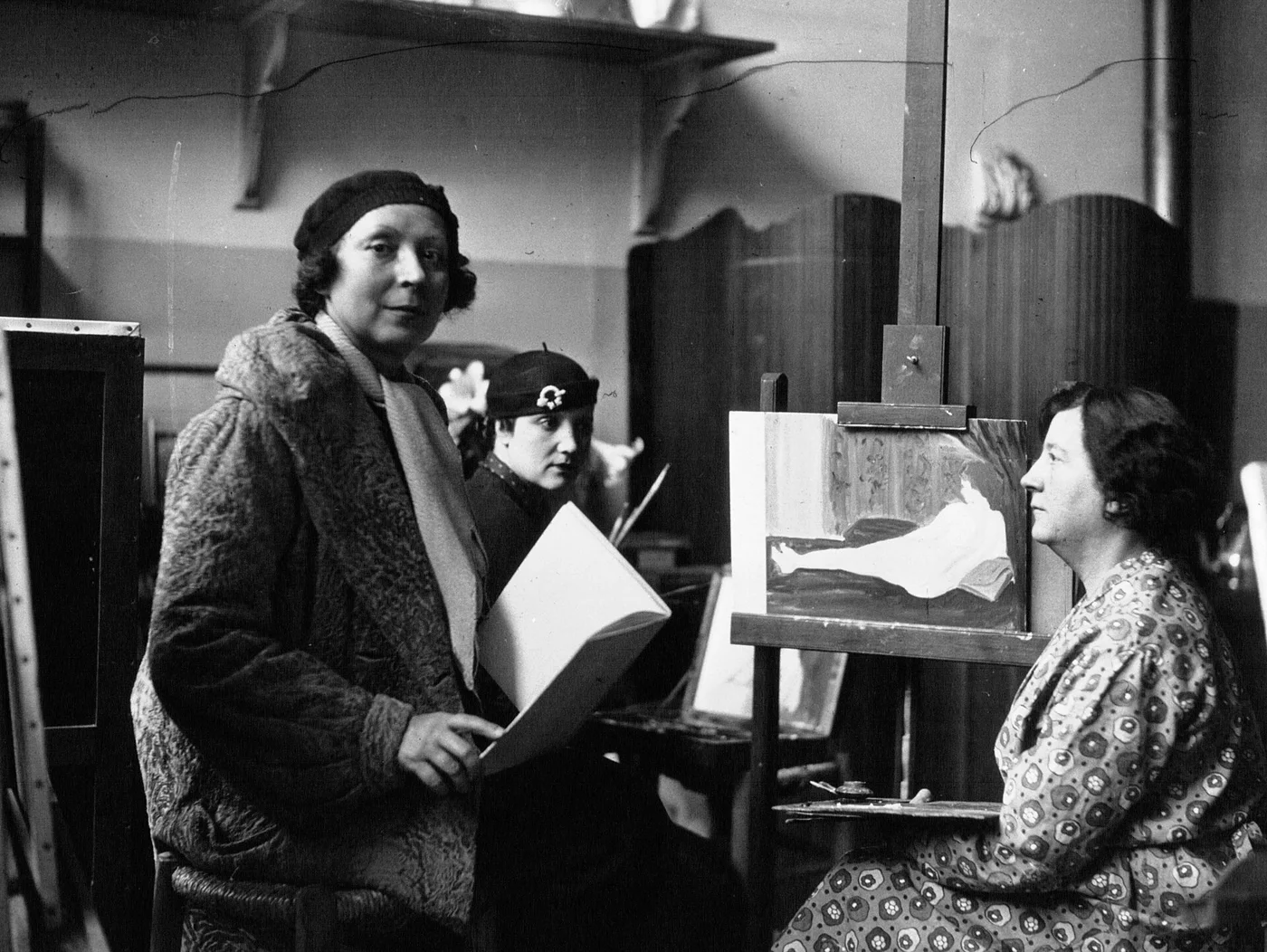
Marie Laurencin was born in Paris on 31.10.1883. Her mother was a housemaid; her father visited and paid for her schooling, but they were never a family. In 1904, at an art academy, she befriended Braque and Picabia, who brought her to Picasso. So she found herself in a circle with almost no women in it: invited to the Cubists’ gatherings, showing her work alongside theirs.
In 1907 Picasso introduced her to the poet Guillaume Apollinaire. They were together for six years, and she became his muse. Yet she painted no angles or cubes — only gentle girls in pink and blue. In 1923, the very year she painted Chanel, she said: “Cubism poisoned three years of my life, preventing me from doing any work.”
In 1914 she married a German baron and, under the law of the time, automatically lost her French citizenship. War broke out, and a Frenchwoman with a German name found herself in exile in Spain, homesick for Paris. In 1920 she divorced and came home.
Remember this: a Frenchwoman who lost France. In a moment we’ll meet a Frenchman whom France never accepted. And they turn out to have almost the same chart.
Sisley: a Frenchman without a passport
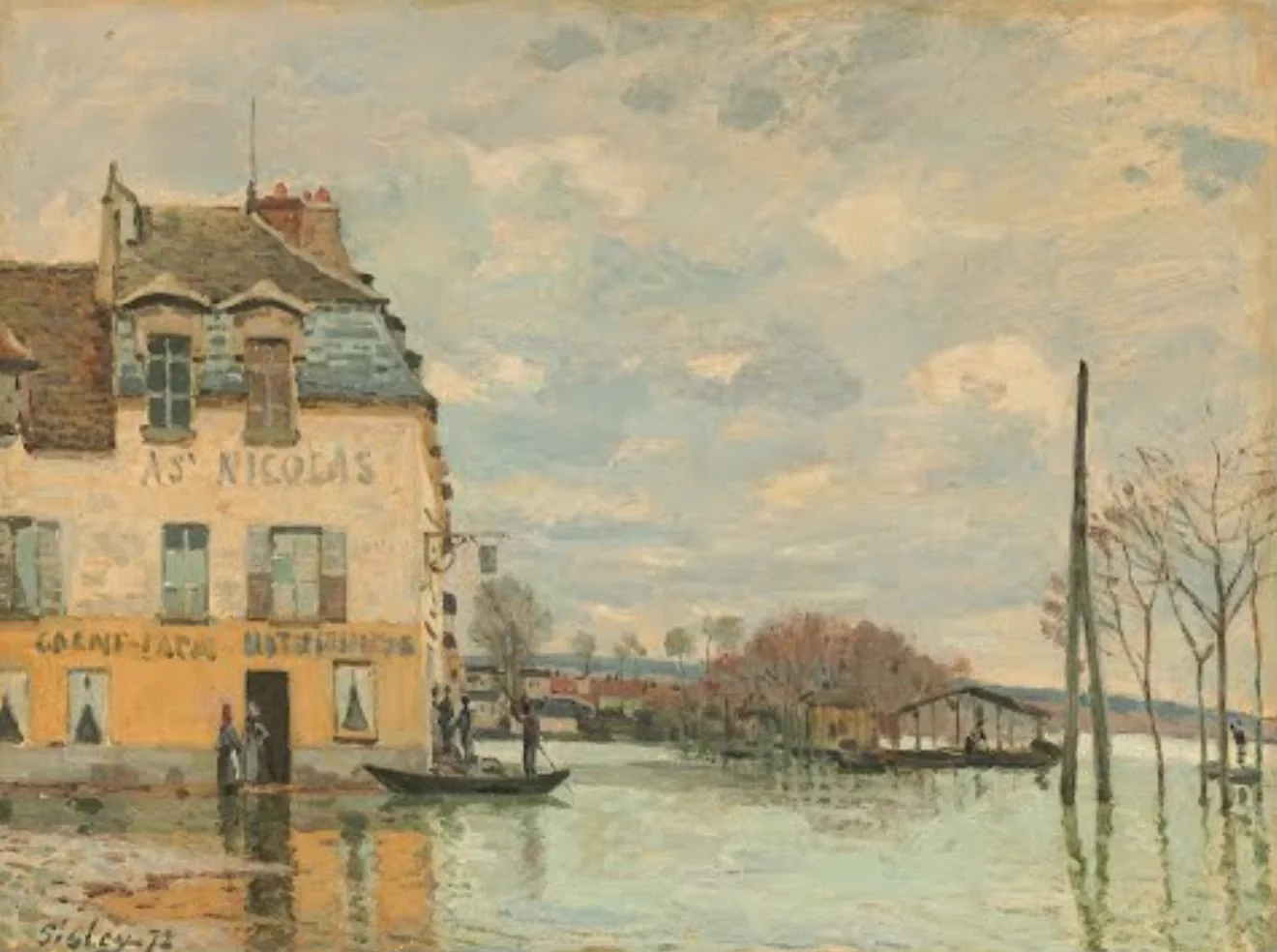
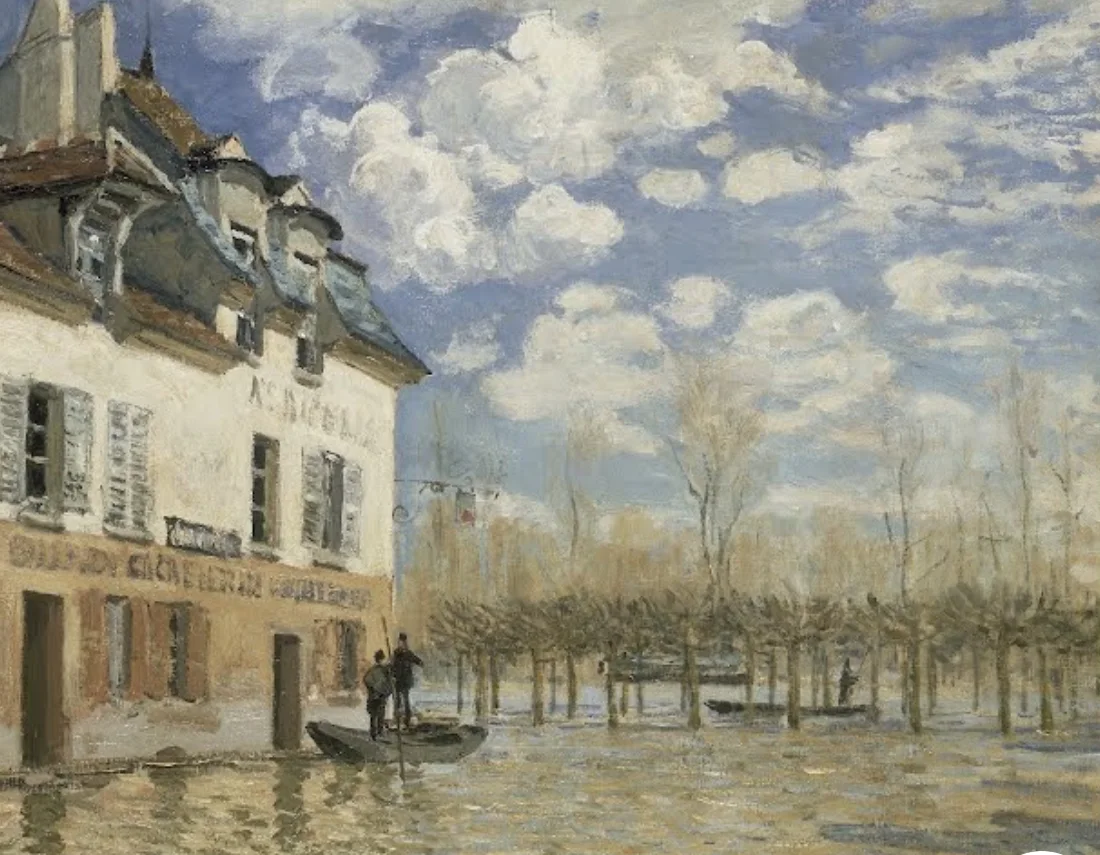
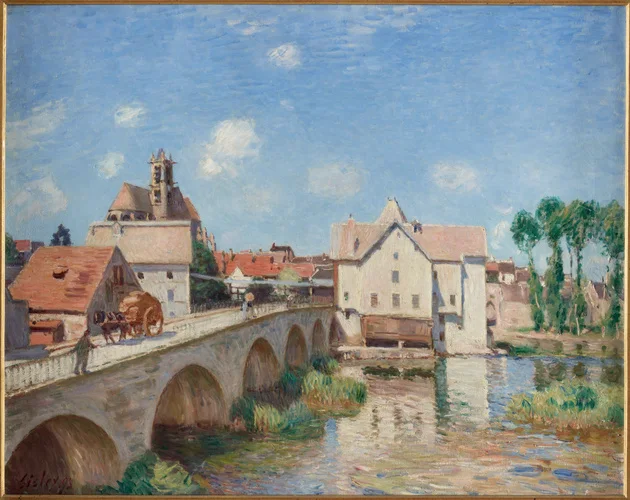
Alfred Sisley was born in Paris on 30.10.1839, but to English parents, and he stayed British all his life. Monet, Renoir and Degas were born French. He wasn’t. His father, a merchant in luxury goods, was ruined by the war of 1870, and from then on Sisley lived in poverty: his paintings barely sold.
He painted the same street at Port-Marly again and again, in 1872 and in 1876, when the Seine burst its banks. The water changed, the light changed, and he stayed himself.
In 1898, a year before his death, Sisley applied for French citizenship and was turned down. He applied again — even the police report was favourable — but he never saw it through: he was dying of throat cancer. He died in January 1899, still British, having asked Monet to look after his children.
Almost the same chart
| Sisley | Laurencin | |
|---|---|---|
| Personality | 3 | 4 |
| Family | 10 | 10 |
| Scale | 21 | 20 |
| Relationships | 7 | 7 |
| Health | 5 | 5 |
| Point of attention | 12 | 12 |
| Soul mission | 10-11-21 | 10-11-21 |
Forty-four years apart, and almost the same chart. Family 10, the Wheel of Fortune: a life turned upside down by outside events. Relationships 7, point of attention 12, and one soul mission between them: 10-11-21.
He lived his whole life in France and could never become French. She was born French and lost it through marriage. Both remained a little foreign. And both painted not what was expected of them, but what they saw themselves.
Full circle
Remember Pope Innocent X’s numbers? Relationships 11, Strength, and a soul mission that opens with eight, Justice. Coco Chanel’s relationships are 11 too, and her mission also opens with eight: 8-16-6. The pope who told Velázquez “too true”, and the woman who turned down her portrait by Laurencin. Nearly three centuries apart, and the same opening note.
And Laurencin, who painted Chanel, carries almost the same chart as Sisley. Chanel and Laurencin are tied by one year and one painting of scale. Laurencin and Sisley by one chart. The Pope and Chanel by Strength in relationships and the first note of their mission. The portraits that were refused weave into a single thread.
Do you recognise yourself?
Velázquez saw the Pope. Bacon saw himself in the Pope. Laurencin saw her own nine in Chanel. Sisley painted the same thing over and over and stayed himself. Every date holds a Sun and a Moon, and an artist looks at us through their own.
Sometimes you look at a photo from ten years ago and don’t recognise yourself. Sometimes for the better. And sometimes you realise that this moment, this youth, this light will never come again.
Every artist sees you in their own way. Some too truly, others fill in the blanks. But you are your own artist too: you can paint yourself as you feel, and choose what to show the world and what to keep for yourself.
Look.
Think of a photo or portrait in which you didn’t recognise yourself.
A question for yourself: what did the person looking at me see, that I didn’t want to see in myself? Or did they see themselves in my portrait?
Numbers are the essence, psychology is the path, art is the mirror.
A hint, not a fairy tale.
Tanya Taina
This is my own reading through the hand method. Works by Velázquez, Sisley and Algardi come from open collections. Works by Bacon and Laurencin are shown with their rights holders and museums credited. Still from Sergei Eisenstein’s Battleship Potemkin, 1925.