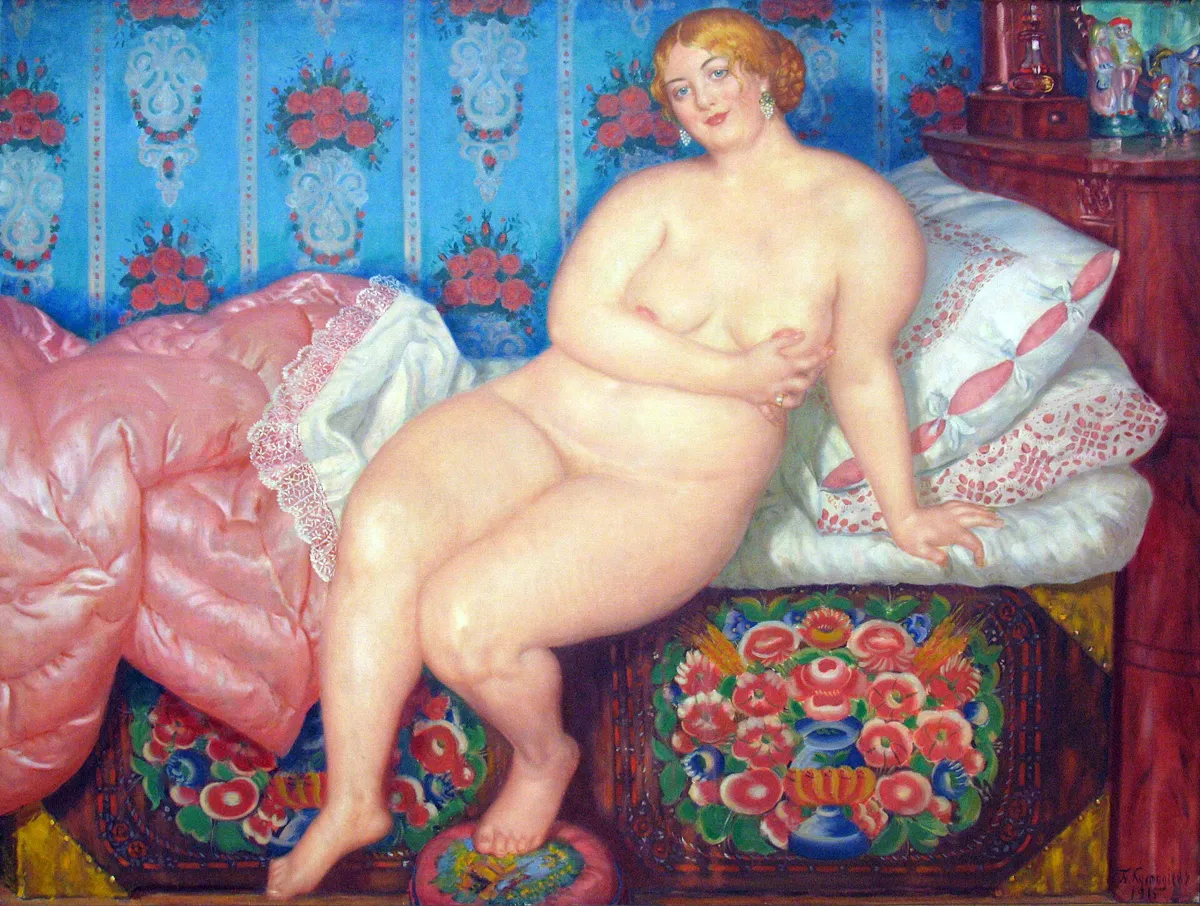
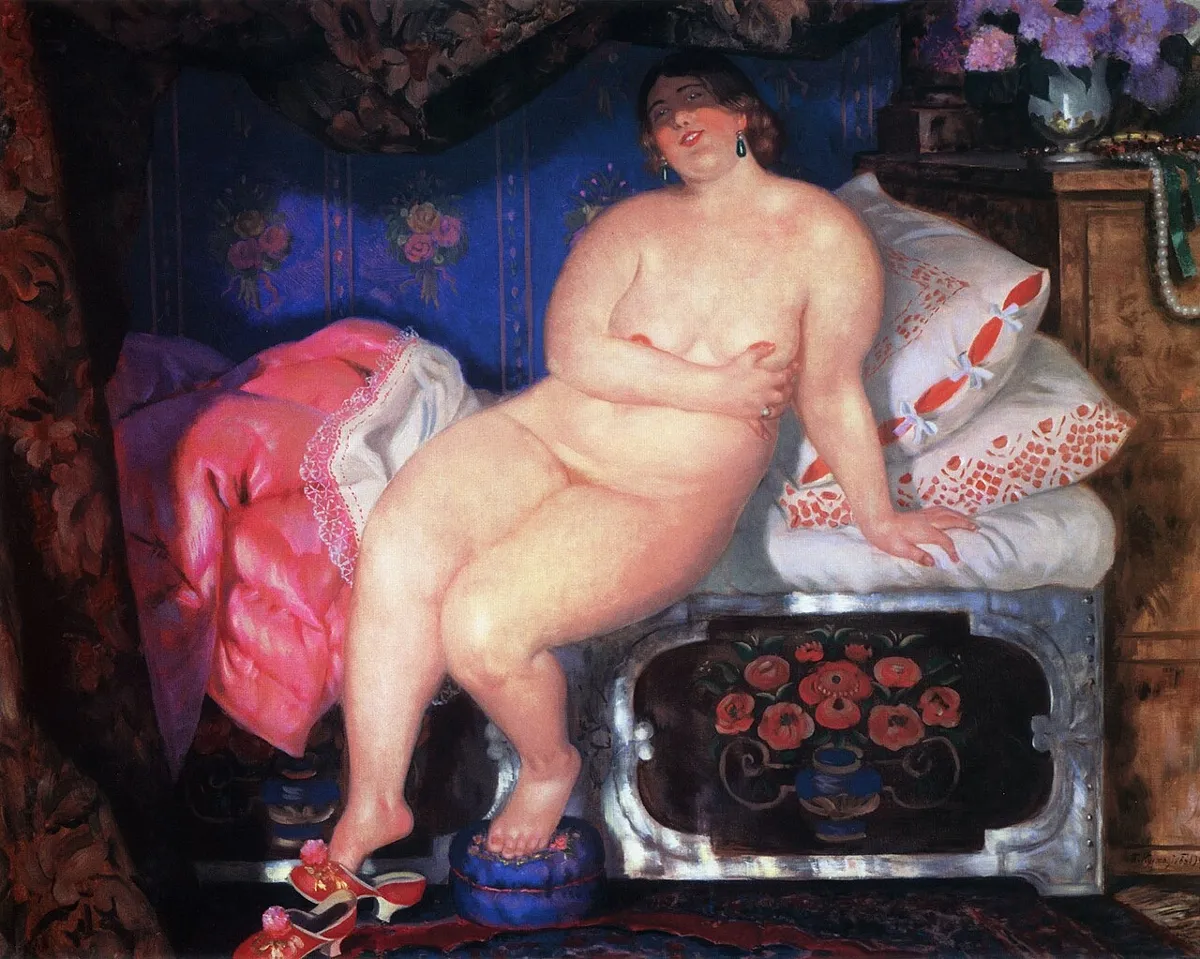
Boris Kustodiev. The Beauty. 1915. Oil on canvas, 141 × 185 cm. State Tretyakov Gallery, Moscow
Art Detective · art and psychology
Kustodiev’s “The Beauty”: What Do You See First?
In 1915 some called this painting vulgar, others admired it. People still argue about it. I read Kustodiev’s letters and his son’s memoirs, saw the painting in person, and want to tell you how it came about. I will also suggest a simple practice: noticing how we look at our own bodies.
The model had to be persuaded
In the autumn of 1914 Kustodiev was designing a production at the Moscow Art Theatre. On 24 November he wrote to his wife:
“For the second day I am drawing for a piece I have in mind — I talked an actress into posing…”Boris Kustodiev to his wife, Moscow, 24.11.1914
The actress was Faina Shevchenko. She was 21 and had just joined the company. “Talked into” was the right word: it took her a long time to agree.
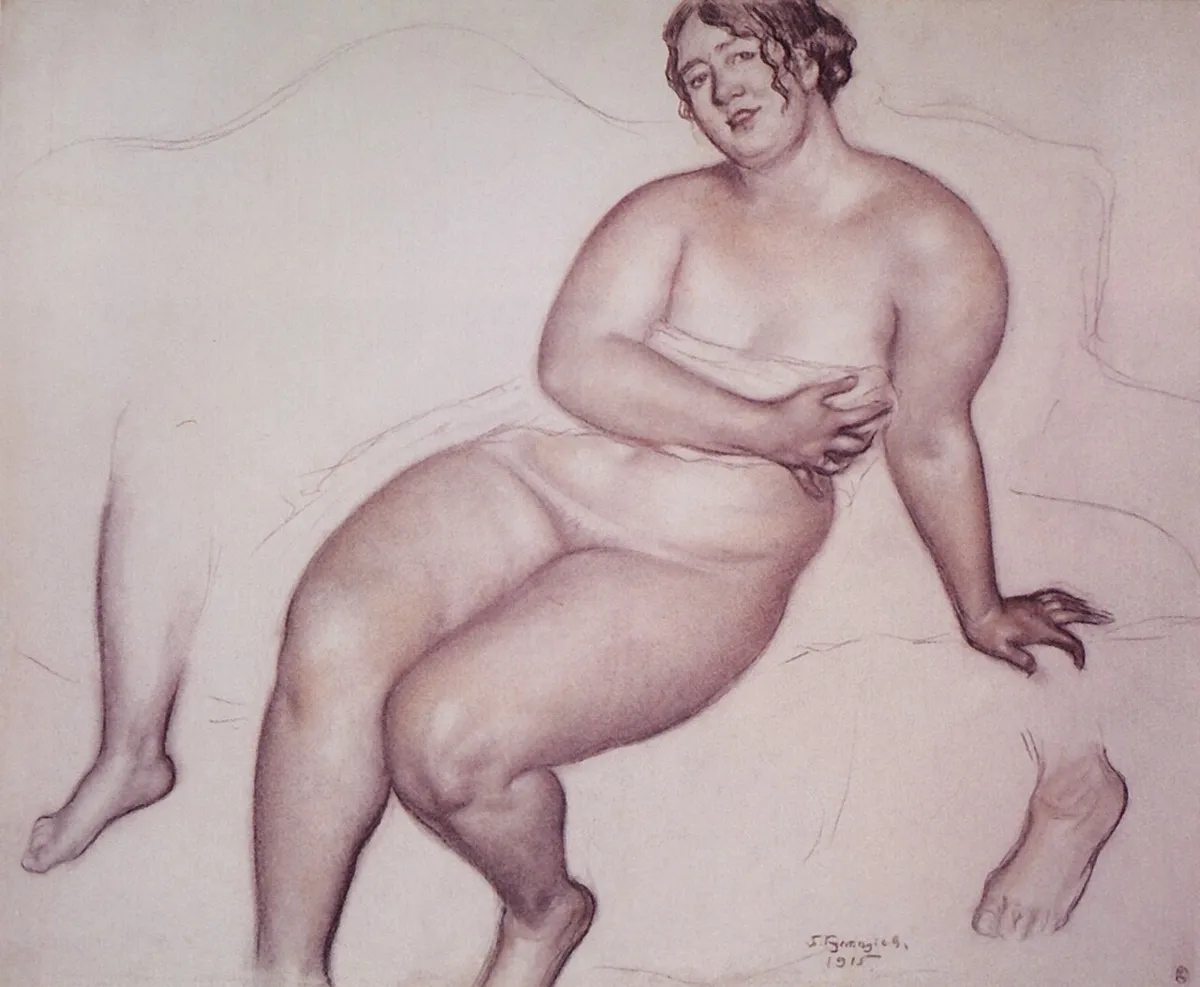
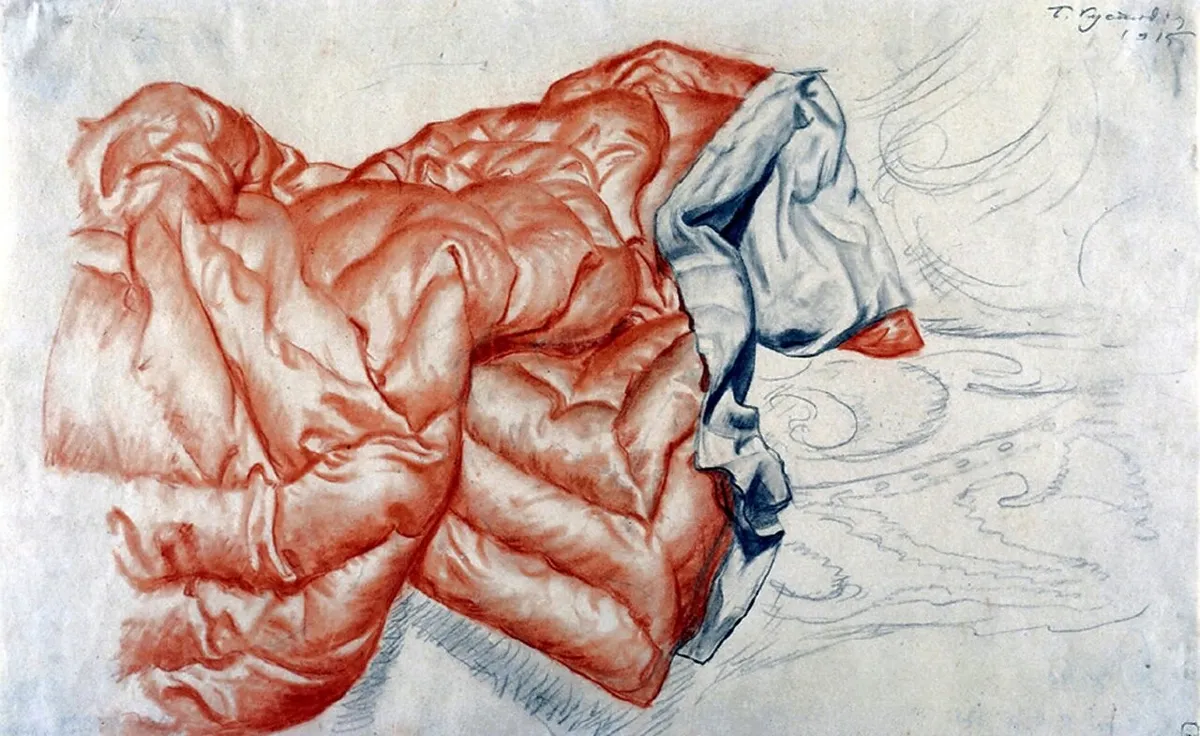
Compare the study with the painting. In the drawing Faina covers her breasts with a strip of cloth. On the canvas the cloth is gone. The artist removed it.
A painting made of home
Kustodiev painted it in Petrograd, in his studio on Vvedenskaya Street. His son Kirill later remembered the details. The pink down quilt was his mother’s birthday present to his father. His grandmother bought the plaster figurines on the chest of drawers at the Sytny market. The roses on the trunk came from an old family painted metal panel; the artist only changed their colour.
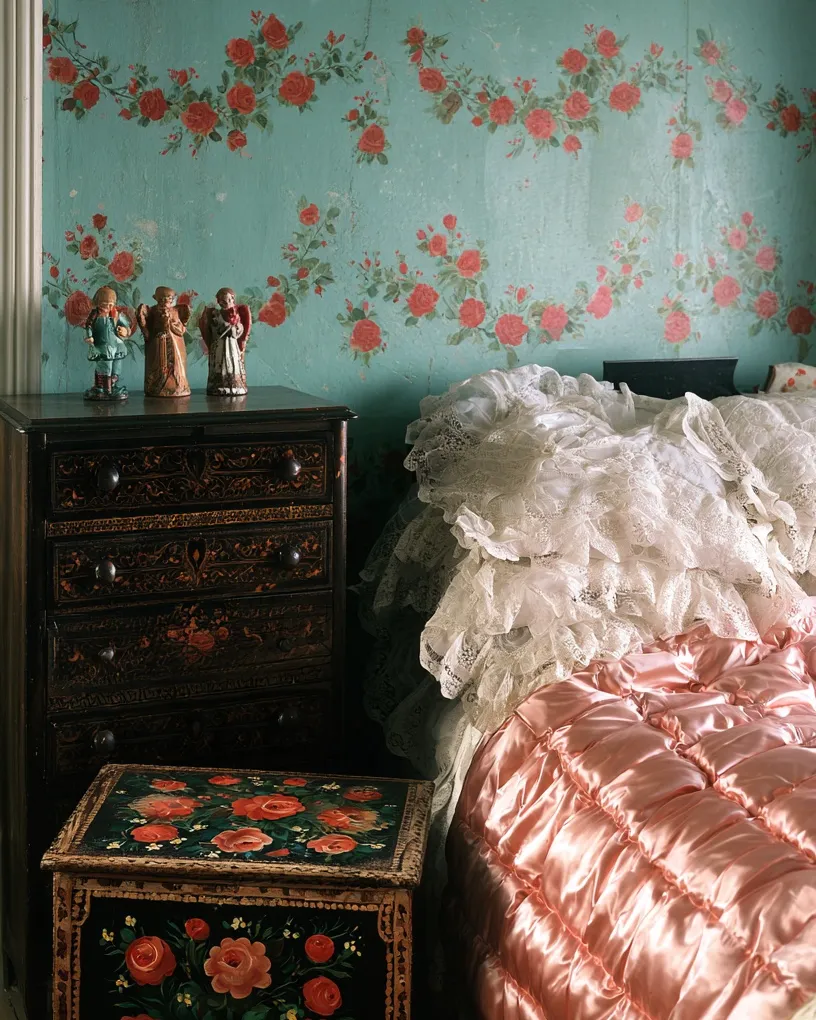
By then Kustodiev was seriously ill: a spinal tumour, operations, constant pain. A few years later he would be in a wheelchair. He worked every day from six in the morning and finished in August 1915. He told his son that in this painting he had finally found his own style.
Guests often asked later whether he had exaggerated her fullness. Kustodiev replied that he had painted “strictly from life”.
The artist’s confession
The most unexpected note was made in 1924 by Kustodiev’s first biographer, Vsevolod Voinov. They were talking about the “muse” of The Beauty.
“…his ideal is not at all such ‘buxom’ women, but when he paints, slender and graceful beauties do not inspire him.”Vsevolod Voinov, diary, 1924
Voinov added: “So go and settle the question of muses!” The artist everyone knows for his ample merchants’ wives found other women beautiful in life. But these were the ones he wanted to paint.
Psychology has a term, body image: how a person sees, judges and feels their own body. It is shaped by family, fashion and other people’s words. We often judge ourselves by someone else’s standard without noticing. Kustodiev knew his standard and still painted what made his eyes light up.
Why people see one painting differently
In Andersen’s “The Snow Queen” a troll breaks a distorting mirror. Whoever gets a shard in the eye sees only the bad. Kai, with a shard in his eye, looks at the roses he loved yesterday and finds them ugly.
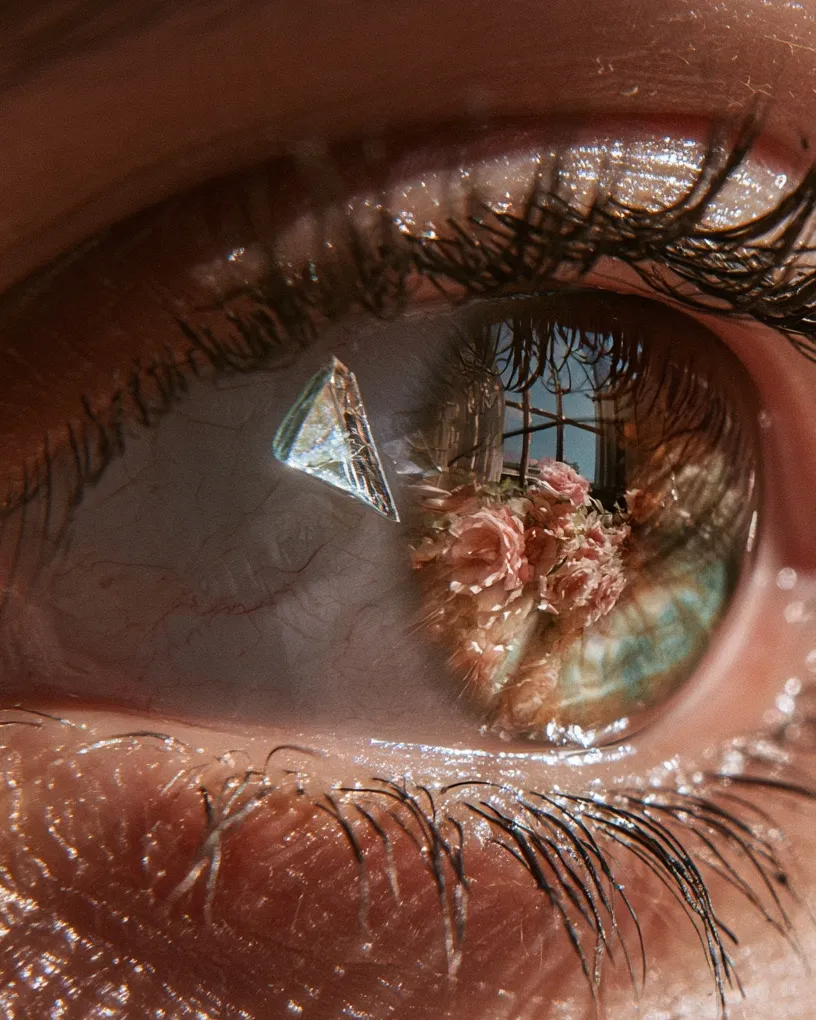
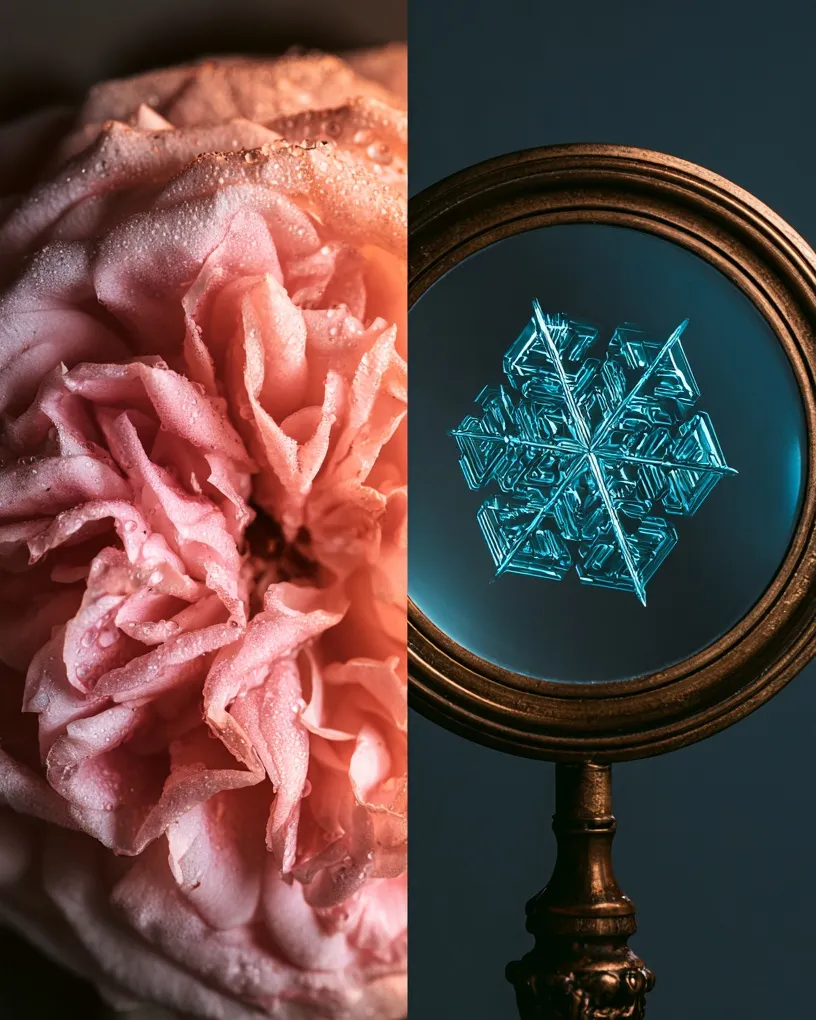
Psychologists explain the same thing without the fairy tale. The eye only sees light and colour; the brain builds the picture from memory and past experience. In the 1960s the Soviet scientist Alfred Yarbus recorded the eye movements of a person looking at Repin’s “They Did Not Expect Him”. He gave different tasks: judge how well-off the family is, guess ages, remember the clothes. One painting, and each time the gaze took a new route. We see what we are looking for.
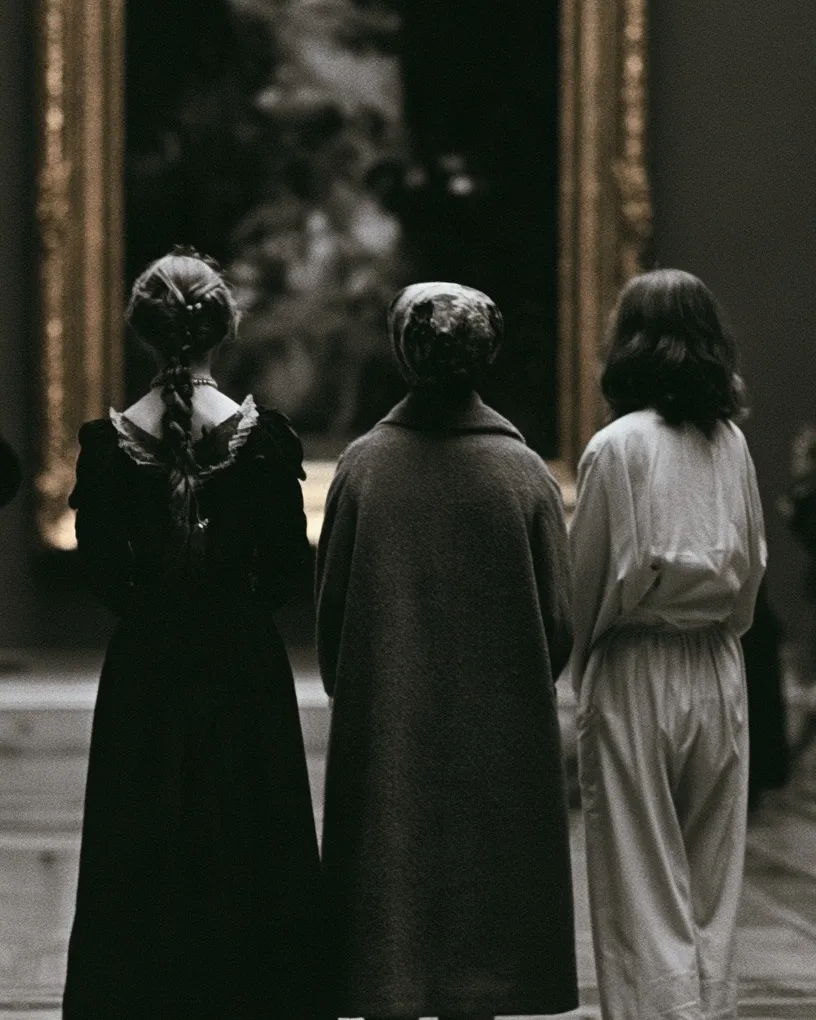
In front of The Beauty, everyone brings their own. One sees comfort and warmth. Another thinks straight away about extra weight. A third remembers what she was told about her own body.
One woman, six years
Kustodiev returned to this subject at least three more times: in 1918, 1919 and 1921.
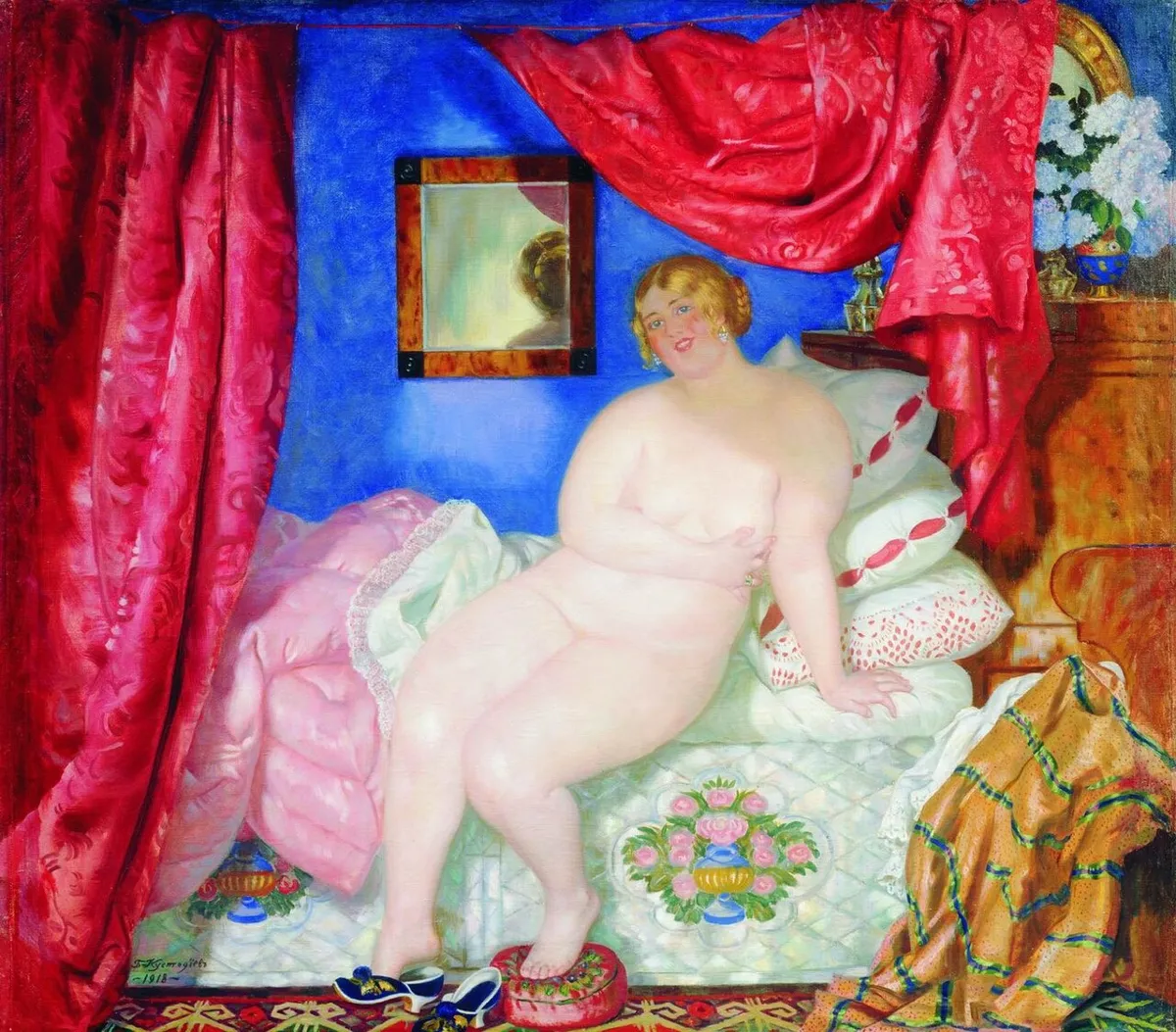
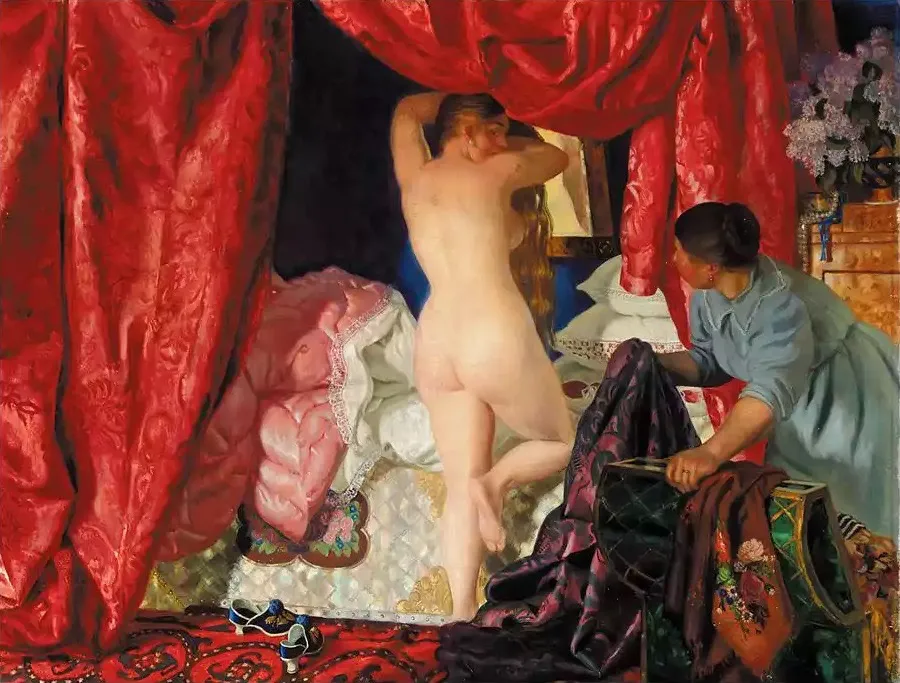
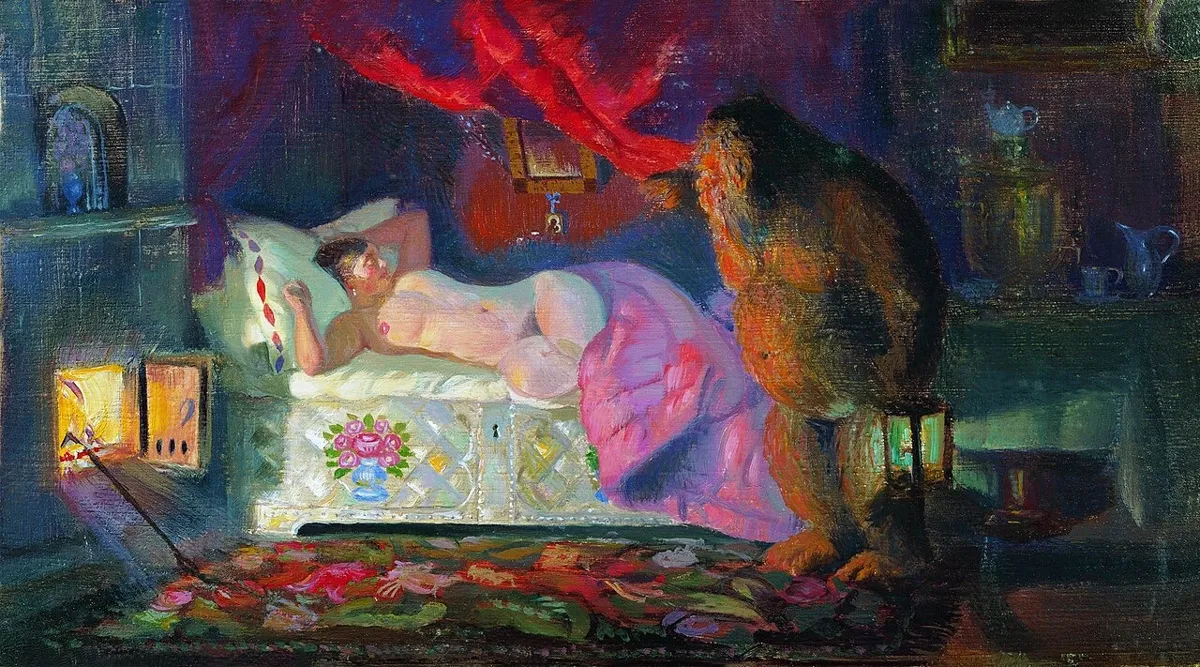
In 1915 she looks straight at us. In 1919 she turns to the mirror. In 1921 half her face is in shadow. By then the artist is in a wheelchair and Petrograd is starving. According to the Tretyakov Gallery, the whole setting reminded him of life before the revolution.
Tiffany blue in Kustodiev
My own chain of associations
When I stood in front of the painting, the first thing that struck me was the colour. Turquoise wallpaper next to the pink quilt and warm skin. I thought at once: that is Tiffany blue, the colour of the little blue box with a diamond inside. Those boxes appeared in 1886, so they already existed when The Beauty was painted. But Tiffany made the colour its own much later: it became a trademark in 1998, and in 2001 Pantone fixed it as number 1837, after the year the company was founded. Kustodiev painted this turquoise when it still belonged to no one.
Then I went looking for this shade in other Kustodiev works and found it in the water of the Volga and on the roofs of a fair. See for yourself:
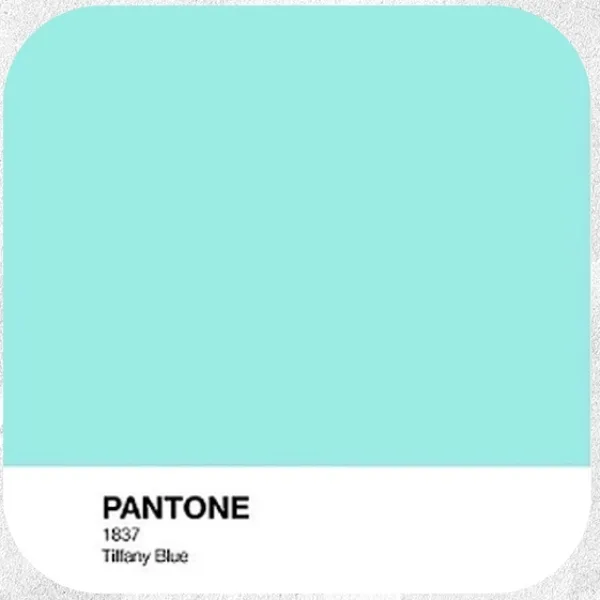
Tiffany Blue
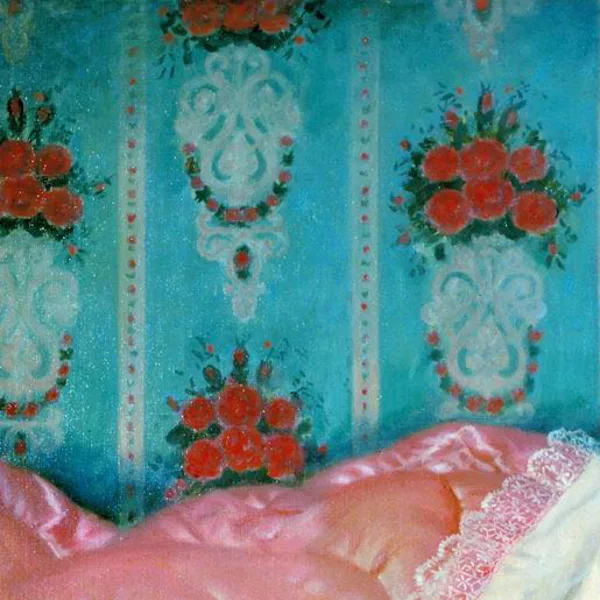
1915
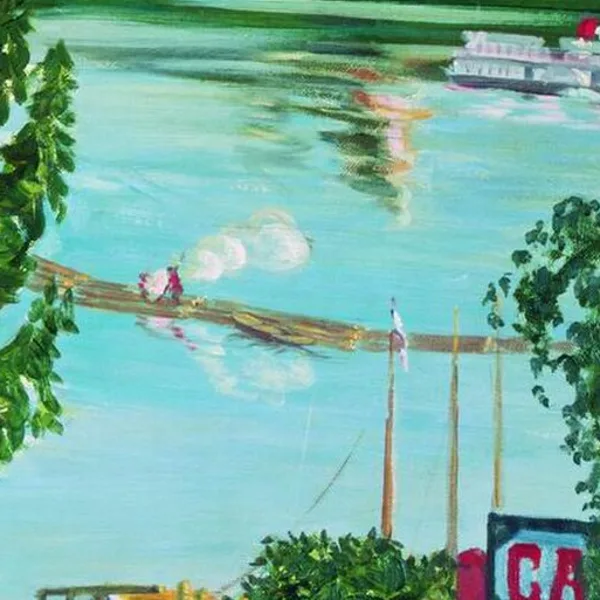
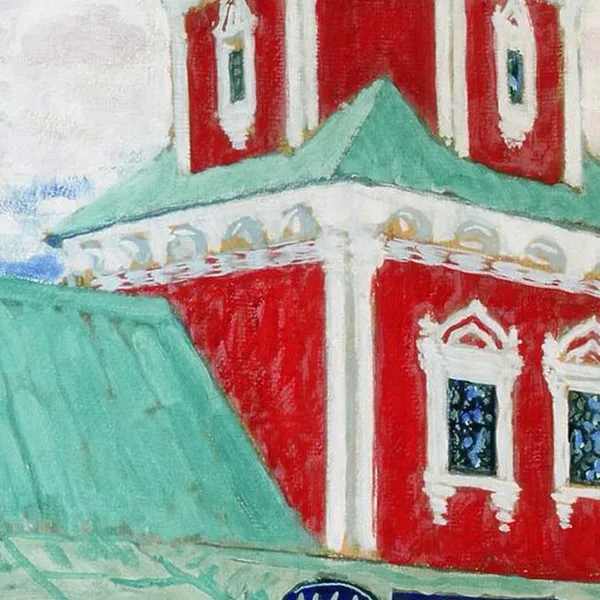
Tanya Taina’s association: a parallel, not a study
Colour reaches us before the subject does. We have not yet worked out what is shown, and we already feel warm or cold, calm or uneasy. Notice what this turquoise next to pink does to you.
Abundance of the body: energy 3
In my method The Beauty is a clear picture of energy 3, the Empress: the body, pleasure, a taste for life, soft strength. This energy has a shadow, the wound of humiliation, shame about oneself. And it has a gift, dignity.
Faina Shevchenko was shy about posing at first. The woman on the canvas looks the viewer in the eye, calmly and with a smile. Shame and dignity share one painting here.
Three sounds loudest for those born on the 3rd, 12th, 21st or 30th, and for those born in March or December. But it can also hide in other spheres of a date.
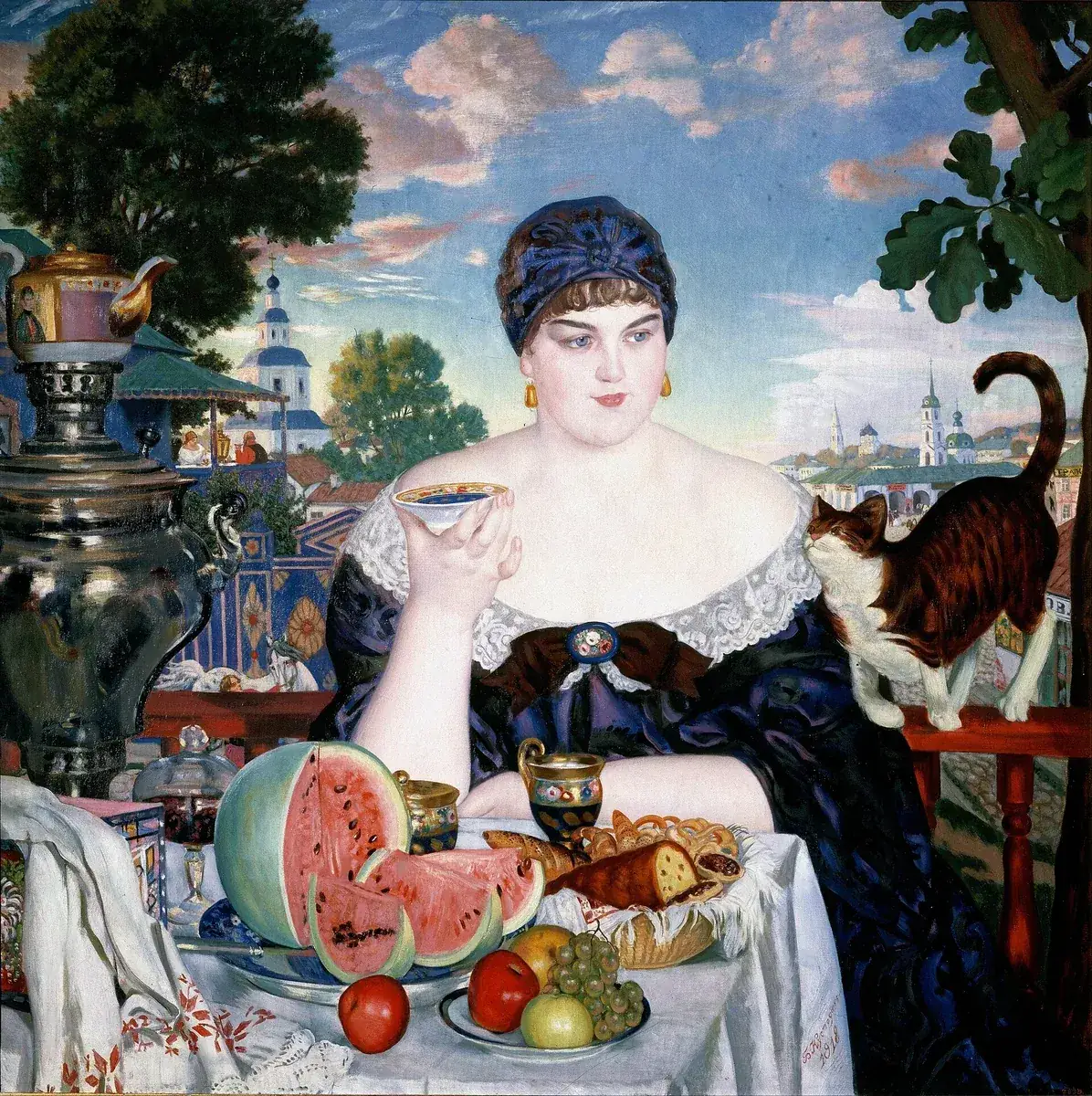
The energies of a date in my method are not a diagnosis or a scientific test. They are a hint, not a fairy tale: a way to come closer to yourself through art.
Practice: me and my body

Why do it. This exercise comes from body image work. It helps you notice the words you use about yourself and whose words they really are. Describing without judging comes from mindfulness practice: first look, then judge. We usually do it the other way round.
- Look at The Beauty and describe it without judging. Facts only: pose, hands, skin tone, what is around her. No “fat”, “beautiful” or “too much”.
- Write down what you felt. Warmth, awkwardness, envy, tenderness, irritation? Anything counts.
- Find the borrowed words. Where did “should”, “improper”, “need to lose weight” appear? Remember who you first heard them from.
- Look at yourself the same way. Stand in front of a mirror and describe yourself in the same calm words you used for the painting.
Questions for yourself
- How do I treat my body when nobody is watching?
- Could I, like her, sit freely and enjoy life without waiting for an “ideal” figure?
- Which colour in this painting is closest to me, and what do I feel next to it?
Now remember what you noticed first in The Beauty, at the very start. That is what you are looking for right now.
Find your notes and paintings →Enter your date and see whether three sounds in youP.S. I saw The Beauty in person on 21.07.2026 at the Russian Museum, at the exhibition “The Great One. The Image of Woman in Russian Art”. I prepared for it as if I were going to meet women, and even dressed up. I had seen Kustodiev before, but never felt like this: one painting is not enough to understand an artist. When you get to know a person better, understanding and admiration come too. Our “ugh” usually comes from not understanding.
I was struck by the juicy colours and her courage. She is not ashamed of her body; she loves it. I brought the exhibition book home to return to these stories. Every woman there is a destiny. Our lives, too, are worthy of great canvases and novels.
Sources: B. M. Kustodiev. Letters. Articles, notes, interviews. Meetings and conversations with Kustodiev. Memoirs of the artist. Leningrad: Khudozhnik RSFSR, 1967 (pp. 143, 161, 235, 261, 288–289) · Tretyakov Gallery — The Beauty, 1921 · Andersen, The Snow Queen — H.C. Andersen Centre · Castelhano, Mack, Henderson, 2009 — on Yarbus · Christie’s — The Merchant’s Wife and the House Spirit · Fontanka — “The Great One” exhibition · Tiffany & Co. — the Blue Box story. Paintings from the open archive of Wikimedia Commons. Illustrations captioned “Image: Tanya Taina” were made with AI. Energies and The Merchant’s Wife at Tea come from the platform You Are Art. You Are a Painting.